


 Nationwide multi-industry (municipal wastewater plant sludge / printing and dyei
 Pilot to engineering scale (70 t/d to 4000 t/d incineration lines; sludge drying
Flue Gas and Ash Residue from Sludge Incineration: Which TEQ Is "0.1 ng TEQ/m³", and Which Standard's 850℃ Is "850℃"
Discussions about sludge incineration are almost entirely focused on "whether the furnace can burn" — whether the calorific value is sufficient, whether coal blending is needed, and where the moisture content threshold for self-sustaining combustion lies. But once an incineration line is actually running, what determines whether it can pass acceptance and whether its operating costs are high are three things that have little to do with the furnace itself: in the report's phrase "dioxin 0.1 ng TEQ/m³," which set of TEF was used to calculate the TEQ; for the same furnace, complying with GB 18485 requires only 850℃, while complying with GB 18484 requires 1100℃ — which one are you following; and whether the ash collected by the dust collector counts as hazardous waste.
I. First, see the process chain clearly: what an incineration line is really doing is pollutant removal, not sludge burning
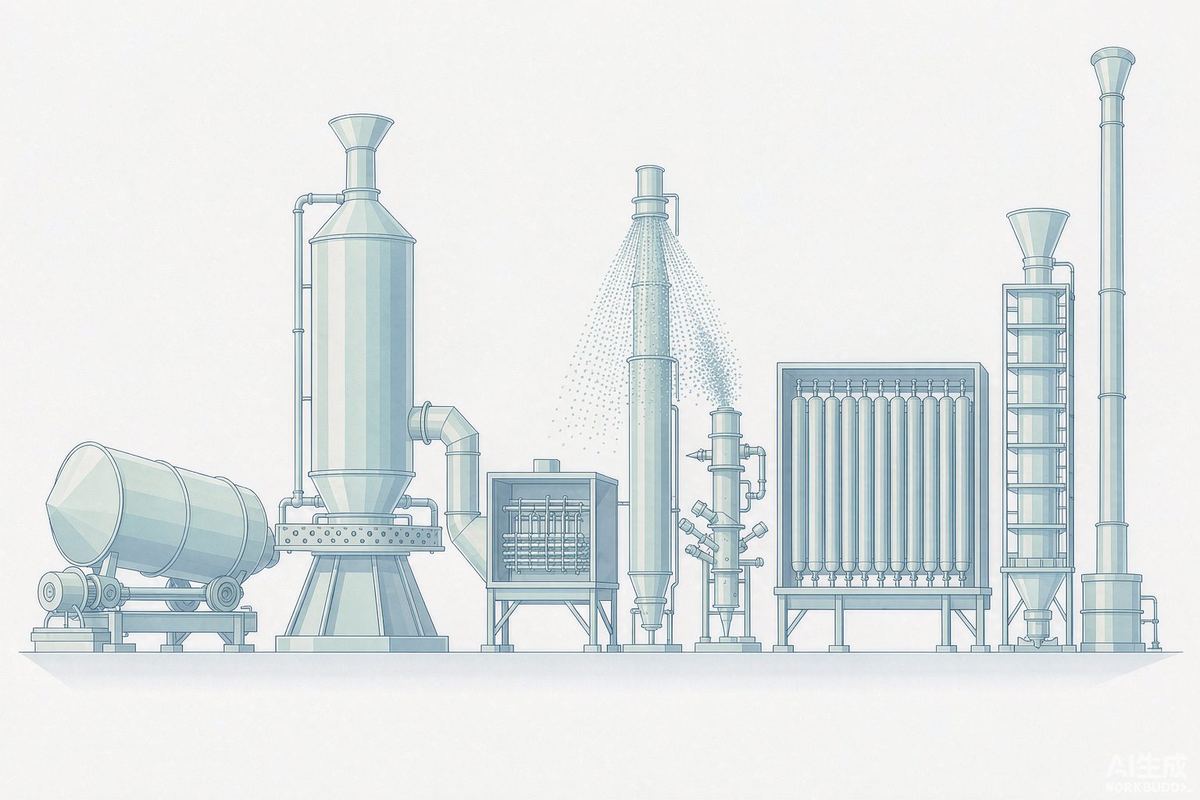
Two already commercially operating chains can lay out the entire process clearly. The Shanghai Qingpu District sludge drying and incineration project has a total designed scale of 600 t/d (Phase I 300 t/d, total investment 5.447 亿 yuan, land area 52.3 mu), with the process being "thin-layer drying + bubbling fluidized bed incineration," equipped with a waste heat boiler to recover heat; flue gas purification uses a seven-stage combination of "SNCR + in-furnace desulfurization + electrostatic precipitation + sodium bicarbonate dry process + activated carbon injection + bag filtration + wet deacidification," with three-stage series deacidification.
Chengdu Xingrong's "semi-drying + independent incineration" is another complete sample: dewatered sludge with a moisture content of 80% is first dried to 65% using saturated steam from the waste heat boiler, becoming semi-dry sludge that is then fed by a plunger pump into a bubbling fluidized bed incinerator; the flue gas passes sequentially through a high-temperature air preheater, waste heat boiler, electrostatic precipitator, flue reactor (with sodium bicarbonate added at the inlet for deacidification and activated carbon added to adsorb heavy metals and dioxins), bag filter, and wet scrubbing (sodium hydroxide slurry), and finally the low-temperature flue gas is reheated to prevent "white smoke." This process, across 3 plants, totals 1400 t/d (calculated at 80% moisture content), covers 115 mu, and represents an investment of about 14.6 亿 yuan.
| Stage | Shanghai Qingpu 600 t/d (Phase I 300 t/d) | Chengdu Xingrong 1400 t/d (3 plants) |
|---|---|---|
| Pre-incineration drying | German-imported thin-layer dryer, high heat transfer efficiency, low waste gas volume | Horizontal thin-layer dryer, 80% → 65% semi-dried sludge |
| Incineration and waste heat | Bubbling fluidized bed + waste heat boiler; 180℃ waste steam used for sludge silo insulation | Bubbling fluidized bed; high-temperature air preheater heats fluidizing air; waste heat boiler produces steam for drying |
| Denitrification | SNCR + in-furnace desulfurization | Low-oxygen reducing environment in furnace, nitrogen controlled at source, no denitrification unit required |
| Pre-dedusting | Electrostatic precipitation (before activated carbon injection) | Electrostatic precipitator (before sodium bicarbonate and activated carbon) |
| Deacidification and adsorption | Baking soda dry process + activated carbon injection | Flue reactor with sodium bicarbonate + activated carbon |
| Final-stage dedusting and deacidification | Bag filter + wet deacidification (three-stage deacidification in series) | Bag filter + wet scrubbing (NaOH) + flue gas reheating |
| Emissions and by-products | SO₂ and HCl emissions are only 10%~20% of the Shanghai local standard limits | Circulating water utilization rate 95%; furnace slag used as raw material for brick/cement production, fly ash solidified before off-site transport |
Placing the two chains side by side reveals three things. First, the drying in both cases uses waste heat steam from the incineration system itself—incineration essentially sustains itself thermally, which is the true meaning of "self-sustaining combustion." Second, deacidification is never completed in a single step; instead, the dry or semi-dry process handles the bulk of the load, with the wet process finishing up. Qingpu uses three-stage deacidification to bring SO₂ and HCl down to 10%~20% of the local standard limits. Third, dedusting appears twice in the chain: electrostatic precipitation first, bag filtration later, with activated carbon injection sandwiched in between. This sequence is not arbitrary—it is the physical origin of the question in Section 4 about "whether ash counts as hazardous waste."
II. Basis 1: Which set of TEF is used in "0.1 ng TEQ/m³" for TEQ
Dioxins are not a single substance, but a mixture of 210 congeners: 75 polychlorinated dibenzo-p-dioxins (PCDD) plus 135 polychlorinated dibenzofurans (PCDF). Among them, only 17 congeners in which the 2,3,7,8 positions are fully chlorinated are considered to have similar toxicity.
To compress "a pile of concentrations" into a single number, the toxicity equivalence factor TEF must be introduced:
At present, two sets of TEF are running internationally at the same time: I-TEF was established by the North Atlantic Treaty Organization (NATO) in 1988 年, covering 17 PCDD/F congeners; WHO-TEF was proposed by the World Health Organization in 1997 年 and revised in 2005 年, also covering 17 PCDD/F congeners, but the values assigned to several of these congeners were modified.
Laying out the 17 items one by one reveals something rarely mentioned: only 5 items differ in value between the two systems, while the other 12 items are completely identical. The differences are all concentrated in these 5 items:
| Congener | I-TEF (NATO 1988) | WHO-TEF (2005) | Ratio |
|---|---|---|---|
| 1,2,3,7,8-PeCDD | 0.5 | 1 | WHO is 2 times I-TEF |
| 2,3,4,7,8-PeCDF | 0.5 | 0.3 | I-TEF is 1.67 times WHO |
| 1,2,3,7,8-PeCDF | 0.05 | 0.03 | I-TEF is 1.67 times WHO |
| O8CDD (Octachlorodibenzodioxin) | 0.001 | 0.0003 | I-TEF is 3.33 times WHO |
| O8CDF (Octachlorodibenzofuran) | 0.001 | 0.0003 | I-TEF is 3.33 times WHO |
Beyond the assigned values, the scope of coverage of the two systems also differs: since 1997 年, the WHO scheme has included 12 "dioxin-like polychlorinated biphenyls" (DL-PCBs) in the TEF table, whereas I-TEQ sums only 17 PCDD/Fs. The combined result is that for the same sample, the I-TEQ calculated using I-TEF is typically about 10% higher than the WHO-TEQ. 10% may not sound like much, but dioxin emissions often run right at the limit, and 10% is the dividing line between pass and fail.
This is visible and tangible in real reports. For a certain rotary kiln hazardous waste incineration project 2023 年 12 月 third-party testing report (sampling point: incinerator outlet; purification process: rotary kiln + waste heat boiler + SNCR + quench + lime/activated carbon + bag filter + two-stage alkaline spray): design treatment capacity 70 t/d, actual 62 t/d, operating load 88.6%, combustion chamber temperature 1150℃; the three total toxic equivalent mass concentrations of dioxins are 0.45 / 0.47 / 0.49 ng TEQ/m³, average 0.47, limit 0.5 (GB 18484-2020), only 6% margin remaining. Yet in the congener list of this report, the TEF marked for 1,2,3,7,8-PeCDD is 0.5—the I-TEF is used.
In other words: this report is running right against the limit, and it is running on the I-TEF basis. If the WHO-TEF were used instead, the contribution of just the 1,2,3,7,8-PeCDD item alone would double; if the 12 DL-PCBs were also included in the summation, the result would only be higher. Therefore, the statement "0.5 ng TEQ/m³ meets the standard" can only hold when stated together with the TEF system.
III. Basis 2: 850℃ and 1100℃ are the difference between two standards, not the difference between two technologies
The original text in the Ministry of Ecology and Environment's pollutant discharge permit technical specification is very clear: incinerators implementing GB 18485 should meet requirements such as an incineration temperature in the furnace chamber of ≥850℃, a flue gas residence time of ≥2 seconds, and a slag ignition loss rate of ≤5%; incinerators implementing GB 18484 should meet requirements such as a furnace chamber temperature of ≥1100℃, a flue gas residence time of ≥2 seconds, a slag ignition loss rate in the furnace chamber of ≤5%, a combustion efficiency of ≥99.9%, and a destruction and removal efficiency of ≥99.99%.
Immediately after, however, the dioxin emission limits are reversed:
| Comparison Item | Compliance with GB 18485 (Municipal Solid Waste Incineration) | Compliance with GB 18484 (Hazardous Waste Incineration) |
|---|---|---|
| Furnace Temperature | ≥850℃ | ≥1100℃ |
| Flue Gas Residence Time | ≥2 s | ≥2 s |
| Ignition Loss of Slag | ≤5% | ≤5% |
| Dioxin Limit | 0.1 ng TEQ/m³ | 0.5 ng TEQ/m³ (measured average) |
| Particulate Matter / Carbon Monoxide | According to the limits listed in GB 18485 | 30 / 100 (1 h average), 20 / 80 (24 h average) mg/m³ |
| Combustion Efficiency / Destruction and Removal Efficiency | — | ≥99.9% / ≥99.99% |
The standard that requires a higher temperature actually has a dioxin limit that is 5 times looser.This is not a contradiction within the standards, but rather a result of the two standards having different protection targets: GB 18484 addresses hazardous waste with extremely complex composition and much higher chlorine and heavy metal loads, taking "must be destroyed" (destruction and removal efficiency 99.99%) as the first gate; GB 18485 addresses municipal solid waste with relatively stable composition, and imposes stricter end-of-pipe emission controls.
This "opposite direction" directly determines three things.
First, "furnace temperature" and "limit values" must not be compared interchangeably. Seeing Project A at 1150℃ and Project B at 850℃, and then claiming A is more environmentally friendly than B, has no basis—you first need to know which standard each of these two furnaces is implementing.
Second, when the source of feed sludge changes, the standard must change accordingly. For separate incineration of municipal sludge, Disposal of Sludge from Municipal Wastewater Treatment Plant—Sludge Quality for Separate Incineration (GB/T 24602-2009) directs incineration flue gas emissions to GB 16297 and GB 18485, i.e., the 0.1 tier; once the feed is industrial sludge with hazardous waste properties, it must shift to the 0.5 tier of GB 18484. For the same furnace, once the formulation changes, both the furnace temperature requirements and the limit values move simultaneously.
Third, the "standard value" and the "engineering value" of residence time are two different sets of numbers. The standard uniformly requires ≥2 seconds, while engineering practice generally leaves a margin: in the Xiaoshan 4000 t/d centralized sludge incineration project, the actual residence time of flue gas in the 850~950℃ furnace chamber exceeds 4 seconds, and the loss on ignition of slag is ≤2%; in the sludge incineration power generation line in Xinji, Hebei, the flue gas residence time in the incinerator is 4~6 seconds, with an incineration temperature above 850℃.
The other half that goes with temperature is quenching. There are two pathways for dioxin formation: high-temperature gas-phase synthesis in the combustion zone, and "de novo" synthesis in the low-temperature zone. For the latter, public materials give three common formulations for the key temperature range: 250~450℃, 300~500℃, and 200~500℃. In engineering, one should not argue over which set is correct, but should act according to the most conservative set—treat the entire 200~500℃ range as a hazardous zone and make the flue gas pass through it within 2 seconds. The corresponding cooling rate specifications are likewise inconsistent: some projects write "the quench tower cools the flue gas from 500℃ down to 200℃ within 1 seconds," some write "cooling rate ≥100℃/s," and others write "must be >200℃/s."
IV. Caliber Three: Does the pile of ash collected by the dust collector count as hazardous waste?
This is the only one of the three calibers where "documents contradict each other."
First, the certain part. Fly ash from municipal solid waste incineration is clearly hazardous waste. In the National Catalogue of Hazardous Wastes (2021 年 Edition), "772-002-18 fly ash from municipal solid waste incineration" is classified under HW18 incineration disposal residues. This provision has been repeatedly confirmed in multiple government documents: the regulatory interpretation by the Shenzhen Urban Management and Comprehensive Law Enforcement Bureau states that "Shenzhen's existing 5 municipal solid waste incineration plants generate about 32 万 tons of fly ash annually," and fly ash must undergo stabilization treatment before entering landfills; the reply letter from the Chongqing Urban Management Bureau states that "our city has built and put into operation 20 incineration facilities, with fly ash output exceeding 600 tons/day," all of which use solidification/stabilization pretreatment before entering municipal solid waste landfills for zoned landfilling.
Next, the uncertain part. Fly ash from municipal sludge incineration is not under the code "772-002-18." And Article 6.5 of GB 18484-2020 clearly states:
The logic of the regulations is "determination through identification," not "automatic designation." However, there is a different statement in industry standards: the Technical Specification for Sludge Incineration Treatment Engineering of Municipal Wastewater Treatment Plants (JB/T 11826-2014) stipulates that "fly ash collected by dust removal equipment shall be treated as hazardous waste." The industry's questioning of this clause is very direct — pre-dedusting fly ash without activated carbon adsorption is typically verified as general solid waste from both theoretical and practical perspectives; if all of it is disposed of as hazardous waste across the board according to the standard, it will only unnecessarily raise the operating costs of sludge treatment and disposal.
Engineering practice stands on the side of "determination through identification." Public reports on the Xiaoshan 4000 t/d centralized sludge incineration treatment project describe this matter very completely: the project's environmental impact assessment report itself required property identification of whether the ash and slag belong to hazardous waste; the ash and slag generation rates are highly correlated with the ash content of the sludge fed into the furnace, with a furnace ash generation rate of about 15% and a furnace slag generation rate of about 2%; a third-party testing agency conducted continuous random sampling of furnace ash and furnace slag, and the maximum dioxin-like toxic substance content in furnace ash was 0.037 µgTEQ/kg, while the corresponding limit in the Identification Standards for Hazardous Wastes - Identification for Toxic Substance Content (GB 5085.6—2007) is 15 µgTEQ/kg — a difference of about 400 times; the monitored concentrations for leaching toxicity, acute toxicity and corrosivity were all outside the limit ranges of the hazardous waste identification standards. The identification conclusion is: both the ash and slag of this project belong to general solid waste, consistent with the fly ash identification results of other sludge incineration projects, and can be used as building material raw materials for concrete mixing plants, brick factories and cement plants.
An earlier peer-reviewed result points in the same direction. For papermaking sludge incinerated using a paddle dryer + bubbling fluidized bed (Combustion Science and Technology, Vol. 14, No. 6 of 2008 年), heavy metal leachate concentration testing of incineration fly ash showed results far below the maximum allowable concentration values for hazardous waste leachate specified in GB 5085.3—1996.
This returns to the sequence in Section 1 of "electrostatic precipitation first, activated carbon injection in the middle, bag filtration last." Both real engineering chains, Qingpu and Chengdu Xingrong, use this arrangement, and its physical meaning is:
- Ash collected by the electrostatic precipitator is coarse ash from flue gas before activated carbon has been injected, without adsorption of dioxins and heavy metals; both literature and measured data point to "general solid waste";
- Ash collected by the bag filter is fine ash after activated carbon injection; the activated carbon adsorbs gas-phase dioxins and mercury, cadmium and lead onto the solid phase, which is then intercepted by the filter bags — this ash stream is enriched with pollutants and has completely different properties.
Mixing the two ash streams together and disposing of them as hazardous waste is equivalent to making the "clean coarse ash" accompany the "enriched fine ash" in paying hazardous waste disposal fees. Separate first, identify later — this is one of the few actions on this line where "doing it right directly saves money."
In addition, there are three different bases for "fly ash rate" being mixed in use. Before comparing, one must first clarify what the denominator is:
| Basis / Definition | Typical Value | Denominator | Source |
|---|---|---|---|
| Bottom ash / slag generation rate | Bottom ash approx. 15%, slag approx. 2% | Sludge feed rate to incinerator | Xiaoshan 4000 t/d project practice |
| Incinerator ash : fly ash | approx. 90 : 10 | Total ash and slag | Technology provider public information |
| Slag : fly ash (actual operation) | General furnace 10 : 4; after optimization 10 : 1 (fly ash approx. 1%) | Total ash and slag | Changzhou Yingke operational data |
| Ash and slag volume | approx. 10% of dewatered sludge volume; in one project, ash and slag volume approx. 9% of raw sludge | Dewatered sludge volume | Technology provider information / Xinji project |
Note that the denominator in the last two rows is "volume," while the preceding rows use "mass" — mass reduction and volume reduction are two different bases and cannot be used interchangeably, which has long been a recurring issue in the sludge treatment chain.
There is still a chlorine threshold at the co-processing end
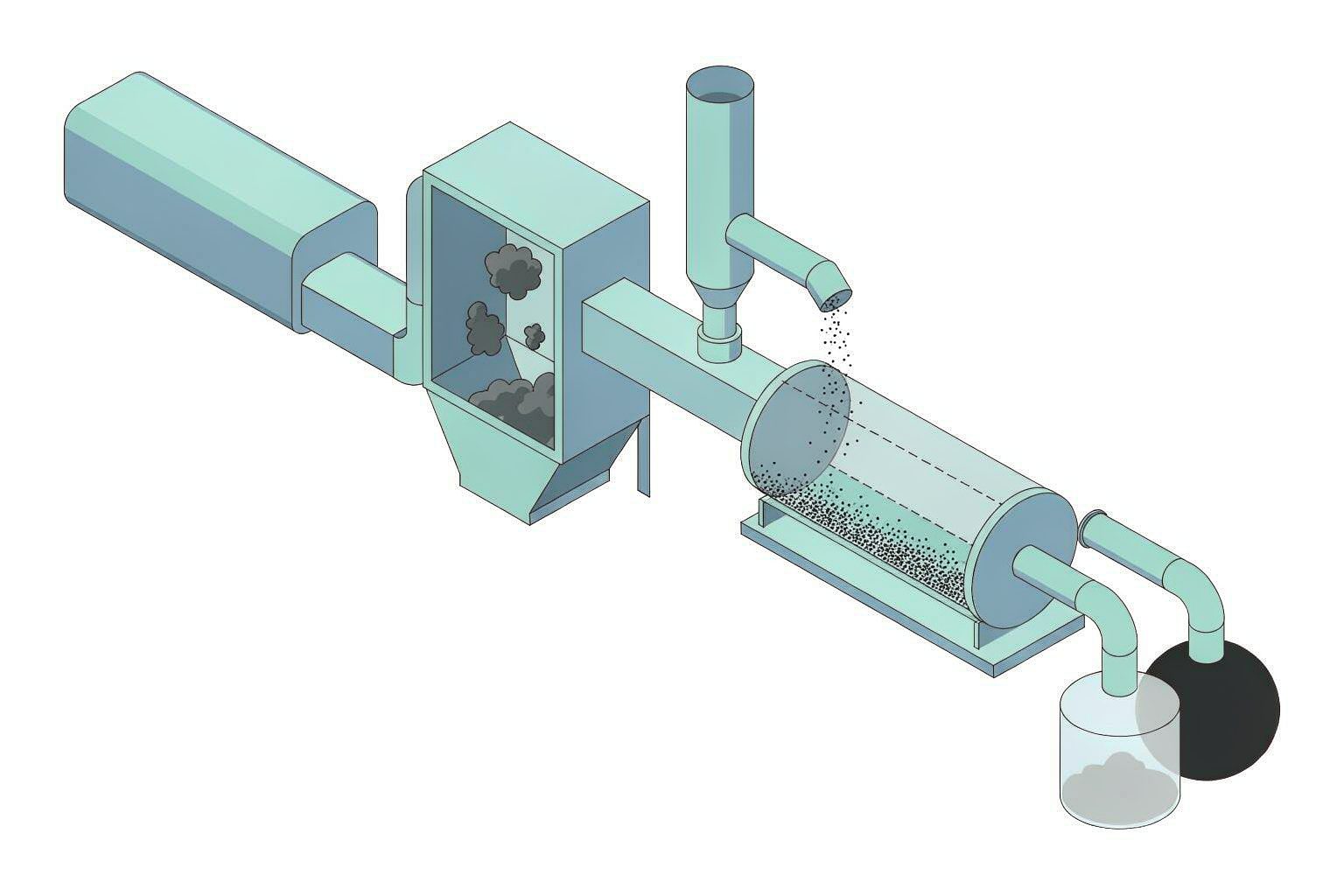
Fly ash has a high chlorine content. Direct kiln feeding will cause crusting in the kiln tail smoke chamber, high-temperature chlorine corrosion of the rotary kiln shell, and corrosion of steel materials. Therefore, the state stipulates that the chlorine content in cement must be less than 0.06%. To meet this requirement, water washing for dechlorination is usually required first; after pretreatment, the chlorine content of dechlorinated fly ash can be controlled to ≤1%, with a moisture content of ≤30%. However, the waste salt generated after treating the water washing wastewater is still hazardous waste, and there is currently no ideal disposal destination.
V. The Real Ledger
| Project / Object | Scale and Process | Key Data | Source |
|---|---|---|---|
| Shanghai Qingpu Sludge Drying and Incineration | 600 t/d (Phase I 300 t/d), thin-layer drying + bubbling fluidized bed | Total investment 5.447 亿 yuan, land area 52.3 mu; flue gas "SNCR + in-furnace desulfurization + electrostatic precipitation + sodium bicarbonate dry sorption + activated carbon injection + bag filter + wet deacidification"; SO₂ and HCl only 10%~20% of the Shanghai local standard limits; 180℃ waste steam used for sludge silo insulation, saving over 200 ten-thousand yuan in annual operating costs | China Solid Waste Network, "Compilation of Outstanding Cases in the Solid Waste Industry" |
| Chengdu Xingrong Sludge Disposal | 3 plants totaling 1400 t/d (calculated at 80% moisture content), semi-drying + independent incineration | 80% → 65% semi-dried sludge fed into furnace; total investment approximately 14.6 亿 yuan, land area 115 mu; circulating water utilization rate 95%; slag used for brick/cement production, fly ash solidified and transported off-site; "3T+E" used to control dioxins | China Water Network, "Compilation of Outstanding Cases in the Water Industry" |
| Xiaoshan Centralized Sludge Incineration | 4000 t/d centralized incineration | 850~950℃ actual furnace residence time >4 s; furnace ash 15%, slag 2%; slag loss on ignition ≤2%; maximum dioxin in furnace ash 0.037 µgTEQ/kg (GB 5085.6 limit 15); ash and slag identified as general solid waste | "China Water & Wastewater" 2022, 38(8) |
| Paper Mill Sludge Drying and Incineration | Paddle dryer + bubbling fluidized bed | Dioxins before coal blending 0.144 ng I-TEQ/m³, reduced to 0.04 ng I-TEQ/m³ after coal blending; CO reduced from 574.8 to 144.5 mg/m³; COD of drying condensate at heat transfer oil 180℃ 113.6 mg/L; fly ash leachate far below GB 5085.3—1996 | "Combustion Science and Technology" 2008, 14(6):545-550 |
| Co-combustion of Municipal Sludge in Thermal Power Plants | Circulating fluidized bed boiler + flue gas waste heat drying + automated co-combustion | Hourly average dioxin in flue gas ≤0.0110 ng TEQ/Nm³; dioxin in fly ash ≤2.8022 ng TEQ/kg; bottom slag ≤0.6596 ng TEQ/kg | "Chinese Journal of Environmental Engineering" 2016 |
| Hebei Xinji Sludge Incineration Power Generation | No addition of lime/iron salts/aluminum salts, preserving calorific value | Fuel lower heating value approximately 1600 kcal (approximately 1/3 standard coal equivalent), capable of self-sustained combustion; "Three T" control; flue gas residence 4~6 s, incineration temperature above 850℃; ash and slag volume approximately 9% of the original sludge amount; annual savings of 2.84 万 tons of standard coal, power generation 8640 万 kWh | China Economic Net (2021-11) |
| A Rotary Kiln (Hazardous Waste Incineration) | Design 70 t/d, actual 62 t/d, load 88.6% | Combustion chamber temperature 1150℃; dioxins 0.45 / 0.47 / 0.49 ng TEQ/m³, average 0.47 (GB 18484-2020 limit 0.5); report annotates 1,2,3,7,8-PeCDD with TEF = 0.5 (I-TEF) | Third-party test report RBSH2312044 (2023-12) |
| Jiangsu Sheyang Hazardous Waste Incinerator | Supervisory monitoring (2023-04-19) | Dioxins 0.026 ng TEQ/Nm³, limit 0.5, compliant | Sheyang County People's Government Supervisory Monitoring Public Notice |
| Fly Ash Stabilization at a Waste-to-Energy Plant in Chongqing | Stabilization ratio test | Optimal addition ratio of DTC-type organic chelating agent 1.5%~2.0%; with the mixed agent of 1% DTC + 2%~3% Na₂S, heavy metal leaching concentrations can be reduced below the GB 16889—2008 limits | "Environmental Sanitation Engineering" 2018, 26(5):38-40 |
| Activated Carbon Injection Parameters | Review summary and industrial pilot test | Single bag filter system dosage 100 mg/Nm³, double bag filter 40 mg/Nm³; when double bag filter injection rate reduced from 40 kg/h to 16 kg/h, removal rate increases to 97.6%~99.3%; linear growth when dosage ≤65 mg/Nm³, almost no further improvement after >150 mg/Nm³ | "Biomass Chemical Engineering" 2025, 59(6) |
| Printing and Dyeing Sludge Fluidized Bed Incineration | 80 t/d, incineration temperature 850℃ | Promotional claims: dioxin emissions 0.08 ng-TEQ/m³, heavy metal removal rate >99.5%, NOx reduced from 500 to below 150 mg/m³ [Commercial promotional material, pending verification] | Industry governance promotional material (2026) |
VI. Five Engineering Truths
1. When writing "0.1 ng TEQ/m³," the TEF system must be stated as well.Tender documents and acceptance reports should specify "calculated as WHO-TEQ (2005)" or "calculated as I-TEQ." Of the 17 congeners in the two systems, only 5 differ, and the differences are entirely concentrated in these 5 congeners. However, after superimposing the coverage differences of 12 types of dioxin-like polychlorinated biphenyls, the same sample can differ by around 10% between the two calculation methods — enough to turn compliance into non-compliance.
2. When you see a furnace temperature, first ask which standard applies.The difference between 850℃ and 1100℃ is the applicability of GB 18485 versus GB 18484, not advanced versus outdated technology; moreover, the dioxin limits differ inversely by a factor of 5. Before comparing two projects, first align their respective applicable standards. Once the feed source changes (municipal sludge → industrial sludge with hazardous waste characteristics), the furnace temperature requirements and emission limits switch simultaneously.
3. Ash and slag properties depend on identification, not on "according to regulations."The principle of GB 18484-2020 is "determination by identification." Pre-dedusting ash and bag filter ash after activated carbon adsorption should be sampled separately by stream and identified separately. Treating everything uniformly as hazardous waste is the easiest place to waste money on this line — the measured data at the 4000 t/d scale of the Xiaoshan project has already disproved the default assumption that "ash is hazardous waste."
4. More activated carbon is not always better.The combination of injection + bag filter dust removal achieves a dioxin removal rate of ≥95%, but there is a clear plateau in the injection rate: at ≤65 mg/Nm³, the removal rate increases linearly with injection rate; at >150 mg/Nm³, it barely improves further. Kim et al. found that when the injection rate reached 400 mg/Nm³, the dioxin concentration at the bag filter outlet actually rose again. The double bag filter system reduced the injection rate from 40 kg/h to 16 kg/h, yet the removal rate increased to 97.6%~99.3% — the extra amount is circulation, not additional injection. The injection temperature window should be controlled at >130℃ and <200℃: below 130℃ causes acid dew point corrosion and quicklime deliquescence leading to bag blinding, while in the 300~400℃ temperature range, activated carbon catalyzes dioxin reformation while adsorbing, and there is also a fire risk.
5. Quenching is "buying time"; furnace shutdown and restart is the most dangerous moment.The three formulations of the reformation window (250~450℃, 300~500℃, 200~500℃) are not unified. In engineering, the most conservative set should be adopted — treating the entire 200~500℃ range as a danger zone and allowing the flue gas to pass through within 2 seconds. Once the quenching tower atomization fails (nozzle clogging), flue gas staying in the window just 2 seconds longer is enough to cause dioxin levels to spike. In operation, "furnace temperature <850℃" or "quenching tower outlet >250℃" should be set as interlock trigger conditions, rather than waiting for the report to come out.
References
- Ministry of Ecology and Environment. GB 18484—2020 Standard for Pollution Control on Hazardous Waste Incineration (Table 3 Emission Concentration Limits of Flue Gas Pollutants, Article 6.5 Determination of the Properties of Incineration Residues). 2020.
- Ministry of Ecology and Environment. GB 18485—2014 Standard for Pollution Control on the Municipal Solid Waste Incineration. 2014.
- Ministry of Ecology and Environment. Technical Specification for Application and Issuance of Pollutant Permit (Water Treatment) — Operation and Management Requirements for Incinerator Exhaust Gas: For compliance with GB 18485, ≥850℃/≥2 s shall be satisfied; for compliance with GB 18484, ≥1100℃/≥2 s and Destruction Removal Efficiency ≥99.99% shall be satisfied.
- Ministry of Ecology and Environment. Compilation Explanation for the "Soil and Sediment — Determination of Polychlorinated Dibenzo-p-Dioxins and Polychlorinated Dibenzofurans — Isotope Dilution/High Resolution Gas Chromatography-High Resolution Mass Spectrometry (Draft for Comments)" (Table 2-4: Comparison of I-TEF and WHO-TEF (2005) for 17 types of 2,3,7,8-chlorinated dioxins). 2023.
- GreenFacts. Toxic Equivalents Scheme (TEFs & TEQs) — The difference between I-TEF and WHO-TEF conversion results is approximately 10%; the WHO scheme includes 12 types of dioxin-like polychlorinated biphenyls.
- Ministry of Housing and Urban-Rural Development. GB/T 24602—2009 Disposal of Sludge from Municipal Wastewater Treatment Plant — Sludge Quality for Separate Incineration. 2009 (National Standards Information Public Service Platform: Current, 2025-08-04 review confirmed continued validity).
- JB/T 11826—2014 Technical Specification for Sludge Incineration Treatment Engineering of Municipal Wastewater Treatment Plants.
- Several Issues Needing Attention in Sludge Treatment and Disposal of Wastewater Treatment Plants in China — Questions on the Inconsistency Between GB/T 24602 and GB 18485 Limits, and the Clause in JB/T 11826 Requiring Fly Ash to Be Treated as Hazardous Waste.
- Xiaoshan 4000 t/d Centralized Sludge Incineration Treatment Project Practice [J]. China Water & Wastewater, 2022, 38(8) (Ash and Slag Property Identification, Furnace Ash 15%/Furnace Slag 2%, Furnace Ash Dioxins 0.037 µgTEQ/kg, Residence >4 s).
- Deng Wenyi, Yan Jianhua, Li Xiaodong, Wang Fei, Cen Kefa. Pollutant Emission Characteristics of Paper Mill Sludge Drying and Incineration System [J]. Journal of Combustion Science and Technology, 2008, 14(6):545-550.
- Secondary Pollution Control of Collaborative Resource Utilization of Municipal Sludge in Thermal Power Plants [J]. Chinese Journal of Environmental Engineering, 2016 (Dioxin hourly average ≤0.0110 ng TEQ/Nm³, Fly Ash ≤2.8022 ng TEQ/kg, Bottom Ash ≤0.6596 ng TEQ/kg).
- Qingpu District Sludge Drying and Incineration Project. China Solid Waste Network "Compilation of Outstanding Cases in the Solid Waste Industry" (Recommended by Shanghai Environment Group Co., Ltd.).
- Chengdu Xingrong Sludge Disposal Co., Ltd. China Water Network "Compilation of Outstanding Cases in the Water Industry" (Recommended by Chengdu Xingrong Environment Co., Ltd.).
- Hebei Province Xinji Centralized Sludge Incineration Power Generation Disposal Center. China Economic Net, 2021-11-01.
- Research Progress on Dioxin Removal by Activated Carbon Adsorption and Its Coupled Technologies [J]. Biomass Chemical Engineering, 2025, 59(6) (Single/Double Bag Filter Dosage, Dosage Temperature Window, Dosage Plateau Effect).
- Jia Baotong, Jian Ruihuan, Zhou Wen, Li Min. Study on Fly Ash Stabilization in Waste Incineration Power Plants [J]. Environmental Sanitation Engineering, 2018, 26(5):38-40.
- GB 5085.6—2007 Identification Standards for Hazardous Wastes — Identification for Toxic Substance Content (Dioxin Limit 15 µgTEQ/kg).
- GB 5085.3—1996 Identification Standards for Hazardous Wastes — Identification for Extraction Toxicity.
- National Catalogue of Hazardous Wastes (2021 年 Edition) — HW18 Incineration Disposal Residues, 772-002-18 Municipal Solid Waste Incineration Fly Ash.
- Urban Management and Comprehensive Law Enforcement Bureau of Shenzhen Municipality. Interpretation of the "Specification for Construction and Management of Stabilized Fly Ash Landfill for Municipal Solid Waste Incineration", 2025; Reply Letter from Chongqing Urban Management Bureau and Chongqing Ecology and Environment Bureau on Suggestions for Collaborative Fly Ash Disposal, 2023—2024.
Gaowutong · Industrial Water Treatment Technology Series · All data in this article are derived from publicly available standard texts, peer-reviewed literature, and publicly disclosed engineering cases, with sources cited item by item in the main text; values marked as [To Be Verified] shall be subject to the original standard text or original test reports.