



 Multiple industries nationwide (provincial-level and above industrial parks / ch
 Pilot to engineering scale (thousands to tens of thousands of m³/d, including ce
Industrial Park Sewer Discharge Standards: Meeting Compliance at the Enterprise Outfall Does Not Mean the Wastewater Treatment Plant Can Handle It
The line in the park—"as long as it meets the discharge-to-sewer standard, it can be discharged"—does not hold up to scrutiny: which standard number is the discharge-to-sewer standard? All three documents may bear this name, and their order of determination decides which value applies. More importantly, the 46-item table for discharge-to-sewer does not include "biodegradability." In parks where B/C is only 0.12 and the inhibition rate of the influent on Activated Sludge still reaches 46%–96%, all enterprise discharge outlets may meet the standards, yet the centralized wastewater treatment plant can still be brought to a halt.
I. Which number does "discharge-to-sewer standard" refer to: it is a determination chain, not a standard number
When discussing Industrial Park wastewater, the first sentence is often "as long as it meets the discharge-to-sewer standard, it can be discharged." But when asked "which standard number is the discharge-to-sewer standard," the answer is not unique. In practice, at least three documents may all be called by this name: ① the "indirect discharge limit" in an industry discharge standard (such as the indirect discharge column in pharmaceutical GB 21903–21908 and printing and dyeing GB 4287); ② Table 1 of GB/T 31962—2015, the Water Quality Standard for Sewage Discharged into Urban Sewers (this is the one most often regarded as the "discharge-to-sewer standard" itself); ③ the connection agreement signed between the park management agency or wastewater treatment plant operating entity and the enterprise (often stricter than the first two, and one enterprise, one policy). The three documents are not in a parallel relationship, but form a determination chain with an order of precedence.
The approach of the Ningdong Base writes this chain very clearly: where the state or autonomous region has promulgated an industry discharge standard that includes provisions for indirect discharge limits, those provisions shall prevail; where there is no industry discharge standard or provision for indirect discharge limits, indirect discharge limits may be determined through negotiation in a legally effective written contract; for indicators not negotiated, the discharge-to-sewer standard shall apply. In other words, in this priority order, the "discharge-to-sewer standard" ranks last; it is a fallback item rather than the first choice—treating the fallback item as the only item will underestimate the fact that industries with an indirect discharge column should implement stricter requirements.
Jiangsu's access principle goes further: for industries such as metallurgy (secondary copper, aluminum, lead, and zinc), electroplating (including production processes such as electroplating, electroless plating, and conversion treatment), petrochemical industry/petroleum refining industry/chemical industry, and biopharmaceuticals (extraction, preparation, fermentation, bioengineering, and biopharmaceutical R&D institutions), some pollutants must meet the industry direct discharge limits before access is allowed, and other Industrial Wastewater must meet the corresponding discharge limits before access is allowed. The meaning of this sentence is that for these industries, enterprises must carry out pretreatment according to the "direct discharge" standard, only because, after being discharged into the pipe network and uniformly treated by centralized facilities, they are legally managed as "indirect discharge." The four words "indirect discharge" no longer mean more lenient; they only indicate where the final outlet of the pollutants is.
Shenzhen provides a third type of interface: eligible pollutant-discharging units may apply to adjust the pretreatment discharge concentration limits for specific water pollutants discharged to urban centralized sewage treatment facilities, provided that the discharged wastewater is Industrial Wastewater with relatively good biodegradability, is discharged through closed pipelines and does not affect the normal operation of the pipe network, and the adjustment applied for is not for Category I water pollutants or toxic and harmful water pollutants. This is a mechanism that "can go up or down"—if water quality is good, relaxation can be applied for, on the premise that it provides a carbon source for the wastewater treatment plant rather than increasing its burden.
The table below places the three rulers side by side. What it compares is not the magnitude of the values, but which boundary each one governs.
| Ruler | Document | Nature and Source of Enforceability | What It Governs | What It Does Not Govern |
|---|---|---|---|---|
| Industry Standard Indirect Discharge Limits | Industry standards such as GB 21903–21908, GB 4287, GB 3544 | Mandatory; applies preferentially when an indirect discharge column is present | Indirect discharge concentrations of industry-specific characteristic pollutants at the plant boundary | Comprehensive water quality of a park where multiple industries coexist |
| Sewer Water Quality Standard | GB/T 31962—2015 Table 1 (Grades A/B/C, 46 parameters) | Recommended; enforceability derives from discharge permits and connection agreements | Water quality entering municipal sewers and the safety of the pipe network and wastewater treatment plants | Industry-specific characteristic pollutants, biodegradability, biological inhibition |
| Park Connection Agreement | Written agency agreement signed between the park or wastewater treatment plant operator and the enterprise | Contract, legally binding; one policy per enterprise | Concentration limits, water volume, and tiered charging for that enterprise | Unplanned discharges outside the scope of the agreement |
These three rows mean that when the same enterprise says "I have met the discharge standards," it points to three different numbers in three different contexts. When writing technical documents or conducting connection assessments, it must be specified which document, which column, and which sampling point; otherwise, the word "compliant" carries no information.
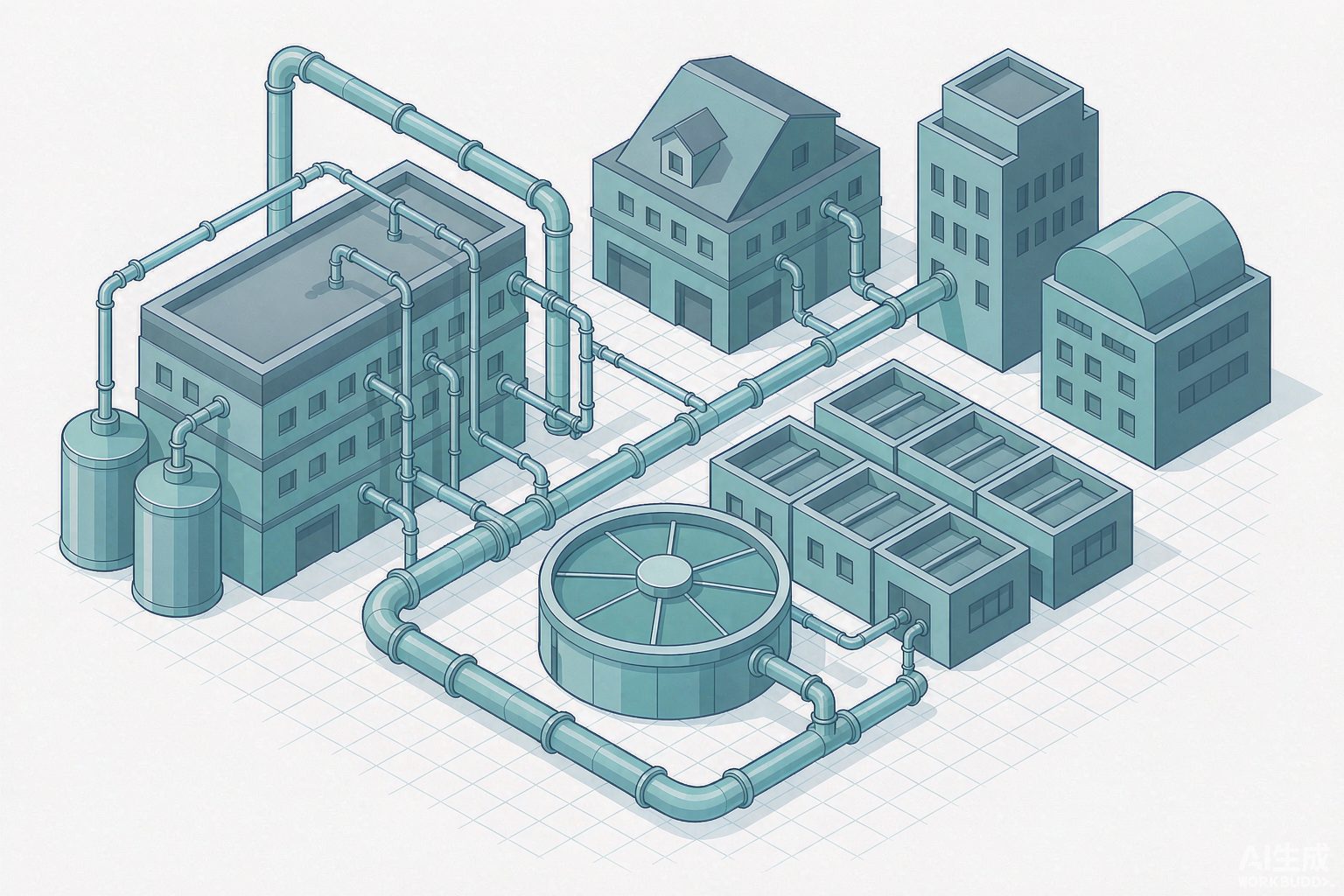
II. The A/B/C of GB/T 31962 Is Not "Three Tiers of Strictness," but Three Tiers of "Whether There Is a Downstream Treatment Facility"
Many people read A, B, and C as "strict, medium, lenient." Looking at the clauses reveals that the direction is exactly the opposite. GB/T 31962—2015, Clause 4.2.1: for wastewater discharged into municipal sewers, b) when secondary treatment is adopted, it shall comply with the provisions of Grade B; c) when primary treatment is adopted, it shall comply with the provisions of Grade C; Clause 4.2.2: when there is no municipal wastewater treatment facility at the end of the sewer, the quality of wastewater discharged into the municipal sewer shall, according to the final destination of the wastewater, comply with the current national and local pollutant discharge standards, and shall comply with the provisions of Grade C. The basis for dividing the three tiers is the capability of the downstream process, not the strictness or leniency of the limits.
Thus the phenomenon arises that "Grade C is instead stricter":
| Control Item (mg/L) | Grade A | Grade B | Grade C | Grade C vs. Grade B |
|---|---|---|---|---|
| Chemical Oxygen Demand / COD | 500 | 500 | 300 | Tightened by 40% |
| Five-day Biochemical Oxygen Demand / BOD₅ | 350 | 350 | 150 | Tightened by 57% |
| Suspended Solids / SS | 400 | 400 | 250 | Tightened by 37.5% |
| Ammonia Nitrogen (as N) | 45 | 45 | 25 | Tightened by 44% |
| Total Nitrogen / TN (as N) | 70 | 70 | 45 | Tightened by 36% |
| Total Dissolved Solids | 1500 | 2000 | 2000 | Same as Grade B |
| Volatile Phenols | 1 | 1 | 0.5 | Tightened by 50% |
| Carbon Tetrachloride | 0.5 | 0.5 | 0.06 | Tightened by 88% |
| Tetrachloroethylene | 0.5 | 0.5 | 0.2 | Tightened by 60% |
There is only one way to read this: Grade C corresponds to "no one else treats it for you at the end of the pipe," so every parameter that the discharger must break down on its own has been tightened, with halogenated hydrocarbons tightened the most (carbon tetrachloride 0.06 vs. 0.5, a 8.3-fold difference). Total Dissolved Solids, however, is the same 2000 under Grade C as under Grade B—because salts are not something biological treatment facilities can remove, so tightening it would be meaningless. Which items in the limit table are tightened and which are not itself constitutes a "list of downstream facility capabilities."
There is one more thing that is easily overlooked: this standard is GB/T, i.e., recommended. Its binding force does not come from the standard itself, but from the discharge permit under the "Regulations on Urban Drainage and Sewage Treatment" and the "Measures for the Administration of Permits for Discharging Urban Sewage into Drainage Networks," as well as the connection agreement signed between the industrial park and the enterprise. The colloquial term "sewer discharge standard" actually turns a recommended standard into a mandatory one — what is truly mandatory are the limits specified in the permit and the terms of the agreement.
III. What truly determines success or failure are two tables: the concentration table and the biodegradability table
Table 1 of GB/T 31962 has 46 items. Among these 46 items, only a limited number can be biologically treated, such as BOD₅, COD, ammonia nitrogen, Total Nitrogen / TN, Total Phosphorus / TP, and animal and vegetable oils; and whether these pollutants can actually be biologically treated is not subject to any threshold in the standard itself. The only thing in the table that can indirectly reflect biodegradability is the B/C ratio calculated from BOD₅ ÷ COD, and it is not a controlled parameter.
Actual measurements from a fine chemicals industrial park in Ningxia quantified this gap: the park is dominated by chemical and pharmaceutical wastewater, and the B/C of most discharging units is less than 0.20 (the commonly used threshold for Aerobic biological treatment is 0.3); some wastewater has a clear inhibitory effect on microorganisms in Activated Sludge, with an inhibition rate greater than 90%; when these pretreated wastewaters are proportionally blended into a "composite influent," the inhibition rate on the Activated Sludge of the municipal wastewater treatment plant still reaches 46%–96% — that is, inhibition exists in all cases, only differing in strength. The study also provides a usable criterion: B/C is positively correlated with oxygen uptake rate OUR, with a correlation coefficient of 0.614 (p less than 0.05).
Another set of actual measurements from an electronics industrial park: in the wastewater after enterprise pretreatment, characteristic pollutants such as benzene series and halogenated hydrocarbons account for 42%, while B/C is only 0.12, directly resulting in a Denitrification efficiency of less than 40% in the subsequent A²/O process.
Placing these two sets of data alongside "all enterprise discharge outlets meet standards" yields the most counterintuitive statement in this industry: the 46 items in the sewer discharge standard are the compliance line for enterprise discharge outlets, not the applicability line for wastewater plant influent. An enterprise meeting the standard only proves that its water is "not so toxic that it cannot enter the pipe network"; it does not prove that the wastewater plant "can treat it to Grade A."
The table below juxtaposes the measured criteria for biodegradability and inhibitory properties. Its most important function is to remind us: measuring only concentration without measuring inhibitory properties is equivalent to doing only the two cheapest items in a physical examination.
| Industrial Park / Wastewater Type | Measured Biodegradability | Inhibitory Criteria | Consequences for the Biological System |
|---|---|---|---|
| A Fine Chemical Industrial Park in Ningxia | Most discharge units are below 0.20 | Inhibition rate of some wastewater exceeds 90%; inhibition rate of combined influent on municipal sludge is 46%–96% | B/C is positively correlated with OUR (r=0.614); toxicity is the limiting factor for effluent improvement |
| An Electronics Industrial Park | B/C 0.12 | Characteristic pollutants such as benzene series and halogenated hydrocarbons account for 42% | A²/O denitrification efficiency is insufficient at 40% |
| A Fine Chemical / Pharmaceutical Industrial Park (Combined Process) | When the proportion of refractory organics exceeds 30%, the performance of conventional Activated Sludge process drops precipitously | Intermediate products after Ozonation still exhibit biological inhibition; biofilm passivation occurs after 6 months of operation | A combined process with spatiotemporal separation of "oxidative ring-opening + biological metabolism" must be adopted |
| A Textile Printing and Dyeing Industrial Park | BOD₅/COD is often below 0.2 | Salinity of 8000–15000 mg/L causes inhibition | Upstream Hydrolysis Acidification must be provided and salt-tolerant bacteria must be enhanced |
Enterprise "Compliant Discharge" and WWTP "System Collapse" Can Coexist
A typical case publicly disclosed by the Jinzhou Municipal Ecology and Environment Bureau provides a complete chain of evidence for this criterion: a certain wastewater treatment plant mainly treats industrial wastewater and domestic sewage from a certain industrial park, with a daily treatment capacity of 0.3 万 t and an actual daily intake of 0.16 万 t; from 2023 年 1 月 30 日 to 2 月 13 日, the Total Nitrogen at the main outlet exceeded the standard intermittently, discharging approximately 2.4 万 t of wastewater with excessive Total Nitrogen in total. The publicly disclosed cause stated in the case is: the influent carbon source concentration was too low and the carbon-to-nitrogen ratio was imbalanced, causing a large number of biological bacteria in the aerobic tank to die, and the pollutant generation volume had exceeded the storage capacity of the emergency regulating tank. Although the enterprise adjusted aeration in the early stage of the exceedance, reduced the aeration volume in the final stage, and added carbon sources, it still did not return to the permitted discharge standard, and was fined 18 万 yuan.
Note the causal order here: it was not that a certain enterprise secretly discharged highly toxic substances, but rather that the influent of the entire park was "too clean"—insufficient carbon sources left Denitrification without electron donors, and Total Nitrogen could not be reduced to nitrogen gas. This also explains why carbon sources are discussed separately below: for a park wastewater treatment plant, the BOD sent from upstream is sometimes a burden and sometimes a raw material.
IV. The Real Ledger: Five Wastewater Treatment Plants in Parks (or Receiving Industrial Wastewater)
The table below lists five publicly verifiable park wastewater treatment plants. The correct way to look at it is not to find the best row, but to identify the gap between "how broad the influent is and how narrow the effluent must be".
| Project | Scale and Investment | Influent and Process Characteristics | Key Effluent and Removal Performance |
|---|---|---|---|
| Qianyang Town Industrial Park, Dandong (Liaoning) | 1 万 m³/d, investment 2460 万 yuan | The park hosts more than 30 enterprises in chemicals, pharmaceuticals, papermaking, textiles, food, etc.; the influent has an extremely low nutrient ratio and fluctuates greatly; the original conventional process could not consistently meet standards for a long time and was once a project listed for supervision by the Central Ecological and Environmental Protection Inspection | Changed to "air flotation + hydrolysis acidification + biochemical tank + high-density sedimentation + sand filtration + catalytic ozonation + activated carbon adsorption"; 1 g ozone can remove 0.5–1.2 g COD; the compliance rate is higher than 99.8% by 2021 年, with an annual average effluent COD of 14.63 mg/L and ammonia nitrogen of 0.38 mg/L |
| Baoshan Industrial and Trade Park Comprehensive Wastewater Treatment Plant (Yunnan) | Phase I 1.5 万 m³/d | Wastewater from a comprehensive industrial park, with poor biodegradability, large fluctuations in water quantity and quality, and characteristic pollutants; fluoride ions need to be controlled to 1.5 mg/L | Removal rates: COD 90%, BOD₅ 93%, SS 97%, TN 77%, ammonia nitrogen 90%, TP 89%, fluoride 69%; effluent meets Grade 1A |
| Wastewater Station of an Electroplating Industrial Park in Jiangsu | Comprehensive reuse 1600 m³/d (newly added 1340), investment 1046.3 万 yuan | Five categories of wastewater undergo segregated pretreatment: chromium-containing, cyanide-containing, nickel-containing, acid-base, and degreasing | In the pretreatment stage: cyanide 98.82%, nickel 99.18%, copper 95.32%, zinc 96.67%, petroleum substances 94.74% |
| A Textile Printing and Dyeing Industrial Park | Investment 5500 万 yuan [to be verified], land area 25 mu | Average influent COD 4500 mg/L; salinity 8000–15000 mg/L; integrated according to "classified collection + segregated treatment + centralized advanced treatment" | After coagulation 2800 (reduced by 37.8%) → after hydrolysis acidification 2100 (further reduced by 25%) → after biological contact oxidation 350 (reduced by 83.3%) → after ozone-biological activated carbon 80, total removal 98.2% |
| Huangsha New Materials Park, Sanyuan District, Fujian | Design 5000 m³/d | Chemical wastewater, with high chloride and many characteristic pollutants; most enterprises have not pretreated chloride ions, and the wastewater treatment plant has long failed to control chloride ions | Actual maximum 7500 m³/d (overload 50%); COD and fluoride ion concentrations at the discharge outlet both exceeded the standard by nearly 40% |
There are three figures in this table worth remembering separately:
First, 1 g ozone removes 0.5–1.2 g COD. This is a coefficient that can be directly used to estimate the scale and operating cost of the advanced treatment stage (more practical than "ozone utilization rate"). The annual average effluent COD at Dandong Qianyang is 14.63 mg/L, which is a concrete example of the industry experience that "the advanced treatment stage reduces COD to below 20 mg/L."
Second, the contribution of the pre-treatment stage is often underestimated. In the printing and dyeing park case: coagulation 37.8% and hydrolysis acidification 25%, two non-biological/semi-biological stages combined, contributed about 60% of the front-end reduction, while the biological contact oxidation stage was the main force in bringing COD from 2100 down to 350. This is consistent with the conclusion of the printing and dyeing article in this series 10-01 — flow separation and the pre-treatment stage determine whether the downstream can run effectively.
Third, overload and monitoring credibility are independent variables beyond design values. The Huangsha Park was designed for 5000 m³/d but actually reached a maximum of 7500 m³/d, exceeding by 50%; the same provincial environmental protection supervision rectification plan also stated: the park's wastewater treatment plant "still uses ordinary oxidation processes for treating general industrial wastewater and cannot effectively remove characteristic pollutants from the chemical industry"; online monitoring for characteristic pollutants such as fluoride ions has not been installed at the influent end, and COD and total phosphorus automatic monitoring equipment has been damaged for a long time without repair; online monitoring equipment has not been regularly calibrated, and on-site standard sample comparison shows that COD and total phosphorus monitoring values are severely low (error −40%), far exceeding the allowable error of 10% specified in relevant standards. Design scale, process suitability, monitoring credibility — none of these three things are on the "enterprise discharge outlet" side.
V. The downstream line: Grade 1A is the "effluent," not the "influent"
The most common receiving standard for centralized wastewater treatment plants in industrial parks is GB 18918—2002 Grade 1A. Its limits are as follows:
| Control Parameter | Grade 1A Limit (mg/L) | Control Parameter | Grade 1A Limit (mg/L) |
|---|---|---|---|
| Chemical Oxygen Demand / COD | 50 | Ammonia Nitrogen (as N) | 5(8) |
| Five-day Biochemical Oxygen Demand / BOD₅ | 10 | Total Nitrogen (as N) | 15 |
| Suspended Solids / SS | 10 | Total Phosphorus (as P) | 0.5 |
| Animal and Vegetable Oils | 1 | Petroleum Substances | 1 |
| Color (times) | 30 | Anionic Surfactants / LAS | 0.5 |
| Total Mercury | 0.001 | Total Cadmium | 0.01 |
| Total Chromium | 0.1 | Hexavalent Chromium | 0.05 |
| Total Arsenic | 0.1 | Total Lead | 0.1 |
(Values outside the parentheses are the control indicators when the water temperature is greater than 12 ℃, and values inside the parentheses are the control indicators when the water temperature is not greater than 12 ℃.) Putting the upper limit for discharge to the sewer network together with this effluent line allows you to calculate at least how much removal rate the wastewater treatment plant must contribute — this is the first account that should be calculated in a sewer connection assessment:
| Control Parameter | Discharge Limit (Grade B) | Effluent Requirement (Grade 1A) | Minimum Required Removal Rate (Calculated) |
|---|---|---|---|
| Chemical Oxygen Demand / COD | 500 | 50 | 90.0% |
| Five-day Biochemical Oxygen Demand / BOD₅ | 350 | 10 | 97.1% |
| Suspended Solids / SS | 400 | 10 | 97.5% |
| Ammonia Nitrogen (as N) | 45 | 5 | 88.9% |
| Total Nitrogen / TN (as N) | 70 | 15 | 78.6% |
| Total Phosphorus / TP (as P) | 8 | 0.5 | 93.8% |
The way to read this table is: If all discharge enterprises discharge at the Grade B limit, the wastewater treatment plant must stably achieve removal rates of COD 90%, BOD₅ and SS of approximately 97%, and TN 79% in order to produce Grade 1A effluent.This is a calculable account, but it simultaneously exposes two loopholes: first, these removal rates are calculated on a "concentration" basis and do not involve the biodegradability of the influent at all; second, the Grade B limit (COD 500) itself is set on the premise that "there is a secondary treatment facility downstream," and does not promise that "this facility can press 500 down to 50."
One of Jiangsu's access principles states this even more rigidly—the dual-control principle of total-quantity compliance: for industrial enterprises discharging into urban sewage treatment plants, the total quantity of wastewater and pollutants discharged shall not exceed the total-quantity control limits for connection to the sewer system as approved in the environmental impact assessment and verified in the pollutant discharge and drainage permits; at the same time, the total quantity of a given characteristic pollutant discharged by the urban sewage treatment plant shall not exceed the sum of the total discharge quantities of that characteristic pollutant calculated for all connected industrial enterprises according to the direct discharge limits of the corresponding industry standards. The engineering implication of this statement is: enterprises comply according to the "indirect discharge limits," yet the sewage plant must calculate total quantities according to the "direct discharge limits"—the difference between the two must be removed by the sewage plant within its own process. And for characteristic pollutants such as fluoride and volatile phenols, conventional biological treatment facilities essentially provide no removal capability (in the Baoshan case, the fluoride removal rate was only 69%, and it was achieved by chemical precipitation). The gap between "enterprise compliance" and "sewage plant compliance" is the question that connection assessment truly has to answer.
The same Jiangsu principles also provide two magnitudes that can be used directly for planning: provincial-level or higher industrial parks with a total industrial wastewater volume exceeding 1 万 t/d, or areas where the urban sewage treatment plant has a connected industrial wastewater proportion exceeding 40%, should in principle be equipped with a dedicated industrial wastewater treatment plant. "Connected volume proportion 40%" is one of the most explicit quantitative thresholds retrieved in this series—it turns "whether a park should build its own dedicated sewage plant" from a debate into a calculable ratio.
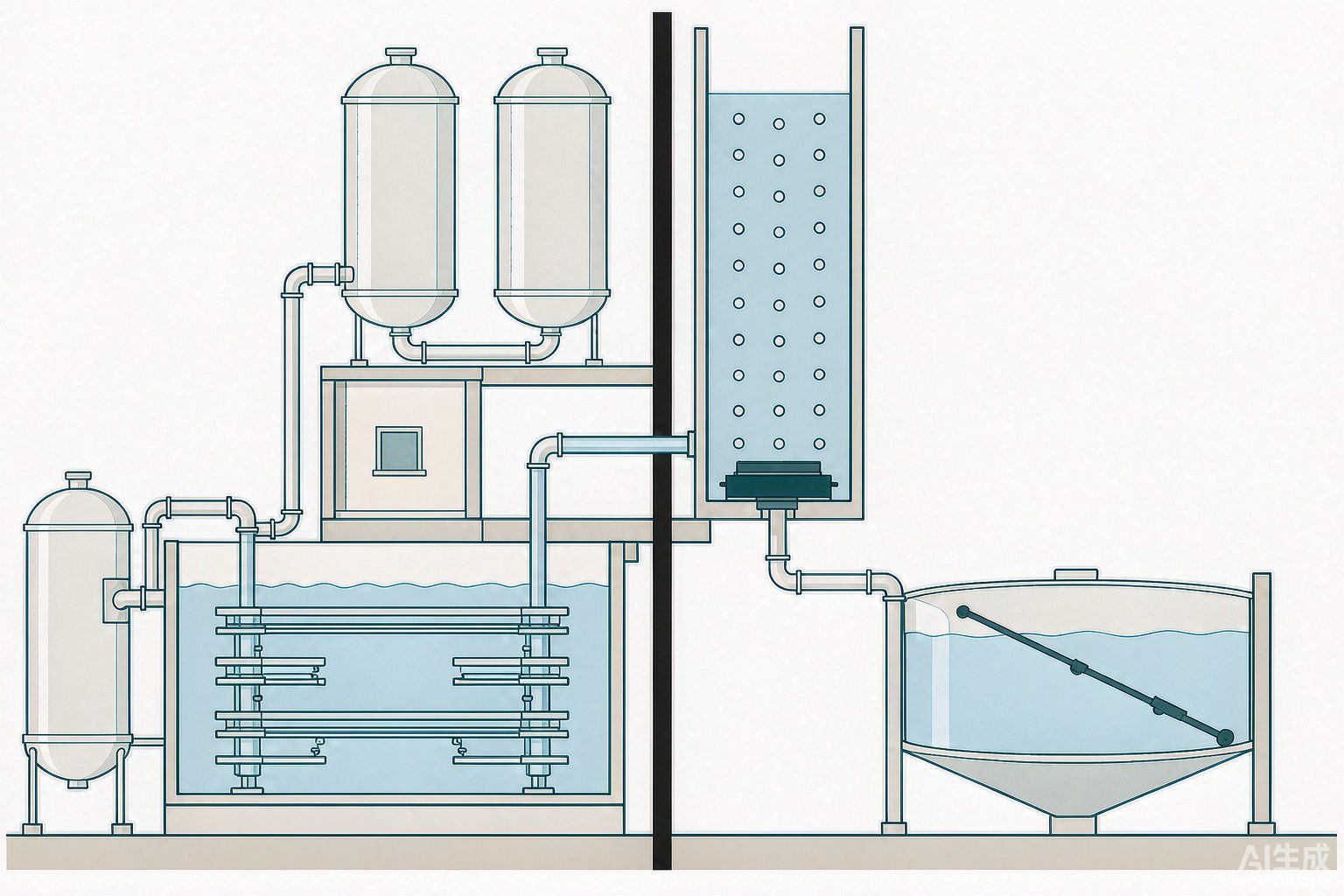
VI. Carbon source: the only thing in industrial wastewater that can "be sold in reverse for money"
The clues from the previous sections converge on carbon source. The influent of a park sewage plant has a systemic problem: the carbon-to-nitrogen ratio is generally lower than 4:1, while denitrification requires a carbon-to-nitrogen ratio of 5–7:1 (the engineering range given in multiple public technical materials). When carbon source is insufficient, nitrate nitrogen cannot be reduced to nitrogen gas—this is precisely the mechanism of the Jinzhou case. Thus, what enterprises see as "organic matter that must be treated at a cost" is, in the eyes of the sewage plant, a raw material that must be purchased at a cost.
The connection guidelines of Luhe County wrote this relationship into the system. It divides industrial wastewater into three categories: prohibited from connection (containing heavy metals, difficult to biodegrade, biologically toxic, high salinity), encouraged for connection, and others. One category encouraged for connection is "industrial wastewater with high-quality carbon source and good biodegradability, such as food processing, brewing, alcohol, and fruit juice beverages"; and it explicitly states: operating units are encouraged, for biodegradability indicators that do not affect the environment and the safe operation of the sewage treatment plant (such as BOD₅, etc.), to negotiate with connected enterprises under the principles of "green and low-carbon" and "mutual benefit" to determine discharge concentration and discharge volume, and to explore a sewage treatment agency model. Shenzhen allows wastewater with good biodegradability to apply for relaxed pretreatment limits, and the logic is the same.
Translating this institution into money gives the self-calculation table below. Basis: taking the removal of 25 mg/L Total Nitrogen (influent TN 40, effluent not exceeding 15), with a denitrification carbon-to-nitrogen ratio of 5:1 (i.e., 5 mg COD required per 1 mg TN removed) as an example, sodium acetate at pure product 1 g is approximately equivalent to 0.58 g COD, and trisodium acetate trihydrate content is calculated at 58%.
| Calculation Step | Formula | Result |
|---|---|---|
| Total Nitrogen / TN to be removed | 40 − 15 | 25 mg/L |
| Chemical Oxygen Demand / COD required per ton of water (at C/N 5∶1) | 25 × 5 | 125 mg/L, i.e. 125 g/m³ |
| Converted to pure sodium acetate | 125 ÷ 0.58 | 215.5 g/m³ |
| Converted to sodium acetate trihydrate (content 58%) | 215.5 ÷ 0.58 | 371.6 g/m³ |
| Daily cost for 1,000 tons of water (at 3000 元/t) | 0.3716 t × 3000 元 | Approx. 1115 元/d, equivalent to approx. 1.1 元/m³ |
| Carbon source as a share of direct operating cost of the wastewater treatment plant | Based on publicly available data | Approx. 20%~35% |
One-line conclusion: To make up for this 25 mg/L Total Nitrogen / TN gap, the wastewater treatment plant has to spend over one thousand yuan per day on carbon source for every 1,000 tons of water, amounting to about 41 万 yuan per year; yet the same batch of BOD, if delivered with the wastewater from upstream food and brewing enterprises, costs nothing. This is why "encouraging connection" is not just a polite phrase. Conversely, if what comes from upstream is electronic wastewater with a B/C of 0.12, the wastewater treatment plant not only has to buy carbon source for itself, but also has to pay the price of system recovery for biological inhibition.
VII. Class I Pollutants and the Red Line of "Dilution"
The discharge-to-sewer standard table 1 also includes heavy metal items such as total nickel (1), total chromium (1.5), hexavalent chromium (0.5), and total cadmium (0.05), which are easily misread as "as long as the levels measured at the connection point do not exceed these figures, it is fine." This directly conflicts with the regulatory provisions on sampling points.
The Integrated Wastewater Discharge Standard GB 8978—1996 lists total mercury, alkyl mercury, total cadmium, total chromium, hexavalent chromium, total arsenic, total lead, total nickel, benzo(a)pyrene, total beryllium, total silver, total α radioactivity, and total β radioactivity — 13 categories in total as Class I pollutants, requiring that regardless of industry, discharge method, or functional category of the receiving water body, sampling shall be conducted at the outlet of the workshop or workshop treatment facility. The Water Pollution Prevention and Control Law further stipulates that industrial wastewater containing toxic and hazardous water pollutants shall be collected and treated separately by category, and dilution discharge is prohibited. Shenzhen's regulations put this into operational terms: pollutant discharge entities shall set up discharge outlets and monitoring points meeting regulatory requirements at the workshop where Class I water pollutants or toxic and hazardous water pollutants are generated, or at the outlet of the workshop wastewater treatment facility, and the wastewater may only be discharged into the comprehensive wastewater treatment facility after treatment meets the standard; and Class I pollutants are excluded from the scope of "eligible to apply for relaxed pretreatment limits."
Therefore, "total nickel at the connection point not exceeding 1 mg/L" and "total nickel must meet the standard at the workshop outlet" are two different matters, and the latter takes priority. Mixing nickel-containing wastewater with acid-base wastewater and diluting it to below 1 mg/L does not constitute compliance under the law. Among the 5 water-related pollution cases published by 2024 年, there is exactly such a scenario: a company's nickel-containing wastewater had a total nickel concentration exceeding the permissible discharge standard of the Integrated Wastewater Discharge Standard by more than ten times, and the nickel-containing wastewater was mixed and diluted with other wastewater, failing to discharge in compliance at the workshop or production facility outlet. This is the same conclusion as in the heavy metals article of this series 09-28 — for determining compliance of Class I pollutants, first look at the sampling point, then at the numerical value.
For park managers, this red line directly determines the branching of the process route: wastewater containing Class I pollutants must be treated separately within the enterprise plant (or at the park's segregated pretreatment station) to meet the workshop outlet limits; the park's centralized wastewater treatment plant does not have the qualification to accept this portion of pollutants. This is also the reason why Jiangsu includes electroplating and other industries in the category of "certain pollutants must meet direct discharge limits before connection," and why Luhe directly includes "heavy metal-containing wastewater" in the prohibited connection category.
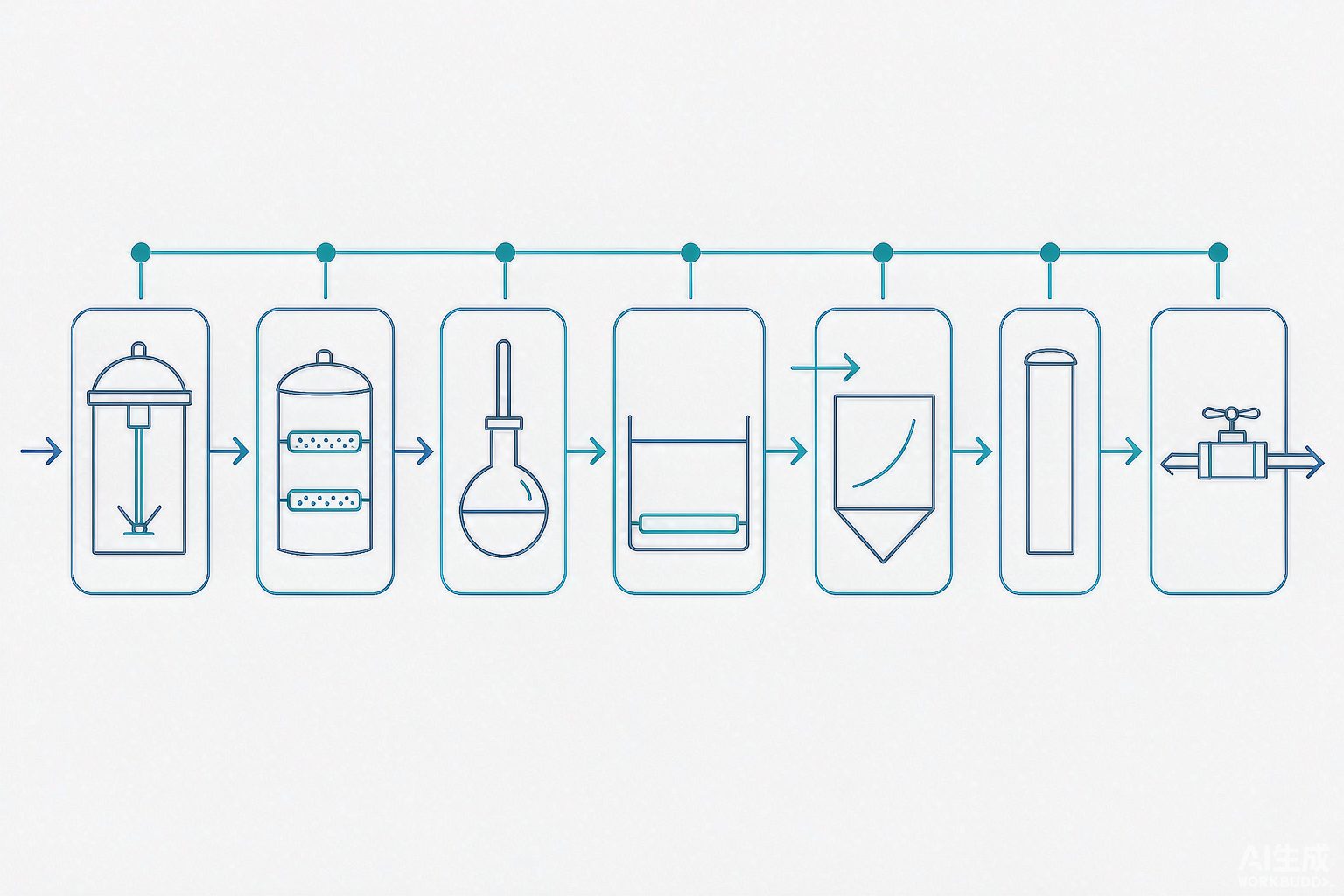
VIII. Five Engineering Truths
1. The volume of equalization tanks and emergency tanks is designed for "routine fluctuations," not for "illegal discharge." In publicly disclosed park shock cases, after a batch of unreported high-salinity, bio-inhibitory waste mother liquor entered the centralized station, within 48 小时 the anaerobic system's gas production plummeted and volatile fatty acids surged dramatically; COD removal rate dropped from the normal 80% to less than 20%, followed by a decline in nitrifying bacteria activity and simultaneous ammonia nitrogen exceedance; afterward, new sludge was added and the microbial community was re-acclimated, taking nearly a month to restore normal operation. A similar Guangzhou case was even more abrupt: after the influent was shocked by hydrofluoric acid, two CAST tanks completely lost effectiveness and one was halved in effectiveness; through sludge diversion, dosing of glucose and sodium carbonate, and transporting sludge from a municipal wastewater treatment plant for inoculation, the abnormal operation duration was 27 小时. After the saline biological system at Gulei Petrochemical was shocked, sludge regeneration "took nearly two weeks." The recovery time from a shock ranges from hours to months, while the cost of preventing it is a few online instruments plus one emergency tank.
2. Online monitoring is the lifeline of sewer discharge management, not a formality. In the rectification plan for Huangsha Industrial Park, "monitoring and surveillance existing in name only" was listed as a separate issue: effective metering of enterprise discharge volumes was absent, online monitoring of characteristic pollutants such as fluoride was not installed at the inlet, automatic monitoring equipment for COD and Total Phosphorus had been out of repair for a long time, online equipment was not calibrated periodically, and on-site standard sample comparison showed a monitoring value error of −40%, far exceeding the allowable error of 10% specified in relevant standards. When influent monitoring itself reads low by 40%, any discharge acceptance assessment, tiered pricing, and early-warning linkage based on it are built on erroneous data.
3. Tiered pricing is the most direct tool for translating "treatment difficulty" into price. The measures of the Ningdong Base stipulate: wastewater treatment fees in the industrial park shall be charged on a tiered basis according to pollutant concentrations, with the base price applied when water quality meets the discharge acceptance standard, and tiered charging based on the exceedance ratio of factors such as TDS, COD, TN, and fluoride when the discharge acceptance standard is exceeded. Choosing TDS and fluoride as the pricing factors shows that what is anchored is not the easiest-to-measure COD, but the two items that are hardest to treat and that centralized facilities genuinely cannot remove. The Lianyungang Petrochemical Base took a different path — agreement-based discharge acceptance featuring "quality-based pricing and payment by performance", breaking away from uniform discharge limits, with the operating unit signing "one enterprise, one policy" agreements with upstream enterprises.
4. "One enterprise, one pipe" solves traceability, not treatment. Ningdong requires the gradual advancement of "one category, one pipe" and "one enterprise, one pipe" pipeline network construction, the use of above-ground pipes for all wastewater pipelines in new projects, and in principle only 1 industrial wastewater discharge outlet(s) and 1 rainwater discharge outlet(s) per industrial enterprise, supported by signage, video surveillance, flow meters, automatic control valves, and online monitoring; the Lianyungang Petrochemical Base has built a 12 万 m³ wastewater allocation tank farm, adopting "one enterprise, one pipe, one enterprise, one tank, primary collection, two-stage allocation," with the tank farm capable of holding up to 10 万 t of accidental wastewater. The value of these facilities lies in making "who discharged it" traceable and turning "mixed together" into "allocable"; but for refractory organics and salinity already in the water, pipeline network renovation itself provides no removal rate whatsoever. When reviewing "whether one enterprise, one pipe can solve the compliance problem," this point must be made clear.
5. The most easily underestimated cost item for industrial park wastewater plants is not electricity consumption, but chemicals and carbon sources. Public reporting from Liaoning Province gives: chemical costs account for more than 15% of wastewater treatment costs in industrial parks; carbon sources (methanol, sodium acetate, etc.) must be supplemented in large quantities due to imbalanced influent nutrient ratios, and the carbon source cost calculated in the previous section accounts for approximately 20%–35% of direct operating costs. Together, these two items already exceed the electricity consumption share of most industrial park wastewater plants, and their magnitude is mainly determined by influent water quality structure, not by the plant's own operational level.
IX. Compressing the Conclusion into One Sentence
The "discharge acceptance standard" for centralized wastewater treatment plants in industrial parks is an interface value jointly derived from three rulers — upstream industry standard indirect discharge limits, sewer water quality standards, and industrial park discharge acceptance agreements — together with one downstream Grade 1A effluent line. It has three characteristics:
First, it is a range rather than a point. The three documents may differ by several times for the same parameter (COD at Level C 300, Level B 500, with some industries having separate values in their inter-industry discharge columns), and the order of determination decides which one applies; without clear qualifiers, the word "compliant" carries no information.
Second, it only manages "concentration," not "whether it can be treated." An enterprise whose 46 indicators all meet the standard may still cause the centralized facility's Total Nitrogen to exceed the limit for more than ten consecutive days because its B/C ratio is only 0.12, or because insufficient influent carbon source destabilizes the carbon-to-nitrogen ratio. Biodegradability and biological inhibition must be assessed as a second table independent of the concentration table.
Third, it is back-calculated from downstream facility capacity. Level C is stricter than Level B because there are no treatment facilities at the end; special industries must pre-treat according to direct discharge limits because centralized facilities lack the capacity to remove their characteristic pollutants; carbon sources can be negotiated and relaxed because centralized facilities genuinely lack carbon sources. Treating the "discharge acceptance standard" as a fixed number to be memorized is the most common starting error in this type of technical document.
To sum up in one sentence: Discharge acceptance is not moving wastewater from one discharge outlet to another, but writing "who is responsible for removing which segment of pollutants" into a division-of-labor table using standards and agreements. If the division-of-labor table is unclear, compliance exists only on paper.
References
- GB/T 31962—2015 "Water Quality Standard for Sewage Discharged into Urban Sewers", Articles 4.2.1, 4.2.2 and Table 1 (limit values for a total of 46 controlled items under three levels A/B/C).
- National Standard Information Public Service Platform GB/T 31962—2015 standard information page: issued on 2015-09-11, implemented on 2016-08-01, and the review conclusion on 2025-08-04 was to remain in force.
- GB 18918—2002 "Discharge Standard of Pollutants for Municipal Wastewater Treatment Plant", Level I-A standard values and 2025 年 amendment.
- GB 18918—2002 Foreword: Industrial wastewater discharged into municipal wastewater treatment plants shall meet the corresponding limit values specified in GB 8978, relevant national industry discharge standards and local discharge standards.
- GB 8978—1996 "Integrated Wastewater Discharge Standard", Class I pollutants (13 types) and sampling point provisions (at the outlet of the workshop or workshop treatment facility).
- "Water Pollution Prevention and Control Law of the People's Republic of China": Industrial wastewater containing toxic and harmful water pollutants shall be collected and treated separately and shall not be discharged by dilution.
- "Regulations on Urban Drainage and Sewage Treatment" (State Council Decree No. 641, effective 2014-01-01), Articles 21, 22 and 31.
- "Measures for the Administration of Permits for Discharging Urban Sewage into Drainage Networks" (regulation of the Ministry of Housing and Urban-Rural Development, effective 2015-03-01, amended in 2022 年).
- "Regulations on Ecological and Environmental Protection of the Shenzhen Special Economic Zone", Articles 57 to 59: discharge outlets and monitoring points shall be set at the workshop outlet; wastewater with good biodegradability may apply for adjustment of the pretreatment discharge concentration limits.
- Jiangsu Provincial Department of Ecology and Environment, "Access Conditions and Assessment Principles for Industrial Wastewater Incorporated into Municipal Wastewater Treatment Plants": seven access and assessment principles; thresholds of 1 万 t/d and 40%; some industries must meet direct discharge limits before being connected.
- "Measures for the Administration of Industrial Enterprise Wastewater Collection and Treatment in the Ningdong Base (Trial)" (issued on 2026-01-20, effective 2026-03-01), Articles 6, 7, 8, 12 and 20.
- "Guidelines for the Management of Industrial Wastewater Connection to Municipal Wastewater Treatment Plants in Luhe County (Trial)" (2025-03-24), Article 6 (three categories: prohibited connection / encouraged connection / others) and Article 11.
- A public Q&A on the government affairs disclosure website of a certain prefecture-level city, "What are the standards and requirements for sewage connection to the network?": provides a general standard table for influent connection to the park wastewater treatment plant (among which total arsenic and total lead deviate from the current national standards).
- "China Environment News" 2026-09-17 "Industrial Wastewater Treatment at Lianyungang Petrochemical Base Achieves Breakthroughs": 12 万 m³ wastewater allocation tank area; one enterprise one pipe, one enterprise one tank, primary collection, two-stage allocation; pricing by quality, payment by effect.
- Jinzhou Municipal Bureau of Ecology and Environment, "Public Notification of 2 Typical Cases of Environmental Violations": a case of excessive total nitrogen at a wastewater treatment plant (influent carbon source too low, carbon-to-nitrogen ratio imbalance causing massive death of biological bacteria; about 2.4 万 t of excessive wastewater; fine of 18 万 yuan).
- "Study on Wastewater Biodegradability and Biological Inhibition in a Fine Chemical Industrial Park in Ningxia", Acta Scientiae Circumstantiae 2024, 44(6): 123—131 (B/C of each unit mostly less than 0.20; inhibition rate of comprehensive influent on municipal sludge 46%~96%).
- "Dilemmas and Breakthroughs in Wastewater Treatment Processes in Modern Industrial Parks" (commercial technical article, not peer-reviewed): characteristic pollutants proportion in a certain electronics park 42%, B/C 0.12, A²/O denitrification efficiency less than 40%.
- Liaoning Provincial Department of Science and Technology reprinted "Liaoning Daily": upgrading and renovation of the wastewater treatment plant in the industrial park of Qianyang Town, Dandong (1 万 m³/d, 2460 万 yuan; 1 g ozonation removes 0.5~1.2 g COD; chemical cost accounts for more than 15%).
- "Design and Operation of the Comprehensive Wastewater Treatment Plant in Baoshan Industry and Trade Park", Water Purification Technology: 1.5 万 m³/d; removal rates COD 90%, BOD₅ 93%, SS 97%, TN 77%, ammonia nitrogen 90%, TP 89%, fluoride 69%.
- "Design and Operation of Wastewater Treatment Plants in Electroplating Industrial Parks" (reprinted by BJX Environmental Protection Network, 2020-08-19): an electroplating park in Jiangsu 1600 m³/d, investment 1046.3 万 yuan; cyanide 98.82%, nickel 99.18%.
- "Park Wastewater Treatment | Impact Hazards and Lessons of Abnormal Enterprise Discharge on Centralized Stations" (commercial technical article, not peer-reviewed): in a certain chemical park, COD removal rate within 48 小时 dropped from 80% to less than 20%, taking nearly one month to recover.
- Treatment process of a certain industrial wastewater treatment plant in Guangzhou impacted by unidentified wastewater (commercial technical article, not peer-reviewed): 2019-08-29 hydrofluoric acid illegal discharge, two CAST tanks failed, one reduced to half effectiveness, recovery in 27 小时.
- "Fujian Daily" (New Fujian) 2023-07-18 "Gulei Petrochemical Public Engineering Division: Prescribing the Right 'Remedy' to Remove the 'Root Cause'": sludge poisoning in the saline biochemical system, recovery in nearly two weeks.
- "Case Study on Emergency Regulation of Wastewater Treatment Plants under the Impact of Industrial Toxic Wastewater", Modern Engineering Technology 2026 年 Issue 4: a wastewater treatment plant in Anhui was inhibited by phenols, cyanide and heavy metals, and recovered treatment capacity in about one week.
- Sanyuan District People's Government of Fujian, "Rectification Plan for Problems Fed Back from Provincial Environmental Protection Supervision and Inspection of Huangsha New Material Circular Economy Industrial Park" (2023-06-01): designed for 5000 m³/d but actual maximum 7500 m³/d; COD and fluoride ion at the discharge outlet exceeded the standard by nearly 40%.
- A high-COD wastewater treatment engineering case in a certain textile printing and dyeing industrial park (commercial material, not peer-reviewed): influent COD 4500 mg/L, staged removal rates 37.8%/25%/83.3%, total removal 98.2%.
- Public calculation basis for sodium acetate carbon source dosage: 1 g sodium acetate is approximately equivalent to 0.58 g COD, denitrification carbon-to-nitrogen ratio taken as 5∶1; carbon source accounts for about 20%~35% of direct operating costs.
- Public information table for Level I-A of the "Discharge Standard of Pollutants for Municipal Wastewater Treatment Plant" (environmental information disclosure documents from multiple locations): COD 50, BOD₅ 10, SS 10, ammonia nitrogen 5 (8), TN 15, TP 0.5, color 30, LAS 0.5 mg/L.
This article is the Nth in the industrial water treatment technology series. Data sources have been cited item by item in the main text and references; all commercial technical materials and commercial engineering cases are marked as "not peer-reviewed" and are intended for directional reference only, subject to on-site bench tests and actual measurements. Values marked with [To Be Verified] in the text are recommended to be checked against the original sources before publication.
