



 Nationwide multi-industry (integrated steel enterprises / steel rolling processi
 Pilot to full-scale engineering (hundreds to tens of thousands of m³/d)
Steel Pickling and Cold Rolling Wastewater: Spent Acid Is Not Wastewater, but a Diluted Stream of Hydrochloric Acid
Cold rolling wastewater is widely recognized as the most difficult stream to treat in the metallurgical industry. But the difficulty lies not in how toxic the chromium-bearing stream is, but in the fact that six streams require six sets of treatment logic, and one of them—waste acid—should never have entered the wastewater treatment station in the first place. Using the original text of the GB 13456—2012 publication, the Ministry of Ecology and Environment's "Guidelines for Environmental Management of Hazardous Waste: Steel Rolling Processing," and publicly available engineering data from Taiyuan Iron & Steel (TISCO) and Baosteel, this article breaks down three issues: whether waste acid should go to the regeneration furnace or the neutralization tank, whether the denominator for water discharge per ton of steel is crude steel or steel products, and whether cold rolling sludge counts as hazardous waste.
I. The difficulty lies not in concentration, but in the number of streams: cold rolling wastewater is "six streams sharing one station"
The cold rolling process chain is: pickling (removing iron oxide scale after annealing) → cold rolling → annealing → degreasing → galvanizing, color coating, or temper rolling. Each stage has its own stream of water, and the first treatment step for these six streams hardly overlaps. The Ministry of Ecology and Environment's "Guidelines for Environmental Management of Hazardous Waste: Steel Rolling Processing" counts the hazardous waste generation stages of hot rolling and cold rolling from "hot rolling turbid circulating water treatment, oil mist purification" all the way to "pickling, cold rolling, emulsion purification and impurity removal, waste emulsion treatment, metal surface treatment, wastewater treatment, oil mist purification"—seven stages in total—which is already a breakdown of the wastewater station counted one by one.
| Wastewater Category | Main Source Units | Characteristic Pollutants | First-Stage Process |
|---|---|---|---|
| Neutral Salt and Chromium-Containing Wastewater | Stainless steel hot-rolled/cold-rolled strip annealing and pickling, carbon steel continuous hot-dip galvanizing | Cr⁶⁺, total chromium, sulfate | Two-stage reduction (pH 2~3) |
| Acidic Wastewater | Pickling units, acid regeneration station, fresh acid station | pH, total iron, fluoride | Lime neutralization + Aerobic oxidation |
| Heavy Oil (Emulsion) Wastewater | Cold rolling mill emulsion system | Petroleum hydrocarbons, COD, surfactants | Demulsification + Air flotation |
| Dilute Alkali Oil (Dilute Oil) Wastewater | Degreasing, temper rolling, cleaning sections | Petroleum hydrocarbons, COD, alkalinity | Air flotation + Biological treatment |
| Temper Rolling Solution Wastewater | Temper rolling units | COD, corrosion inhibitors | Merged into heavy oil system for treatment |
| Hot Rolling Turbid Circulating Water | Hot rolling mill descaling, cooling | Iron oxide scale, floating oil | Cyclone sedimentation + Oil removal + Filtration |
The publicly available design data of Baosteel Stainless Steel Co., Ltd. indicate the actual magnitude of these six wastewater streams: the cold rolling line produces more than 200 ten thousand tons of stainless steel and carbon steel annually, of which neutral salt and chromium-containing wastewater and acidic wastewater together amount to 1 100~3 200 m³/d, dilute oil wastewater 300~2 100 m³/d, heavy oil wastewater only 20~350 m³/d, while the quantity of temper rolling solution is so small that it is only 300 kg per month, which is directly merged into the heavy oil system without separate treatment.
Please note the water volume ratio here—when the chromium-containing wastewater is calculated separately, "the total water volume shall not exceed 30 m³/h", which is not even a fraction of the whole wastewater treatment station. Yet it is precisely this smallest stream that determines how the piping of the entire station is divided, where sampling points are located, and which valves must be interlocked. The reason lies in the standard clauses in the next section: its assessment point is at the workshop outlet, and it does not have the option of "being allowed to relax once discharged into the wastewater treatment plant".
II. The First Fork: Does the Waste Acid Go to the Regeneration Furnace or the Neutralization Tank
Article 4.14.3 of the Environmental Management Guide for Hazardous Wastes: Steel Rolling Processing contains only one sentence, but it is the policy basis for the entire technical route: "Waste acid generated by the cold rolling process should preferably adopt the regeneration technology proposed in the Best Available Techniques Guidance for Pollution Prevention and Control in Steel Rolling Processes of the Iron and Steel Industry (Trial) (HJ-BAT-006) for comprehensive utilization." This sentence divides waste acid and acidic wastewater into two categories—acidic wastewater is water, while waste acid is material.
| Comparison Item | Acid Regeneration Route | Lime Neutralization Route |
|---|---|---|
| What happens to the waste acid | Iron salts are hydrolyzed at high temperature, and the acid is recovered as HCl gas | The acid is neutralized into salts, all of which remain in the water |
| Outputs | Regenerated hydrochloric acid (16%~18%) + iron oxide powder | Neutralized sludge (requires secondary landfill disposal) |
| Consumption | Fuel, electricity, cooling water; high capital investment | Lime (CaO), alkali, flocculant; low capital investment |
| Loop | Hydrochloric acid returns to the pickling tank; iron powder serves as raw material for magnetic materials | One-way: acid in, sludge out |
| Applicable scale | Large cold-rolling / mixed acid regeneration lines | Small and medium pickling lines, plants without regeneration facilities |
| Main risks | Condensation corrosion, crystallization blockage, hydrofluoric acid tail gas | Large sludge volume, secondary pollution from lime residue |
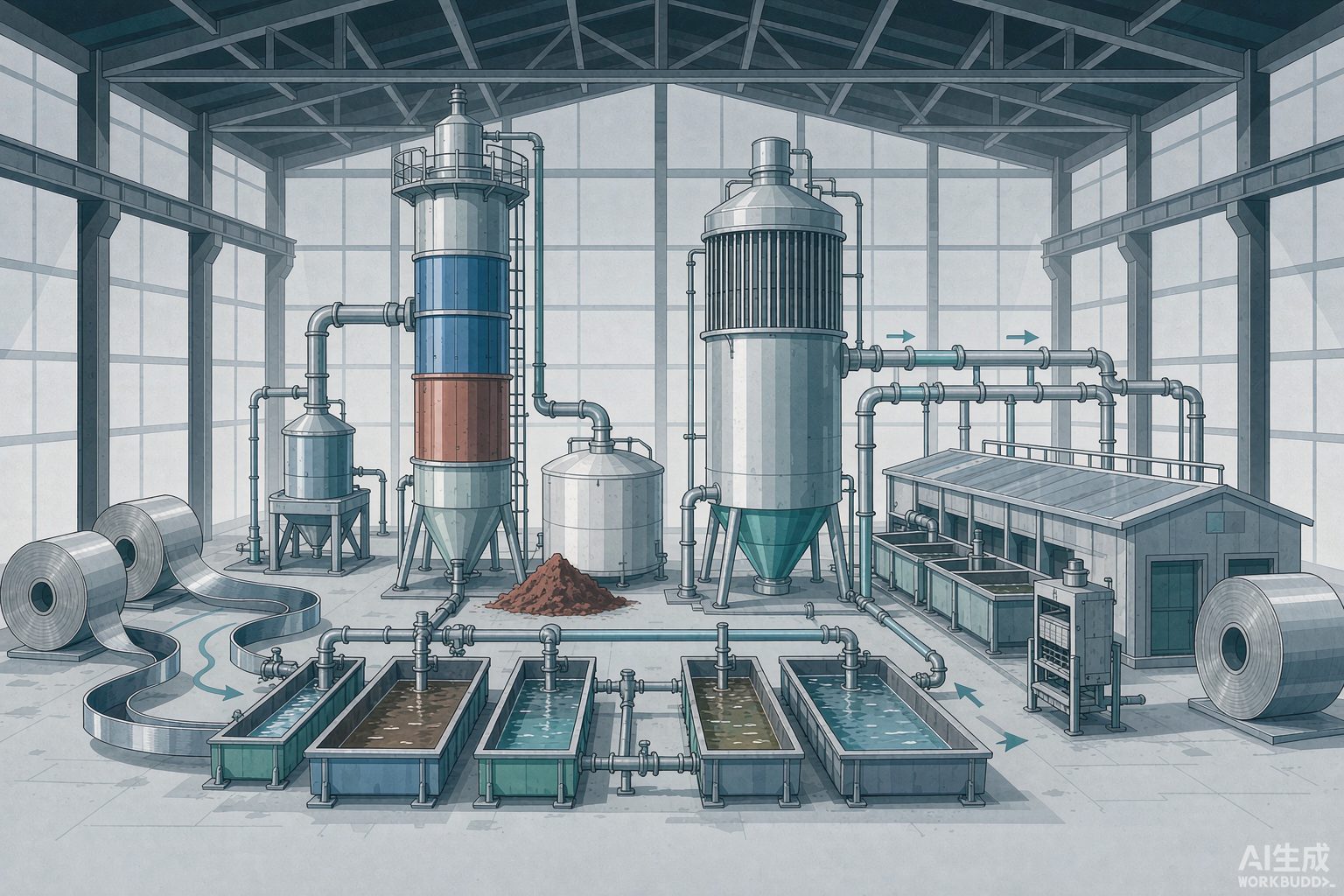
The economics of the two routes are stated plainly in public data. The mixed acid regeneration project of TISCO Stainless Steel Cold Rolling Plant involved an investment of 2.76 亿 yuan, was designed and installed by ANDRITZ, adopted the spray roasting process, and has three units with an annual processing capacity of 15.8 万 m³. After commissioning, the results were: hydrofluoric acid recovery rate above 97%, nitric acid recovery rate above 60%, and the recovered iron oxide powder is rich in chromium and nickel and can be used directly as steelmaking raw material; annual savings of lime 25 116 t, with a significant reduction in sludge shipped offsite; the nitrogen oxide content emitted during the mixed acid regeneration process is only 20 ppm, one fifth of the national standard (100 ppm). As of the statistical cutoff of that report, the plant had treated 3.2 万 m³ of waste acid liquid, produced 2.5 万 m³ of usable regenerated acid, and recovered 1 233.5 t of iron powder; in just the four months from 5 to 8 月, it reduced the use of new nitric acid by 1 341 t and new hydrofluoric acid by 1 347 t, saving 1.4 万 m³ of fresh industrial water for acid blending and 0.8 万 m³ of demineralized water, generating benefits of 1 933 万 yuan.
The same type of Ruthner spray roasting technology introduced by the cold rolling plant and the pickling and galvanizing plant of Handan Iron and Steel Group has been recorded in publicly available literature as achieving a hydrochloric acid regeneration rate of up to 99.1%, yielding Fe₂O₃ powder with a purity of no less than 99.3%. A technology compilation by the economic affairs department of the Taiwan region of China gives a more complete commercial case: a plant producing 100 万 t of cold-rolled pickled steel coils per year needs to remove 700 kg of scale per hour and generates about 6 000 L of waste acid; with supporting spray roasting regeneration (regenerated hydrochloric acid concentration 16%~18%, recovery rate 98%), it can save about 1.5 亿 New Taiwan dollars per year in total from waste hydrochloric acid recovery, ferric oxide recovery, and waste acid treatment chemicals, with an estimated payback period of about 1 年.
Conversely, look at the real cost of the neutralization route—it has never been the "chemical cost." Lime turns hydrochloric acid into calcium chloride that remains in the water, and turns iron into ferric hydroxide that remains in the sludge. Thus: lime is purchased, sludge must be hauled away, transportation requires hazardous waste transfer manifests, and landfill disposal requires land. The "annual saving of 25 116 t of lime" at the Taiyuan Iron and Steel line is precisely the portion of this route that was eliminated.
III. The Most Valuable Thing in Waste Acid Is Not the Acid
The entire ingenuity of the spray roasting process (Ruthner process) is that it simultaneously exploits a chemical property of ferrous chloride: under conditions of sufficient steam and an appropriate amount of air, ferrous chloride can undergo quantitative hydrolysis. The overall reaction can be written as:
4FeCl₂ + 4H₂O + O₂ = 2Fe₂O₃ + 8HCl
Thus the waste acid treatment process is compressed into one thing: filtration to remove impurities, pre-concentration, and then spraying through high-pressure nozzles into a roasting furnace at about 800 ℃. Inside the furnace, the droplets first evaporate and then hydrolyze; the acid leaves the furnace as HCl gas and enters an absorption tower where it is absorbed by clean water to become regenerated hydrochloric acid at a concentration of about 16%~18%, which is returned to the pickling tank; the iron grows as Fe₂O₃ particles in the furnace, settles to the bottom, and is discharged. The four tasks of heating, dehydration, ferrous oxidation-hydrolysis, and hydrogen chloride absorption are completed in one pass within a single system—this is where it saves compared with "evaporation followed by crystallization."
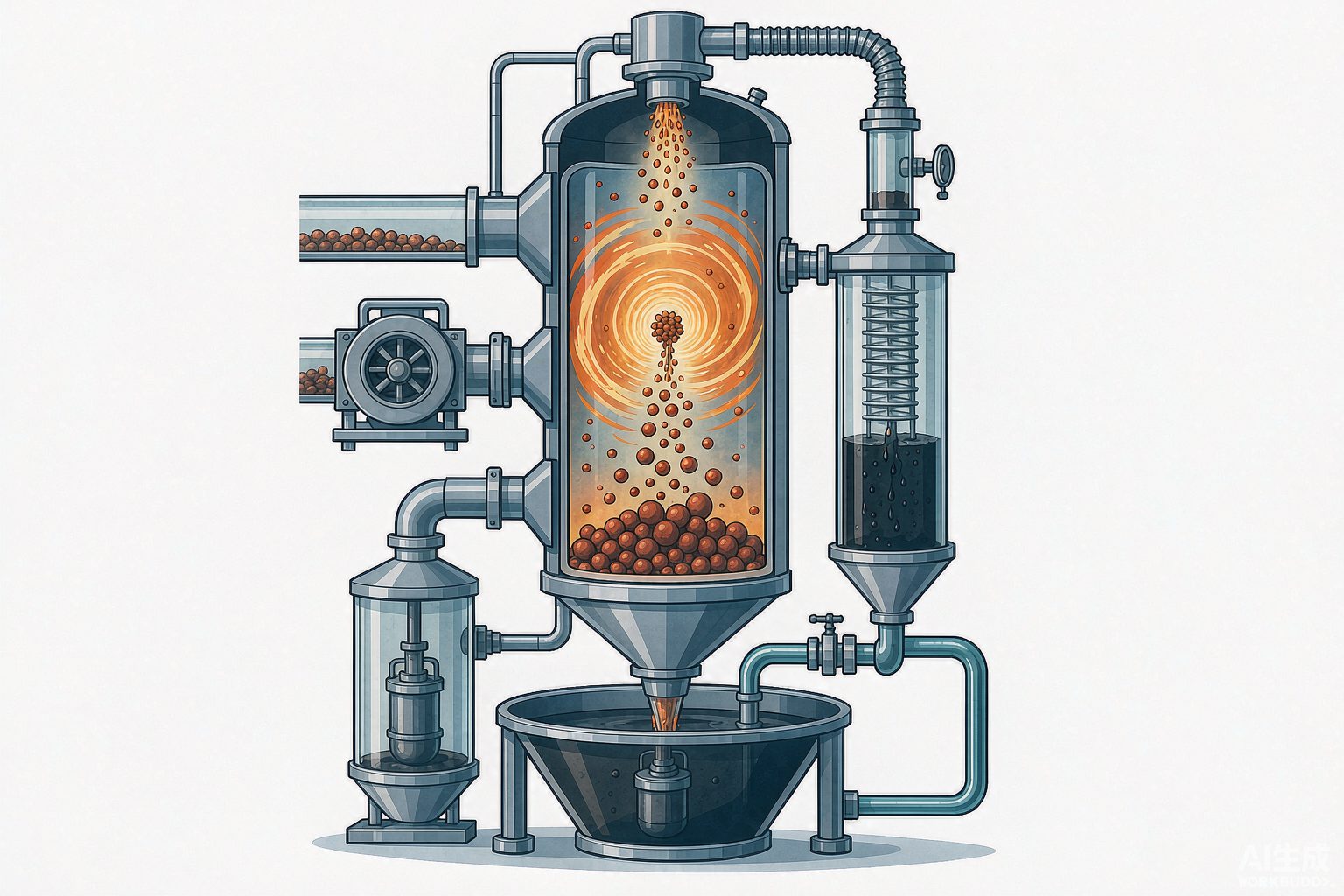
Fluidized bed roasting is another implementation of the same idea: waste acid is sprayed into a circulating fluidized bed coupled with a cyclone separator, decomposing on the surface of iron oxide particles (serving as the fluidizing medium); the particles gradually grow, and the larger particles settle and are discharged, producing Fe₃O₄ or Fe₂O₃·FeO, with a hydrochloric acid recovery rate also nominally 98%. Its advantages are that the iron oxide has very low chlorine content, the particles are larger and their size is controllable, and the product can be fully used in the magnetic materials industry; however, the regenerated acid has a relatively high Fe³⁺ content, the reaction time is long, and the requirements on furnace materials are stringent.
| Recovery Route | Applicable Acid Type | Key Parameters and Recovery Rate | Main Limitations |
|---|---|---|---|
| Spray Roasting (Ruthner) | Hydrochloric Acid, Nitric Acid + Hydrofluoric Acid Mixed Acid | Furnace temperature approx. 800 ℃; regenerated hydrochloric acid 16%~18%; hydrochloric acid recovery rate 98%~99.1%; TISCO mixed acid line HF 97%/HNO₃ 60% | Large footprint, high operating cost, consumes cooling water and fuel, suitable for large enterprises |
| Fluidized Bed Roasting | Hydrochloric Acid | Regenerated hydrochloric acid 16%~18%, recovery rate 98%; produces Fe₃O₄ or Fe₂O₃·FeO | High Fe³⁺ in regenerated acid, long reaction time, strict furnace material requirements |
| Vacuum Evaporation (Vacuum Evaporation Condensation) | Nitric Acid + Hydrofluoric Acid Mixed Acid | Steam 0.1~0.15 MPa, vacuum degree 88~91 kPa, evaporation temperature 50~65 ℃; recovery rate 93%~96% | Requires sulfuric acid addition to convert iron salts; few equipment units, low investment, suitable for small and medium pickling lines |
| Diffusion Dialysis (Membrane Process) | Hydrochloric Acid, Mixed Acid | Acid recovery rate above 80%; no power consumption, investment about one-fifth of the roasting process | Small treatment capacity, bulky equipment; recovered acid concentration cannot exceed that of the raw waste acid; residual liquid still cannot be discharged directly |
Diffusion dialysis deserves a separate mention because it is the only affordable option for many small and medium pickling plants. The principle relies on the selective permeability of anion exchange membranes to separate acid from salt: waste acid and tap water flow countercurrently on both sides of the membrane, and under the driving force of the concentration difference, acid radical ions pass through the membrane into the water side; to maintain electrical neutrality, they carry an equimolar amount of cations—and since the hydrogen ion radius is far smaller than that of metal ions and its migration speed is far faster than that of metal ions, the vast majority of salts remain on the waste acid side while the acid migrates to the water side. Its three limitations are also clear: small treatment capacity results in bulky equipment; the recovered acid concentration cannot exceed that of the raw waste acid (limited by equilibrium concentration); and the residual liquid after acid recovery still cannot be discharged directly. In other words, diffusion dialysis is a "load-reduction" device, not a "closed-loop" device.
Stainless steel mixed acid (nitric acid plus hydrofluoric acid) is the hardest stream to handle among these four routes: it must deal with acid, iron, chromium, nickel, and fluoride simultaneously. A publicly available case from a stainless steel tube plant in North China (commercial material, not peer-reviewed) gives typical composition of free acid concentration about 8%, Fe³⁺ 15 g/L, Cr³⁺ 2 g/L, Ni²⁺ 1.5 g/L, and fluoride about 3%, using a "diffusion dialysis + spray roasting" combination, with a nominal acid recovery rate of over 85%, metal recovery rate of over 90%, and hazardous waste reduction of 95%. These figures are directionally credible—because fluoride cannot be recovered via the roasting route and can only be precipitated as calcium fluoride at the neutralization stage, so the actual recovery rate of mixed acid regeneration is necessarily lower than that of pure hydrochloric acid pickling.
IV. Three Tables under the Same Standard: One Set of Indicators, Two Tightening Rhythms
With the technical routes clarified, what follows is the area most prone to error during implementation. GB 13456—2012 "Discharge Standard of Water Pollutants for Iron and Steel Industry" uses three tables to regulate the same set of 20 indicators: Table 1 governs existing enterprises in 2012 年 10 月 1 日 to 2014 年 12 月 31 日 (transitional tier), Table 2 governs new enterprises from 2012 年 10 月 1 日 and existing enterprises from 2015 年 1 月 1 日, and Table 3 is the special emission limits. After aligning the three tables item by item, a phenomenon rarely mentioned emerges.
| Pollutant Item | Table 1 Direct Discharge | Table 2 Direct Discharge | Table 3 Direct Discharge | Table 2 Indirect Discharge |
|---|---|---|---|---|
| pH | 6~9 | 6~9 | 6~9 | 6~9 |
| Suspended Solids / SS | 50 | 30 | 20 | 100 |
| Chemical Oxygen Demand / COD (Integrated Enterprise) | 60 | 50 | 30 | 200 |
| Chemical Oxygen Demand / COD (Steel Rolling—Cold Rolling) | 80 | 70 | 30 | 200 |
| Ammonia Nitrogen | 8 | 5 | 5 | 15 |
| Total Nitrogen / TN | 20 | 15 | 15 | 35 |
| Total Phosphorus / TP | 1.0 | 0.5 | 0.5 | 2.0 |
| Petroleum | 5 | 3 | 1 | 10 |
| Total Cyanide | 0.5 | 0.5 | 0.5 | 0.5 |
| Fluoride | 10 | 10 | 10 | 20 |
Unit: mg/L (except pH). Data are taken item by item from the published draft of GB 13456—2012, Tables 1, 2, and 3. The steel rolling item is split into cold rolling and hot rolling columns in Tables 1 and 2 (hot rolling COD is 60 and 50, respectively), and combined into one column in Table 3.
The phenomenon is: Between Table 1 and Table 2, out of 20 indicators, only 6 changed—Suspended Solids 50→30, COD 60→50 (cold rolling 80→70), ammonia nitrogen 8→5, Total Nitrogen 20→15, Total Phosphorus 1.0→0.5, petroleum 5→3. The remaining 14 indicators, including volatile phenols, total cyanide, fluoride, total iron, total zinc, total copper, as well as the 7 indicators at the workshop outlet, were not changed at all. And between Table 2 and Table 3, 13 indicators changed, among which heavy metals were not tightened by percentage but directly jumped to a higher tier.
| Pollutant Item | Table 2 Direct Discharge | Table 3 Direct Discharge | Tightening Factor |
|---|---|---|---|
| Total Nickel | 1.0 | 0.05 | 20 times |
| Total Chromium | 1.5 | 0.1 | 15 times |
| Hexavalent Chromium | 0.5 | 0.05 | 10 times |
| Total Cadmium | 0.1 | 0.01 | 10 times |
| Total Lead | 1.0 | 0.1 | 10 times |
| Total Arsenic | 0.5 | 0.1 | 5 times |
| Total Mercury | 0.05 | 0.01 | 5 times |
| Total Iron | 10 | 2.0 | 5 times |
| Petroleum类 | 3 | 1 | 3 times |
| Suspended Solids | 30 | 20 | 1.5 times |
Why do two paces emerge? Because the engineering actions they correspond to are completely different. Suspended Solids, COD, and petroleum类 are "adjustable items"—the treatment process route stays unchanged, and by adjusting chemical dosage, retention time, filtration rate, and reflux ratio, they can be tightened by 10–20%, so the three tiers present continuous small steps. Total nickel, total chromium, and total cadmium are "process route items"—tightening from 1.0 mg/L to 0.05 mg/L cannot be achieved by adjusting parameters; the route must be changed: from two-stage reduction to three-stage, from hydroxide precipitation to sulfide or chelating capture, from manual dosing to ORP interlocked with an online chromium analyzer. The standard concentrates their tightening into Table 3 and gives it all at once, which is in fact saying: this tier is not about adjusting parameters, it is about changing the process.
One easily overlooked detail: cold rolling carries a "premium" under the two conventional tiers. In Table 1, the COD limit for steel rolling cold rolling is 80 mg/L, and for hot rolling it is 60; in Table 2, cold rolling is 70 and hot rolling is 50—cold rolling is a full 20 mg/L higher. This premium is flattened in Table 3, where cold rolling and hot rolling are both 30 mg/L. The very existence of the premium reflects an industry-recognized fact: cold rolling wastewater is far harder to treat than hot rolling wastewater, and this gap is no longer acknowledged under the special emission limit tier.
V. The seven items at the workshop outlet: there is no "indirect discharge" option
Among the 20 indicators in Table 2 of GB 13456—2012, the 7 items numbered 14 to 20—total arsenic, hexavalent chromium, total chromium, total lead, total nickel, total cadmium, and total mercury—have their pollutant emission monitoring location specified as "wastewater discharge outlet of the workshop or production facility," while the remaining 13 items are at the "enterprise wastewater total discharge outlet." This is not a typesetting difference but a difference in assessment logic. Placing the two-column values of these 7 items from the three tables side by side:
| Pollutant Item | Table 2 Direct Discharge | Table 2 Indirect Discharge | Table 3 Direct Discharge | Table 3 Indirect Discharge | Monitoring Location |
|---|---|---|---|---|---|
| Total Arsenic | 0.5 | 0.5 | 0.1 | 0.1 | Wastewater discharge outlet of workshop or production facility |
| Hexavalent Chromium | 0.5 | 0.5 | 0.05 | 0.05 | Wastewater discharge outlet of workshop or production facility |
| Total Chromium | 1.5 | 1.5 | 0.1 | 0.1 | Wastewater discharge outlet of workshop or production facility |
| Total Lead | 1.0 | 1.0 | 0.1 | 0.1 | Wastewater discharge outlet of workshop or production facility |
| Total Nickel | 1.0 | 1.0 | 0.05 | 0.05 | Wastewater discharge outlet of workshop or production facility |
| Total Cadmium | 0.1 | 0.1 | 0.01 | 0.01 | Wastewater discharge outlet of workshop or production facility |
| Total Mercury | 0.05 | 0.05 | 0.01 | 0.01 | Wastewater discharge outlet of workshop or production facility |
| Total Iron (Reference) | 10 | 10 | 2.0 | 10 | Enterprise total wastewater discharge outlet |
The conclusion is unequivocal: the values for these 7 items are identical in the "Direct Discharge" and "Indirect Discharge" columns; discharging the water into a municipal wastewater treatment plant or an industrial park wastewater treatment plant does not grant a single mg/L of relaxation. The rationale is the same as for chromium-containing wastewater from leather tanning—heavy metals are not something that biological treatment can conveniently carry away; the downstream wastewater treatment plant merely repeats the precipitation process, so relaxation is meaningless. Moreover, with the discharge outlet located at the workshop, the compliance responsibility for this segment lies at the interface between the pickling line and the wastewater station, not at the total discharge outlet; dilution cannot improve the determination.
In the same table, there is another indicator with the opposite direction that deserves separate attention: Total Iron. In Table 1 and Table 2, it is the only one among the 13 "total discharge outlet" indicators that is not relaxed—direct discharge 10 mg/L, and indirect discharge is also 10 mg/L. In Table 3, it presents an even more anomalous combination: direct discharge is tightened to 2.0 mg/L, while indirect discharge remains at 10 mg/L, leaving a 5-fold gap in between. Why is iron so special? Because the iron dissolved from the pickling section is the most important characteristic pollutant of this line; iron is not "an impurity that can be conveniently removed downstream"—it is the industry-specific pollutant. Also note footnote a under the table: the Total Iron limit "applies when the pH value of discharged wastewater is less than 7"—so a statement that "Total Iron exceeds the standard" must first be qualified by asking what the pH at the discharge outlet is.
Table 3 has several additional "not relaxed" items: Total Phosphorus 0.5 mg/L, Volatile Phenols 0.5 mg/L, and Total Cyanide 0.5 mg/L have the same values in both columns; Fluoride in Table 2 is direct discharge 10, indirect discharge 20 (relaxed 2 times), and in Table 3 it becomes 10 and 10 (no longer relaxed). Within one standard, the number of items for which the statement "indirect discharge will be relaxed" holds decreases from 10 items in Table 2 to 9 items in Table 3; the number of items with the same values in both columns increases from 10 items to 11 items.
VI. Benchmark wastewater discharge per unit product: four numbers, two denominators
If limits govern "how dirty the water is", the benchmark wastewater discharge per unit product governs "how much water you are allowed to discharge". This concept is defined in GB 13456—2012 as "the upper limit of wastewater discharge per unit product specified for verifying the emission concentration of water pollutants". It appears in one standard in two completely different formulations:
| Enterprise Type / Process | Table 1 | Table 2 | Table 3 |
|---|---|---|---|
| Integrated Iron and Steel Enterprise (Denominator: Crude Steel) | 2.0 | 1.8 | 1.2 |
| Non-Integrated Iron and Steel Enterprise—Sintering (Pelletizing), Ironmaking | 0.05 | 0.05 | 0.05 |
| Non-Integrated Iron and Steel Enterprise—Steelmaking | 0.1 | 0.1 | 0.1 |
| Non-Integrated Iron and Steel Enterprise—Steel Rolling | 1.8 | 1.5 | 1.1 |
Unit: m³/t. For the integrated iron and steel enterprise row, the denominator is explicitly specified in note b below the table as "the product of an integrated iron and steel enterprise shall be calculated as crude steel"; for the non-integrated enterprise rows, values are taken separately by process, and the denominator is the product of that process.
Let's look at the vertical dimension first. GB 13456—1992, which was replaced by GB 13456—2012, set the benchmark discharge volume per unit product at 20 m³/t—the public comparison table from the Wuhai Municipal Ecology and Environment Bureau lists three tiers: 20 (old standard), 2.0 (2012-10-01 to 2014-12-31), and 1.8 (from 2015-01-01), matching the published text item by item. In other words, the integrated-enterprise tier was tightened 10 times in one go in the 2012 年 revision, then tightened further to 1.2 in Table 3, a total reduction of 16.7 times from 20 to 1.2.
Now the horizontal dimension—this is where mistakes are most easily made. The same standard contains two figures: integrated enterprises 1.8 m³/t (denominator is crude steel) and steel rolling 1.5 m³/t (denominator is the product of the rolling process). They are not two ways of writing the same thing, but two different rulers—the integrated enterprise's 1.8 covers the entire process of sintering, ironmaking, steelmaking, and rolling, while the non-integrated enterprise's sintering 0.05 + steelmaking 0.1 + rolling 1.5 = 1.65 m³/t is the sum of three separate process segments. The two values are numerically close (1.65 vs. 1.8, a difference of 9%), but that is because the sintering and steelmaking segments in modern steel plants basically no longer discharge water (dry dust removal, dry coke quenching, slag water quenching circulation)—the plant's water is in effect all concentrated in the rolling segment. Therefore, these two figures cannot substitute for each other, nor can they be converted into each other.
With the correct denominator 1.8: ratio = 1.7 ÷ 1.8 = 0.944, less than 1; per the provision "the measured concentration of water pollutants shall be used as the basis for determining whether discharge meets the standard," that is, judged by 45 mg/L, the integrated-enterprise COD limit in Table 2 is 50 mg/L—compliant.
Misusing the rolling figure 1.5: ratio = 1.7 ÷ 1.5 = 1.133, greater than 1, requiring conversion: ρ基 = 1.133 × 45 = 51.0 mg/L, exceeding the 50 mg/L limit of 2%—non-compliant.
The same stream of water, the same measured value, the same standard—one wrong denominator, and the conclusion flips.
The term "per ton of steel" has a third definition in the steel industry, and all three have appeared in public reports about the same company. Shougang Qian'an Iron & Steel, by replacing chemical agents with electrochemical descaling, raised the circulating water concentration ratio from 2.5 to 4.0~5.0, reduced water consumption by 20%~25%, achieved zero dosing of water treatment chemicals, and recorded a water intake of 2.87 m³/t per ton of steel in 2023 年, with a water reuse rate of 98.89%. Here, "water intake per ton of steel 2.87" refers to fresh water; back-calculating from "water reuse rate 98.89%" by definition (reused water volume ÷ total water consumption), the plant's total water consumption per ton of steel is approximately 2.87 ÷ (1 − 0.9889) ≈ 259 m³/t, whereas GB 13456 governs external discharge volume (benchmark 1.8 m³/t). Water intake, water use (including circulation), and external discharge are all called "per ton of steel," but between them lie evaporation, water carried away by products, and water entering sludge and slag—the numbers obtained by subtracting them have no physical meaning.
This definition is becoming increasingly important because policy is turning "reuse rate" into a hard target. The Implementation Plan for Industrial Wastewater Recycling specifies: the industrial water reuse rate of above-scale enterprises in the steel industry is 2020 年 97%, with a target of greater than 97% by 2025 年; nationwide above-scale industry is to rise from 92.5% to around 94%. An expert interpretation by the Ministry of Industry and Information Technology disclosed that as of the end of 2023 年, the industrial wastewater reuse rate of key statistical steel enterprises had reached 98.3%, an increase of 0.8 percentage points over 2015 年; in the "2024 年 List of Typical Cases of Industrial Wastewater Recycling" released on 2024 年 11 月, 8 steel enterprises were selected (5 for water use process recycling, 2 for smart water management and control, and 1 for technological equipment innovation). When an industry's overall reuse rate has already reached 98.3%, the remaining 1.7% of fresh water no longer represents a "water quantity problem," but rather those few streams of wastewater that simply must be discharged.
VII. Hazardous Waste: Two Codes with the Same Name, Three Attributes for Sludge from the Same Stream
The hazardous waste list for steel cold rolling workshops is the group of evidence in this article that best demonstrates that "the code depends on the source, not on the characteristics." The Ministry of Ecology and Environment guidelines organize cold rolling process waste into 11 items, of which four have waste generation coefficients:
| Waste Name | Generation Stage | Waste Code | Waste Generation Coefficient (kg/t product) | Generation Pattern |
|---|---|---|---|---|
| Waste Acid | Pickling | 313-001-34(HW34) | 0.7~21.0 | Continuous |
| Waste Emulsion | Cold Rolling | 900-007-09(HW09) | 0.02~0.1 | Intermittent |
| Waste Mineral Oil | Cold Rolling | 900-204-08(HW08) | — | Intermittent |
| Cold Rolling Oil Sludge | Emulsion Purification and Impurity Removal | 900-200-08(HW08) | 1.4~8.8 | Continuous |
| Waste Mineral Oil | Waste Emulsion Treatment | 900-210-08(HW08) | 0.03~0.1 | Continuous |
| Waste Paint (excluding water-based paint) | Color Coating | 900-252-12(HW12) | — | Intermittent |
| Waste Corrosion Solution, Waste Bath Solution, Bath Sludge | Metal Surface Treatment | 336-064-17(HW17) | — | Intermittent |
| Chromium-Containing Sludge | Wastewater Treatment | 336-100-21(HW21) | — | Intermittent |
| Wastewater Treatment Sludge | Wastewater Treatment | 336-064-17(HW17) | — | Intermittent |
| Waste Mineral Oil, Waste Filter Screen | Oil Mist Purification | 900-249-08、900-041-49 | — | Intermittent |
The waste generation coefficient is in kg/t product, and the data are taken from the original text of the Ministry of Ecology and Environment guidelines; the range for the waste acid row spans 30 times (0.7~21.0), and the guidelines do not distinguish within the same row between acid types and whether acid regeneration is included; the cause of the span is [to be verified], and for design calculations it is recommended to use the measured values from the enterprise's hazardous waste management ledger as the basis. "—" indicates that the original guideline text marks it as "greatly affected by uncertain factors, and the waste generation coefficient is difficult or not yet determined."
There are four points in this table worth pausing to examine.
First point: the waste acid code is 313-001-34, and the industry source is "steel rolling processing." It is not the "non-specific industry" 900-xxx-34, but a dedicated code carrying an industry source. This directly affects management actions: waste acid in this industry is treated as "a material generated by this industry with a clear utilization pathway," rather than an unidentified waste liquid.
Second point: the same waste name, two codes. The waste emulsion from the cold rolling stage is 900-007-09 ("generated in other process processes"), while the same guideline, when addressing the forging process, writes the waste emulsion generated in the machining stage as 900-006-09 ("generated during machining using cutting oil or cutting fluid"). The same guideline, the same waste name, two codes—the difference lies not in the composition of the waste itself, but in which piece of equipment it comes from.
Third point: the truly large item is not the emulsion, but the iron powder it carries out. In terms of waste generation coefficients, the waste emulsion itself is only 0.02~0.1 kg/t product, while the cold rolling oil sludge generated in the emulsion purification and impurity removal stage is 1.4~8.8 kg/t product—the latter is one to two orders of magnitude larger than the former, and is generated continuously. In other words, the main daily burden of the emulsion system is "the iron powder and impurities filtered out of the emulsion," and the emulsion itself is only fully replaced when the oil concentration and saponification value can no longer meet the rolling requirements.
Fourth point, and the most critical one: the same wastewater treatment sludge has three attributes. The guideline lists two items under "wastewater treatment stage": one is chromium-containing sludge (HW21 chromium-containing waste, 336-100-21), described as "sludge generated after treatment of chromium-containing wastewater from passivation of galvanized sheet and silicon steel surfaces"; the other is wastewater treatment sludge (HW17 surface treatment waste, 336-064-17), described as "sludge generated after treatment of wastewater from acid washing, alkali washing, phosphating, and degreasing of steel surfaces," and explicitly bracketed as "excluding wastewater treatment sludge from carbon steel acid washing and rust removal." Putting the three together yields a very practical criterion: the hazardous waste attribute of sludge is determined by "which unit it comes from"—that from the galvanized sheet and silicon steel passivation section is HW21 chromium-containing sludge, that from stainless steel or carbon steel acid washing, alkali washing, phosphating, and degreasing is HW17 surface treatment waste, and the sludge from the carbon steel acid washing and rust removal stream is explicitly excluded from the HW17 description.
Putting this criterion together with the tannery wastewater written about earlier in this series, a pattern can also be seen: the HW21 category has at least two source codes—193-001-21 points to "wastewater treatment sludge and residues generated from chrome tanning and retanning processes using chrome tanning agents," and 336-100-21 points to chromium-containing sludge from "metal surface treatment and heat treatment processing." Same category, different source codes usually mean different disposal destinations and different ledger standards. The fundamental reason why "separate first, identify later" saves money in engineering is exactly this: separation determines the code, and the code determines the unit price.
Finally, the legal identity of waste acid. In the appendix "Hazardous Waste Exemption Management List" of the National Hazardous Waste List (2021 年 Edition), there is a line: in HW34, "waste acid that only has corrosive hazardous characteristics, when comprehensively utilized as a production raw material, is not managed as hazardous waste during the utilization process." The reply from the Beijing Municipal Ecology and Environment Bureau on 2022 年 makes the boundary very clear: when both conditions of "only having corrosive hazardous characteristics" and "comprehensive utilization as a production raw material" are met simultaneously, the utilization unit may be exempted from holding a hazardous waste comprehensive operation license; however, when the exemption conditions are not met, the entire process of storage, transportation, collection, utilization, and disposal of waste acid, as well as other stages besides the utilization process when the exemption conditions are met, shall still be managed as hazardous waste. In other words, this exemption only exempts the "utilization" link—it releases the acid regeneration furnace from the threshold of a hazardous waste operation license, but does not release the waste acid storage tanks, transport tank trucks, and transfer manifests along with it.
VIII. The chromium-containing water stream: finish it at the workshop outlet
Now back to the chromium-containing wastewater stream with the smallest volume and the heaviest responsibility. Public design data for the cold rolling wastewater treatment of Baosteel Stainless Steel Co., Ltd. gives the influent quality: pH less than 2, Cr⁶⁺ about 100~1 300 mg/L, total chromium about 200~1 800 mg/L, suspended solids about 150~250 mg/L, and total chromium-containing wastewater volume not exceeding 30 m³/h. The sources are the stainless steel hot-rolled strip annealing and pickling line, the stainless steel cold-rolled strip annealing and pickling line, and the carbon steel hot-dip galvanizing line—precisely the lines described as "chromium-containing sludge" in the hazardous waste table in the previous section.
The main process flow is: chromium-containing wastewater → equalization tank → primary reduction tank → secondary reduction tank → effluent merged into the acidic wastewater treatment facility. The reduction reaction is a familiar one:
Cr₂O₇²⁻ + 3HSO₃⁻ + 5H⁺ = 2Cr³⁺ + 3SO₄²⁻ + 4H₂O
During normal production, hydrochloric acid is dosed into the reduction tank as a pH adjuster and sodium bisulfite as a reducing agent, controlling the reaction tank pH at 2~3. The truly ingenious part lies in a process coupling: when the main pickling line pickles the 400 series of steel grades, waste sulfuric acid is generated; this waste sulfuric acid is then used in place of hydrochloric acid and sodium bisulfite, serving simultaneously as pH adjuster and reducing agent—the waste sulfuric acid contains a large amount of Fe²⁺, which is itself a reducing agent. Thus, within the same plant, a waste acid that would cost money to dispose of becomes the chemical agent needed to bring another wastewater stream into compliance.
The control logic is also worth copying: pH meters and ORP meters are installed in the two-stage reduction tanks, and their measured values are interlocked with the hydrochloric acid and waste acid dosing valves to control the dosage; a Cr⁶⁺ meter is additionally installed at the outlet of the secondary reduction tank, and its measured value is interlocked with the outlet control valve—if Cr⁶⁺ is within compliance, the outlet valve opens and the water enters the acidic wastewater system; if not, the outlet valve closes and the water returns to the equalization tank for re-treatment. Online instruments interlocked with valves are the key to keeping this stream reliably in compliance—not how accurately the chemical dosage is calculated.
After reduction, the chromium-containing wastewater enters the subsequent neutralization and sedimentation stage together with the acidic wastewater: it is lifted to the primary neutralization tank and flows by gravity to the secondary neutralization tank, where lime slurry is dosed and aeration is applied to oxidize Fe²⁺ to Fe³⁺, ultimately forming settleable Fe(OH)₃ and other metal hydroxides; the effluent from the secondary neutralization tank enters the reaction tank, where flocculant is dosed to enlarge the flocs before entering the clarifier for solid-liquid separation; the clarifier effluent undergoes final pH adjustment and sand filter filtration, with part reused within the station and the rest discharged in compliance, while the sludge at the bottom of the clarifier is sent to the sludge disposal system.
An industry case can provide an order-of-magnitude reference. A chromium-containing wastewater upgrade case at an enterprise producing 200 万 t of cold-rolled sheet and coil per year (commercial data, not peer-reviewed) reports: chromium-containing wastewater about 800 m³/d, sodium metabisulfite dosed in the reduction stage with ORP controlled at 250~300 mV, NaOH added in the neutralization stage to adjust pH to 8.5~9.0, effluent total chromium ≤0.5 mg/L, Cr⁶⁺ ≤0.1 mg/L, chromium removal rate ≥99.7%, sludge chromium content 12%~15% with disposal according to hazardous waste regulations, and system operating cost about 8.2 元/m³. Note that this 8.2 元/m³ includes sludge disposal—only a per-ton water cost that accounts for the sludge is the true cost of chromium-containing wastewater.
IX. Emulsion: Ultrafiltration Is Not Fouled by the Emulsion Itself
The "stickiest" stream on the cold rolling line is emulsion wastewater. The influent parameters of a steel plant's cold rolling emulsion wastewater system (design treatment capacity 20 m³/h) are CODcr 10 000~40 000 mg/L and oil content 1 000~5 000 mg/L, characterized by a high degree of emulsification, stable chemical properties, complex composition, and poor biodegradability. Its original process was "heated equalization tank to remove upper floating oil + demulsification + air flotation + stainless steel ultrafiltration." The problems were: unstable influent quality, short demulsification time and poor effectiveness, ineffective separation of the oil and water phases, poor air flotation performance, and ultimately severe ultrafiltration membrane fouling—chemical cleaning was required every 24 h of operation, and the cleaning cycle itself took over 24 h, making the entire emulsion system unable to operate normally.
The upgrade did not replace the membranes, nor did it add membranes: the process was changed to "heated equalization tank with acid demulsification to remove upper floating oil + neutralization and coagulation + air flotation," and then ultrafiltration was simply eliminated. The result was that the air flotation effluent already met the influent requirements of the downstream system and could be directly merged into the dilute alkaline oily wastewater system for secondary treatment; the average CODcr removal rate of the system effluent reached 93.7%; PAFC dosage ranged from a minimum of 50 mg/L to a maximum of 600 mg/L, and cationic PAM dosage ranged from a minimum of 0.4 mg/L to a maximum of 2.2 mg/L, requiring on-site adjustment according to influent conditions.
The magnitude of the waste emulsion itself is even more striking. The ranges given in industry technical literature are: COD 5 000~150 000 mg/L, BOD 1 500~30 000 mg/L, oily substances 1 500~80 000 mg/L, and B/C between 0.05~0.2 (poor biodegradability); the same literature gives the MVR evaporation treatment cost as 1 200~1 300 元/t (commercial data). This cost magnitude explains why the business model for emulsion resource recovery can hold up: at the emulsion disposal project of a hazardous waste disposal enterprise (Jiaxing, Zhejiang), the approved HW09 capacity is 22 000 t/a and waste acid HW34 4 500 t/a; the emulsion disposal volumes in the first three quarters of 2019 年, 2020 年, 2021 年 and 2022 年 were 2 650 t, 6 302 t, 8 225 t and 7 240 t respectively; a combined process of "thermal method + conditioning centrifugation" is used to separate the oil phase, and the oil separation efficiency of the centrifuge is ≥95%; after preliminary separation, the COD of the remaining emulsion is greatly reduced, the difficulty of downstream waste liquid disposal decreases, reducing disposal costs by more than 30%. The same principle appears once again: skimming off the oil first and selling it, then treating the remaining water, is more cost-effective than mixing the two together and sending them for incineration.
As for cold-rolling oil sludge, the waste generation coefficient is 1.4~8.8 kg/t of product and it is generated continuously; it is both a hazardous waste cost item and a direct readout of "how well the magnetic filtration system is performing": more oil sludge output means the iron powder in the emulsion has not been separated in time, and both the subsequent rolling quality and membrane fouling will be affected accordingly.
X. Five Engineering Truths
1. The fork in the road for waste acid is in the workshop, not at the wastewater station. Waste acid and acidic rinse water are separated on the pipeline by only one valve. If this valve does not separate them, then no matter how much lime, flocculant or aeration is added downstream, it is merely gradually converting an acid loop that could have been closed into an increasing volume of sludge for off-site transport. The cost of separation is a one-time pipeline modification; the cost of not separating is a long-term hazardous waste ledger.
2. For "water discharge per ton of steel," two questions must be asked first: is the denominator crude steel or steel product, and is the boundary the whole process or a single process step? The two figures 1.8 and 1.5 differ by only 0.3, but one is based on crude steel and covers the whole process, while the other is based on process product and covers only steel rolling; for water measured at COD 45 mg/L, using the right denominator means compliance, while using the wrong denominator means exceeding the standard by 2%.
3. The 7 items at the workshop outlet have no "indirect discharge" option. Total arsenic, hexavalent chromium, total chromium, total lead, total nickel, total cadmium and total mercury have exactly the same values in the direct discharge and indirect discharge columns. If a project in its early stage is designed treating "discharge to the sewer" as a relaxation channel, process upgrades will definitely be required at the acceptance stage.
4. Whether sludge counts as hazardous waste is determined by which unit it comes from, not by the test report. Sludge from the passivation section of galvanized sheet and silicon steel is managed as HW21, sludge from acid pickling, alkaline cleaning, phosphating and degreasing of stainless steel and carbon steel is managed as HW17, and sludge from acid pickling and rust removal of carbon steel is not within the description of HW17. Apart from separation, there is no second low-cost solution.
5. The economics of the regeneration route come from the three costs that are avoided, not from the price of regenerated acid. Lime cost, sludge off-site transport cost and secondary landfill cost are the real difference between acid regeneration and lime neutralization. The publicly disclosed "annual lime savings of 25 116 t" at the Taiyuan Iron & Steel line is only one aspect; converting these three costs into a cost per ton of acid at local prices is closer to the real answer than directly comparing "new acid price vs. regenerated acid cost."
References
- GB 13456—2012 "Discharge Standard of Water Pollutants for Iron and Steel Industry" (published draft), issued by the Ministry of Environmental Protection and the General Administration of Quality Supervision, Inspection and Quarantine of the People's Republic of China on 2012-06-27, implemented on 2012-10-01, PDF publicly available on the website of the Ministry of Ecology and Environment. All limit values and benchmark discharge volumes in the three tables of this paper are taken item by item from the original text of this published draft.
- GB 13456—1992 "Discharge Standard of Water Pollutants for Iron and Steel Industry" (abolished): benchmark discharge volume per unit product 20 m³/t.
- Ministry of Ecology and Environment "Environmental Management Guide for Hazardous Wastes: Steel Rolling Processing" (Appendix 7), 2021 年 12 月, Table 1 (hot rolling), Table 2 (cold rolling), Table 3 (forging) and Article 4.14.3.
- "National Catalogue of Hazardous Wastes (2021 年 Edition)" Appendix "List of Hazardous Waste Exemption Management": HW34 waste acid item.
- Public reply of the Beijing Municipal Ecology and Environment Bureau on the exemption stage of HW34 waste acid, 2022-09-02: clarifying that "the utilization process is not managed as hazardous waste", while the remaining stages are still managed as hazardous waste.
- "Implementation Plan for Industrial Wastewater Recycling" (MIIT Joint Section [2021] No. 213): the water reuse rate of industrial enterprises above designated size in the iron and steel industry 2020 年 97%, target for 2025 年 greater than 97%; nationwide 92.5% raised to about 94%.
- Ministry of Industry and Information Technology "Expert Interpretation II: Tap Water-Saving Potential to Promote Efficient Recycling of Wastewater in the Iron and Steel Industry", 2024 年: 2023 年 water consumption of iron and steel enterprises above designated size 32.4 亿 m³; as of the end of 2023 年, the industrial wastewater reuse rate of key statistically monitored iron and steel enterprises 98.3%; water intake per ton of steel at Shougang Qian'an Iron and Steel 2.87 m³/t, water reuse rate 98.89%, concentration ratio increased from 2.5 to 4.0~5.0.
- Ministry of Industry and Information Technology "List of Typical Cases of Industrial Wastewater Recycling in 2024 年", 2024 年 11 月: 8 iron and steel enterprises selected.
- Public report on the mixed acid regeneration project of the cold rolling plant of TISCO Stainless Steel: investment of 2.76 亿 yuan, designed and installed by ANDRITZ, spray roasting process, three sets of equipment with annual processing capacity of 15.8 万 m³, hydrofluoric acid recovery rate above 97%, nitric acid recovery rate above 60%, annual saving of lime 25 116 t, nitrogen oxide emissions 20 ppm (national standard 100 ppm).
- Operating data from the same source: waste acid liquid treated 3.2 万 m³, usable regenerated acid produced 2.5 万 m³, iron powder recovered 1 233.5 t; 5~8 月 reduced new nitric acid 1 341 t, new hydrofluoric acid 1 347 t, saving industrial fresh water 1.4 万 m³, demineralized water 0.8 万 m³, creating benefits of 1 933 万 yuan.
- Handan Iron and Steel Group cold rolling plant and pickling galvanizing plant introduced ANDRITZ Ruthner spray roasting waste hydrochloric acid regeneration technology: hydrochloric acid regeneration rate 99.1%, Fe₂O₃ powder purity not less than 99.3% (quoted from "Research Progress on Recovery and Utilization of Waste Hydrochloric Acid Pickling Liquor from Steel").
- Industrial Bureau of the Economic Affairs Competent Authority of the Taiwan Region of China "Compilation of Steel Industry Waste Resource Utilization Cases" and "Industrial Pollution Prevention Report" Issue 108: spray roasting process regenerated hydrochloric acid concentration 16%~18%, recovery rate 98%; case of a cold-rolled pickling steel coil plant with annual output of 100 万 t (removing 700 kg scale per hour, generating about 6 000 L waste acid, annual saving of about 1.5 亿 New Taiwan dollars, payback period about 1 年).
- Fluidized bed roasting process item from the same source: regenerated hydrochloric acid 16%~18%, recovery rate 98%, can produce Fe₃O₄ or Fe₂O₃·FeO, with very low chlorine content in iron oxide, larger and controllable particles.
- "Resource Utilization Technologies for Waste Acid Liquor" (industry review): diffusion dialysis acid recovery rate above 80%, investment about one-fifth of the roasting process, dialysis process consumes no electricity; boundaries are small processing volume, recovered acid concentration limited by equilibrium concentration, and residual liquid still cannot be discharged directly.
- Fu Wei et al. (quoted from the same source): vacuum evaporation condensation process for stainless steel nitric acid-hydrofluoric acid pickling waste liquor, steam pressure 0.1~0.15 MPa, vacuum degree 88~91 kPa, evaporation temperature 50~65 ℃, recovery rate 93%~96%, annual recovery 10 510 t, annual benefit about 160 万 yuan.
- "Process Design of Cold Rolling Wastewater Treatment for Baosteel Stainless Steel Co., Ltd.": chromium-containing wastewater Cr⁶⁺ 100~1 300 mg/L, total chromium 200~1 800 mg/L, suspended solids 150~250 mg/L, pH less than 2; neutral salt and chromium-containing wastewater and acidic wastewater 1 100~3 200 m³/d, dilute oil wastewater 300~2 100 m³/d, concentrated oil wastewater 20~350 m³/d; temper rolling liquid about 300 kg per month merged into the concentrated oil system.
- "Demonstration Project of Cold Rolling Chromium-Containing Wastewater Treatment" (industry journal): design capacity of chromium-containing wastewater treatment 30 m³/h; reducing tanks dosing hydrochloric acid or waste sulfuric acid to adjust pH, dosing sodium bisulfite for reduction, effluent merged into acidic wastewater treatment facilities.
- "Pickling Process and Wastewater Treatment of Baosteel Stainless Steel Strip": stainless steel pickling lines generate two types of wastewater: neutral salt chromium-containing wastewater and mixed acid pickling acidic wastewater; reduction reaction formula Cr₂O₇²⁻ + 3HSO₃⁻ + 5H⁺ = 2Cr³⁺ + 3SO₄²⁻ + 4H₂O; two-stage reduction tanks equipped with pH meters and ORP meters, outlet equipped with Cr⁶⁺ meter interlocked with outlet valve; neutralization tank dosing lime milk and aerating to oxidize Fe²⁺ to Fe³⁺, followed by flocculation, clarification, final pH adjustment and sand filtration.
- Same source: when pickling 400 series steel grades, waste sulfuric acid is generated, which, due to containing large amounts of Fe²⁺, can serve as pH adjuster and reducing agent for chromium-containing wastewater, reducing the consumption of hydrochloric acid and NaHSO₃.
- Public performance data of Meiwang Environment: Phase I of the wastewater treatment station of Baosteel Stainless Steel Cold-Rolled Stainless Steel Strip Plant (two systems: chromium-containing wastewater and acidic wastewater), Phase II (dilute oil wastewater 2 544 m³/d, concentrated oil wastewater 576 m³/d, temper rolling liquid wastewater 6 912 m³/d); dilute oil wastewater adopts two-stage air flotation + anoxic-aerobic biochemical + sand filtration, concentrated oil/emulsion wastewater adopts ceramic membrane ultrafiltration + MBR.
- Same source: Baosteel Group iron and steel industry wastewater advanced treatment and comprehensive utilization project, reuse water pretreatment design scale 60 000 m³/d, reuse water system design scale 38 400 m³/d (pretreatment + ultrafiltration + reverse osmosis); another plant-wide wastewater treatment and reuse project 33 000 m³/d all reused after treatment.
- Technical case of process optimization for cold rolling emulsion wastewater system of a steel plant: design treatment capacity 20 m³/h, CODcr 10 000~40 000 mg/L, oil content 1 000~5 000 mg/L; process optimized from "heating + demulsification + air flotation + stainless steel ultrafiltration" to "heating and acidification demulsification + neutralization coagulation + air flotation" with ultrafiltration cancelled; average CODcr removal rate 93.7%, PAFC 50~600 mg/L, cationic PAM 0.4~2.2 mg/L (case source is enterprise technical data, not peer-reviewed).
- Waste emulsion water quality range and treatment cost (MVR process vendor technical data, commercial data): COD 5 000~150 000 mg/L, BOD 1 500~30 000 mg/L, oil 1 500~80 000 mg/L, B/C 0.05~0.2; treatment cost 1 200~1 300 元/t.
- Case of resource utilization of waste oil in emulsion by Hanlan Industrial Services (Jiaxing) Co., Ltd. (E20 platform): approved hazardous waste disposal scale 32 000 t/a, of which HW09 emulsion 22 000 t/a, HW34 waste acid 4 500 t/a; 2019~2021 年 and first three quarters of 2022 年 emulsion disposal volumes 2 650 t, 6 302 t, 8 225 t, 7 240 t; adopts "thermal process + conditioning centrifugation", centrifuge oil separation efficiency ≥95%, disposal cost reduced by more than 30%.
- Case of chromium-containing wastewater upgrading and reconstruction of a cold-rolled sheet coil enterprise in East China (commercial data, not peer-reviewed): chromium-containing wastewater about 800 m³/d, sodium metabisulfite reduction, ORP 250~300 mV, NaOH pH adjustment 8.5~9.0; effluent total chromium ≤0.5 mg/L, Cr⁶⁺ ≤0.1 mg/L, removal rate ≥99.7%; sludge chromium content 12%~15%; operating cost about 8.2 元/m³.
- Case of mixed acid (HNO₃ + HF) waste acid resource utilization of a stainless steel pipe plant in North China (commercial data, not peer-reviewed): free acid concentration about 8%, Fe³⁺ 15 g/L, Cr³⁺ 2 g/L, Ni²⁺ 1.5 g/L, fluoride about 3%; adopts diffusion dialysis + spray roasting scheme.
- Pre-approval publicity of the "Environmental Impact Report Form for the Technical Transformation Project of an Annual 85 万 tons High-Speed Bar and Wire Rod Rolling Production Line" of Guangde City, Anhui Province: the steel rolling section implements the indirect discharge standard of GB 13456—2012 Table 2, benchmark discharge volume implemented as 1.5 m³/t product for the steel rolling section.
- Public comparison table of "Impact of Environmental Standard Improvement on Enterprise Operations" by Wuhai Municipal Ecology and Environment Bureau: three tiers of benchmark discharge volume per unit product are 20 (old standard), 2.0 (2012-10-01 to 2014-12-31), 1.8 (from 2015-01-01) m³/t, consistent with the original text of the published draft.
