



 Steel industry (hot-rolled strip / medium plate / wide heavy plate / continuous
 Engineering implementation (a single system of approximately 1,900–7,500 m³/h; t
Hot-Rolled Turbid Circulating Water: What Is Being "Treated" Is Not the Water, but the Iron-Containing 70% Mill Scale
In the same "Code for Design of Water Supply and Drainage of Iron and Steel Enterprises", clean circulating water (indirect cooling) is assessed by "concentration ratio not less than 3.0, reuse rate not less than 97%", while turbid circulating water (direct cooling) does not apply the concentration ratio at all—it is only assessed by suspended solids and oil content. And the term "primary scale" refers to two completely different things in metallurgy and in water treatment. This article uses the original text of GB 50721—2011, three industry textbooks, public pricing of oxide scale, and engineering data from Jiuquan Iron and Steel, Guangxi Iron and Steel, and Hebei Yongyang Special Steel to break down this chain.
I. There are two sets of water in the hot rolling workshop, not one
The circulating water supply systems of steel plants are divided into two categories according to "whether the water is polluted during use": clean circulating water is used for indirect cooling of equipment or media, the water does not contact materials, and after use it only rises in temperature; turbid circulating water is used for direct cooling of equipment, products, or media, and the used water both rises in temperature and becomes polluted. The hot rolling workshop is precisely where these two systems coexist and where turbid circulating water accounts for the main part.
The main water-using equipment for turbid circulating water is very specific: roll cooling, roller table cooling, high-pressure descaling, water seal tanks of heating furnaces, and oxide scale flushing water. Among them, nozzles are the most important water-using equipment for steel rolling turbid circulating water—this also explains why turbid circulating water is most afraid of "clogging": oil and fine scale in the water will form oil sludge, which first makes nozzles and filters extremely easy to clog, and second promotes the growth of bacteria and algae and accelerates the formation of slime. Therefore, the first task of turbid circulating water treatment is not "making the water clean", but removing oxide scale and oil, and removing oil first.
| Comparison Item | Clean Circulating Water (Indirect Cooling) | Turbid Circulating Water (Direct Cooling) |
|---|---|---|
| Cooling Method | Water is separated from the cooled equipment by a metal heat exchange surface; the water only rises in temperature | Water is sprayed directly onto hot steel billets, rolls, and flue gas; the water rises in temperature and becomes contaminated |
| Typical Users | Blast furnace cooling staves, air compressors, oil coolers, various heat exchangers | Roll cooling, roller table cooling, high-pressure descaling, reheating furnace water seal troughs, oxide scale flushing water, continuous casting secondary cooling |
| Return Water Quality | Essentially unchanged, only temperature increases | Contains oxide scale, mud and sand, lubricating oil and grease |
| Main Problems | Scaling, corrosion, bacterial and algal slime | Suspended Solids (scale) + oil (oil sludge) + water temperature |
| Specification Assessment Items | Cycles of concentration, reuse rate, Suspended Solids and particle size | Suspended Solids, oil content, supply water temperature |
| Corresponding Specification Section | GB 50721—2011 Chapter 6 "Indirect Cooling Circulating Water System" | GB 50721—2011 Section 6.4 and Chapter 7 "Direct Cooling Circulating Water System" |
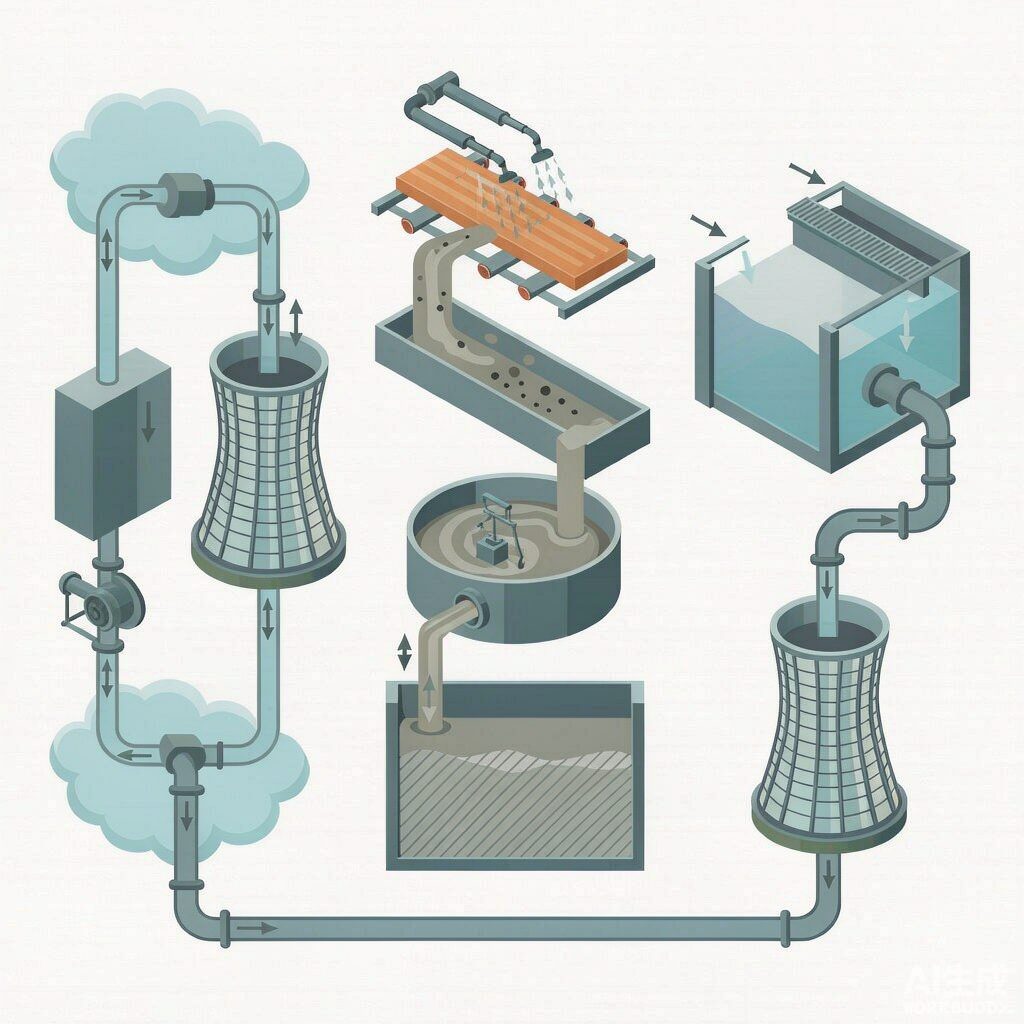
II. Four Columns of Water in One Table: The Reuse Water Column Is the "Bottom Line" of Circulating Water
GB 50721—2011 Clause 3.2.2 provides the "Industrial New Water Quality and Reclaimed Water Quality Indicators", with four columns side by side in one table: Production New Water, Softened Water, Demineralized Water, and Reclaimed Water. For the same indicator, the four columns differ greatly — Suspended Solids drops all the way from 10 mg/L for Production New Water to 1 mg/L for Demineralized Water, while the Reclaimed Water column gives 20 mg/L. This is not a self-contradiction in the standard; rather, the four types of water inherently serve different purposes: Production New Water is the raw water for supplementing the circulating system, Softened Water and Demineralized Water are make-up water for high-quality users (boilers, heat exchange surfaces), and Reclaimed Water is the make-up water for the circulating system itself.
| Parameter | Fresh Process Water | Softened Water | Demineralized Water | Reclaimed Water |
|---|---|---|---|---|
| pH Value | 7~9 | 7~9 | 6.5~9 | 6~9 |
| Suspended Solids mg/L | ≤10 | ≤5 | ≤1 | ≤20 |
| Total Hardness (as CaCO₃) mg/L | ≤150 | ≤10 | ≤2 | ≤450 |
| Ca Hardness (as CaCO₃) mg/L | ≤100 | ≤2 | ≤1 | ≤300 |
| M-Alkalinity (as CaCO₃) mg/L | ≤110 | ≤110 | ≤1 | ≤330 |
| Chloride Ion (as Cl⁻) mg/L | ≤220 | ≤200 | ≤1 | ≤660 |
| Sulfate Ion (as SO₄²⁻) mg/L | ≤80 | ≤80 | Not Detected | ≤240 |
| Parameter | Fresh Process Water | Softened Water | Demineralized Water | Reclaimed Water |
|---|---|---|---|---|
| Total Iron (as Fe) mg/L | ≤1 | ≤1 | ≤0.1 | ≤3 |
| Soluble SiO₂ (as SiO₂) mg/L | ≤6 | ≤6 | ≤0.1 | ≤18 |
| Oil Content mg/L | ≤2 | ≤1 | Not Detected | ≤5 |
| Conductivity μS/cm | ≤500 | ≤500 | ≤10 | ≤3000 |
| Evaporation Residue (Dissolved) mg/L | ≤300 | ≤300 | ≤5 | ≤1000 |
| Ammonia Nitrogen mg/L | ≤10 | ≤10 | ≤1 | ≤10 |
| CODcr mg/L | — | — | — | ≤100 |
Each item is taken from the original text of GB 50721—2011, Article 3.2.2, Table 3.2.2; in the Total Iron column, "Reclaimed Water ≤3 mg/L" is the most lenient tier for iron in the entire table, because iron is inherently a background value in turbid circulating water. "—" indicates that this item has no requirement for that water supply type. Three notes below the table: the guarantee rate of each water supply parameter should be above 90%; when groundwater is the main water source, total hardness must not exceed 200 mg/L; demineralized water produced by the central water plant should preferably be determined according to the water quality of Grade 1 demineralized water.
Reading this table thoroughly yields a very practical conclusion: "Reuse water ≤ 20 mg/L Suspended Solids" is not the operating target of the circulating water system, but the admission upper limit for circulating water make-up water. It is the same number as the "Suspended Solids should not exceed 20 mg/L" for clean circulating water discussed below, yet it governs two different things—the former governs "how dirty the water you make up is," while the latter governs "how dirty the water running in your system is." Confusing the two will lead to the bizarre situation of "make-up water meeting the standard, yet the system scaling and pipes clogging."
III. Clean Circulating Water Is Assessed by "Cycles of Concentration," Turbid Circulating Water Is Assessed by "Fishing Out the Iron Scale"
This is the most critical clarification of definitions in the entire article. Section 6.1 of GB 50721—2011 states it very clearly:
Article 6.1.3: The water reuse rate of an indirect cooling circulating water system should not be less than 97%, and the cycles of concentration should not be less than 3.0.
Please note that the subject of both articles is "indirect cooling circulating water system"—that is, clean circulating water. Why do cycles of concentration only make sense for clean circulating water? Because the physical definition of cycles of concentration is "salt content of circulating water ÷ salt content of make-up water," and its premise is that salts are concentrated only through evaporation and removed only through blowdown. Clean circulating water is exactly like this: the water does not contact materials, the only source of salt in the system is make-up water, and the only outlets are blowdown and windage.
Turbid circulating water is not like this. Its water is sprayed directly onto steel billets and rolls, and the three outlets for water loss are evaporation, mist entrainment, and "carried water" removed together with iron scale and sludge. The third item barely exists in clean circulating water, but in turbid circulating water it may be the largest item—one ton of wet iron scale can have a moisture content of 30% to 40%, and when the scale is grabbed out by the grab bucket, the water goes with it. Therefore, the specification clauses for turbid circulating water do not ask about cycles of concentration, but about three specific things: whether the packing will clog, whether the pumps will wear, and whether the water volume between structures will become unbalanced.
| Specific Requirements of GB 50721 for Turbid Circulating Water (Direct Cooling) | Key Points of the Provisions |
|---|---|
| Cooling Tower Fill (Article 7.1.2) | Direct cooling open recirculating cooling water contains Suspended Solids / SS and oily substances. To prevent clogging of the cooling tower fill, non-clogging fill such as grid fill should be used |
| Primary Lift Pump (Article 7.1.3) | The medium conveyed by the primary lift pump contains a large amount of Suspended Solids / SS, and the flow-passing parts are prone to wear and frequent replacement; wear-resistant materials should be used |
| Water Balance (Article 7.1.4) | The direct cooling system has many structures, and water imbalance between structures easily causes overflow losses; common measures include matching the number of pumps at each pumping station and installing recirculation devices on pump sets |
| Emergency Volume (Article 6.4.4) | The vortex basin of the direct cooling recirculating water system should be designed with an regulating volume capable of receiving emergency return water |
| Separate System (Article 6.4.2) | Laminar cooling water or quenching cooling water for heavy plates and hot-rolled strip steel should be provided with separate recirculating water treatment facilities |
| Filtrate Recovery (Article 6.4.5) | The filtrate and flushing water from sludge dewatering machines should be recovered and reused |
The provision explanation of Article 6.4.4 gives a very specific scenario: when a power outage occurs during continuous casting, the outlet valve of the safety water tower opens to continue cooling the cast billet, and the cooling water enters the vortex basin through the iron sheet trench. At this time, the lift pumps of the vortex basin also cannot start due to the power outage — if the vortex basin has no regulating volume, the pumping station will be flooded. The essence of this requirement is not water treatment, but designing the "water system" as part of production safety facilities. This also explains why the vortex basins of direct cooling systems are often built deep and large.
There is another commonly overlooked associated item: Section 7.5 "Laminar Cooling Circulating Water" requires that the filtration treatment water volume should be determined by calculation based on the amount of iron oxide scale to be removed, the cooling treatment water volume should be determined by thermal calculation according to the supply water temperature requirements, and the side-stream treatment water volume should be determined according to the process's supply water temperature and water quality requirements. In other words, for the figure of "how large the filtration stage should be" in a turbid circulating water system, the answer is first calculate the scale quantity, then select the filtration equipment, rather than copying a surface loading rate.
IV. The purification of turbid circulating water has four levels of depth, each corresponding to a suspended solids figure
Industry textbooks classify the commonly used processes for hot rolling turbid circulating water into four levels, with the difference lying only in "to what degree it is purified" and the corresponding "which users it supplies":
| Treatment Depth | Main Structures and Parameters | Effluent Suspended Solids | Corresponding Water Supply Target |
|---|---|---|---|
| Primary Sedimentation | Vortex sedimentation tank only; design load 25~30 m³/(m²·h), retention time 6~10 min | Approx. 100 mg/L | Mill scale flushing water (lowest water quality requirement) |
| Secondary Sedimentation | Vortex sedimentation tank + horizontal flow or inclined plate sedimentation tank, with PAC and PAM flocculation | Less than 30 mg/L, oil less than 10 mg/L | Direct equipment cooling |
| Sedimentation-Coagulation Sedimentation-Cooling | Plus chemical coagulation sedimentation and cooling tower temperature control | Less than 50 mg/L | Recycling (general applications) |
| Sedimentation-Filtration-Cooling | Plus pressure filter: filtration rate 40 m/h, inlet pressure 0.25~0.35 MPa, filtration cycle 12 h | 10 mg/L, oil content approx. 5 mg/L | Users with high requirements for nozzles and heat exchange surfaces |
The effluent temperature is uniformly controlled by the cooling tower so that the supply water temperature does not exceed 35~40 ℃. The continuous casting side version differs slightly: the two-stage scheme only uses the primary scale pit to remove mill scale above 0.2 mm, with effluent suspended solids not greater than 60 mg/L, but the primary scale pit has a large volume, deep structure and high cost, so it is rarely adopted; in the three-stage scheme (primary sedimentation + secondary sedimentation + filtration), the primary scale pit removes scale above 0.5 mm with effluent less than 150 mg/L for mill scale flushing water, and the secondary sedimentation removes scale above 0.2 mm with effluent less than 60 mg/L, so it is widely adopted.
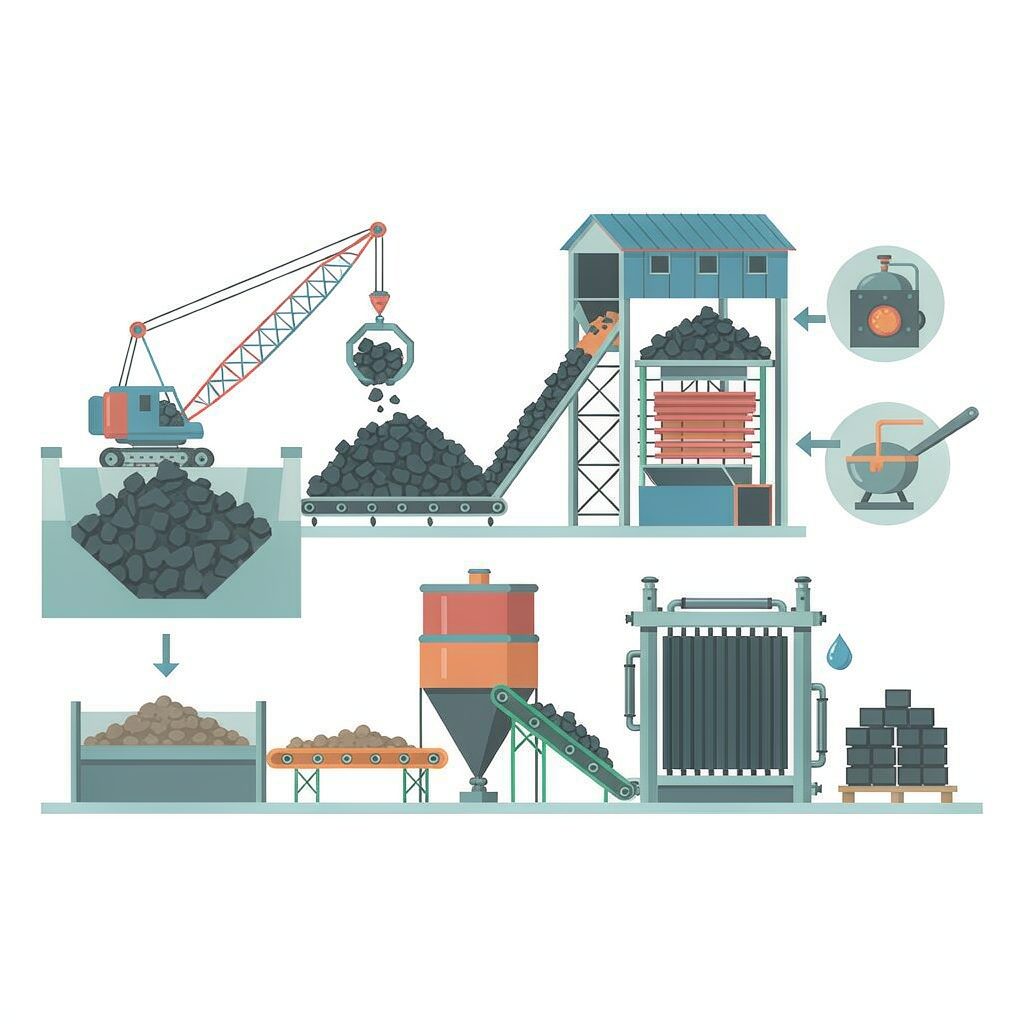
A real comparative ledger: the turbid circulating water system of the medium and heavy plate rolling mill at Jiuquan Iron and Steel. The circulating water volume of each equipment on the rolling line is 1 617 m³/h, and the scale-flushing water is 336 m³/h; both streams enter the cyclone sedimentation tank through the scale flume, with a total return water volume of 1 948 m³/h; before treatment, suspended solids are 500~700 mg/L and oil is 15~20 mg/L; after adopting a two-stage process plus side-stream chemical oil removal, the effluent suspended solids are no more than 50 mg/L and oil is 5~10 mg/L. This design uses one permanent-magnet flocculator plus a self-cleaning filter to replace the secondary sedimentation tank and pressure filter in the traditional process—the backwash water volume of the self-cleaning filter is only 0.5%~1% of the effluent volume, and the backwash time does not exceed 1~3 min.
V. "Primary scale" refers to two different things: one classified by tank, one classified by rolling mill
When going through materials in this field, the pair of terms most likely to confuse people is "primary oxide scale" and "secondary oxide scale." They have separate definitions in two contexts, and both are correct.
In the water treatment context, "primary/secondary" is classified by sedimentation location. The primary scale pit (primary sedimentation, often using a downflow cyclone sedimentation tank) collects coarse-grained scale, which is grabbed out with a grab bucket, naturally dewatered in a slag pit, and then can be transported offsite for reuse; the secondary sedimentation tank collects fine scale and oil, which must be flocculated and concentrated, then dewatered and even de-oiled before reuse. Although both are called "scale," different particle sizes mean different dewatering methods and different reuse destinations.
In the metallurgical context, "primary/secondary/tertiary" is classified by the process step in which the oxide layer forms. Primary oxide scale is the 1~3 mm thick "primary scale" formed when steel is heated and held at 1 100~1 300 ℃; it is grayish-black, flaky, covers the steel plate surface, and its main component is magnetite Fe₃O₄; secondary oxide scale is the oxide layer newly formed during the short period after the billet exits the furnace, is descaled by high-pressure water, and enters rough rolling; it is thick with poor peelability, appears as a red scale layer, and its main components are wüstite FeO and hematite Fe₂O₃ particles; tertiary oxide scale is repeatedly formed between the stands of the finishing mill and re-forms after descaling. In addition, there is "red oxide scale" that occurs only in high-silicon steel grades.
Incidentally, here is a structure that can be verified on the spot: oxide scale consists of three layers from outside to inside, with the outermost Fe₂O₃ accounting for about 10% of the thickness, the middle Fe₃O₄ about 50%, and the innermost FeO adjacent to the iron matrix about 40%. Therefore, "oxide scale" is not a single substance but a layered structure, which is also why it has a high iron content and can serve as an exothermic raw material for sintering. The criterion is very practical: when you hear "primary scale," first ask—do you mean which tank, or which rolling mill?
VI. Yield and iron grade: each has three sets of definitions
The second group prone to error is the numbers. For the same question of "how much oxide scale accounts for," publicly available materials give more than one range:
| Basis Item | Value | Source and Applicable Object |
|---|---|---|
| Yield (as a share of steel output) | 2%~3% | "Iron Oxide Scale" entry in the Steel Industry Encyclopedia; same basis as iron-bearing raw material industry data |
| Yield (as a share of steel processed) | 3%~5% | Science Popularization China · Iron Oxide Scale |
| Yield (as a share of cast billet, turbidity removal target) | 0.2%~0.5% | "Amount of iron oxide scale to be removed" in continuous casting turbid circulating water design data |
| Iron grade (all scale) | w(Fe) 80%~90% | Science Popularization China · Iron Oxide Scale |
| Iron grade (coarse scale / fine powder from sedimentation tank) | 70%~75% / approx. 60% | Steel Industry Encyclopedia entry: generally contains iron 70%~75%; fine scale powder cleared from the sedimentation tank contains approx. 60% iron |
| Iron grade (rolling scale TFe) | 60%~70% | Iron-bearing waste material industry data |
These three sets of yield figures are not contradictory, because the denominators differ: 2%~3% is "all iron oxide scale from the entire plant", 3%~5% is "the amount spalled from the surface of the steel processed", and 0.2%~0.5% is "the portion that enters the turbid circulating water system and needs to be removed by the filtration stage".The last category is the smallest, which precisely demonstrates one thing: most of the coarse scale has already been intercepted in the scale trench and the primary scale pit, and only fine particles actually enter the circulating system with the water.
Verify once more with the Jiusteel case: total return water volume 1 948 m³/h, influent Suspended Solids (SS) taken as 600 mg/L, then the SS load is about 1 169 kg/h, which converted at 330 天 continuous operation for the full year is about 9 260 t/a (dry basis). For a medium-heavy plate plant with an annual output of 200 万 t, this is equivalent to 0.46%—falling right within the continuous casting side's range of "0.2%~0.5% of billet," while about 5 times lower than "2%~3% of steel." For the same plant and the same batch of mill scale, choosing the wrong denominator leads to the erroneous conclusion that "the turbid circulating water system recovered all the mill scale of the entire plant."
VII. Recovery accounting: mill scale is a raw material stream containing 60%~90% iron
The first product of the turbid circulating water system is not clean water—it is mill scale. Its destination and pricing both have public bases and can be converted into money.
| Item | Public Data | Remarks |
|---|---|---|
| Mill Scale (70%Fe) Market Price | 660~720 元/t | 2026 年 9 月: Daqiuzhuang 670, Shijiazhuang 680, Handan 680, Nanjing 670, Xingtai 660 元/t |
| Steel Mill Public Bidding (Ansteel Heavy Machinery) | 700 元/t (tax included 13%) | 1 000 t bulk material, 2026 年 8 月 online bidding, total price 70 万 yuan, buyer pickup |
| Steel Mill Bidding Transaction (Xinxing Ductile Iron Pipes Handan New Materials) | 655 元/t | 10 t grid plate mill scale powder, 2026 年 8 月 transaction |
| Sintering Addition Effect | Adding 8% can increase output by about 2% | FeO in mill scale oxidizes and releases heat, reducing solid fuel consumption while improving sinter grade |
| Other Uses | Iron oxide red/iron oxide yellow, ferric chloride, ferrous sulfate, ferrosilicon alloy, sponge iron, reduced iron powder | Nationwide, ferrosilicon alloy smelting consumes about 200 万 t of steel scrap annually; mill scale can replace steel scrap |
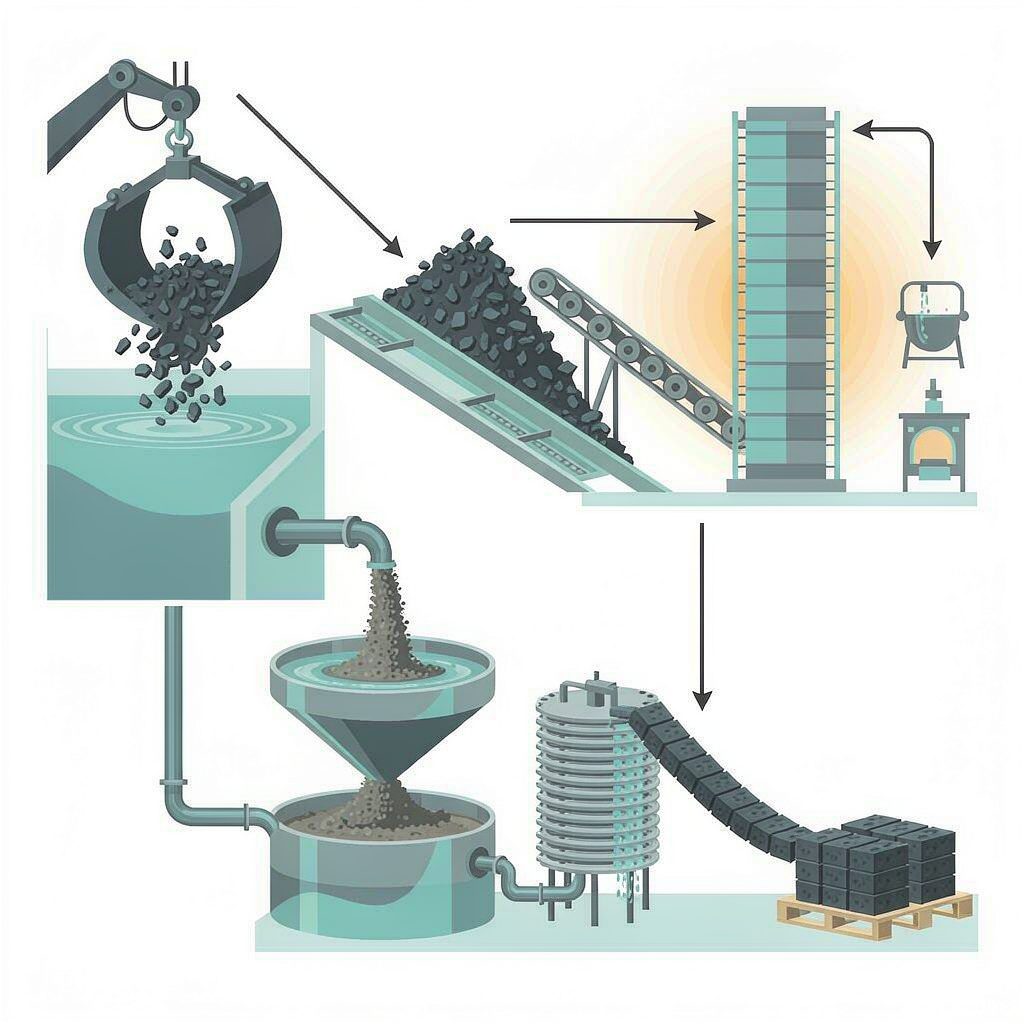
Based on a median price of 700 元/t, a rough calculation: a company producing 500 万 t of steel annually, if calculated at 2.5%, produces about 12.5 万 t of mill scale per year, corresponding to about 8 750 万 yuan/a; however, the fine mill scale actually recovered by the turbid circulating water system accounts for only about 0.5%, approximately 2.5 万 t, corresponding to about 1 750 万 yuan/a. These two figures differ by 5 times, but both are correct—the difference lies only in the two scopes: "plant-wide mill scale" versus "turbid circulating water system mill scale." What truly puts this money into the tray is the cyclone pit grab bucket, the secondary sedimentation sludge scraper, and the dewatering machine, not the water itself.
VIII. Six Engineering Truths
First, the most expensive thing in turbid circulating water is not water, but oil sludge. The oil leaked from rolling mill lubricating oil and hydraulic components sticks together with fine iron oxide particles and dust to form oil sludge, which not only clogs nozzles and filters, but also breeds bacteria and algae and accelerates the formation of slime. Turbid circulating water in most domestic steel plants generally has the problem of high oil content, so "de-oiling" is the first task of turbid circulating water, not "scale removal".
Second, filters in turbid circulating water are consumables, not long-life equipment. Quartz sand filter media will harden due to oil and scale, making the filter unable to operate and forcing it to stop for media replacement—those with good production control generally replace once a year, and some enterprises replace twice a year; although walnut shell filter media do not harden due to stirring, the stirring abrasion will reduce the particle size of the media and cause media loss, and the media running into the system will clog pipes, filters and nozzles, directly causing production shutdown. This is also the reason why many steel plants choose "no or less filtration": as long as flocculation and sedimentation are thorough, suspended solids can be less than 30 mg/L and oil less than 10 mg/L, which is already sufficient for production.
Third, magnetic filtration is not without cost either. High-gradient magnetic filters utilize the magnetization of iron oxide scale, with large treatment capacity and high efficiency, but because the equipment and filter medium (stainless steel magnetic wool) are prone to hardening, they are generally replaced every 2~4 months and cannot be regenerated, resulting in high operating costs; pressure filters using quartz sand and activated carbon as filter media also have the problems of media hardening, deteriorating effluent and short media life. The self-cleaning filter, which has been promoted rapidly in recent years, uses a woven stainless steel screen, can automatically backwash and continuously supply water, and does not require standby filters and backwash systems; the unit price is relatively high, but the overall capital and operating costs are lower.
Fourth, the rare earth magnetic disk is not a master key. It relies on a high-strength permanent magnetic field to fish out magnetic suspended solids, with small footprint and short retention time. But industry textbooks also remind: if the emulsified oil content in the wastewater is high while non-magnetic substances are few, the effluent effect will be poor—rolling wastewater, affected by the process and operating system, will contain non-magnetic iron oxide. To make the magnetic disk attract firmly, the premise is to first remove the floating oil and flocculate the oil, non-magnetic dust, ferroferric oxide and other fine particles into dense flocs.
Fifth, "quality-based water supply and cascade utilization" means sending water of poor quality to where it should go. Shandong Iron and Steel's approach is very straightforward: equipment cooling water hardly contacts the outside directly and is generally clean, called clean circulating water; turbid circulating water undertakes work such as rinsing steel and washing the ground; the two are used in cascade within and between processes (such as five-stage cascade in the steelmaking process, clean circulating water from waste heat units entering the sintering batching system, and blast furnace slag flushing water returning to the slag flushing system). The account book of Handan Steel East District conversely confirms the importance of quality-based supply: the two wastewater plants have different processes; the one using high-density clarifier plus V-type filter has low effluent hardness and low turbidity, and all its reclaimed water can be reused; the one using coagulation, sedimentation and filtration has poor effluent quality, and its reclaimed water can only be used for users with low water quality requirements such as sintering, slag flushing, coke quenching and dust removal, and a considerable part cannot be reused and is discharged.Also called "reclaimed water reuse", the hardness and turbidity of the effluent determine which user it can enter.
Sixth, the pressure of the whole system's water balance is on the "make-up water" side. The total water consumption per ton of crude steel in steel plants is on the order of 80~220 m³, while the amount of water lost to evaporation in the production process is very small, about 3 m³ per ton of steel; after adopting circulating water supply, the fresh water consumption per ton of steel in advanced enterprises has dropped to the order of 2~3 m³ (Shandong Iron and Steel Rizhao Base 2.02 m³/t, Laiwu Branch Xindong District 2.6 m³/t, Lianyuan Steel 3.19 m³/t, Handan Steel East District 2.1 m³/t).This figure has approached the physical lower limit of "evaporation loss 3 m³/t"—to go further down, it depends not on how clean the water is treated, but on making more cascade utilization stages and sending water with lower quality requirements to more suitable users.
IX. Three Fact Checks
All three boxes in this section are records actually encountered during retrieval and verified item by item against the original texts, for reference to avoid pitfalls.
X. Compress the conclusions of this article into three sentences
First sentence: Clean circulating water and turbid circulating water are two systems with two sets of criteria. For the two figures—concentration ratio not less than 3.0 and reuse rate not less than 97%—the legal subject is the "indirect cooling circulating water system"; the assessment items for turbid circulating water are suspended solids and oil content, plus four engineering constraints: packing, pump materials, water volume balance, and emergency storage volume. Applying the 3.0 times figure to turbid circulating water will lead to the physically invalid conclusion that "turbid circulating water also needs concentration".
Second sentence: The product treated by the turbid circulating water system is iron scale; water is only the carrier. Each increase in purification depth lowers the effluent suspended solids by one step: about 100 → less than 50 → less than 30 → 10 mg/L. The particle size of the iron scale determines which route it takes—coarse particles can be reused after natural dewatering by grab bucket, while fine particles must be flocculated and filter-pressed, and the oil must first be removed thoroughly.
Third sentence: All figures must carry their qualifiers. "Iron oxide scale accounts for 2%~3%" means of steel materials; "3%~5%" means of the steel materials processed; "0.2%~0.5%" is the turbidity removal target as a share of cast billets; "iron content 80%~90%" refers to all iron scale, "70%~75%" refers to coarse iron scale, and "about 60%" refers to fine powder from the sedimentation tank. In the same plant and the same batch of iron scale, changing the denominator once can make the conclusion differ by 5 times.
References
- "Code for Design of Water Supply and Drainage of Iron and Steel Enterprises" GB 50721—2011, Clause 3.2.2, Table 3.2.2 (water quality indicators for industrial fresh water and reuse water).
- GB 50721—2011, Clause 6.1.2, Clause 6.1.3, Clause 6.1.4 (Suspended Solids, particle size, reuse rate and cycles of concentration in indirect cooling circulating water systems).
- GB 50721—2011, Clause 6.4.2, Clause 6.4.4 and clause explanations, Clause 6.4.5 (direct cooling circulating water system, accident return water regulation volume).
- GB 50721—2011, Clause 7.1.2, Clause 7.1.3, Clause 7.1.4 (grid packing, wear-resistant pumps, water balance of direct cooling open circulating cooling water).
- GB 50721—2011, Clauses 7.5.1~7.5.9 (laminar cooling circulating water: basis for determining the treated water volume of the three stages—side-stream, filtration and cooling).
- "Technical Manual of Three Wastes Treatment Engineering · Wastewater Volume", Chapter 6 Iron and Steel Industry Wastewater: four process flows for hot rolling wastewater treatment, cyclone sedimentation tank loading 25~30 m³/(m²·h), retention 6~10 min, pressure filter parameters.
- "Hydraulic Engineering Design" Wastewater Pollution Control Technology Manual: two systems of clean circulating water and turbid circulating water in hot rolling plants, with turbid circulating water containing iron oxide scale and oil as the main wastewater.
- Science Popularization China · Direct Cooling Water (entry): water-using equipment of steel rolling turbid circulating water, iron oxide scale particle size distribution, effluent Suspended Solids of cyclone sedimentation tank about 100 mg/L, Suspended Solids after flocculation sedimentation less than 30 mg/L, oil less than 10 mg/L.
- Science Popularization China · Iron Oxide Scale (entry): accounts for 3%~5% of the steel processed, w(Fe) 80%~90%, three-layer structure and proportions, classification of primary/secondary/tertiary and red iron oxide scale, national annual output about 1 000 万 t, sintering addition of 8% increases production by about 2%.
- Iron and Steel Industry Encyclopedia "Iron Oxide Scale" entry: accounts for about 2%~3% of steel output, generally contains iron 70%~75%, fine scale in sedimentation tank contains about 60% iron, particle size 0.3~2 mm accounts for more than 50%, high residual oil requires roasting for deoiling to prevent dust explosion in electrostatic precipitators.
- Changzhou Precision Steel Tube Blog "Iron Oxide Scale": same source and basis as the previous item, iron content 70%~75%, sintering addition effect and density data (original unit annotation is incorrect).
- "Turbid Circulating Water Treatment in Hot Rolling Workshops", Wastewater Treatment Engineering Network: Jiuquan Iron and Steel medium and heavy plate rolling mill turbid circulating water case—circulating water volume 1 617 m³/h, scale flushing water 336 m³/h, total return water 1 948 m³/h, influent Suspended Solids 500~700 mg/L, oil 15~20 mg/L, effluent Suspended Solids not greater than 50 mg/L, oil 5~10 mg/L, self-cleaning filter backwash water volume 0.5%~1%.
- "Treatment of Turbid Circulating Water in Hot Rolling Workshops", Wastewater Treatment Engineering Network: design concept of replacing secondary sedimentation tank and pressure filter with permanent magnetic flocculator (magnetic coagulation) and self-cleaning filter.
- "Brief Discussion on Design of Continuous Casting Circulating Water System", China Water Network: secondary and tertiary water treatment schemes for continuous casting turbid circulating water, primary scale pit removing above 0.5 mm, secondary sedimentation removing above 0.2 mm, comparison of advantages and disadvantages of three types of filters.
- "Application of Water Quality Analysis Instruments in Continuous Casting Circulating Water of Steelmaking Workshops": the purpose of turbid circulating water treatment is turbidity removal, oil removal, cooling and concentration ratio management; the iron oxide scale removed by turbidity removal generally accounts for 0.2%~0.5% of billet output.
- "Rare Earth Magnetic Disk Separation and Purification Wastewater Process", Wastewater Treatment Engineering Network: inlet Suspended Solids 300~400 mg/L, outlet not greater than 20 mg/L, operating cost per ton of water 0.04~0.1 元 (the dimension of "daily treatment water volume 18 000 m³/h" in the original text is questionable).
- CSCEC SCIMEE · Guangxi Iron and Steel 3 800 mm wide and heavy plate production turbid circulating water rapid purification project (2025 年 excellent case of urban and rural water environment governance, reposted on China State Construction official website): design treatment capacity 7 500 m³/h, Suspended Solids removal rate above 90%, oil removal rate above 80%, effluent Suspended Solids less than 20 mg/L, oil content less than 5 mg/L, retention time 4~6 min, PAC 2~3 mg/L, PAM 0.2~0.3 mg/L, moisture content after magnetic pressing below 25%.
- CSCEC SCIMEE · Hebei Yongyang Special Steel full production line turbid circulating water treatment project (2026 年 8 月 public report): seven projects with total treatment scale exceeding 8 400 t/d, footprint reduced by 70%, iron sludge dewatered to moisture content below 35%, industrial water recycling rate increased to 98.9%.
- Mysteel: iron oxide scale (70%Fe) market price 2026 年 9 月 Daqiuzhuang 670, Shijiazhuang 680, Handan 680, Nanjing 670, Xingtai 660 元/t; Shandong Yinli purchase price 680~700 元/t (excluding tax).
- Ansteel Heavy Machinery Co., Ltd. iron oxide scale online public bidding sales announcement (2026 年 8 月): 1 000 t bulk material, 700 元/t (including tax 13%), total price 70 万 yuan.
- Xinxing Ductile Iron Pipes Handan New Materials scrap steel (iron oxide scale) bidding result announcement (2026 年 8 月): transaction price 655 元/t.
- "Green Steel, Virtuous as Water", People's Daily Online Shandong Channel: definition of clean circulating water and turbid circulating water of Shandong Iron and Steel, quality-differentiated water supply and cascade utilization, new water per ton of steel in Laiwu Branch new dynamic zone 2.6 m³, Rizhao Base 2.02 m³.
- "Lianyuan Steel Uses Water Resources Carefully", Loudi Daily (2023 年 10 月): 2022 年 fresh water intake 4 053 万 m³, reused water volume 247 963 万 m³, water reuse rate 98.4%, fresh water consumption per ton of steel 3.19 m³.
- "Exploration of Water Saving and Water Pollution Control Methods in Iron and Steel Enterprises", China Energy Conservation Network: total circulating water volume of Handan Steel East Zone 22 万 t/h, water circulation utilization rate 96.7%, fresh water consumption per ton of steel 2.1 t, and the accounts of two wastewater treatment plants with different processes leading to different reclaimed water destinations.
- Danish Environmental Protection Agency (MST) "Identification of Water and Energy Conservation in the Iron and Steel Industry" (2014): classification of circulating water in China's iron and steel industry (reuse water, industrial fresh water, softened water, demineralized water) and parameter citations from GB 50721—2011, GB 50050 (the table has mixed items and misaligned values; citations must be checked against the original text).
- "Discharge Standard of Water Pollutants for Iron and Steel Industry" GB 13456—2012: applicability relationship and benchmark discharge volume of the three tables Table 1, Table 2, Table 3 (used to verify that "GB 13456—2022" does not exist).
Gaowutong · Industrial Water Treatment Technology Series · All data in this article are annotated with the original text of public standards, government and industry public platforms, peer-reviewed literature or enterprise public engineering reports; wherever estimates or questionable bases exist, they have been noted item by item in the main text and references, and shall not be directly adopted as design basis; for engineering applications, please refer to the official text of current standards and enterprise measured data.
您提供的内容似乎不完整,缺少需要翻译的中文文本。请提供待翻译的中文内容,我将根据术语表为您翻译成地道的英文。