



 Multi-industry nationwide (beer/malt/MSG/fermented alcohol/baijiu/soy products/s
 Pilot to engineering scale (individual projects from tens to tens of thousands o
Food Brewing Wastewater: It Is Not a Pollution Load, but a Discharged Carbon Source
The same stream of water is, in the eyes of an enterprise, a pollution load that must have its COD reduced from several thousand mg/L to below 500 mg/L before it is allowed into the sewer, yet in the eyes of a wastewater treatment plant it is a carbon source purchased by the ton. And the question of "how much water a company may discharge per year to be compliant" is written three different ways across three standards in the food fermentation industry: one hides the denominator and makes you back-calculate it, one writes the denominator into a table, and one requires the denominator to first be "converted at 65 degrees." This article uses the original standard texts, ministry policy interpretations, publicly disclosed local pilot ledgers, and engineering data to take this chain apart.
I. First, Put the Two Prices Side by Side
The common characteristics of food fermentation wastewater are high organic concentration, good biodegradability, and no toxic or hazardous substances. Taking brewery wastewater as an example, the industry-measured ranges are roughly COD 2 000–6 000 mg/L, BOD₅ 1 200–3 600 mg/L, and Suspended Solids 200–1 000 mg/L, with BOD/COD between 0.55 and 0.65. This ratio means that most of the organic matter can be directly consumed by microorganisms—for a discharging enterprise this means "not difficult to treat," while for a wastewater treatment plant short of carbon source this means "high-quality, readily available, externally added carbon source that costs nothing to buy."
In the policy interpretation of the standard amendment released by the Department of Water Ecological Environment of the Ministry of Ecology and Environment on 2021 年 1 月, both ends of this matter are stated plainly: on one end, "liquor manufacturing enterprises need to take measures to substantially reduce the Chemical Oxygen Demand in wastewater to several hundred mg/L (400 mg/L for fermented alcohol and baijiu enterprises, 500 mg/L for beer enterprises) before it may be discharged to wastewater treatment plants, and the construction investment and operating costs of wastewater treatment facilities are relatively high"; on the other end, "some wastewater treatment plants need to supplement carbon sources in order to improve nitrogen and phosphorus removal efficiency and achieve compliant discharge." The same document writes out "the extra money spent by enterprises" and "the extra money spent by wastewater treatment plants" side by side, which is rarely seen in standards-type documents.
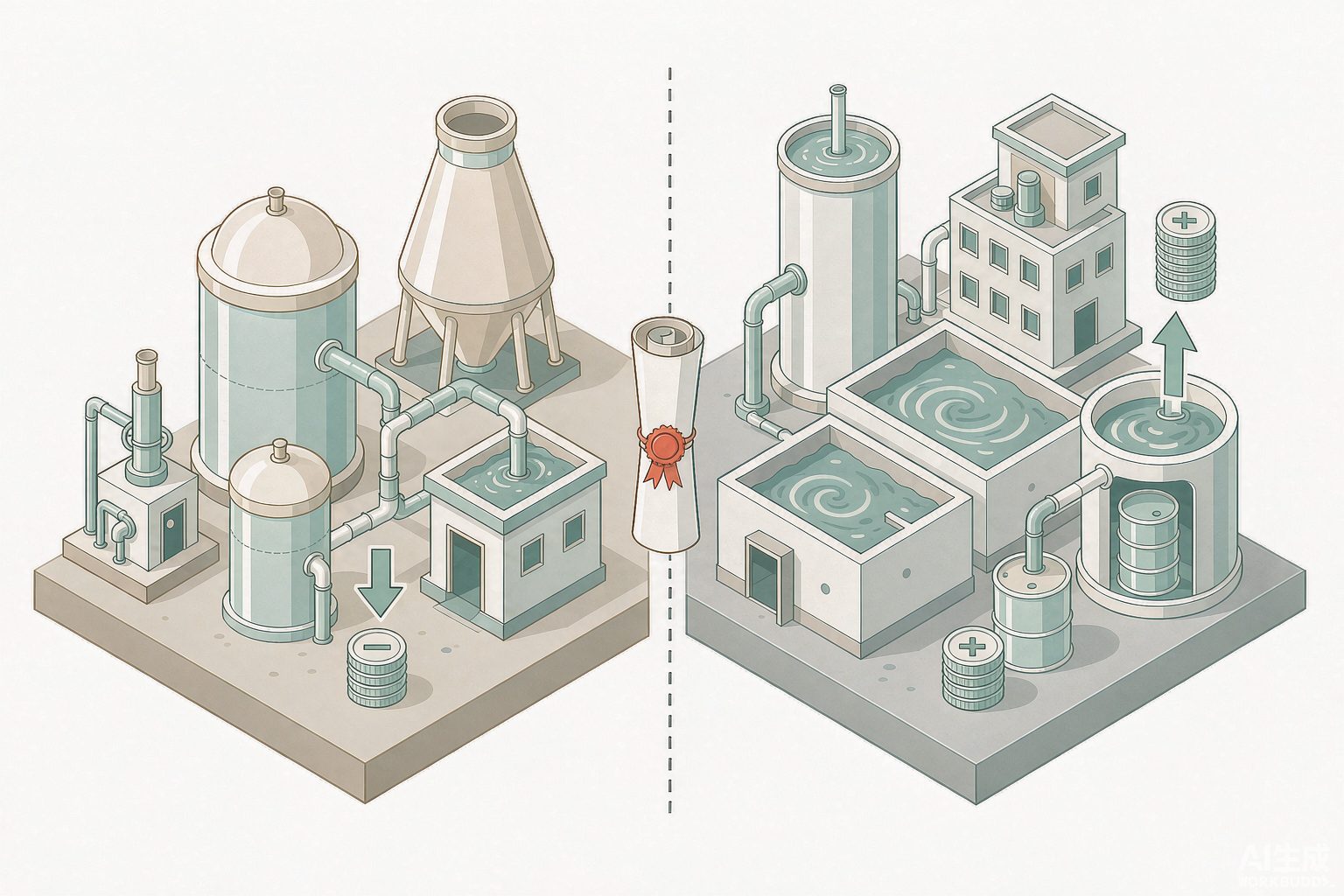
To convert the term "carbon source" into money, a conversion equivalent is needed. Sodium acetate trihydrate (NaCH₃COO·3H₂O, relative molecular mass 136.08) consumes 2 mol of oxygen per mole upon complete oxidation, i.e., 64 g, and the theoretical COD equivalent is 64 ÷ 136.08 ≈ 0.470 g COD/g, meaning that every 1 kg COD provided requires about 2.13 kg sodium acetate trihydrate. Based on 2025 年 publicly disclosed transaction prices—the SunSirs 12 月 17 日 quotation (content 58%–60%) at 1 750–1 950 元/ton, and the competitive negotiation transaction price of the Jingzhou Guannan Road Wastewater Treatment Plant 2025 年 8 月 at 2 130 元/ton—taking 1 800 元/ton, the purchased cost of 1 kg COD is approximately 3.8 元.
In other words, one cubic meter of brewery wastewater with COD 2 000 mg/L is roughly equivalent to 7.7 元 of external carbon source for a wastewater treatment plant; while for the enterprise, it is a stream of water that must go through screening, equalization, anaerobic, aerobic, and advanced treatment before it can be discharged. That money has not disappeared; it has merely moved from one company's cost sheet to another company's cost sheet—unless someone connects the two.
II. One Industry, Three Standards, Three Ways of Writing the "Denominator"
Whether the above account can be settled depends on one thing: how the standards answer the question "how much water should an enterprise discharge per year." Environmental discharge indicators have never been just about concentration; they also involve total quantity—and total quantity must have a denominator. The three industry standards currently still in force for the food fermentation industry handle the denominator in completely different ways.
| Standard | Applicable Products | How the Denominator Is Expressed | What the Denominator Is |
|---|---|---|---|
| GB 19821—2005 Discharge Standard of Pollutants for Beer Industry | Beer, Malt | No "baseline water discharge" column; only "pollutant discharge per unit product" (kg/kL, kg/t) | Kiloliter of beer / ton of malt (requires back-calculation) |
| GB 19431—2004 Discharge Standard of Pollutants for Monosodium Glutamate Industry | Monosodium Glutamate | "Pollutant discharge per ton of product" (kg/t) and "water discharge" (m³/t) are listed side by side; the four indicators are self-consistent | Ton of monosodium glutamate (explicitly stated) |
| GB 27631—2011 Discharge Standard of Water Pollutants for Fermented Alcohol and Baijiu Industry | Fermented Alcohol, Baijiu | Directly states "baseline water discharge per unit product" (m³/t), with the denominator defined in the terminology | Ton of alcohol / ton of original liquor (converted at 65 degrees) |
None of the three approaches is wrong, but they place completely different demands on users: the first requires you to do division, the second requires you to cross-check, and the third requires you to first perform an alcohol strength conversion. Any table that directly compares the figures from these three standards side by side ignores the fact that the denominators are simply not aligned.
III. Beer: The two figures 7.0 and 5.0 are calculated from the table
Let's look at the first document. The structure of Table 1 in GB 19821—2005 is as follows: each pollutant occupies one row, with the concentration standard value above and the pollutant discharge per unit product below; the footnote below the table states "for beer enterprises, the unit is kg/kL; for malt enterprises, the unit is kg/t". The table does not contain a column for "benchmark wastewater discharge".
However, these two rows of figures are linked by the same implicit divisor. Dividing the five indicators one by one:
| Pollutant | Discharge Standard for Brewery Enterprises (mg/L) | Discharge per Unit Product (kg/kL) | Implied Wastewater Discharge by Division (m³/kL) |
|---|---|---|---|
| Chemical Oxygen Demand CODCr | 80 | 0.56 | 7.0 |
| Five-Day Biochemical Oxygen Demand BOD₅ | 20 | 0.14 | 7.0 |
| Suspended Solids SS | 70 | 0.49 | 7.0 |
| Ammonia Nitrogen | 15 | 0.105 | 7.0 |
| Total Phosphorus | 3 | 0.021 | 7.0 |
Data are taken from GB 19821—2005 Table 1, the "Discharge Standard" column for brewery enterprises and the corresponding row of pollutant discharge per unit product; dividing one by the other gives "discharge per unit product ÷ concentration limit = the water volume corresponding to that limit". The five independent indicators back-calculate the same divisor, indicating that 7.0 m³/kL is not a coincidence, but the implied baseline wastewater discharge adopted when this standard was prepared.
Process the malt enterprise column in the same way (0.4, 0.1, 0.35, 0.075, 0.015 kg/t, for 80, 20, 70, 15, 3 mg/L), and dividing the five items likewise yields all hits 5.0.These two "denominators" equal 7.0 m³/kL beer and 5.0 m³/t malt respectively—they were never written in the standard text itself, but back-calculated from emission loads.
IV. MSG: the denominator is written directly in the table, and it verifies itself
The second standard, GB 19431—2004, takes the opposite approach: it writes "pollutant emission per ton of product" and "water discharge" side by side in the same table. The table is read as follows—the upper four rows give the two values "kg/t product" and "mg/L" for the four pollutants, and the last row directly gives the water discharge.
| Version | COD (kg/t and mg/L) | BOD₅ | SS | Ammonia Nitrogen | Discharge Volume (m³/t) |
|---|---|---|---|---|---|
| Table 1 (construction projects before 2003-12-31) | 75 / 300 | 25 / 100 | 37.5 / 150 | 17.5 / 70 | 250 |
| Table 2 (construction projects from 2004-01-01) | 30 / 200 | 12 / 80 | 15 / 100 | 7.5 / 50 | 150 |
Excerpted from Table 1 and Table 2 of GB 19431—2004. Dividing each of the four pairs of values in the two tables yields the same value: 250 for Table 1 (75÷0.300, 25÷0.100, 37.5÷0.150, 17.5÷0.070), and 150 for Table 2. According to Article 4.1.4.1, monosodium glutamate enterprises constructed before 2003-12-31 shall also implement Table 2 from 2007-01-01. The standard also defines "discharge volume": the amount of water directly used in the production process that is discharged.
This table deserves a separate mention because its internal consistency is verifiable: for four mutually independent pollutants, each "kg/t ÷ mg/L" lands precisely on the same number. This yields a very practical criterion—when you encounter a table with "discharge per ton of product," run this division first; any column that does not divide evenly is either a transcription error or the denominator is not what you think it is.
There is another definitional difference that is easily overlooked: GB 19431 defines "discharge volume" as "the discharge volume of water used directly in the production process," whereas Article 3.5 of GB 27631—2011 defines "discharge volume" as "the volume of wastewater discharged by production facilities or enterprises beyond the enterprise's legal boundary, including all types of externally discharged wastewater directly or indirectly related to production (including domestic sewage in the plant area, cooling wastewater, boiler and power station drainage in the plant area, etc.)." The same term: one standard counts only process water, while the other counts all external discharges from the entire plant. Cooling water at a brewery accounts for more than 60% of total discharge volume, and this difference is enough to change the conclusion.
V. Baijiu: the denominator is not "ton of liquor" but "original liquor converted at 65 degrees"
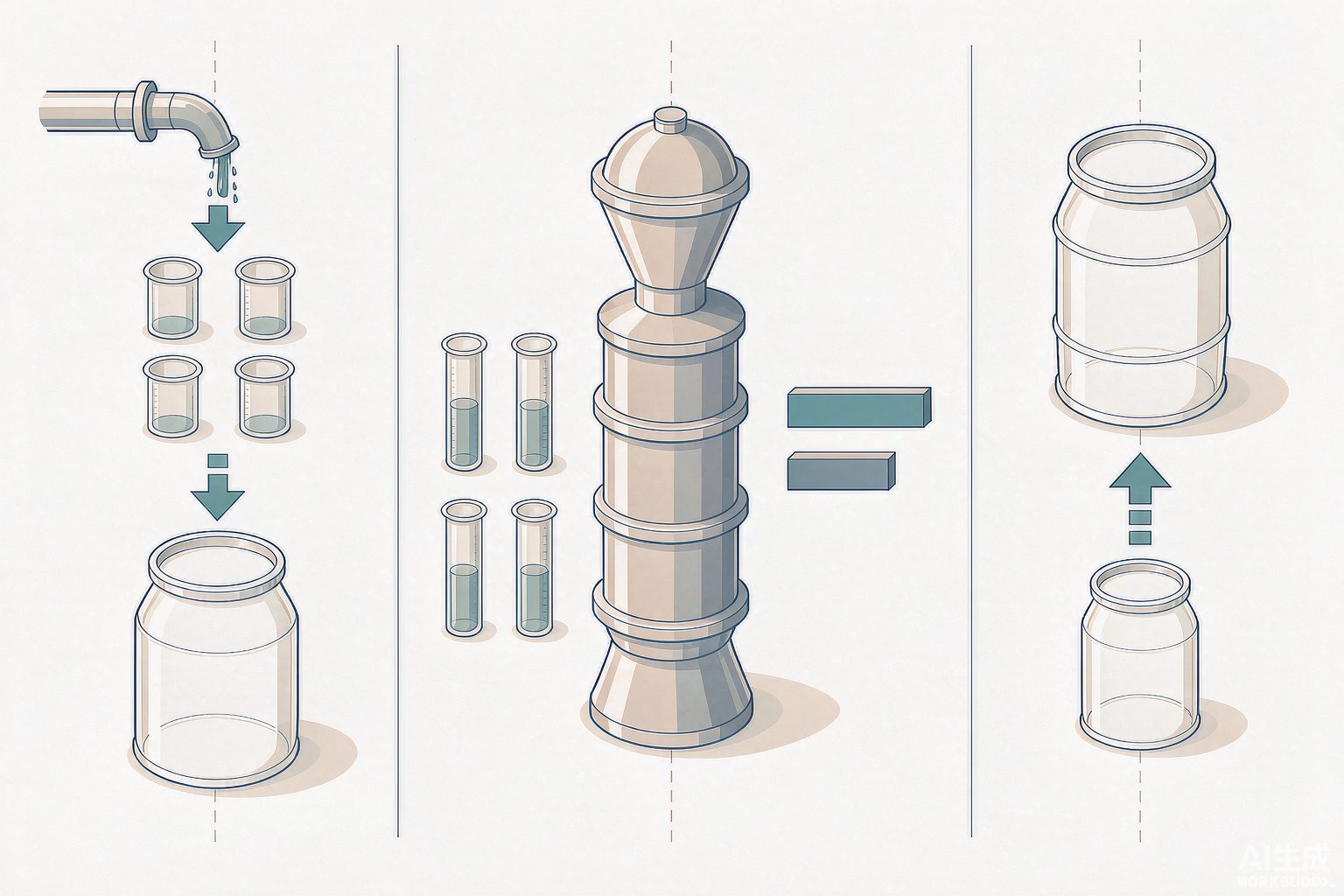
The third standard, GB 27631—2011, makes the denominator explicit, but it does so by subjecting it to a conversion step. The definition in Article 3.6 of the standard reads: "Benchmark discharge volume per unit product—refers to the upper limit value of wastewater discharge volume per unit of alcohol or original liquor produced (original liquor converted at 65 degrees) specified for the purpose of verifying the discharge concentration of water pollutants."
| Standard Tier | Fermentation Alcohol Enterprises (m³/t) | Baijiu Enterprises (m³/t) | Corresponding COD Limit (Direct Discharge / Indirect Discharge, mg/L) |
|---|---|---|---|
| Table 1 Existing Enterprises (2012-01-01~2013-12-31) | 40 | 30 | 150 / 400 |
| Table 2 New Enterprises (from 2012-01-01; existing enterprises from 2014-01-01) | 30 | 20 | 100 / 400 |
| Table 3 Special Emission Limits for Water Pollutants | 20 | 10 | 50 / 100 |
The "Baseline Water Discharge per Unit Product" column in Table 1, Table 2, and Table 3 of GB 27631—2011. The derivation pace of the three tiers is synchronized with the COD limits: Baijiu from 30 → 20 → 10, COD direct discharge from 150 → 100 → 50, with additional limits for Total Nitrogen (25 / 20 / 15) and Total Phosphorus (1.0 / 1.0 / 0.5).
Please note a fact in this section that is easily overlooked: the "direct discharge" and "indirect discharge" values for each tier are exactly the same—for alcohol they are 40/40, 30/30, 20/20, and for baijiu they are 30/30, 20/20, 10/10. Unlike the concentration limits (COD direct discharge 100 versus indirect discharge 400, a relaxation of 4 times), the benchmark discharge volume is not relaxed at all. The reason is also clear: the concentration is relaxed because that portion of the reduction load is shifted to the wastewater treatment plant; the water volume is not relaxed because the extra water discharged is also a hydraulic load at the wastewater treatment plant, and no party can absorb it on its behalf.
The five characters "converted according to 65 degrees"—the standard does not specify the conversion method
"Conversion" is the most error-prone part of this matter. The common practice in the baijiu industry is to convert according to the alcohol volume fraction at 20 ℃, that is, to convert the actual alcohol strength into 65 degrees:
Converted 65 degree base liquor volume = actual finished liquor volume × actual alcohol strength ÷ 65
According to this algorithm, 1 kiloliters of 52%vol finished baijiu equals only 52 ÷ 65 ≈ 0.80 kiloliters of 65 degree base liquor. In other words, if an enterprise takes the easy way out and directly uses "finished liquor output" as the denominator, the denominator will be inflated by at least one quarter, and the calculated wastewater discharge per ton of liquor will be too small—operating conditions that should have been judged as exceeding the benchmark discharge volume will be calculated as compliant. This is the sixth time in this series that "one error in the denominator flips the conclusion," and the first time we have seen that the denominator itself needs a process conversion first.
VI. The two amendment sheets for 2020 年: writing "negotiation" into mandatory standards
The reason these interpretations exist is that food brewing wastewater has long been managed as "industrial wastewater": enterprises had to reduce COD to several hundred mg/L within their own plants before being allowed to discharge into the sewer. On 2020 年 12 月, a negotiable opening was made in this threshold.
The Ministry of Ecology and Environment and the State Administration for Market Regulation jointly issued the amendment sheet to the "Discharge Standard of Pollutants for Beer Industry" (GB 19821—2005) and the amendment sheet to the "Discharge Standard of Water Pollutants for Fermented Alcohol and Baijiu Industry" (GB 27631—2011). The original text of Article 4.2 of the amendment sheet (according to the verbatim quotation in the public reply of the Baotou Municipal Ecology and Environment Bureau) is:
The policy interpretation also sets out the supporting obligations equally clearly: first, the two parties are allowed to "jointly agree on water pollutant discharge concentration limits by signing a legally binding written contract, and use them as the basis for environmental supervision and enforcement"; second, "enterprises implementing the agreed concentration limits shall promptly share the self-monitoring data of the relevant pollutant indicators with the ecological environment authorities and the operating units of downstream wastewater treatment plants"; the amendment sheet also expands the scope of application and adds requirements for the standardized setting of wastewater discharge outlets and information disclosure. "Negotiation" here is not "relaxing supervision," but replacing the regulatory basis from the standard tables with contracts and data flows.
This mechanism was subsequently written into local regulations. Article 16, Paragraph 3 of the "Regulations on Water Pollution Prevention and Control of Hunan Province" provides: "Support is given to enterprises such as those engaged in alcoholic beverage manufacturing and agricultural and sideline food processing to use highly biodegradable wastewater as a carbon source supplement for wastewater treatment plants in accordance with relevant national and provincial provisions." The regulations were adopted on 2024 年 11 月 29 日 and came into effect on 2025 年 5 月 1 日; according to public reports, the pilot practices in Changsha Ningxiang Economic and Technological Development Zone and Wangcheng Economic and Technological Development Zone were among the grassroots sources that drove this provision to be written into law.
VII. How large is the price gap: a public ledger from a pilot industrial park
How much money this mechanism actually saves once implemented—the public data from two industrial parks in Changsha provide a fairly complete account. 2022 年, Ningxiang Economic and Technological Development Zone first piloted the approach with a beer enterprise, making it Hunan Province's first cooperation project for resource utilization of brewery wastewater; 2024 年 12 月 26 日, the pilot was expanded to zone-wide implementation, with 9 food enterprises in Ningxiang Economic and Technological Development Zone joining, and the two parks together comprising 18 existing enterprises and 5 new enterprises.
| Account Item | Public Data | Beneficiary |
|---|---|---|
| Reduction of wastewater treatment facility operating costs for existing enterprises | 1 000 万 yuan or more / year | 18 pilot existing enterprises |
| Construction cost savings for newly introduced enterprises | Approx. 1 680 万 yuan (one-time) | 5 new enterprises |
| Carbon source cost savings for wastewater treatment plant | Approx. 220 万 yuan / year | Industrial Park wastewater treatment plant |
| Carbon emission reduction | Approx. 4 340 tons CO₂ / year | Industrial Park as a whole |
| Including 9 pilots in Ningxiang Economic and Technological Development Zone | Comprehensive wastewater treatment cost savings of approx. 500 万 yuan / year | 9 food enterprises |
| Measured at a pilot food enterprise | Annual electricity reduction of 40 万 kWh, annual operating cost savings of 120 万 yuan | Single enterprise |
Data sources: Public reports from Changsha City, Ningxiang City, and Changsha Ecological Environment Bureau (2024-12-26 pilot press conference, 2025-06 notification of selection as one of the top ten typical cases of 2024 年 Industrial Park Water Environment Management by the Ministry of Ecology and Environment). The same set of data has two calibers in different reports: "1 000 万 yuan" and "867 万 yuan"; this article adopts the 2024 年 12 月 press conference caliber.
What deserves the most attention from technical personnel in this set of figures is one engineering description: that pilot food enterprise "eliminated the anaerobic and aerobic treatment processes; after collection, the wastewater only needs pretreatment and is discharged within the negotiated discharge concentration limits, while the idle anaerobic and aerobic treatment tanks were cleaned up and converted into emergency tanks." In other words, the 120 万 yuan and 40 万 kWh saved are precisely the power consumption and operating costs of those two biological treatment stages; and the cost (and also the necessary supporting measure) is converting them into emergency facilities.
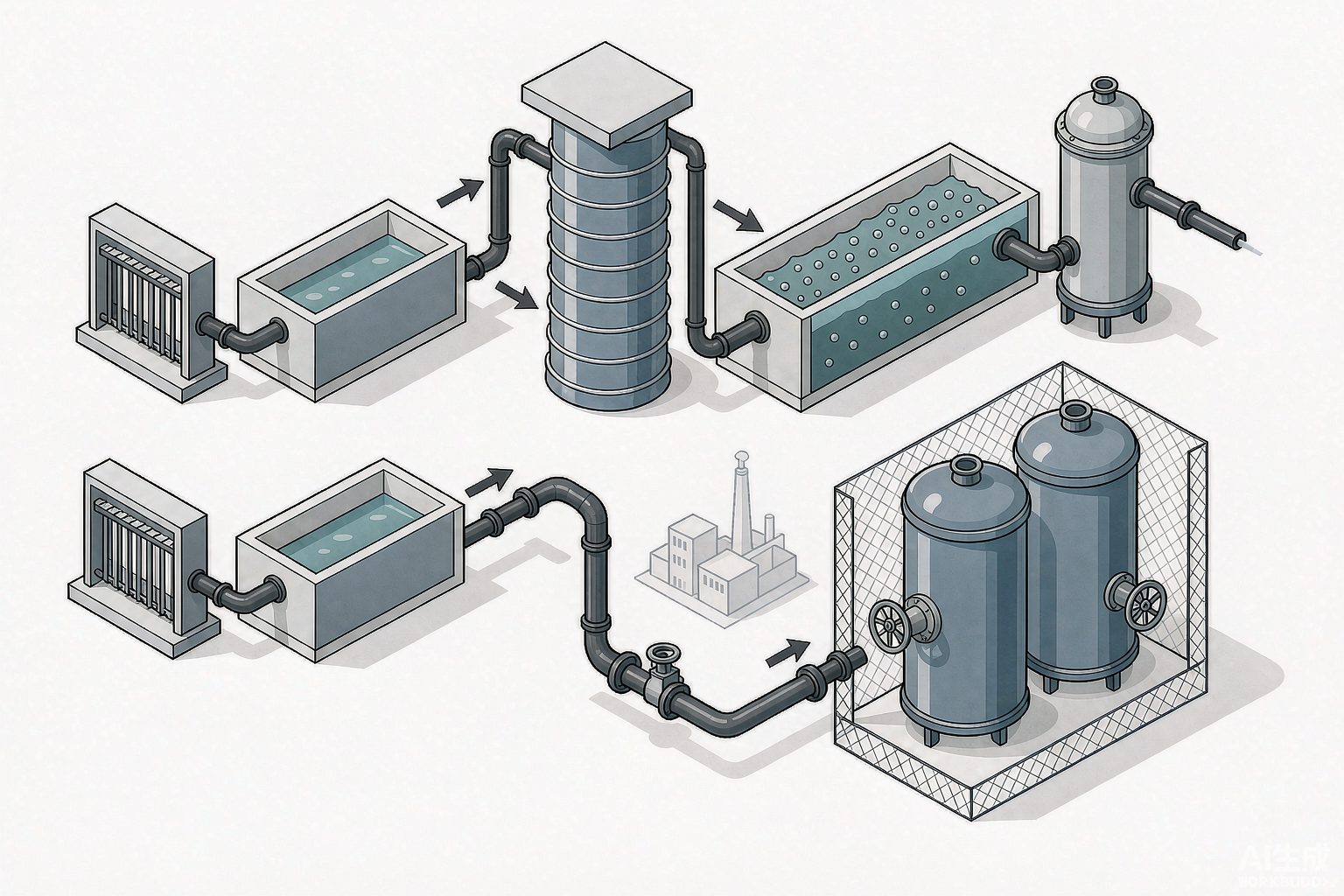
There is also comparative data on the effectiveness of food wastewater as a carbon source. Research by Li Jun's team at Zhejiang University of Technology on soybean product wastewater shows that each 1 tons of soybeans processed generates about 12–20 tons of wastewater, and sending it directly to a wastewater treatment plant can save 4.15 元/m³ in treatment costs; after the wastewater treatment plant receives it, the influent COD increases by 53.3% on average, while Total Nitrogen and Total Phosphorus increase only slightly by 5.7% and 8.1%, the effluent nitrogen and phosphorus removal performance improves, and the plant can reduce CO₂ emissions by about 337.9 tons per year (about 15.8% of the plant's total emissions), save about 406.5 tons of carbon source, and lower wastewater treatment costs by 7%–10%. Research by Huang Yulian and others at Chengdu Environment Investment Group provides a horizontal comparison of another substitute: when anaerobic acidification liquid from fruit and vegetable waste is used as a carbon source, the Total Nitrogen removal rate during the addition stage is 98.27%, basically on par with the conventional carbon source 97.18%, while the COD removal rate is actually higher (90.62% vs. 83.01%).The intuition that "substitute carbon sources perform poorly" does not hold, at least for these two types of wastewater.
VIII. Negotiated discharge is not "no treatment": three things that must be done
Replacing the two biological treatment stages with a contract is premised on this path being truly controllable. What recurs in public pilot reports is the same sequence: feasibility demonstration → pipeline network modification and O&M → online monitoring and data sharing → emergency fallback. The approach of Ningxiang Industrial Park is to "organize and carry out surveys of the current drainage status, feasibility demonstration and analysis of negotiated wastewater discharge, prepare implementation plans, and commission professional institutions to carry out pipeline network modification and maintenance," and at the park level to "conduct 24 小时 monitoring of water-related enterprises" and "organize professional pipeline inspection teams to patrol the park's pipeline network every day."
Among these, the most easily overlooked and also the least omissible is emergency facilities. The Technical Specification for Brewing Industry Wastewater Treatment Engineering (HJ 575—2010) has very rigid provisions on this matter:
Article 6.10.3: After production returns to normal or the wastewater treatment facility fault is cleared, the wastewater stored in the accident tank may be conveyed at a uniform rate to the comprehensive wastewater treatment system for treatment to meet discharge standards.Wastewater must not be discharged directly from the accident tank to outside the plant.
Article 7.6.1: The effective volume of the accident tank shall be greater than the maximum wastewater generation volume in the event of an accident, or greater than 24 h of the total comprehensive wastewater discharge volume of the brewing plant. Article 7.6.3 separately stipulates that the freeboard of the tank body should preferably be 700–1 000 mm.
Looking at these two articles together with the pilot enterprise's modification, the logic becomes complete: the reason "eliminating biological treatment" can be dared is that those two original tanks were converted into buffer space for 24 小时 of the water volume. This also explains why the specification separately emphasizes that "the equalization tank must not be used as an accident tank"—the equalization tank is a homogenization and flow equalization unit with continuous inflow and outflow, while the accident tank is a closed vessel with only inflow and no outflow; the two cannot substitute for each other.
IX. If the enterprise still treats wastewater itself: here is the parameter window
Not all food and brewing enterprises are suitable for negotiated discharge. Enterprises with complex product structures, pipeline networks difficult to segregate by quality, or downstream wastewater treatment plants without spare capacity still need to reduce COD within their own plants. The anaerobic unit design parameters given in HJ 575—2010 are the most direct "window table" for this industry:
| Anaerobic Process (Stage) | Volumetric Loading kgCOD/(m³·d) | Reaction Temperature ℃ | Biogas Yield m³/kgCOD | Effective Water Depth m | Upflow Velocity m/h |
|---|---|---|---|---|---|
| CSTR (Stage 1) | 6~10 | 55±2 | 0.45~0.55 | — | — |
| EGSB (Stage 1) | 15~40 | 55±2 | 0.35~0.45 | 14~18 | 5~15 |
| UASB (Stage 2) | 5~7 | 35±2 | 0.35~0.45 | 4~8 | 0.5~1.0 |
| Hydrolysis Acidification (Stage 2) | 2.3~4.5 | 25±2 | — | 4~6 | 1.5~3.0 |
HJ 575—2010 Reference Table for Article 7.2.3 (to be used when test data are lacking). The selection logic is given in Article 7.2.1.2: when the combined wastewater has COD<3 000 mg/L and SS<500 mg/L, UASB should be selected; when COD<1 000 mg/L, Hydrolysis Acidification should be selected. Article 7.2.2 specifies the pollutant removal rate requirements: Stage 1 CSTR >80%, Stage 1 EGSB >85%, Stage 2 UASB >90%, Stage 2 Hydrolysis Acidification >35%. Article 7.2.5 additionally sets two hard constraints: 2 or more reactors should be provided, and the volume of a single unit should not exceed 2 000 m³.
Three numbers in this table are worth remembering separately. First, the volumetric loading rate of EGSB differs from that of UASB by a factor of 3–5 (15–40 versus 5–7); what differs is not equipment quality but effective water depth (14–18 m versus 4–8 m) and upflow velocity (5–15 m/h versus 0.5–1.0 m/h)—it relies on a taller tower body to truly "fluidize" the granular sludge. Second, the first-stage Anaerobic process runs at high temperature (55±2 ℃), while only the second-stage Anaerobic process runs at mesophilic temperature (35±2 ℃); this tier difference directly determines the heating method and heat source selection. Third, the volume of a single unit should not exceed 2 000 m³, and at least 2 units must be provided—this is a very practical availability clause: when one unit is under maintenance, the other can still run.
On the Aerobic side, the common wording in commercial materials is Activated Sludge process with MLSS 2 000–4 000 mg/L and retention time 8–16 h, while an actual engineering case of a brewery (design scale 5 000 m³/d) provides this experience: a well-designed UASB can achieve effluent COD of 250–350 mg/L when influent COD is <3 000 mg/L. Other peer-reviewed data (Cronin & Lo, Bioresource Technology, 1998, 64(1)) show that UASB treating brewery wastewater achieves COD removal of 75%–90% at a volumetric loading rate of 10–15 kg COD/(m³·d). Putting these three sets of numbers side by side reveals a common point: all parameters rest on the same premise—influent COD is in the thousands, not the hundreds. This is exactly the ruler that negotiated discharge is meant to move: it replaces "in-plant reduction" with "off-plant synergy," but the volume, depth, and upflow velocity of those tanks inside the plant remain unchanged.
X. Closing: This Is Not a Division Problem, but a Division-of-Labor Table
Returning to the two prices at the beginning. What the two amendment sheets of 2020 年 essentially do is change the threshold of "reduce to a few hundred mg/L" into the matter of "who reduces it," which can be agreed upon by both parties. It holds on three premises, and trouble arises if any one is missing: first, the wastewater itself is clean enough (good biodegradability, free of toxic and hazardous substances—a natural endowment of food and brewing wastewater); second, the downstream sewage treatment plant is indeed short of carbon source (the carbon-to-nitrogen ratio of the mixed water quality of pilot enterprises is as high as 20.97, while Denitrification usually requires a carbon-to-nitrogen ratio of no less than the order of 3.5); third, not a single drop of water volume is released (the direct discharge tier and indirect discharge tier of the benchmark discharge volume are completely identical; the only thing negotiable is concentration).
Among all engineering actions, the one that can least be omitted is that emergency tank. It brings a management innovation back to engineering common sense: remove the two-stage biological process from the flow, and you must leave in place a volume that "only accepts inflow and discharges nothing"; hand over the concentration cap, and you must connect back the data stream of online monitoring. Otherwise, the electricity and chemical costs saved are merely borrowing from the future.
As for "discharge volume per ton of product," the answer given by the three standards unpacked in this article is: the denominator for beer must be back-calculated (7.0 m³/kL), the denominator for MSG must be verified (250 and 150 m³/t), and the denominator for baijiu must first be converted (based on 65 degrees). Any approach that puts the numbers from these three standards into the same comparison table will err on the denominator—and if the denominator is wrong once, compliance and exceedance can flip into each other.
Summary of Conclusions: ① The two prices of food brewing wastewater are linked by the same COD equivalent—the theoretical COD equivalent of sodium acetate trihydrate is 0.470 g/g, converted at 1 800 元/ton, 1 kg COD is approximately equivalent to 3.8 元, and wastewater with 1 m³ COD 2 000 mg/L is approximately equivalent to 7.7 元; ② Table 1 of GB 19821—2005 does not set a baseline discharge volume; back-calculation from five indicators yields 7.0 m³/kL (beer) and 5.0 m³/t (malt); ③ The denominator of GB 19431—2004 is written in the table and the four items are self-consistent (250 and 150 m³/t), but its "discharge volume" only counts process water, and its broad and narrow scopes differ from GB 27631; ④ The denominator of GB 27631—2011 is "raw liquor converted at 65 degrees," and the baseline discharge volumes for direct discharge and indirect discharge are completely identical—what is negotiated is concentration, not water volume; ⑤ The pilot in two parks in Changsha with 18 old enterprises saves more than 1 000 万 yuan in annual operating costs, about 220 万 yuan in annual carbon source costs for the wastewater treatment plant, and reduces carbon by 4 340 tons/year; ⑥ The engineering consideration for negotiated discharge is converting the original biological tank into an emergency tank; HJ 575—2010 requires that the accident tank be set up separately, that the equalization tank must not be used as a substitute, and that the volume be greater than the 24 h comprehensive wastewater volume.
References
- Ministry of Ecology and Environment, State Administration for Market Regulation: Amendment Sheet to the Discharge Standard of Pollutants for Beer Industry (GB 19821—2005), Amendment Sheet to the Discharge Standard of Water Pollutants for Fermented Alcohol and Baijiu Industry (GB 27631—2011), issued on 2020 年 12 月, effective from the date of issuance.
- Water Ecology and Environment Department, Ministry of Ecology and Environment: Policy Interpretation of Amendment Sheets to 2 Pollutant Discharge Standards Including Beer, Fermented Alcohol and Baijiu, 2021-01-06. The original text contains statements that "beer enterprises shall be 500 mg/L" and "fermented alcohol and baijiu enterprises shall be 400 mg/L", along with explanations on negotiated indirect discharge concentration limits.
- Full text of the issued version of the Discharge Standard of Water Pollutants for Fermented Alcohol and Baijiu Industry (GB 27631—2011), issued on 2011-10-27, implemented on 2012-01-01. Article 3.5 "Discharge Volume", Article 3.6 "Baseline Discharge Volume per Unit Product (original liquor converted at 65 degrees)", Article 4.5 baseline water volume conversion formula, Tables 1–3.
- Discharge Standard of Pollutants for Monosodium Glutamate Industry (GB 19431—2004), approved by the State Environmental Protection Administration on 2004-01-18, issued by Announcement No. 21 of Huanfa [2004]. Table 1, Table 2, and Articles 4.1.4 and 4.1.5.
- Discharge Standard of Pollutants for Beer Industry (GB 19821—2005), Table 1: Maximum allowable discharge limits of water pollutants for beer production enterprises and malt enterprises, including the row of pollutant discharge per unit product and the footnote "beer enterprises kg/kL, malt enterprises kg/t".
- Baotou Municipal Ecology and Environment Bureau: Reply to Recommendation No. 145 of the Third Session of the 16th Baotou Municipal People's Congress, 2024-07-19. Verbatim quotation of the original text of Article 4.2 of the Amendment Sheet to GB 19821—2005 and the relevant requirements of the Notice on Further Standardizing the Environmental Management of Urban (Park) Wastewater Treatment (Huan Shui Ti [2020] No. 71).
- Hunan Province Water Pollution Prevention and Control Regulations, adopted at the 13th Meeting of the Standing Committee of the 14th Hunan Provincial People's Congress on 2024-11-29, effective from 2025-05-01; Article 16, Paragraph 3: "support enterprises engaged in alcoholic beverage manufacturing, agricultural and sideline food processing, etc. ... to use wastewater with strong biodegradability as a carbon source supplement for wastewater treatment plants".
- Ningxiang Branch of Changsha Municipal Ecology and Environment Bureau: "Wastewater" Becomes "Carbon Source" — Ningxiang Wastewater Treatment Model Selected as One of the Top Ten Typical Cases of 2024 年 Industrial Park Water Environment Management, Ningxiang Municipal Government Portal, 2025-06-19.
- Rednet Moment: Embarking on the "Green Advancement Path" — 9 Enterprises in Ningxiang Economic and Technological Development Zone Participate in the Wastewater Discharge Pilot Program, 2024-12-27. Including "18 existing enterprises reduced operating costs by 867 万 yuan/year, 5 newly introduced enterprises saved station construction costs of 1680 万 yuan, the wastewater treatment plant saved about 220 万 yuan/year in carbon source costs, and reduced carbon emissions by 4340 tons/year".
- Changsha Evening News: Pilot Program for Region-wide Advancement of Negotiated Discharge Concentration Limits for Wastewater in Hunan's Food Industry Launched First in Ningxiang Economic and Technological Development Zone, 2024-12-26. Including a pilot food enterprise's "annual electricity reduction of 40 万 kWh, annual savings of 120 万 yuan", "cancellation of anaerobic and aerobic treatment processes", and "idle anaerobic and aerobic treatment tanks cleaned and converted into emergency tanks".
- China Environment News / China Environment Network: Wastewater Treatment Drinks Cola and Tea — What Else Can Serve as Carbon Sources? Is "Carbon Source Freedom" Really Free? ①. Including the mixed water quality carbon-nitrogen ratio of 20.97 for pilot enterprises in Changsha, research data on soybean product wastewater by Li Jun's team at Zhejiang University of Technology, and research data on anaerobic acidification liquid of fruit and vegetable waste by Huang Yulian et al. of Chengdu Environment Investment Group.
- Full text of the Technical Specification for Wastewater Treatment Engineering of Brewing Industry (HJ 575—2010), issued by the Ministry of Environmental Protection. Article 6.10 accident and emergency treatment, Article 7.1.2 regulating tank, Article 7.2 anaerobic biological treatment, Article 7.5.3 biogas storage cabinet, Article 7.6 accident emergency treatment, Article 8.1.11 decanter.
- Wastewater Treatment Engineering Network: Hydrolysis Acidification + UASB + Plug-flow Activated Sludge Process for Brewery Wastewater Treatment (a beer enterprise in southern Jiangsu, design scale 5 000 m³/d). Including COD ranges for each stage, cooling water proportion of approximately 65%, BOD₅/COD 0.4–0.6, and UASB effluent COD 250–350 mg/L.
- Cronin C, Lo K V. Anaerobic digestion of brewery wastewater using an upflow anaerobic sludge blanket reactor. Bioresource Technology, 1998, 64(1). COD removal rate of 75%–90% for brewery wastewater UASB at volumetric loading rates of 10–15 kg COD/(m³·d).
- Public environmental impact assessment document of a beer project in Jinghe New City, Xixian New Area, Shaanxi Province. Including "maximum allowable discharge volume for beer industry 6.5 m³/kL beer" and the pretreatment standard values in Table 1 of GB 19821—2005.
- 100ppi: Sodium Acetate/Sodium Acetate Commodity Price Dynamics (2025-12-17). Content 58%–60% quoted at 1 750–1 950 元/ton.
- Announcement of Transaction Results for the Chemical Procurement Project of Guannan Road Wastewater Treatment Plant, Jingzhou Economic and Technological Development Zone, 2025-08-18. Sodium acetate winning bid price 2 130 元/ton, glucose 3 550 元/ton.
- Announcement of Winning Bid Results for the Sodium Acetate Procurement Project of Yantai Xin'an River Wastewater Treatment Co., Ltd., China Government Procurement Network, 2025-12-17. Sodium acetate content 25%, quantity 3 700 tons, unit price 435 元/ton.
- Lüliang Municipal People's Government: Public Notice of Proposed Approval of the Environmental Impact Report of Shanxi Ziyunta Liquor Industry's Annual Production of 1 000 Tons of Daqu Baijiu Construction Project, 2024-11-15. Including high-concentration wastewater regulating tank + EGSB pretreatment, baseline discharge volume per unit product limits of 6.8 m³/t and 20 m³/t, and 100 m³ accident tank set up in accordance with HJ 575—2010.
- Luzhou Municipal Ecology and Environment Bureau: Environmental Impact Report of the Mid-to-High-End Baijiu Integrated Project (Public Notice Version). Including indirect discharge limits in Table 2 of GB 27631—2011, baseline discharge volume per unit product of 10 m³/t in Table 3, and values from the Sichuan Province Water Pollutant Discharge Standard for the Minjiang and Tuojiang River Basins (DB51/2311—2016).
- Ulanqab Municipal Ecology and Environment Bureau: Supervisory Monitoring (Second Half of the Year) of Yanjing Beer (Fengzhen) Co., Ltd. and Supervisory Monitoring of Inner Mongolia Huade County Brewery Co., Ltd. Including the comparison method between applicable standards and measured values.
- Ministry of Ecology and Environment, State Administration for Market Regulation: Announcement on the Release of 8 Standards (Including Standard Amendment Sheets) Such as the "Discharge Standard of Water Pollutants for Electronics Industry", 2020-12-08.
