



 Major coal-producing regions across China (Shanxi/Shaanxi/Inner Mongolia/Xinjian
 Individual projects range from several thousand to tens of thousands of m³/d (th
Mine Water: A Water Supply Source That Is Discharged Away, Yet the Standards Table Has No Item for "Salt"
Policy divides mine water into three categories—suspended solids-containing, high-salinity, and acidic and special-component-containing—and the treatment objectives for the three are entirely different. Yet the three tables of the "Coal Industry Pollutant Emission Standard" contain sixteen indicators in total, none of which is "salt content." Thus "full compliance with all standard items" and "whether this water can be discharged" are two different matters: the criterion for salt has been externally attached to the farmland irrigation standard and discharge documents. This article uses the original standard text, ministerial policies, key laboratory papers, and publicly available engineering data from coal mining enterprises to unpack this chain.
I. Two identities of mine water: as "wastewater" it must meet standards; as "water source" it must be allocated
Mine water is groundwater that surges out after contacting coal seams and rock strata during mining, and is a by-product. It has two identities, and both are simultaneously recognized in policy documents—this point determines the entire governance logic.
As "wastewater," it has emission standards and must meet each item of the three tables of GB 20426—2006; as a "water source," it is treated as an unconventional water source and incorporated into the unified allocation of regional water resources. On 2024 年 2 月, eight departments—the National Development and Reform Commission, the Ministry of Water Resources, the Ministry of Natural Resources, the Ministry of Ecology and Environment, the Ministry of Emergency Management, the State Administration for Market Regulation, the National Energy Administration, and the National Mine Safety Administration—jointly issued the "Guiding Opinions on Strengthening the Protection and Utilization of Mine Water" (Fagai Huanzi [2024] No. 226), writing both ends of this matter into the same document: one end is "promoting source protection, classified treatment, and comprehensive utilization of mine water," and the other end is "strengthening mine water allocation and promoting the use of mine water for production, domestic, ecological, and agricultural water use."
This document gives three very specific statements on "classified treatment," which in fact are the three water types: promote large-scale and intelligent treatment of suspended solids-containing mine water, graded green treatment of high-salinity mine water, and efficient targeted treatment of acidic and special-component-containing mine water. The three sentences have different subjects and different verbs, and naturally their treatment objectives are also different.
| Water Type | Characteristic Pollutants | Treatment Target (the parameter to be reduced) | Interface with Limit Values |
|---|---|---|---|
| Suspended Solids-containing Mine Water | Coal slurry, rock dust and other suspended solids | Suspended Solids (SS) | SS limit values in GB 20426 Table 2/Table 3 |
| High-salinity Mine Water | Total Dissolved Solids, sulfate, chloride, fluoride | Salinity (TDS) | This item is not included in the discharge standard; irrigation standards and EIA requirements apply additionally |
| Acidic and Special-component-containing Mine Water | pH, iron, manganese, aluminum, sulfate, heavy metals, radioactivity | pH and dissolved metals | GB 20426 Table 1 (toxic pollutants) + Table 2 total iron and total manganese |
The basis for the three-category classification is the three tasks in the section "Promoting the quality-based and graded treatment of mine water" in the Guiding Opinions on Strengthening the Protection and Utilization of Mine Water; the corresponding limit values are derived by item-by-item consolidation from Tables 1 to 3 of GB 20426—2006 in this article. None of the treatment targets of the three water types overlap, which is the true engineering meaning of "quality-based and graded treatment."
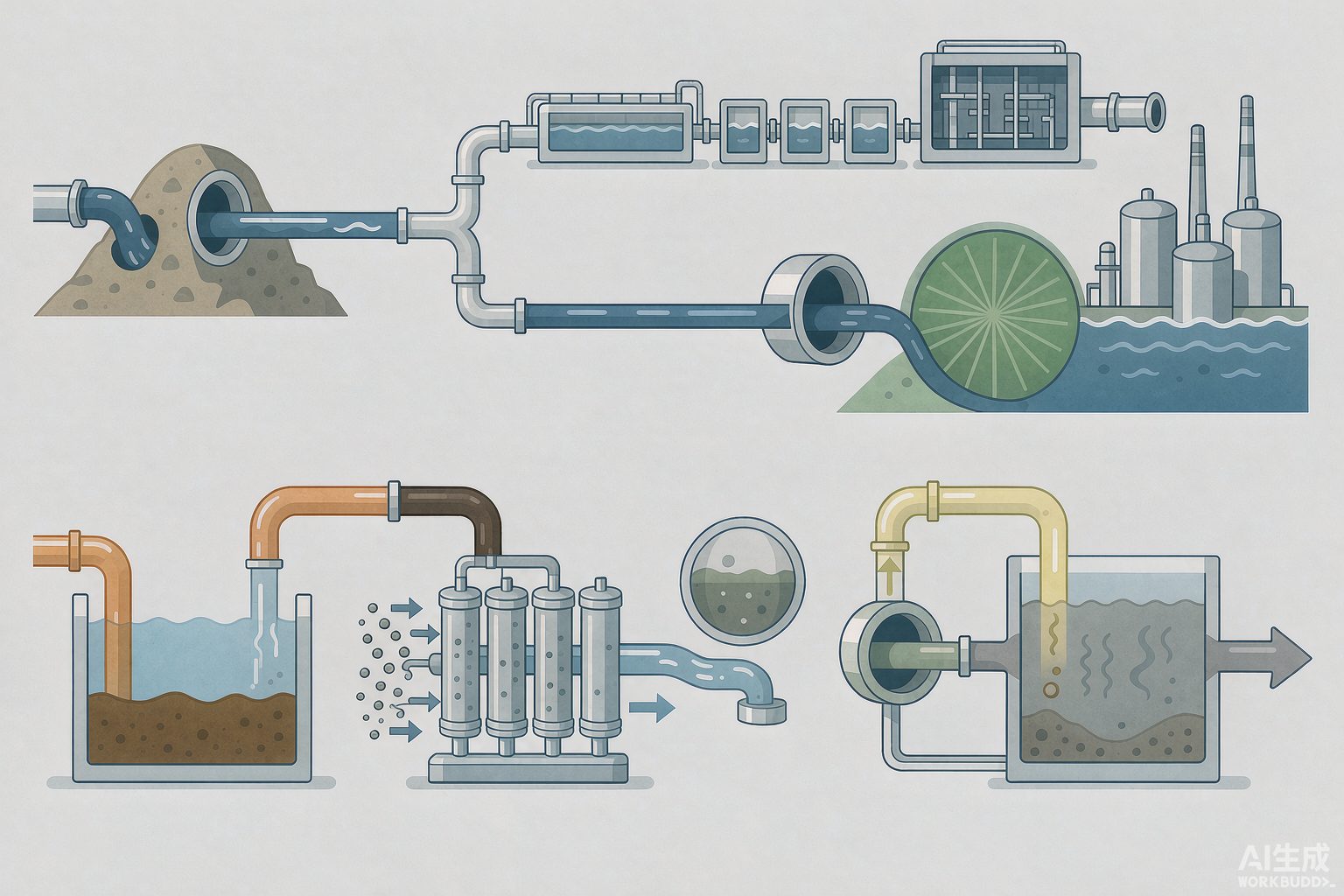
From the "water source" perspective, policy requirements are firmer than "encouraging utilization." The aforementioned Guiding Opinions propose that mine water be incorporated into regional water resource planning and unified water resource allocation, and that the prefecture-level cities where coal mines are located formulate mine water treatment and comprehensive utilization plans and annual implementation schemes; strictly enforce water abstraction permits, and when constructing water-using projects in key coal-producing areas, mine water should be fully utilized to replace surface water. A municipal-level document from Qujing City, Yunnan Province 2023 年 states this boundary even more plainly: "Where usable mine water has not been reasonably and fully utilized, other surface water and groundwater sources shall not be extracted or used as production water sources, and discharge without authorization shall not be permitted."
In other words, in this industry mine water is no longer a technical question of "whether to treat it," but a question of allocation order: use it first, then use surface water; only what remains unused may be considered for discharge. This determines the direction of all subsequent process selection—the process does not serve compliance; it serves "connecting this stream of water to a certain water use point."
II. Scale: 95.2 亿 cubic meters, and two "utilization rates" that differ by a factor of two
First, consider how large this stream of water is. A paper published in Journal of China Coal Society 2025 年 provided a set of industry-scale data: in 2024 年, mine water generated by coal mining nationwide amounted to approximately 95.2 亿 cubic meters, a figure that exceeds the total annual water transfer volume of the South-to-North Water Diversion Middle Route Project (approximately 83.37 亿 cubic meters), equivalent to the annual water consumption of approximately 2 248 万 people. The same paper also provided an often-overlooked field coefficient: on average, every 1 tons of coal produced requires the extraction of approximately 1.5 tons of groundwater.
However, regarding "utilization rate," public data show a clear divergence:
| Data | Value | Sample Scope | Source |
|---|---|---|---|
| Comprehensive Utilization Rate of Mine Water | 74.6% | Large coal enterprises (2023 年) | China National Coal Association, "2023 Coal Industry Development Annual Report" |
| Average Utilization Rate of Mine Water | Approx. 35% | Nationwide (2024 年 scale) | "Journal of China Coal Society", 2025 年 paper on deep geological storage of mine water |
| Policy Target | 68% or above | Yellow River Basin (2025 年 target) | NDRC DRC [2024] No. 226 |
The two utilization rates are not contradictory: the association data covers large coal enterprises (coal mines with annual output of 120 万 tons or more account for over 85% of the national total), while the nationwide scope also includes a large number of small and medium-sized coal mines. The difference between the two samples is this factor of 2.1.
Converting these two figures into water volumes makes the sense of scale much clearer: based on a total volume of 95.2 亿 cubic meters, if only about 35% is actually utilized, then the unutilized volume is about 61.9 亿 cubic meters; if the utilization rate is raised to the policy target of 68%, the unutilized volume drops to about 30.5 亿 cubic meters. The difference between the two is about 31.4 亿 cubic meters, close to forty percent of the annual water diversion volume of the South-to-North Water Diversion Middle Route. This is the real dimension of "every few percentage points increase in utilization rate" in this matter.
III. The Three Tables of GB 20426: One Governs Toxicity, Two Govern Two Product Lines
The "Emission Standard of Pollutants for Coal Industry" (GB 20426—2006) replaces the coal industry portions of GB 8978—1996 and GB 16297—1996, and has been implemented since 2006 年 10 月 1 日. Its water pollutant section consists of three tables plus one section of technical provisions, and this structure itself is the criterion:
| Clause | Name | Number of Items | Existing/New Separately |
|---|---|---|---|
| 4.1 Table 1 | Emission Limits of Toxic Pollutants for Coal Industry Wastewater | 10 items | Not separated; same values for existing and new |
| 4.2 Table 2 | Emission Limits of Pollutants for Coal Mining Wastewater | 6 items | Separated (existing/newly expanded or modified) |
| 4.3 Table 3 | Emission Limits of Pollutants for Coal Preparation Wastewater | 6 items | Separated (existing/newly expanded or modified) |
| 4.4 | Technical Regulations for Water Resource Utilization in Coal Mining (Including Open-Pit Mining) | No specific limits | — |
Table 1 applies to "wastewater from the coal industry (including existing and new (expanded or modified) coal mines and coal preparation plants)". Transitional arrangements for Table 2/Table 3: existing coal mining production lines shall comply with Table 2 from 2007 年 10 月 1 日; existing coal preparation plants shall comply with Table 3 from 2007 年 10 月 1 日, and shall achieve closed-loop water circulation from 2009 年 1 月 1 日.
Table 1 is the most easily overlooked table in this standard, because regardless of whether the concentration is tens or hundreds, it only governs "toxic" substances, and the same values apply to both existing and new facilities:
| No. | Pollutant | Limit (mg/L) | No. | Pollutant | Limit (mg/L) |
|---|---|---|---|---|---|
| 1 | Total Mercury | 0.05 | 6 | Total Arsenic | 0.5 |
| 2 | Total Cadmium | 0.1 | 7 | Total Zinc | 2.0 |
| 3 | Total Chromium | 1.5 | 8 | Fluoride | 10 |
| 4 | Hexavalent Chromium | 0.5 | 9 | Total α Radioactivity | 1 Bq/L |
| 5 | Total Lead | 0.5 | 10 | Total β Radioactivity | 10 Bq/L |
Discharge is prohibited when the daily maximum allowable emission mass concentration is exceeded. Fluoride and the two radioactivity parameters are listed in Table 1, which is where the coal industry standard differs from most industry standards—fluorine is a high-frequency characteristic component of groundwater in mining areas, while radioactivity originates from natural nuclides in coal-bearing strata.
Table 2 and Table 3 are the daily indicators of two product lines. When the two tables are viewed side by side, a very clean result emerges:
| Pollutant | Table 2 Coal Mining Wastewater (Existing / New) | Table 3 Coal Preparation Wastewater (Existing / New) | Difference Between the Two Tables |
|---|---|---|---|
| pH Value | 6~9/6~9 | 6~9/6~9 | Identical |
| Total Suspended Solids / SS | 70/50 | 100/70 | Different (broader for coal preparation) |
| Chemical Oxygen Demand / CODCr | 70/50 | 100/70 | Different (broader for coal preparation) |
| Petroleum Substances | 10/5 | 10/5 | Identical |
| Total Iron | 7/6 | 7/6 | Identical |
| Total Manganese | 4/4 | 4/4 | Identical (limited by footnote) |
Note to Table 2: The total manganese limit applies only to acidic coal mining wastewater. The applicable conditions of Table 3 are that the coal preparation plant shall achieve closed-circuit circulation of water, and occasional discharges shall comply with the limits for new (expanded, modified) production lines — that is, the normal state of coal preparation wastewater is not discharge; closed-circuit circulation is the main approach.
Four of the six items are identical word for word; only Suspended Solids and Chemical Oxygen Demand differ, and the direction is consistent: the limits for coal preparation wastewater are looser than those for coal mining wastewater. This is not an inconsistency in strictness, but because these two items have different identities in this product line — the Suspended Solids in coal preparation wastewater is coal slime; it is a product, not waste. Since the standard requires closed-loop circulation and recovery of this coal slime, there is justification for somewhat looser limits for occasional discharge; whereas the Suspended Solids in coal mining wastewater is rock dust with low recovery value, which is why tighter limits are needed to constrain it. Total Iron and Total Manganese are not differentiated by product line because they originate from the strata rather than from the process.
IV. No "Salt" in the Tables: There Are Three Criteria for Highly Mineralized Mine Water, None of Which Are in the Discharge Standard
Now add the three tables together: Table 1 has ten items, Table 2/Table 3 have six items in total; the union is sixteen indicators — pH, Suspended Solids, Chemical Oxygen Demand, petroleum substances, Total Iron, Total Manganese, fluoride, Total Mercury, Total Cadmium, Total Chromium, hexavalent chromium, Total Lead, Total Arsenic, Total Zinc, total α radioactivity, total β radioactivity.
Among the sixteen items, not one is salt content. There is no Total Dissolved Solids, no chloride, no sulfate. This point is often overlooked, but it directly determines why highly mineralized mine water cannot avoid membrane processes and evaporative crystallization.
The standard is not unaware of this stream of water. Section 4.4 of GB 20426—2006, "Technical Regulations for Water Resource Utilization in Coal Mining (Including Open-Pit Mining)," contains three requirements that make for interesting reading:
Please note the logic of this clause: the standard does not set a limit for salt content, but rather specifies the "destination" — advanced treatment, comprehensive utilization, preferential use as production water source. As for how much the salt should be reduced to, it transfers the criterion to the next standard: when used for farmland irrigation, GB 5084 applies.
And the "Standard for Irrigation Water Quality" (GB 5084—2021), Table 1, has sixteen basic control items, two of which directly govern salt: chloride (calculated as Cl⁻) ≤350 mg/L; total salt content ≤1 000 mg/L (non-saline-alkali soil areas), ≤2 000 mg/L (saline-alkali soil areas). Total salt content is determined by the gravimetric method per HJ/T 51.
Here is the first place where one can calculate for oneself. Taking the raw mine water from a certain coal mine in Shaanxi with Total Dissolved Solids of 3 700–4 000 mg/L: to meet the total salt content of 1 000 mg/L, the salt needs to be reduced by approximately 73%–75%; whereas if this land belongs to a saline-alkali soil area with the limit relaxed to 2 000 mg/L, only about 46%–50% needs to be reduced. The same stream of water, the same standard — compliance depends on soil type, not on water source. This is also why GB 5084 writes 1 000 and 2 000 side by side in the same cell, using parentheses to distinguish the applicable areas.
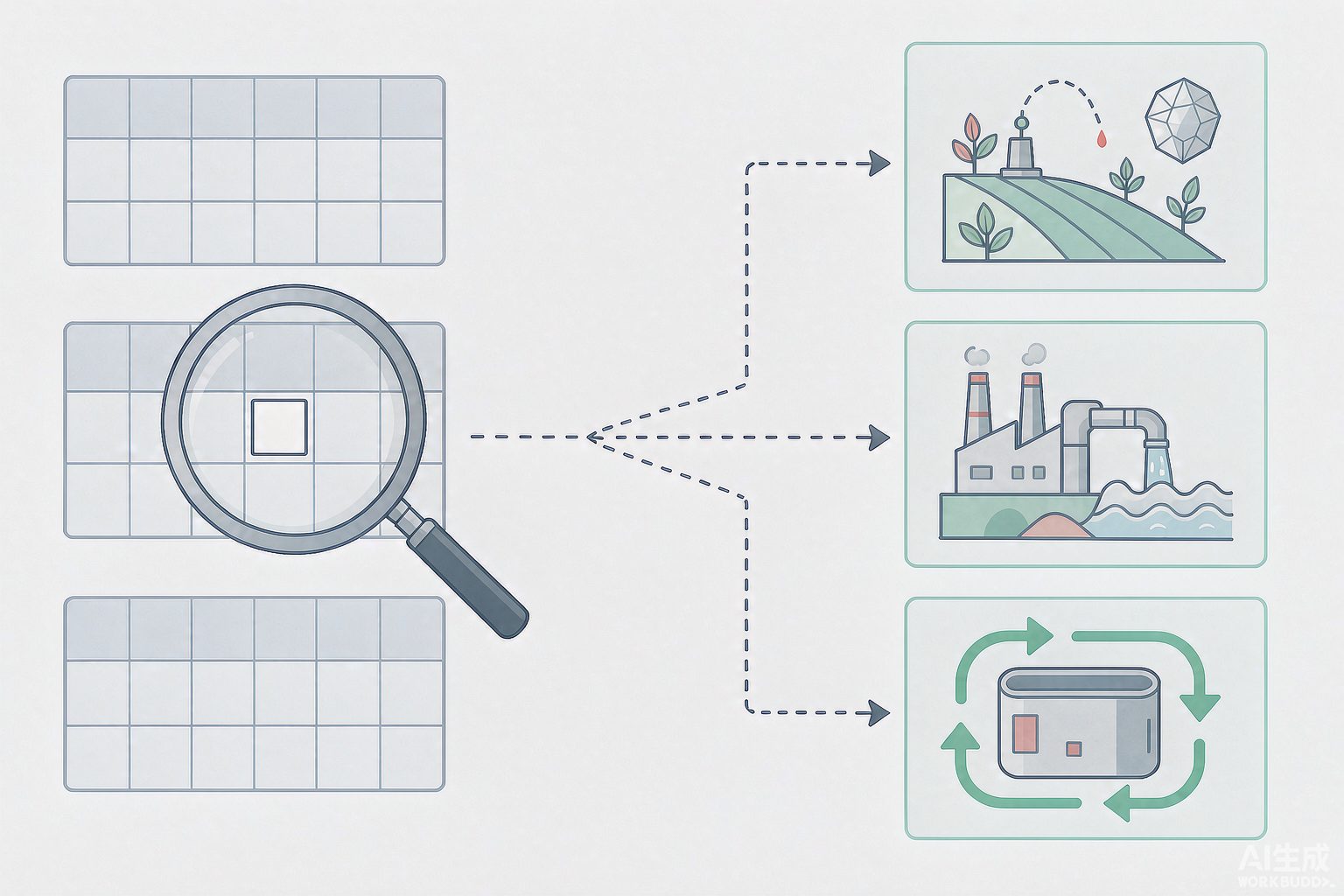
V. Mine water containing suspended solids: what is treated is suspended solids, what is recovered is coal slime
This type is the most common and also the most mature. The treatment target is only suspended solids, and the main process line is coagulation—sedimentation—filtration, transferring the coal slime in the water into the sludge; the effluent can then meet the suspended solids limits of Table 2/Table 3 of GB 20426, and is reused for underground working faces and coal washing water.
The real optimization point in engineering is not "how to settle" but "at which stage to take it out". The three-stage approach in the Shendong mining area can serve as a complete reference:
Stage 1: take it out underground
By utilizing the filtering and purification effect of gangue in the mining area on the water body and natural pressure-difference water conveyance, all underground wastewater is injected into the mining area; after sedimentation and filtration in the mining area, the clear water is collected and pumped into the water supply system, achieving direct underground reuse. All 13 producing mines in Shendong have built mining-area filtration and purification systems, reducing the external discharge of mine water by nearly 6 万 cubic meters per day. The value of this stage lies in placing treatment before the point of water use, avoiding the round-trip energy consumption of lifting water from underground to the surface and then returning it underground.
Stage 2: efficient surface sedimentation and filtration
Each coal mine is equipped with a pretreatment system, which transfers coal slime into sludge through chemicals, coagulation, sedimentation, and filtration; the effluent meets GB 20426 and is then reused for underground production and surface coal washing.
Stage 3: advanced treatment for upgrading standards and irrigation
In view of the relatively high total dissolved solids and fluoride in the mine water of the mining area, Shendong has invested a cumulative 7.71 亿 yuan to build advanced mine water treatment systems according to the Class III surface water standard, and has completed multiple dedicated fluoride removal systems and desalination systems; fluoride removal adopts the hydroxyapatite adsorption process, and desalination adopts the three-stage Reverse Osmosis plus evaporative crystallization process. Among them, the Bulianta area project is the first application project of a sodium carbonate salt crystallization system in China, with a design treatment capacity of 2 万 cubic meters per day, and the effluent quality is better than Class III surface water.
After three-stage treatment comes three-stage utilization. According to Shendong's public figures, treated mine water meeting standards is allocated in three directions: production reuse accounts for 46.3% of mine water generation (underground production, coal washing make-up water, yellow mud grouting, plant fire-fighting sprinkling, and greening), miscellaneous domestic use accounts for 5.2%, and ecological reuse accounts for 48.5% (ecological reclamation of coal mining subsidence areas and irrigation of crops such as sea buckthorn, sand willow, and forage grass). The three figures add up to exactly 100.0%—this is not a coincidence, but the manifestation in data of the goal of "full utilization, zero discharge"; the report also states that all of its own mine water has achieved zero liquid discharge.
When treatment reaches this level, water use intensity drops directly: at Shendong's production mines, raw coal production water consumption is 0.058 cubic meters per ton of coal, while the Class I cleaner production indicator (international cleaner production advanced level) in the Cleaner Production Standard — Coal Mining and Preparation Industry (HJ 446—2008) is 0.1 cubic meters per ton of coal — the former is approximately 58% of the latter.
VI. High-salinity mine water: three desalination accounts, each costing a few yuan per ton of water
The treatment target for high-salinity mine water is salt content, and the main line is membrane desalination. Although it is also desalination, engineering divides it into three stages for accounting: pretreatment removes suspended solids and hardness, membrane processes separate salt from water, and the concentrated brine must then find a destination. Among the three stages, the third is the most easily underestimated — which is also the reason for a separate section later in this article.
| Project | Influent/Raw Water | Process | Product Water and Concentrate | Key Data |
|---|---|---|---|---|
| A Coal Mine in Shaanxi (UF+RO Double-Membrane Process) | TDS 3 700~4 000 mg/L, hardness 450~500 mg/L | Bar Screen+Pre-sedimentation and Equalization Tank+Magnetic Loading Sedimentation+Ultrafiltration+Reverse Osmosis | Design influent 7 200 m³/d, product water 4 800 m³/d | Desalination rate 98%; product water TDS approx. 70 mg/L, hardness ≤6.0, Cl⁻ <35, SO₄²⁻ <5.5 |
| Zero Liquid Discharge System of a Coal Mine | TDS 1 900~2 400 mg/L | Brackish Water Reverse Osmosis (BWRO)+Disc Tube Reverse Osmosis (DTRO)+Multi-Effect Distillation (MED) | Concentrated brine TDS ≥90 000 mg/L | System recovery ≥96.5%; effluent TDS ≤300 mg/L; comprehensive operating cost approx. 7.89 元/t water |
| A Mine in the Arid Coal Region of Northwest China (Gradient Desalination) | Salinity approx. 19.8 g/L | Reverse Osmosis (RO) stage+High-Salinity Reverse Osmosis (HSRO) stage, brine reflux | Influent 20 m³/h → product water 12 m³/h, concentrate 8 m³/h | Pressure 32 bar; product water salinity approx. 0.443 g/L, concentrate approx. 48.8 g/L; water recovery 44%→60% |
The three rows of data are respectively from a double-membrane process application case in Water Purification Technology, a research paper on mine water zero liquid discharge process, and a gradient desalination paper in Journal of Water Process Engineering 2025 年. The "operating cost" bases of the three differ: 7.89 元/t is the comprehensive operating cost of the whole system including evaporation and crystallization, while the other two do not include terminal disposal of concentrated brine.
There are two places in the three rows of data where you can work it out yourself.
The first is flow conservation. The third row gives influent 20 m³/h, produced water 12 m³/h, and concentrate 8 m³/h: 12 + 8 = 20, water recovery rate 12 ÷ 20 = 60%, concentrate rate 8 ÷ 20 = 40%, which is consistent with its reported statement that "the water recovery rate was increased from 44% in the original process to 60%." The salt balance also checks out: influent salinity 19.8 g/L × 20 m³/h = 396 kg/h; produced water 0.443 × 12 = 5.3 kg/h, concentrate 48.8 × 8 = 390.4 kg/h, and the two added together give 395.7 kg/h, a difference of less than 0.1% from the influent. This shows that what "gradient desalination" does is not improve the removal rate, but squeeze the same amount of salt into less water—the concentrate salinity is pushed from the level of conventional RO to 48.8 g/L, the feed concentration to the downstream evaporator increases by a factor of 1.4, and steam and power consumption decrease accordingly.
The second is the cost structure. The project report states that annual operating costs dropped from 543 万 yuan to 442 万 yuan, a reduction of 18.6%; and the operating cost formula it gives is 6.36 元 per ton of water (= 5.88 + 1.93 × 480 ÷ 1 920): of which 5.88 元/t is the intrinsic cost of desalination and conveyance, 1.93 元/t is the unit price of deep sequestration of concentrated brine, and 480 ÷ 1 920 = 25% is exactly the concentrate ratio—in other words, for every 4 tons of water treated, 1 tons must go to sequestration, and this cost is spread over 4 tons of water. The same paper also gives: secondary Reverse Osmosis / RO produced water of about 1 438 t/h (water recovery rate 75%), deep sequestration of about 480 t/h at a TDS of about 24 000 mg/L; an investment of about 1/2 of conventional evaporative crystallization Zero Liquid Discharge / ZLD; annual carbon emissions of 32 425 tons, a reduction of 131 888 tons compared with the evaporative crystallization route, equivalent to the annual absorption of about 15 万 mu of carbon-sink forest.
VII. Where the concentrated brine goes: three destinations, completely different economics
The real difficulty of high-salinity mine water lies in the concentrated brine, because it cannot be "treated once more and become clean" like ordinary sewage—the salt is only concentrated, not removed. At present there are three destinations in engineering practice:
Destination 1: Evaporative crystallization and salt separation
The concentrated brine is evaporated to dryness, crystallizing out sodium chloride and sodium sulfate. The evaporative crystallization unit of the aforementioned ZLD system separates sodium sulfate and sodium chloride, meeting industrial salt standard requirements and usable as chemical raw material; the Bulianta project, meanwhile, adopts the process of cooling crystallization of concentrated brine to produce sodium carbonate.
There is an account here well worth recording: according to its published data, producing sodium carbonate instead of sodium sulfate can reduce sulfuric acid dosing by about 180 万 yuan/year, and sodium carbonate itself has higher value, increasing revenue by about 830 万 yuan/year. That is to say, the same evaporative crystallization unit can choose which salt to produce—and choosing wrong means more than eight million yuan less revenue a year. This is the most easily overlooked decision point in salt separation processes: it does not affect effluent quality, only the economics of this line.
Destination 2: Deep geological sequestration
Instead of evaporative crystallization, the concentrated brine is reinjected into deep formations for long-term sequestration. The published conclusion of the aforementioned Ordos case is: the investment is about 1/2 of the conventional ZLD route, with lower operating energy consumption and cost, less land occupation and staffing, and an operating cost of 6.36 元/t water. But it also clearly sets out the supporting conditions: long-term monitoring of deep solute migration and diffusion and of shallow groundwater quality indicators is required, together with corresponding emergency measures and protection plans.
Destination 3: Reuse and ecological allocation
No salt products are pursued; the salt is simply pressed below the water quality requirements of the point of use. This is in fact the route most encouraged by policy—Shendong's approach is pipeline irrigation: treated mine water is conveyed through 946 km of main (branch) irrigation pipelines to ecological forests and farmland in subsidence areas, pipeline irrigation saves 1 300 万 yuan/year compared with water trucking, while alleviating soil salinization; the annual output value of the ecological industry is about 2 619 万 yuan (large-fruited sea buckthorn 2 850 mu, fruit trees 1 950 mu, alfalfa 10 000 mu, fodder mulberry 1 965 mu). Another upgrading project puts it more directly: pretreatment uses high-efficiency sedimentation and manganese sand filters to remove hardness and Suspended Solids / SS; advanced treatment uses Ultrafiltration / UF, Reverse Osmosis / RO and tubular membranes to bring key pollutants down to all 29 indicators of Class III surface water, with total salt content not exceeding 1 000 mg/L; the evaporative crystallization stage uses thermal salt separation (sodium chloride reaching Grade I industrial dry salt, sodium sulfate meeting Class II first-grade of "Industrial Anhydrous Sodium Sulfate"); the project has a total design treatment capacity of 6.3 万 m³/day and can reduce groundwater extraction by 1 600 万 m³ per year.
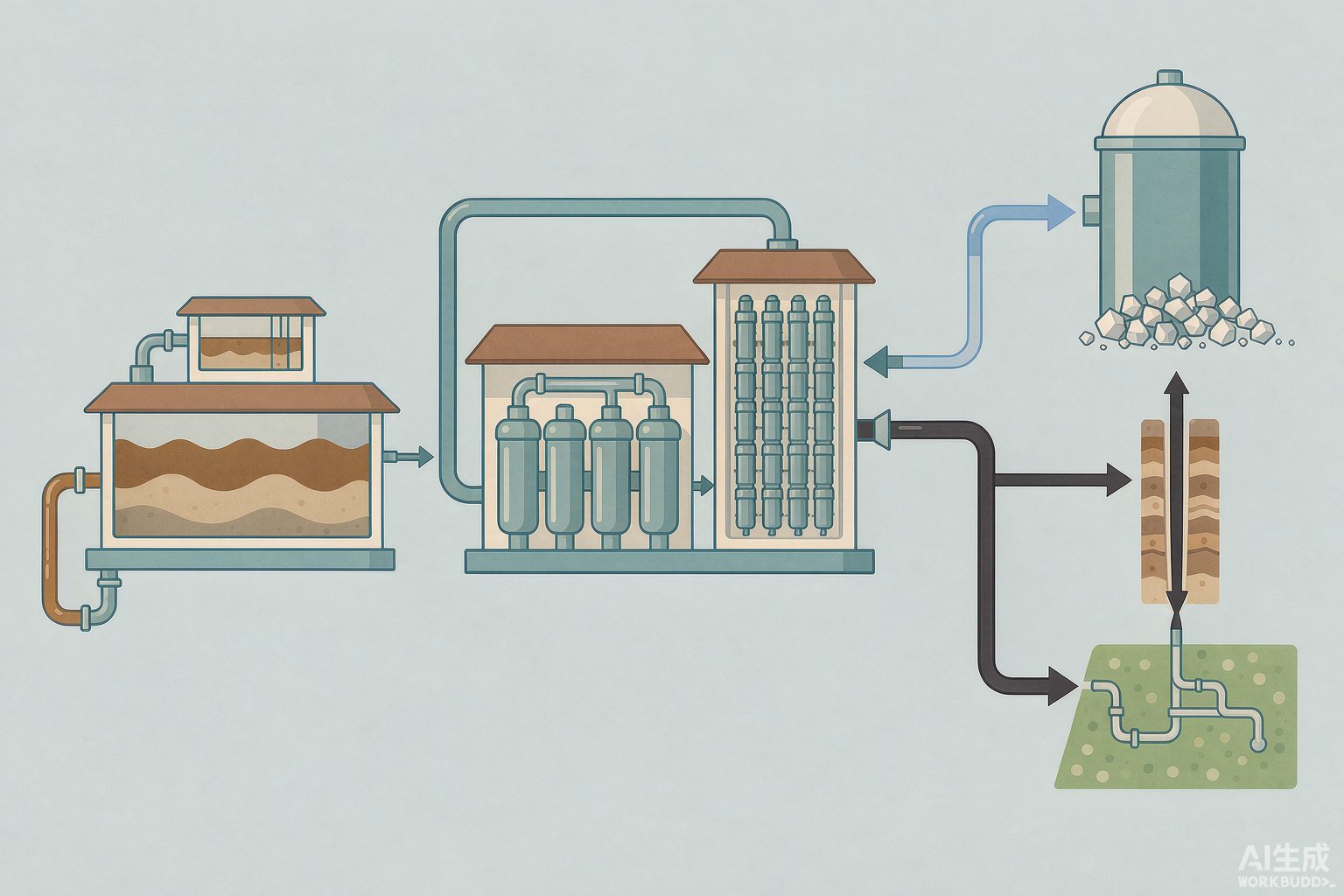
VIII. Acid Mine Drainage: Iron Must Be Concentrated Thirtyfold, Manganese Is Already Within Limits
Acid mine drainage (AMD) originates from the oxidation of sulfides in coal-bearing strata: sulfides react with water and oxygen to form sulfuric acid, the pH drops to around two to three, and iron, aluminum, manganese, and sulfate are simultaneously dissolved out. Its treatment targets are pH and dissolved metals, and the main process line is neutralization and precipitation.
Acid mine drainage from a coal mine waste rock pile in Brazil provides a rare set of long-term field data—sampling monthly since 2007 年, with continuous observation for 17 年 (an active treatment facility for pH neutralization and metal precipitation was built at the site in 2007 年):
| Parameter | 2007 年 Start | After 17 年 | Change |
|---|---|---|---|
| pH | 2.1 | 4.7 | Increase of 2.6 units |
| Iron (mg/L) | 177.8 | 0.1 | Decrease of 99.9% |
| Aluminum (mg/L) | 29.0 | 0.1 | Decrease of 99.7% |
| Manganese (mg/L) | 3.1 | 0.6 | Decrease of 80.6% |
| Sulfate (mg/L) | 2 023 | 307 | Decrease of 84.8% |
| Acidity (mg CaCO₃/L) | 539.5 | 3.96 | Decrease of 99.3% |
The data show the decay of raw water (untreated water) parameters over time, consistent with a first-order kinetic model. One of the conclusions of the study is that although most water quality parameters have met discharge standards, the active treatment facility must still be operated—to prevent pH fluctuations and further reduce manganese concentration, and therefore a transition from active treatment to passive treatment is being considered.
Comparing this table with Table 2 of GB 20426 yields a result that runs counter to common sense. The total iron limit in Table 2 is 6 mg/L (currently 7), and the total manganese limit is 4 mg/L, with a note specifying that the total manganese limit applies only to acidic coal mining wastewater—which happens to apply to this stream. But calculated from the 2007 年 starting values: total iron 177.8 ÷ 6 ≈ 29.6 times, nearly thirty times over the limit; while total manganese 3.1 ÷ 4 = 0.78 times, within the limit from the very start.
The choice of neutralizing agent is also supported by clear data. A limestone dosing test on acidic mine water from a gold mine in Tanzania (initial sulfate 2 277 mg/L) showed: at a dosage of 100 g/1 000 mL, pH rose to 8.6; when increased to 200 g/1 000 mL, sulfate dropped from 2 277 to 506 mg/L (removal 77.8%), and the removal rates for iron, copper, zinc, manganese, and nickel were 99%, 92%, 68%, 96%, 99%, respectively. The researchers also noted that manganese declines slowly with increasing limestone dosage, and proposed that limestone can serve as a primary treatment agent for acidic mine water.
More noteworthy than this is the switch in treatment approach. The conclusion from that site in Brazil was: after 17 年 of active treatment (dosing, precipitation, continuous operation), most parameters had met standards, but the facility still could not be shut down; therefore a pilot study investigated passive treatment—filling trenches with gravel-sized limestone or slag, relying on natural water contact to achieve neutralization and residual metal removal, with pilot effluent at non-toxic levels to Daphnia magna. Active treatment buys "adjustable at any time," at the cost of never being able to stop; passive treatment buys "no manpower needed," at the cost of zero responsiveness. For mine water—a stream whose volume and quality continuously change as mining progresses—this trade-off matters more than which agent to choose.
IX. The Denominator of "Utilization Rate": The Industry Already Has This Indicator—It's Called the Water Abundance Coefficient
Returning to the utilization rate that differed by a factor of two in Section II. The mine water industry has long had a "water volume per ton of coal" indicator, just not called utilization rate: mine water abundance coefficient (water content coefficient) KB = Q ÷ P, where Q is the mine's drainage volume (cubic meters) for a given period, and P is the coal extraction volume (tons) for the same period. It is a hydrogeological indicator reflecting the degree of mine water filling, and is also used for economic evaluation of mine water inflow.
Hidden in this definition is the most practical criterion of this round: its numerator is "drainage volume," not "inflow volume." Inflow volume, drainage volume, and utilization volume are three different numbers:
| Basis | Meaning | Typical Context |
|---|---|---|
| Water Inflow | The volume of water flowing from aquifers into the mine | Hydrogeological assessment, verification of sump and drainage capacity |
| Drainage Volume | The volume of water actually discharged from the mine (numerator of the water-richness coefficient) | Discharge accounting, pollutant discharge permits |
| Utilization Volume | The volume of treated water consumed at a given point of use | Utilization rate, water conservation assessment |
The relationship among the three is not fixed: the portion directly reused underground may never be discharged from the mine (it enters neither the drainage volume nor the discharge volume, but is counted in the utilization volume); the externally discharged portion is counted in the drainage volume but not in the utilization volume.
As a result, the term "utilization rate" has at least three denominator conventions, and public data often do not specify which one is used: Utilization Volume ÷ Water Inflow, Utilization Volume ÷ Drainage Volume, and the comprehensive utilization rate under the large coal enterprise convention. This is the technical reason why 74.6% and approximately 35% coexist—they differ not only in sample but possibly also in denominator.
The Shendong dataset "46.3% + 5.2% + 48.5% = 100.0%" is useful precisely because it makes the denominator explicit: the denominator of all three shares is "mine water generation volume", and the three parts add up exactly to the total. Whenever an enterprise reports only a single utilization rate, asking "is the denominator generation volume or drainage volume?" will often explain the other half of the discrepancy.
X. Conclusion: This Is Not a Treatment Problem, but a Configuration Table
There are not many things that truly need to be judged along the mine water chain, but none of them can be omitted:
First, classify before selecting the process. Water containing suspended solids only requires coagulation, sedimentation, and filtration, with suspended solids as the target; high-salinity water must be desalinated, with salinity as the target; acidic water must first be neutralized, with pH and iron as the targets. The targets of the three types of water do not overlap in any item; using one set of processes to deal with all three types of water at the same time is equivalent to pursuing three unrelated indicators simultaneously.
Second, the item absent from the standard tables is the real problem of high-salinity mine water. Among the sixteen indicators in the three tables of GB 20426—2006, there is no salinity; Section 4.4 only states "advanced treatment and comprehensive utilization." The criterion for salt is distributed in GB 5084 Table 1 (total salt content 1 000/2 000 mg/L, by soil type) and in 1 000 mg/L of the discharge document. "Meeting all standards" and "being dischargeable" are two different things—this determines that high-salinity mine water must go to reuse or zero discharge, rather than to compliance.
Third, the destination of concentrated brine is a decision point, not a closing item. Which salt to produce by evaporation crystallization (sodium carbonate yields about 830 万 yuan more per year than sodium sulfate), how long monitoring must accompany deep geological sequestration, or whether to treat it to the requirements of the water use point and then reuse it—the three paths differ completely in per-ton water cost and risk source. Treating "salt being concentrated" as "salt being removed" is the most expensive misreading along this chain.
Summary of the conclusions of this article: ① Policy divides mine water into three types: containing suspended solids, high salinity, and acidic and containing special components (Fagai Huanzi [2024] No. 226); the treatment targets of the three types of water are suspended solids, salinity, and pH and dissolved metals, respectively, and do not overlap; ② In 2024 年, the national mine water volume was about 95.2 亿 m³, exceeding the annual diversion volume of the Middle Route of the South-to-North Water Diversion Project of 83.37 亿 m³, with about 1.5 tons of groundwater extracted per 1 tons of coal mined on average; ③ Two public figures for utilization rate coexist—the comprehensive utilization rate of large coal enterprises is 74.6% (2023 年), and the national average is about 35%; the policy target is for the Yellow River Basin to reach above 68% by 2025 年; ④ The water pollutant part of GB 20426—2006 consists of Table 1 (10 toxic pollutants, regardless of production line), Table 2 (6 items for coal mining wastewater), and Table 3 (6 items for coal preparation wastewater); among the sixteen indicators in the union, there is no salinity; ⑤ Among the six items in Table 2 and Table 3, four are completely identical (pH, petroleum, total iron, total manganese), and only suspended solids and Chemical Oxygen Demand differ, with coal preparation wastewater being more lenient—because its suspended solids are coal slime; ⑥ The note to the total manganese limit specifies "applicable only to acidic coal mining wastewater," while measured manganese in acidic mine water is already within the limit (3.1 vs 4 mg/L), whereas iron exceeds the limit by nearly 30 times; ⑦ The operating costs of the three accounting books for high-salinity desalination are on the order of a few yuan per ton of water, among which the full-system cost including deep sequestration of concentrated brine is 6.36 元/t (concentrate ratio 25%); ⑧ There are at least three sets of denominators for "utilization rate"; the numerator of the industry's original water-richness coefficient indicator is discharge volume rather than water inflow.
References
- Ministry of Environmental Protection, General Administration of Quality Supervision, Inspection and Quarantine: "Emission Standard of Pollutants for Coal Industry" (GB 20426—2006), issued on 2006-09-01, implemented on 2006-10-01. Article 4.1 Table 1, Article 4.2 Table 2 (including the note "the total manganese limit applies only to acidic coal mining wastewater"), Article 4.3 Table 3 (including water circuit closed-loop circulation requirements), Article 4.4 technical provisions on water resource utilization in coal mining (including open-pit mining).
- National Development and Reform Commission, Ministry of Water Resources, Ministry of Natural Resources, Ministry of Ecology and Environment, Ministry of Emergency Management, State Administration for Market Regulation, National Energy Administration, National Mine Safety Administration: "Guiding Opinions on Strengthening the Protection and Utilization of Mine Water" (Fagai Huanzi [2024] No. 226). Including "classified and graded treatment of three types of water", "comprehensive utilization", "statistical measurement and assessment", and the 2025 年 Yellow River Basin 68% target.
- National Development and Reform Commission: "NDRC and Other Departments Issue the 'Guiding Opinions on Strengthening the Protection and Utilization of Mine Water'" policy release.
- Chinese Government Website: "Improving the Level of Mine Water Protection and Utilization", 2024-03. Including incorporation of mine water into regional water resource planning and unified allocation, strict water withdrawal permitting, and water-using projects in key coal-producing areas should make full use of mine water to replace surface water.
- National Energy Administration: "Notice on Further Strengthening the Management of Environmental Impact Assessment for Coal Resource Development", 2020-12-03. Including mine water shall be prioritized for project construction and production, other water sources shall not be exploited if mine water is not fully utilized, and the salt content of residual external discharge shall not exceed 1 000 mg/L, along with online automatic monitoring requirements.
- Office of the People's Government of Qujing City, Yunnan Province: "Notice on Further Strengthening Ecological Environment Protection and Pollution Prevention in the Entire Coal Industry Chain", 2023. Same requirements as the preceding item, and including closed-loop circulation of coal slime water in coal preparation plants and collection and treatment of initial rainwater at industrial sites.
- China National Coal Association: "2023 Coal Industry Development Annual Report". 2023 年 raw coal output 47.1 亿 tons; raw coal washing rate of large coal enterprises 69%, comprehensive utilization rate of mine water 74.6%, comprehensive utilization and disposal rate of coal gangue 73.6%, land reclamation rate 57.9%.
- "Journal of China Coal Society" 2025 年: "Technical System and Engineering Application of Deep Geological Storage of Coal Mine Water" (doi:10.13225/j.cnki.jccs.2025.0974). Including 2024 年 national mine water volume of approximately 95.2×10⁸ m³, exceeding the annual water diversion volume of the Middle Route of the South-to-North Water Diversion Project by approximately 83.37×10⁸ m³, equivalent to the annual water consumption of approximately 2 248 万 people, with an average utilization rate of approximately 35%.
- Z.Y. et al.: "Gradient Desalination RO and Evaporative Crystallization Process for Zero Liquid Discharge of Saline Mine Water", J. Water Process Eng., 2025. Influent 20 m³/h, salinity 19.8 g/L; produced water 12 m³/h (0.443 g/L), concentrate 8 m³/h (48.8 g/L); water recovery rate 44%→60%.
- D. S. et al.: "Technical and Economic Analysis of Deep Geological Storage of High-Salinity Concentrated Brine from Coal Mines", Sustainability, 2025, 15(19):14553. Secondary RO produced water 1 438 t/h (75%); deep storage 480 t/h, TDS approximately 24 000 mg/L; operating cost 6.36 元/t.
- "Water Purification Technology": Application case of dual-membrane process in advanced treatment of mine water. A coal mine in Shaanxi designed influent 7 200 m³/d, produced water 4 800 m³/d, recovery rate 65%; raw water TDS 3 700~4 000 mg/L, hardness 450~500 mg/L; produced water TDS approximately 70 mg/L, desalination rate 98%, measured recovery rate 71.4%.
- "Zero Liquid Discharge Treatment Technology and Application for Coal Mine Water". TDS 1 900~2 400 mg/L mine water, using BWRO + DTRO concentration, MED evaporative crystallization, concentrated brine TDS ≥90 000 mg/L, system recovery rate ≥96.5%, effluent TDS ≤300 mg/L, comprehensive operating cost of the entire system approximately 7.89 元/t water; evaporative crystallization separates sodium sulfate and sodium chloride.
- Ministry of Ecology and Environment: "Water Quality Standard for Farmland Irrigation" (GB 5084—2021) Table 1 basic control item limits, issued on 2021-01-20, implemented on 2021-07-01. Total salt content ≤1 000 mg/L (non-saline-alkali soil areas), ≤2 000 mg/L (saline-alkali soil areas); chloride (calculated as Cl⁻) ≤350 mg/L; supporting HJ/T 51 "Water Quality - Determination of Total Salt Content - Gravimetric Method".
- Ordos Municipal Ecology and Environment Bureau: "Second Batch of Typical Cases of Synergistic Innovation in Pollution Reduction and Carbon Reduction ⑧: Mine Water 'Zero Liquid Discharge + Salt Separation Treatment + Comprehensive Utilization of Discharged Water'", 2026-01. Including the process of producing sodium carbonate by cooling crystallization of concentrated brine reducing sulfuric acid agent input by approximately 180 万 yuan/year, and increasing annual revenue by approximately 830 万 yuan compared with the sodium sulfate production process; pipeline network irrigation saving approximately 1 300 万 yuan/year compared with water trucking; annual reduction of fluoride by approximately 40 tons and total dissolved solids by approximately 8 800 tons; annual output value of the ecological industry approximately 2 619 万 yuan.
- Related reports on Shendong Coal Group ("Shendong's Answer to the 'Water Problem'" etc.): 13 mine 14 shaft average daily mine water 27.72 万 t; 18 sets of coagulation-sedimentation-filtration, 5 sets of defluoridation, 4 sets of membrane filtration and evaporative crystallization systems; cumulative investment of 7.71 亿 yuan to build advanced treatment according to Class III surface water standards; Bulianta scale 2 万 m³/d; production reuse 46.3%, domestic miscellaneous use 5.2%, ecological reuse 48.5%; raw coal water consumption 0.058 m³/t.
- "Coal Mine Water Zero Liquid Discharge and Upgrading Treatment Project" (public reports on the Haragou and Shigetai mine water upgrading treatment projects): designed total treatment scale 6.3 万 m³/d; pretreatment using high-efficiency sedimentation and manganese sand filters, advanced treatment using ultrafiltration, reverse osmosis and tubular membranes, key pollutants meeting all 29 indicators of Class III of the "Environmental Quality Standards for Surface Water", total salt content not exceeding 1 000 mg/L; evaporative crystallization thermal salt separation, sodium chloride reaching Grade I of industrial dry salt, sodium sulfate meeting Class II First Grade of "Industrial Anhydrous Sodium Sulfate"; annual reduction of groundwater extraction by 1 600 万 m³.
- Keller F S et al.: "Study on Attenuation and Transition from Active to Passive Treatment of Acid Mine Drainage from a Coal Mine Waste Rock Pile in Southern Brazil", Minerals, 2025, 15(10):1068. 2007—2024 年 monthly monitoring: pH 2.1→4.7; iron 177.8→0.1, aluminum 29.0→0.1, manganese 3.1→0.6, sulfate 2 023→307 mg/L; active treatment facilities must still operate to prevent pH fluctuations and suppress manganese.
- Marwa A, Sweya L N: "Limestone Pretreatment for Sustainable Water Quality Management of Acid Mine Drainage", J. Degraded Min. Lands Manage., 2024, 11(3):6009-6015. At limestone 100 g/1 000 mL, pH rises to 8.6; at 200 g/1 000 mL, sulfate 2 277→506 mg/L, removal rates of iron, copper, zinc, manganese, nickel 99%, 92%, 68%, 96%, 99%.
- "Coal Mine Production Capacity Verification Standard" and definition of mine water abundance coefficient (water content coefficient): K_B = Q ÷ P, where Q is the mine drainage volume during the same period (m³), and P is the coal output during the same period (t); used for classification of mine water inflow degree and economic evaluation of water inflow.
- Ministry of Ecology and Environment: "Cleaner Production Standard - Coal Mining and Preparation Industry" (HJ 446—2008), Level 1 cleaner production indicator raw coal production water consumption 0.1 m³/t.
- Completion Environmental Protection Acceptance Report and Environmental Impact Report (public documents) of the Bulianta Area Mine Water Upgrading Treatment Project of Shendong Coal Branch: the process is pretreatment + primary brackish water reverse osmosis (BWRO) + concentration and evaporative crystallization unit, and reused water shall comply with the corresponding category requirements of the "Environmental Quality Standards for Surface Water" (GB 3838).
- Citations of GB 20426—2006 Table 1/Table 2/Table 3 in public environmental impact assessment and river discharge outlet demonstration documents by ecology and environment departments of Baotou City, Zhengzhou City, Tongchuan City, Xinhua County and other places, used for multi-source cross-checking of the limits in Table 1, Table 2, and Table 3 of this paper.
