



 Multiple industries nationwide (metal surface treatment and electroplating, auto
 Pilot to engineering scale (0.5 to 300 tDS/d; sludge involved per individual cas
Whether Sludge Counts as Hazardous Waste: It Is Determined by the Generating Process, Not by a Lab Report
Two streams of sludge from the same wastewater station may differ by a single letter in their code, yet their disposal costs can differ tenfold. This identity is not assigned by the laboratory; it is assigned by the process that generates it.
The most frequently debated issue in the sludge dewatering workshop is not how low the moisture content can be reduced, but whether this truckload of sludge counts as hazardous waste. Because it determines all subsequent actions: what bags to use, what labels to affix, whose site it enters, what manifest to issue, and what price to pay. And this issue, debated for over a decade, often has its answer not on the laboratory report—but in the process that generates it.
I. First, look at a 2.25-ton site
2026 年 4 月 24 日, law enforcement officers from the Shaoguan Municipal Ecology and Environment Bureau conducted an on-site inspection of an auto parts company and found approximately 70 bags of bagged sediment sludge, weighing 2.25 tons, stacked in the open at the entrance of the wastewater treatment workshop. This sludge was generated by the company's wastewater treatment station treating washing wastewater. The penalty decision stated plainly: according to the National Catalogue of Hazardous Wastes, this waste is HW17 surface treatment waste, code 336-064-17; the storage method does not comply with the requirement of Article 6.1.1 of GB 18597—2023 that "hazardous waste shall not be stacked in the open," constituting storage of hazardous waste without protective measures meeting national environmental protection standards [1].
Three points in this case are worth pausing on. First, it is not an electroplating plant but an auto parts manufacturer, yet it still falls under HW17. Second, the determination process contains no description such as "chromium and nickel exceeding standards were detected"—the catalogue directly determines it, with no identification required, which is the most convenient and most rigid aspect of the catalogue approach. Third, at the disposal price discussed later, the disposal cost for 2.25 tons of sludge is only about four thousand yuan; but the act of open-air stacking itself is an independent violation, unrelated to the sludge quantity. What is truly expensive is not the disposal fee, but the matter of "not treating it as hazardous waste."
Similar cases are not isolated. In a case of dumping electroplating surface treatment sludge in Botou, Hebei, the determination basis was likewise a single sentence: "According to the National Catalogue of Hazardous Wastes, electroplating sludge is hazardous waste (HW17 surface treatment waste)," after which the case was transferred to public security [2]. A certain Long Electroplating Company in Chongqing, between 2012 and 2015 年, transported over 5000 tons of electroplating sludge to idle land more than 800 meters from the main stream of the Yangtze River and dumped it; it was discovered during excavation in 2021 年, and the investigation concluded that chromium, nickel, zinc, and other components severely exceeded standards, constituting hazardous waste [3]. The common thread across the three cases is: no one argued about "how dirty this sludge is"; they only argued about which process it came from.
II. The catalogue actually has no entry called "industrial wastewater treatment sludge"
This is the step most easily skipped and most prone to error. Opening the National Catalogue of Hazardous Wastes (2025 年 Edition), the 470 types of hazardous waste correspond item by item to five columns: "waste category—industry source—waste code—hazardous waste description—hazardous characteristics" [4]. Picking out the entries bearing the words "wastewater treatment sludge" reveals a pattern: each one is bound to a specific industry and process; not one is called "industrial wastewater treatment sludge."
| Waste Code | Industry Source | Key Description Points | Premise for Applicability | Characteristics |
|---|---|---|---|---|
| 336-064-17 | Metal Surface Treatment and Heat Treatment Processing | Waste liquids, tank residues and wastewater treatment sludge generated from acid-alkali washing, degreasing, derusting, rinsing, phosphating, bright dipping and chemical polishing processes | Generated from surface treatment processes | T/C |
| 263-011-04 | Pesticide Manufacturing | Wastewater treatment sludge generated during pesticide production | The industry is pesticide manufacturing | T |
| 275-001-02 | Veterinary Drug Manufacturing | Wastewater treatment sludge generated during the production of veterinary drugs using arsenic or organic arsenic compounds | Raw materials contain arsenic or organic arsenic | T |
| 321-027-48 | Copper Regeneration | Dust collected by dust collection (removal) devices and wastewater treatment sludge generated from wet dust removal | The process is copper regeneration | T |
| 772-006-49 | Environmental Governance | Wastewater treatment sludge and wastewater treatment residues (liquids) generated during the treatment or disposal of toxic or infectious hazardous waste by physical, chemical, physicochemical or biological methods | The object being treated is itself hazardous waste | T/In |
| 900-046-49 | Non-specific Industries | Wastewater treatment sludge generated during the regeneration of ion exchange devices (excluding drinking water, industrial pure water and boiler softened water preparation devices, as well as ion exchange devices in complete wastewater treatment processes) | The device is ion exchange, and is not within the excluded items | T |
772-006-49 This entry is worth reading word by word. Its subject is not "industrial wastewater", but "the treatment or disposal of toxic or infectious hazardous waste". That is to say, if a factory's wastewater station only treats the factory's own production wastewater, the sludge produced has nothing to do with this entry; this entry only applies when a factory treats hazardous waste on behalf of others, or treats its own waste liquid that has been identified as hazardous waste. This entry is misused extremely frequently—searching publicly available environmental impact assessment report forms from various regions, it is not uncommon to find ordinary industrial wastewater sludge directly written as 772-006-49. The consequences of writing the wrong code are not just on paper: a wrongly filled hazardous waste management plan will cause an enterprise that should only be managed as general solid waste to declare, transfer and accept supervision under the hazardous waste framework for the entire year.
900-046-49 represents another direction of misuse. Its parentheses exclude four categories of installations, and one phrase—"ion exchange installations in complete wastewater treatment processes"—is the easiest to overlook: if this ion exchange is a segment within the treatment chain of a sewage station (such as the softening stage of reclaimed water reuse), the sludge generated from its regeneration does not fall under this clause; only when the ion exchange installation is independent of the wastewater treatment process (such as a pure water station) does it apply. The same piece of equipment, installed in a workshop versus installed in a sewage station, has a different code.
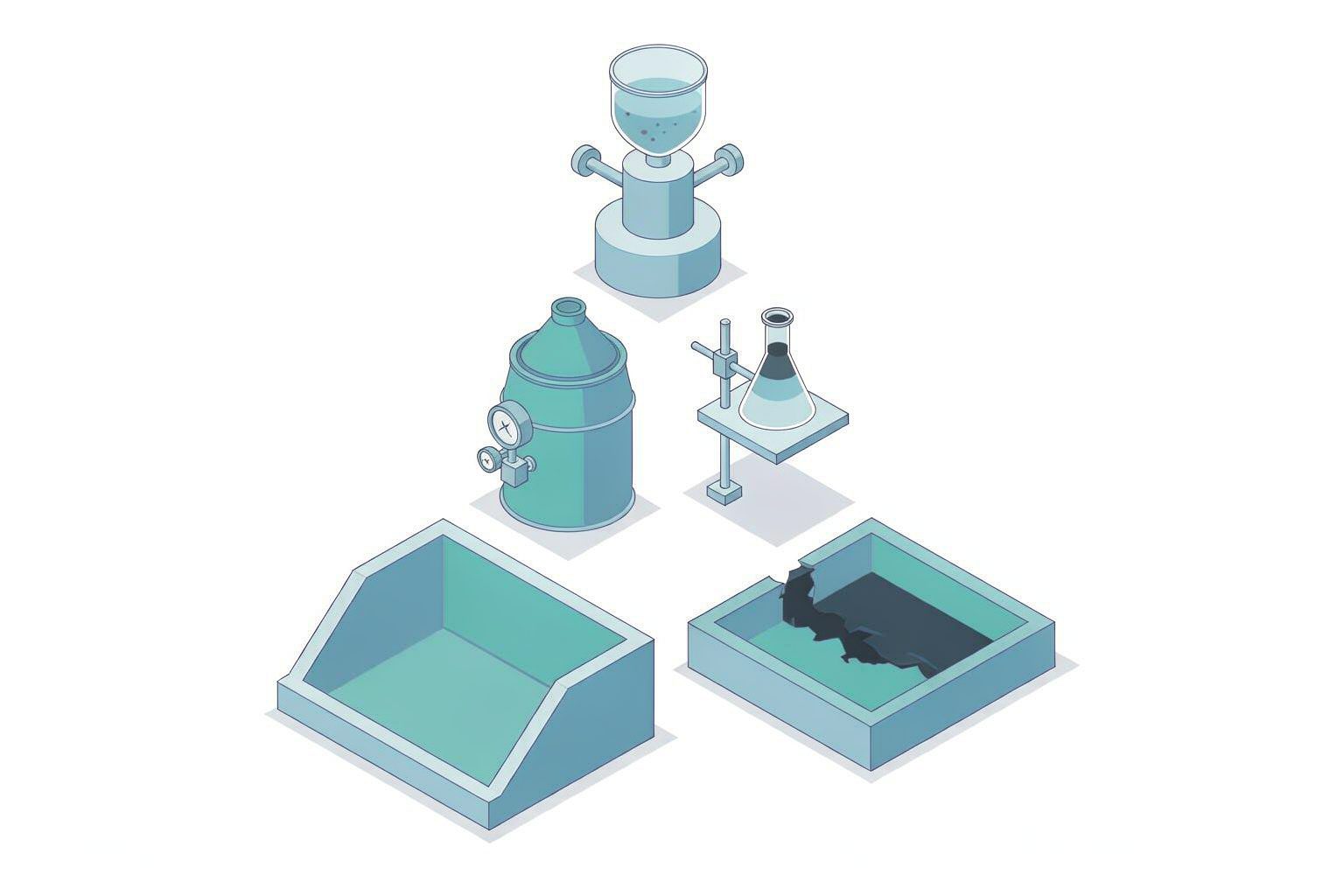
III. 336-064-17 comes with four "exclusions," and the anchor points are in the parentheses
The surface treatment clause is the most commonly used, and is also the easiest to read as "anything involving acid or alkali is it." Copy the original text in full: waste corrosive liquids, waste washing liquids, waste bath liquids, bath residues, and wastewater treatment sludge generated from metal or plastic surface acid (alkali) washing, degreasing, rust removal (excluding sandblasting rust removal), washing, phosphating, brightening, and chemical polishing processes—followed immediately by a parenthesis (excluding: wastewater treatment sludge from acid (alkali) washing, roughening, sulfuric acid anodizing, and phosphoric acid chemical polishing of aluminum and magnesium materials (sheets); wastewater treatment sludge from chemical corrosion of aluminum electrode foil for aluminum electrolytic capacitors and from non-boric acid-based formation liquid formation; wastewater treatment sludge from alkali washing (mold soaking) of aluminum extrusion dies; wastewater treatment sludge from carbon steel acid washing rust removal) [4].
These four exclusions are not clerical errors, nor are they because "this sludge is cleaner." The reason they are excluded is that the acid washing liquid or alkali washing liquid of these processes is mainly based on aluminum, magnesium, and iron, and the sludge produced cannot meet the toxicity or corrosivity criteria corresponding to this clause, so it is not governed by this clause. A key point must be distinguished here: "not in this clause" does not equal "is ordinary solid waste"; it merely exits the direct determination of the catalogue, and next the identification procedure must be followed. The catalogue and identification are two sequential gates, not two mutually exclusive answers.
Among them, the item "wastewater treatment sludge from carbon steel acid washing rust removal" connects with another pathway in the steel industry: waste acid generated from steel rolling processing has a dedicated code and regeneration destination, and acid washing sludge is therefore listed separately, not squeezed into the surface treatment clause. In practice, a plant with both a galvanizing line and an aluminum anodizing line has two sludge streams with different codes, different destinations, and different prices. Once mixed and discharged into the same sludge tank, only the strictest identity comes out—see the mixing rules in Section VII for the reason.
IV. The four steps of the determination procedure, the second of which is "must not be skipped"
Chapter 4 of the Identification Standards for Hazardous Waste—General Rules (GB 5085.7—2019) sets out the procedure in four steps, and the order of these four steps cannot be changed [5]:
| Step | Key Points of the Standard Text | Actions to Take on Site | Common Mistakes |
|---|---|---|---|
| 4.1 | Based on legal provisions and GB 34330, determine whether it is solid waste; if not, it is not hazardous waste | First confirm whether it is waste or a product/by-product (whether quality standards exist and whether it is declared as discarded) | Managing a product with standards and a market as waste, or conversely, selling waste as a product under an enterprise standard |
| 4.2 | If it is solid waste, first identify it according to the catalogue; if listed in the catalogue, it is hazardous waste and no hazardous characteristics identification is required | Compare the code descriptions word by word, including the exclusions in parentheses | Conducting testing before checking the catalogue; or using test reports to overturn catalogue conclusions |
| 4.3 | If not listed in the catalogue but corrosivity or toxicity cannot be ruled out, identify according to GB 5085.1~5085.6 and HJ 298 | Develop a sampling plan according to HJ 298, and select test items according to the characteristics | Testing only for leaching toxicity, missing corrosivity and reactivity |
| 4.4 | If not listed in the catalogue and cannot be identified according to standards but may be harmful, the competent department of ecology and environment under the State Council shall organize experts for determination | Keep process, raw and auxiliary materials, and operation records for determination | Enterprises drawing conclusions on their own without leaving an evidence chain |
The sentence in 4.2 — "no hazardous characteristics identification is required" — is most important when read in reverse: if listed in the catalogue, one cannot use a compliant test report to whitewash it into general solid waste. The standard gives a one-vote determination with no appeal channel. This is also why no test data can be seen in the determination processes of the three cases mentioned above — they simply do not need it.
The 2025 年 version of the catalogue made one revision regarding "how to classify after identification," which is worth noting. The 2021 年 version stipulated that wastes not listed in the catalogue but identified as having hazardous characteristics shall be classified under code 900-000-××; the 2025 年 version changed this to: first, classification shall be based on the main hazardous constituents and hazardous characteristics by reference to existing waste codes in the catalogue; only when classification under existing codes is truly impossible shall 900-000-×× be used [6]. The practical effect of this change is: after identifying "toxicity," one must first answer "which type in the catalogue does it resemble," rather than directly assigning it to the catch-all code. For enterprises, this means the identification report cannot merely give a "yes/no hazardous waste" conclusion; it must also identify a code that can be used to connect with a disposal unit.
V. The Same Sludge, Two Methods, Two Conclusions
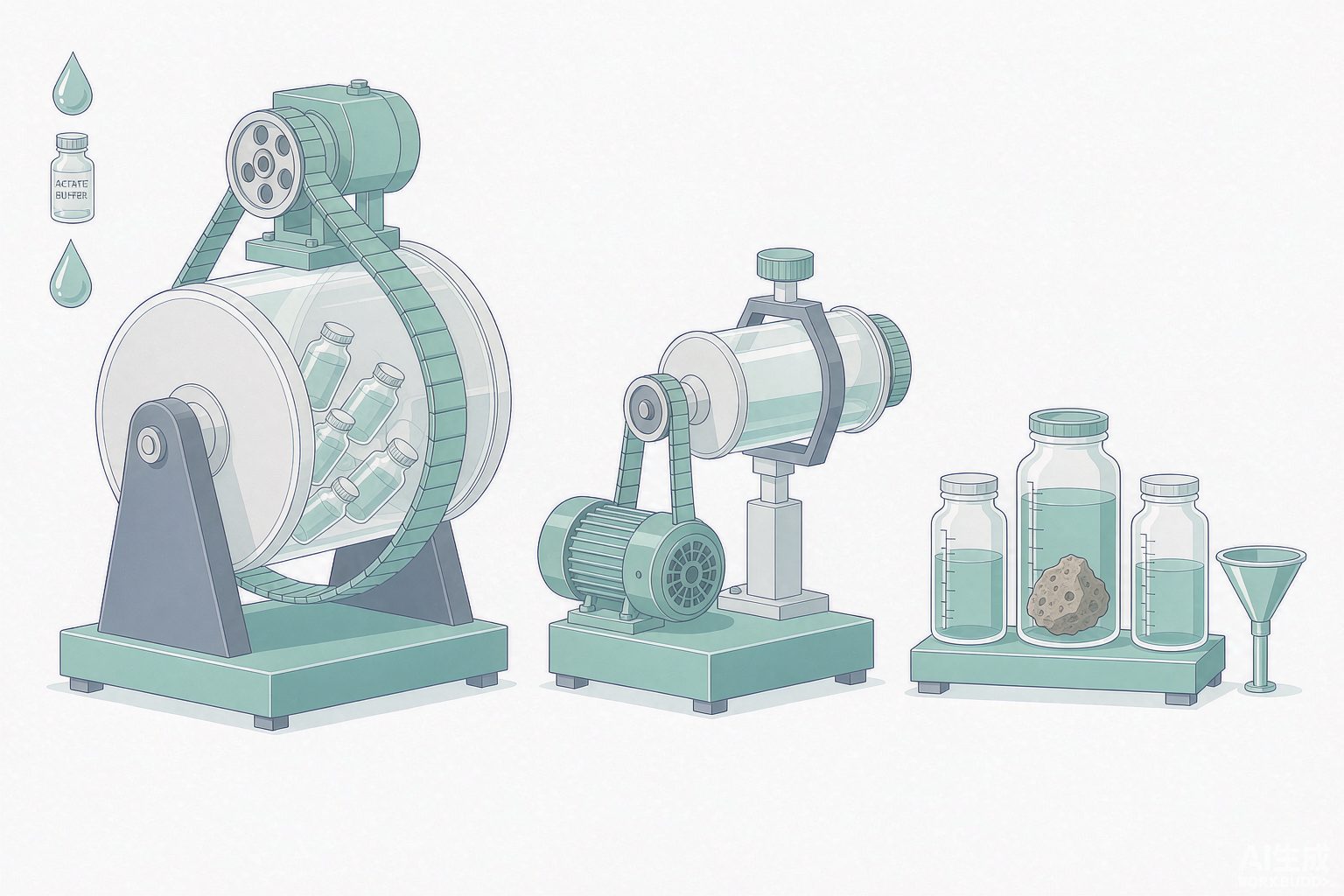
Once on the path of identification, the first fork in the road is not what items to test, but what method to use to leach the pollutants out of the sludge. The three currently effective leaching methods in China simulate three completely different scenarios; their parameters are not interchangeable, and their results are even less convertible [7] [8] [9].
| Method | Leaching Agent | Liquid-to-Solid Ratio | Shaking Conditions | Application |
|---|---|---|---|---|
| HJ/T 299—2007 Sulfuric Acid-Nitric Acid Method | Sulfuric acid + nitric acid mixed solution, pH 3.20±0.05 | 10∶1 | Rotary agitation at 30±2 r/min, 23±2 ℃, 18±2 h | Hazardous waste identification, hazardous waste landfill admission assessment |
| HJ/T 300—2007 Acetic Acid Buffer Solution Method | Acetic acid buffer solution | 10∶1 | Rotary agitation, 18±2 h | Hazardous waste identification (simulating the organic acid environment of domestic waste landfill) |
| HJ 557—2010 Horizontal Shaking Method | Deionized water (neutral) | 10∶1 | Horizontal reciprocating 110±10 times/min, shake for 8 h then let stand for 16 h | Classification of general industrial solid waste Class I/II, environmental risk assessment for resource utilization |
Among the three parameters, pH is the most critical. The sulfuric acid-nitric acid method adjusts the leaching agent to pH 3.2, simulating acid rain and acidic stockpiling; the horizontal shaking method uses pure water, which is close to neutral. The leaching of metals such as nickel, zinc, and copper at pH 3.2 is not on the same order of magnitude as in neutral water. Therefore, for the same batch of sludge, results obtained using 299 may exceed the standard, while results obtained using 557 may all be compliant—this is not a case of either report being falsified; rather, the two methods answer two different questions.
There is another high-frequency misattribution in secondary sources: the liquid-to-solid ratio of HJ/T 300 is 10∶1, while the US EPA TCLP is 20∶1. The two are often mixed in the same table in English technical articles, and when cited in Chinese sources it becomes "HJ/T 300 uses 20∶1". The liquid-to-solid ratio directly determines the leachate concentration; a twofold difference is enough to reverse the conclusion. When verifying, refer to the original standard text.
VI. The determination unit is "portion", not "one bottle"
The second fork is sampling. The Technical Specifications for Hazardous Waste Identification (HJ 298—2019) specifies two things: determine the minimum number of portions based on waste quantity (Table 1), then determine the allowable limit of exceeding portions based on the number of portions (Table 3) [10]. The determination is not "if any single sample exceeds the limit, it is hazardous waste", nor is it "if the average does not exceed the limit, it is compliant".
A public reply from the Ministry of Ecology and Environment on 2025 年 9 月 stated the rule most clearly: for a certain waste, the minimum number of portions determined according to Table 1 is 8, and the allowable limit of exceeding portions determined according to Table 3 is 3; if the number of portions exceeding the flammability limit is 2 and the number of portions exceeding the toxic substance content limit is also 2, totaling 4, the conclusion is still neither flammable nor hazardous due to toxic substance content — because hazardous characteristics must be judged separately by individual characteristic, and the number of exceeding portions for different hazardous characteristics is not cumulative [11].
| Scenario | Number of Exceeding Sample Portions | According to the Limits in Table 3 | Conclusion |
|---|---|---|---|
| Only 1 sample portion(s) have nickel leaching exceeding the limit | 1 (toxicity) | Limit 3 | The determination condition is not met; this characteristic does not hold |
| 3 sample portions have nickel leaching exceeding the limit | 3 (toxicity) | Limit 3 | This characteristic holds; determined as hazardous waste |
| 2 sample portion(s) exceed the flammability limit + 2 sample portion(s) exceed the toxic substance content limit | 2+2 | Each characteristic is compared separately against 3 | Neither characteristic reaches the limit; no cumulative addition |
| Switch to a plan with 5 sample portions | According to the corresponding limits in Table 3 | The fewer the sample portions, the fewer the number of portions allowed to exceed the limit | Different plans cannot be applied interchangeably to reach conclusions |
These rules have two practical implications. One is to protect enterprises: a single-point anomaly, local agglomeration, or scooping up the sediment layer at the bottom of the tank during sampling should not result in the entire batch of sludge being classified as hazardous waste. The other is that speculation is not allowed: the fewer the sample portions, the fewer the number of portions allowed to exceed the limit. Taking "fewer samples" to lower the exceeding proportion does not work under the standard; likewise, spreading the exceeding sample portions across more points cannot yield a compliant conclusion—because the limits change with the number of sample portions. Only two things can truly change the conclusion: clearly distinguishing the generating processes, or altering the properties of the sludge itself.
VII. Mixing Rules: Only Toxicity and Infectivity Are "Contagious"
The most common accident on site is not a misjudgment—it is co-disposal. Chapter 5 of GB 5085.7—2019 sets out three rules for determining mixed waste, with very clear distinctions [5]:
5.2 Hazardous waste possessing only one or more hazardous characteristics of corrosivity, flammability, and reactivity is mixed with other substances; if the mixed solid waste is identified as no longer possessing hazardous characteristics, it is not hazardous waste.
5.3 Hazardous waste is mixed with radioactive waste; the mixed waste shall be managed as radioactive waste.
These three rules limit "contagion" to the two characteristics T and In. Heavy-metal sludge (HW17, HW21 and the like) carries toxicity—a few tons of hazardous waste sludge mixed into hundreds of tons of general sludge turns the entire pile into hazardous waste, and there is no such thing as "proportional conversion." By contrast, waste possessing only corrosivity, flammability, or reactivity, when mixed with other substances, is not hazardous waste if identification shows it no longer possesses hazardous characteristics—this is precisely the legal basis on which pretreatment such as lime neutralization and oxidation-reduction can stand.
But 5.2 does not mean dilution is permitted. Returning to 4.2: waste listed in the catalogue is directly determined, and neither mixing nor dilution can change its identity. Only those wastes that are established solely through identification and whose characteristics fall under C/I/R can be saved by 5.2. Therefore, segregation by quality and stream is the first process step on the sludge side just as it is on the wastewater side: sludge from galvanizing lines, sludge from aluminum anodizing, oily sludge, and biological excess sludge—the four streams must be stored separately, tested separately, and routed separately, with disposal fees paid according to each stream's identity; mixed together, they are paid at the price of the most expensive one.
VIII. pH Has Two Rulers: 12.5 and 12.0
Corrosivity is the most easily overlooked item, because its criterion is only a single pH value. Article 3.1 of the Identification Standards for Hazardous Wastes—Identification for Corrosivity (GB 5085.1—2007): leachate prepared in accordance with GB/T 15555.12 with pH≥12.5, or pH≤2.0, is hazardous waste; Article 3.2 provides another criterion based on steel corrosion rate—at 55 ℃, the corrosion rate on No. 20 steel ≥6.35 mm/a [12]. The position of this line is critical—it is only a few tenths away from the common pH of lime-conditioned sludge.
The other ruler stands at the landfill gate. Article 6.2, paragraph b, of the Standard for Pollution Control on the Hazardous Waste Landfill (GB 18598—2019) stipulates that waste entering a flexible landfill must have a leachate pH between 7.0 and 12.0 [13].
| Threshold | Value | Source | What It Governs | Consequence of Exceeding |
|---|---|---|---|---|
| Corrosivity Identification Threshold | pH≥12.5 or ≤2.0 | GB 5085.1—2007 Article 3.1 | Whether this sludge is hazardous waste | Classified as corrosive hazardous waste |
| Flexible Landfill Admission Threshold | pH 7.0~12.0 | GB 18598—2019 Article 6.2 b | Whether this hazardous waste can enter this site | Requires pretreatment (neutralization) before admission |
Between the two lines lies a window of 0.5: sludge with pH between 12.0 and 12.5 is neither classified as corrosive hazardous waste nor admissible to a flexible landfill. This window is particularly realistic for lime-conditioned sludge—to destabilize extracellular polymeric substances and reduce the moisture content below 60%, lime dosing often raises the pH of the sludge cake to around 12, and overdosing pushes it past 12.5. This creates a rather awkward chain: lime is added for dewatering, and pH rises; once pH rises, sludge that was originally general solid waste may become corrosive hazardous waste, while sludge that was already hazardous waste cannot enter a flexible landfill and must first be neutralized; neutralization in turn requires acid addition, which raises salinity and then hits the 10% threshold for water-soluble salts.
This is not theoretical deduction. In the electroplating sludge case and the plastic washing waste liquid case mentioned above, pH 12.62 and 13.5 were both directly determined as corrosive hazardous waste according to GB 5085.1 [14], and there was no second indicator in the determination process.
IX. Moisture Content, Salt, Organic Matter: Three More Thresholds for Admission
Being classified as hazardous waste only gets the first ticket. Chapter 6 of GB 18598—2019 lists six conditions for entering a flexible landfill, three of which are directly related to the properties of the sludge itself [13]: moisture content below 60%, total water-soluble salts less than 10% (determined according to NY/T 1121.16), and organic matter content less than 5% (determined according to the HJ 761 loss-on-ignition method); the other three are that the harmful components in the leachate do not exceed the limits in Table 1, pH is within 7.0~12.0, and it no longer has reactivity or flammability.
| Item | Flexible Landfill | Rigid Landfill |
|---|---|---|
| Absolutely Prohibited | Medical waste; waste that reacts incompatibly with the liner; liquid waste (Article 6.1) | |
| Leachate | Prepared in accordance with HJ/T 299; hazardous constituents shall not exceed the allowable landfill control limits in Table 1 | Not required |
| pH | 7.0~12.0 | Not required |
| Moisture Content | <60% | Not required |
| Total Water-Soluble Salts | <10% | Not required |
| Organic Matter | <5% | Not required |
| Reactivity/Flammability | No longer present | No longer present (or no longer present after pretreatment) |
| Arsenic Content | — | Waste with >5% shall be disposed of in a rigid landfill (Article 6.4) |
The 60% here is the same number as the 60% in the article on Sludge Dewatering, yet its meaning is different. The 60% in the dewatering article is an interface value back-calculated from the downstream disposal method; here it is a hard threshold written into the standard for flexible landfills, with no room for negotiation. Only by reading the two together can one see why this number is so stubborn in the industry: it is simultaneously a process target, a commercial pricing basis, and an entry permit—three things sharing a single number.
The water-soluble salt item is more often exceeded in industrial sludge. Sludge generated from desulfurization, acid pickling, and saline wastewater treatment can easily have water-soluble salts exceeding 10%, so it can only go to a rigid landfill or undergo pretreatment. The acceptance conditions for rigid landfills are much looser, but capacity is scarce and the unit price is higher—this is the second charge levied by "salt" on the solid waste side; the first charge has already been levied on the wastewater side.
10. Being Classified as General Solid Waste Is Just Switching to a Different Exam
Many enterprises stop here: if the identification shows no exceedance, they write an explanation and haul it away as general solid waste. However, Articles 3.6 and 3.7 of the Standard for Pollution Control on the Storage and Landfill of General Industrial Solid Waste (GB 18599—2020) require another classification, and this time both the methods and the limits are completely different [15]:
Category II: In the leachate, the concentration of one or more characteristic pollutants exceeds the above limits, or the pH is outside the range of 6~9.
Note the three changes here: the method is changed from HJ/T 299 to the HJ 557 horizontal oscillation method; the limits are changed from GB 5085.3 to Class I of GB 8978 Integrated Wastewater Discharge Standard; and an additional pH 6~9 requirement unrelated to pollutants is added. That is to say, a batch of sludge can pass the question of "whether it is hazardous waste" but be judged as Category II on the question of "Category I or Category II"—because the two sets of limits are not the same number, and the pH 6~9 requirement is something that does not exist in hazardous waste identification.
The destinations of the two categories are also different: for a Category I site, when the saturated permeability coefficient of the natural foundation layer is not greater than 1.0×10⁻⁵ cm/s and the thickness is not less than 0.75 m, the natural foundation layer can be used as the impermeable liner; a Category II site must have a synthetic liner, with a high-density polyethylene membrane thickness of not less than 1.5 mm, and a clay liner of not less than 0.75 m with a saturated permeability coefficient of not greater than 1.0×10⁻⁷ cm/s. The grade of the site determines where the sludge can go and how much it costs, and the grade is determined by that 557 report.
| Tier | Question to be answered | Basis | Leaching method | Limit for comparison |
|---|---|---|---|---|
| Tier 1 | Whether it is hazardous waste (direct determination by the catalogue) | National Catalogue of Hazardous Wastes (2025 年 Edition) | No testing required | Code description and exclusions in parentheses |
| Tier 2 | Whether it is hazardous waste (characteristic identification) | GB 5085.1~5085.6 + HJ 298 | HJ/T 299 or HJ/T 300 | GB 5085.3 leaching limits, GB 5085.1 corrosivity, etc. |
| Tier 3 | Whether general solid waste is Class Ⅰ or Class Ⅱ | GB 18599—2020, Articles 3.6 and 3.7 | HJ 557 | GB 8978 Class I standard + pH 6~9 |
XI. What the exemption list exempts is a step, not a status
The main text of the catalogue, Article 3, specifies: hazardous wastes listed in the appendix "List of Hazardous Wastes Exempted from Management" may be managed under exemption in the listed exemption stages and when the corresponding exemption conditions are met, in accordance with the provisions of the exemption content [4]. The 2025 年 version made one adjustment to the appendix: deleting 2 exemption provisions, adding 1 new ones, and revising the wording of some exemption conditions.
The Ministry of Ecology and Environment specifically emphasized this point in a press conference Q&A, and deliberately added a sentence to the exemption condition descriptions in the new appendix: "shall still comply with the requirements of ecological and environmental laws, regulations and standards such as those on solid waste management," because "individual localities and units have an inaccurate understanding of exemption management": items listed in the exemption list still belong to hazardous waste; what is exempted is only the specific management requirements in specific stages and under specific conditions, not the hazardous waste attribute itself [6].
So when you hear on site "we've got an exemption for this," the next three questions should be: which stage is exempted (collection, storage, transportation, utilization or disposal), are the exemption conditions met, and do the requirements outside the exemption (such as transfer manifests and operating permits) still apply. Take oil-bearing metal chips as an example: only under the condition that, after degreasing to the point of standing without dripping, they are baled or briquetted for metal smelting, may the utilization process be exempted; other circumstances are not within the scope of the exemption. When it comes to sludge, the most common misunderstanding is reading "a certain type of sludge can be used for building materials" as "this type of sludge does not need to be managed as hazardous waste" — the former is about destination, the latter is about identity; they are two different things.
Twelve. The Ledger: 1500 to 2000 元, and 180 to 350 元
Identity is worth verifying repeatedly because it directly determines the unit price. The Yantai Municipal Ecology and Environment Bureau gave the local official figures in a reply to a proposal in 2026 年: the current average price for hazardous waste incineration is about 2000 元/ton, and the average price for landfill is about 1500 元/ton [16]. On the general industrial sludge side, industry quotation materials give a range of 180~350 元/ton for sludge with a moisture content of about 80%, mainly going to landfill or brick-making [17] (commercial quotation materials, for order-of-magnitude reference only; actual local contracts prevail).
| Destination | Unit Price / (CNY·t⁻¹) | 1 万 t Annual Disposal Cost / 10,000 CNY | Difference vs. General Solid Waste / 10,000 CNY |
|---|---|---|---|
| General Industrial Solid Waste (Landfill or Brick Making) | 180~350 | 180~350 | — |
| Hazardous Waste Flexible Landfill | Approx. 1500 | Approx. 1500 | Approx. 1150~1320 |
| Hazardous Waste Incineration | Approx. 2000 | Approx. 2000 | Approx. 1650~1820 |
Breaking these numbers down one more level reveals a commonly overlooked discrepancy in calculation basis. Disposal fees are charged per wet ton, while identification is calculated on a dry basis. For sludge with a moisture content of 80%, 5 tons of wet sludge correspond to only 1 tons of dry basis; at 2000 元/wet ton, this converts to 10000 元/tDS on a dry basis. If an enterprise only focuses on the "CNY/ton" figure, it is easy to assume they are paying per dry ton, when in fact they are paying five times that amount. This is also the real value of dewatering in this chain: squeezing out water is equivalent to reducing the tonnage-based billing base—but if the means of squeezing water is adding lime, the added solids are also billed by tonnage. How much remains after offsetting both ends must be calculated separately.
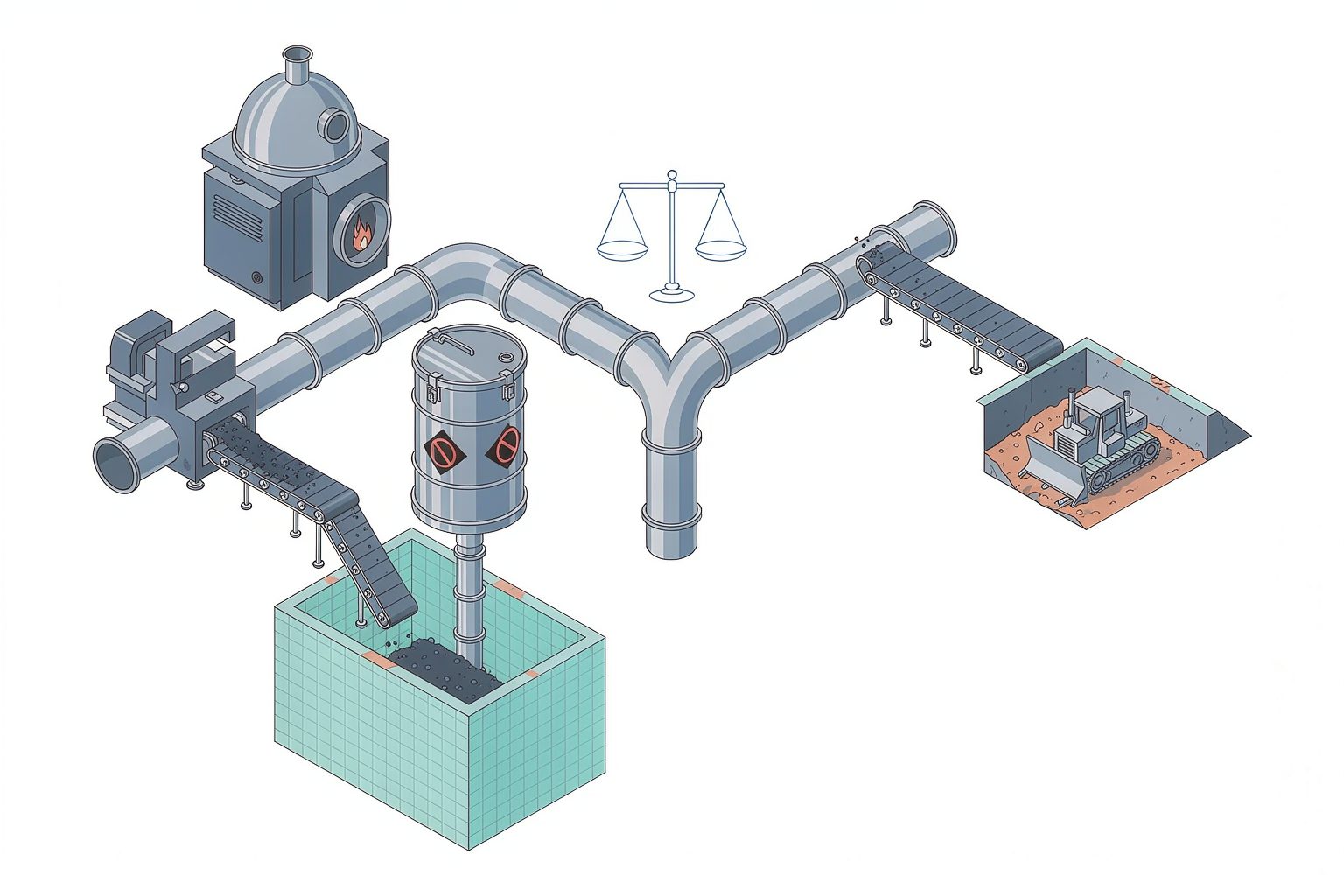
In the Chongqing case of over 5000 tons of electroplating sludge, if disposed of legally at 2000 元/ton, the book cost would be about 1000 万 yuan [3]. This figure is not meant to justify dumping, but to explain why such cases recur: when identity determination is treated as something that can be "handled," the money saved and the risk borne are never in proportion.
Thirteen, Seven Points on Site
- Check the catalogue first, then test. Items in the catalogue are directly determined; testing cannot change the conclusion. Only those removed from the catalogue enter identification. Reversing the order wastes both money and conclusions.
- Read the code together with its parentheses. 336-064-17 carries four exclusions, among which "sludge from carbon steel pickling and rust removal wastewater treatment" is explicitly excluded; missing the parentheses results in either misjudging such sludge as hazardous waste, or letting what should be identified pass directly.
- 772-006-49 is not a universal code for "industrial wastewater sludge." Its premise is that the treated object itself is toxic or infectious hazardous waste. Before writing it into the EIA, first answer "for whom does our plant dispose of hazardous waste?"
- Write the leaching method on the first page of the report. Hazardous waste identification only recognizes HJ/T 299 and HJ/T 300; general solid waste Class Ⅰ/Ⅱ uses HJ 557; the two are not interchangeable, nor convertible.
- Determine the number of incremental samples in the sampling plan first. The judgment depends on the relationship between the number of exceeding incremental samples and the limit, not on "whether one bottle exceeds"; different hazardous characteristics are not cumulative.
- Segregation by quality and stream must reach the sludge. Sludge from different processes is separated into tanks, packaged separately, and tested separately; hazardous waste sludge containing heavy metals mixed into general sludge causes the whole pile to be handled as hazardous waste, with no proportional conversion.
- Re-test the pH once for lime-conditioned sludge. 12.5 is the hazardous waste identification line, 12.0 is the flexible landfill admission line; the two figures differ by only 0.5, and a slight overdose hits both at once.
Fourteen, One Sentence to Close
The determination of sludge properties looks like a testing question, but is actually a traceability question.A lab report can only answer "what it leaches out," not "on what basis it is regulated this way." The catalogue gives the answer of the process, identification gives the answer of the characteristics, and the landfill gives the answer of the destination; the three answers belong to three standards, three sets of methods, and three sets of limits. Mix them into one sentence, and the most typical on-site dialogue emerges: the report is compliant, and the fine is still issued.
References
- Shaoguan Municipal Ecology and Environment Bureau Shixing Branch: "Administrative Penalty Decision" (Shao Huan (Shixing) Fa [2026] No. 8), 2026 年 8 月 17 日 disclosure: The sedimentation sludge generated from the treatment of washing wastewater at the wastewater treatment station of Shaoguan Dejia Auto Parts Co., Ltd., approximately 70 bags, 2.25 tons, is identified as HW17 surface treatment waste (code 336-064-17); open-air storage does not comply with Article 6.1.1 of GB 18597—2023.
- Cangzhou Municipal Ecology and Environment Bureau Botou Branch: Public disclosure of investigation and handling of a public complaint case: The residue at the dumping site was determined to be electroplating surface treatment sludge, which according to the "National Catalogue of Hazardous Wastes" belongs to HW17 surface treatment waste, 2019 年 9 月 transferred to the public security organ.
- Ministry of Ecology and Environment: Typical cases of procuratorial supervision and ecological environment enforcement coordinated to serve and safeguard green development of the Yangtze River Economic Belt, Chongqing Moulong Electroplating Company case: 2012—2015 年 illegal dumping of more than 5000 tons of electroplating sludge; on-site inspection found chromium, nickel, zinc and other components severely exceeding standards, constituting hazardous waste.
- "National Catalogue of Hazardous Wastes (2025 年 Edition)", Ministry of Ecology and Environment and four other departments, effective 2025 年 1 月 1 日: Appendix Table HW17 surface treatment waste (including 336-064-17 full text and four exclusions), HW49 other wastes (772-006-49, 900-046-49), HW04 (263-011-04), HW02 (275-001-02), HW48 (321-027-48), HW18 (772-003-18); main text Article 3 exemption management, Article 5 code composition, Article 6 identification and classification.
- GB 5085.7—2019 "Identification Standards for Hazardous Wastes - General Rules": Chapter 4 identification procedures (4.1 determine solid waste attributes according to GB 34330, 4.2 catalogue priority, 4.3 characteristic identification, 4.4 expert determination); Chapter 5 determination rules after mixing of hazardous wastes (5.1, 5.2, 5.3).
- Department of Solid Waste and Chemicals, Ministry of Ecology and Environment, answering reporters' questions on the "National Catalogue of Hazardous Wastes (2025 年 Edition)", 2024 年 11 月 30 日: The catalogue lists 470 types, an increase of 3 types compared with the 2021 年 Edition; Article 6, Paragraph 2 was revised to "first classify by referring to existing codes, and only use 900-000-×× when classification is truly impossible"; 6 notes were added to the appendix table; 2 entries were deleted from the appendix and 1 exemption provisions were added; exemption management only applies to specific stages and does not exempt the hazardous waste attribute.
- HJ/T 299—2007 "Solid Waste - Extraction Procedure for Leaching Toxicity - Sulfuric Acid and Nitric Acid Method": extraction agent pH 3.20±0.05, liquid-to-solid ratio 10:1, rotary agitation 30±2 r/min, 23±2 ℃, 18±2 h, filtration through 0.45 μm membrane filter.
- HJ/T 300—2007 "Solid Waste - Extraction Procedure for Leaching Toxicity - Acetic Acid Buffer Solution Method": acetic acid buffer extraction, simulating the organic acid environment of domestic waste landfills, liquid-to-solid ratio 10:1; the 20:1 ratio of US EPA TCLP is often confused in secondary sources.
- HJ 557—2010 "Solid Waste - Extraction Procedure for Leaching Toxicity - Horizontal Oscillation Method": deionized water extraction, liquid-to-solid ratio 10:1, horizontal reciprocating oscillation 110±10 times/min, standing for 16 h after 8 h of oscillation.
- HJ 298—2019 "Technical Specifications for Hazardous Waste Identification": Table 1 minimum number of individual samples, Table 3 limit on number of exceeding samples; Chapter 7 judgment of test results; sampling, sample preparation and moisture content requirements.
- Ministry of Ecology and Environment: Public reply on "how to determine when among 8 samples there are 2 each for highly flammable and toxic substance content limits, totaling 4", 2025 年 9 月 15 日: Determine according to Table 1 minimum number of individual samples 8 and Table 3 limit on number of exceeding samples 3; hazardous characteristics shall be judged separately for each single characteristic, and the number of exceeding samples for different hazardous characteristics shall not be accumulated.
- GB 5085.1—2007 "Identification Standards for Hazardous Wastes - Corrosivity Identification" Article 3: leachate pH≥12.5 or pH≤2.0; corrosion rate of No. 20 steel at 55 ℃ ≥6.35 mm/a.
- GB 18598—2019 "Pollution Control Standard for Hazardous Waste Landfill" Chapter 6: 6.1 three categories of waste that shall not be landfilled; 6.2 six admission conditions for flexible landfill (HJ/T 299 leachate not exceeding Table 1 limits, pH 7.0~12.0, moisture content <60%, total water-soluble salts <10%, organic matter <5%, no reactivity or flammability); 6.3 rigid landfill; 6.4 arsenic content >5% shall enter rigid landfill.
- Heilongjiang Provincial Department of Ecology and Environment: 2023 年 third batch of typical cases of combating environmental violations of hazardous waste (a waste plastics processing plant in Yichun City, cleaning foam pH 12.62 determined as corrosive hazardous waste according to GB 5085.1; another case of caustic soda waste liquid pH 13.5).
- GB 18599—2020 "Pollution Control Standard for Storage and Landfill of General Industrial Solid Waste": Articles 3.6 and 3.7 definitions of Category I and Category II (HJ 557 leachate compared against GB 8978 maximum allowable discharge concentration, Class II pollutants implemented according to Grade I standard, and pH 6~9); Category I site natural foundation layer saturated permeability coefficient ≤1.0×10⁻⁵ cm/s and thickness ≥0.75 m; Category II site high-density polyethylene membrane ≥1.5 mm, clay liner ≥0.75 m and saturated permeability coefficient ≤1.0×10⁻⁷ cm/s.
- Yantai Municipal Ecology and Environment Bureau: Reply to the proposal on promoting the upgrading of the industrial hazardous waste treatment industry (No. 145407), 2026 年: Currently the average price of hazardous waste incineration is approximately 2000 元/ton, and the average price of landfill is approximately 1500 元/ton.
- Solid waste disposal industry quotation materials (2025 年 3 月, commercial platform): General industrial sludge (moisture content around 80%) disposal price 180~350 元/ton, mainly destined for landfill or brick making; the hazardous waste incineration 4500~8000 元/ton and landfill 3500~5000 元/ton given in the same document are relatively high-end quotations for the region and differ considerably from official figures, and are for order-of-magnitude reference only.
- GB 5085.3—2007 "Identification Standards for Hazardous Wastes - Leaching Toxicity Identification": Limits for inorganic pollutants in leachate (mg/L) — copper 100, zinc 100, cadmium 1, lead 5, total chromium 15, hexavalent chromium 5, mercury 0.1, total arsenic 5, selenium 1, barium 100, nickel 5, beryllium 0.02, total silver 5, fluoride 100, plus several organic pollutants.
- GB 5085.6—2007 "Identification Standards for Hazardous Wastes - Identification of Toxic Substance Content": Uses the total amount of pollutants in the waste as the criterion, constituting a different pathway from leaching toxicity.
- GB 18597—2023 "Pollution Control Standard for Hazardous Waste Storage" Article 6.1.1: Storage facilities shall, according to the form, physical and chemical properties, packaging form and pollutant migration pathways of hazardous wastes, adopt measures against wind, sunlight, rain, leakage, seepage and corrosion, and shall not store hazardous wastes in the open air.
- GB 34330 "Identification Standards for Solid Wastes - General Rules": Connected with Article 4.1 of GB 5085.7, used to determine whether a substance belongs to solid waste, and is the starting point of the identification procedure.
- Compilation of hazardous waste management Q&A by local ecology and environment departments (Yishui, Shandong, 2021): Question 94 — solid waste generated during the utilization of hazardous waste with toxic hazardous characteristics, if after identification it no longer has hazardous characteristics, is not hazardous waste; Question 96 — whether a single sample exceeding the standard can be determined as hazardous waste depends on the number of samples and Table 3 of HJ 298; Question 98 — key points for distinguishing by-products from hazardous waste.
- Comparison of Article 6 of the "National Catalogue of Hazardous Wastes (2021 年 Edition)" with the 2025 年 Edition revision: Used to verify changes in the "classification after identification" rule, and the code integration in the 2025 年 Edition such as 336-100-21 merged into 336-100-17.
The standard provisions, penalty decisions and cases cited in this article all come from public sources, with annotations shown in the in-text numbering. For the application of catalogue codes and the exclusion items in parentheses, please refer to the original text of the currently effective version; the correspondence between leaching methods and limit values cannot be applied by analogy. For specific projects, it is recommended to formulate sampling and testing plans according to HJ 298 and confirm code attribution with the local ecology and environment department. The values used in the self-calculated parts (Table 8 and dry-basis conversion) are listed in the main text and can be verified.
您提供的内容似乎不完整,缺少需要翻译的中文文本。请提供待翻译的中文内容,我将根据术语表为您翻译成地道的英文。