



 Across multiple industries nationwide (chlor-alkali, oilfield & refining, coal c
 Laboratory and online monitoring specifications (chloride ion range 0.5 to 20000
COD Has Five Values: Chloride Is Not an Interference, but a Reactant Fully Priced at 0.226
The same bottle of industrial wastewater, sent to three laboratories, can yield three different values all written on accredited reports. It is not that any of them is wrong; rather, five different "COD" values each hold true under their own conditions.
Chemical Oxygen Demand is not an objective quantity that is measured; it is a conditional quantity measured under specified conditions. Change the conditions, and the value changes. And industrial wastewater happens to contain several substances specifically capable of altering these conditions: chloride ions are oxidized by potassium dichromate, ammonium ions are oxidized by the chlorine gas liberated from chloride ions, hexavalent chromium does part of the work in place of potassium dichromate, and chlorate-based "COD removal agents" oxidize organic matter before digestion. These four substances do not all act in the same direction—three drive the value up, one drives it down. This article breaks them down one by one and draws clearly the line that "the same bottle of water has five COD values."
I. COD Is a Conditional Indicator—the Standard Itself Says So
HJ/T 399—2007 defines Chemical Oxygen Demand as: under certain conditions, after oxidation treatment with potassium dichromate, the mass concentration of oxygen corresponding to the amount of potassium dichromate consumed by the dissolved substances and suspended solids in the water sample, wherein 1 mol of potassium dichromate (1/6 K₂Cr₂O₇) is equivalent to 1 mol of oxygen (1/2 O). Three conditions are hidden between the lines of this definition: strongly acidic medium, silver salt catalysis, and boiling reflux for 2 h. Replace any one of them, and what is measured is no longer the same thing.
In the preparation notes for the "Water Quality—Determination of Chemical Oxygen Demand—Chlorine Correction Method" released for public comment by 2025 年 2 月, the opening of Section 5.6.3 states very plainly: COD is a comprehensive indicator, and the determination method falls within the category of volumetric methods; it cannot eliminate interference as techniques such as chromatography and mass spectrometry can, and adding chemical reagents to eliminate possible ionic interference often introduces new interference because the newly added reagents themselves contribute COD. In other words, the very means by which this method combats interference is itself creating new interference. This sentence unties the knot behind all the contradictions that follow.
First, let us lay out clearly the positions of the five values (Table 1). They are not five precision levels of the same indicator; they are five different indicators.
| Designation | Method standard | Oxidation conditions | Range and detection limit | Chloride upper limit | Can it be used for discharge determination |
|---|---|---|---|---|---|
| COD_Cr (dichromate method) | HJ 828—2017 | K₂Cr₂O₇ strong acid, Ag₂SO₄ catalysis, boiling reflux 2 h | Sample volume 10.0 mL: detection limit 4, lower determination limit 16, undiluted upper limit 700 mg/L | Not applicable above 1000 (after dilution) | Yes. Both GB 8978 and GB 18918 specify this method |
| COD_Cr (chlorine gas correction method) | HJ/T 70—2001 (under revision) | Same as above, with nitrogen gas at 5~10 mL/min to strip chlorine gas, followed by alkaline absorption and titration | Detection limit 30 mg/L at sample volume 20.0 mL | Less than 20000 | Yes. Dedicated basis for high-chloride wastewater |
| Rapid digestion spectrophotometric method | HJ/T 399—2007 | Sealed high-temperature digestion, dual-wavelength colorimetry at 440 nm and 600 nm | Undiluted 15~1000 mg/L | Not greater than 1000 | Guidance standard; listed by GB 5084 as one of the specified methods |
| Permanganate index COD_Mn | GB 11892—89 | KMnO₄, boiling water bath 30 min, acidic or alkaline medium | 0.5~4.5 mg/L | Above 300, switch to alkaline method | No. The standard explicitly states it is not applicable to the organic pollution load of industrial wastewater |
| TOC converted value | HJ 501—2009 | High-temperature catalytic oxidation; measures carbon, not oxygen | μg/L to mg/L level | Not limited by chloride | Cannot be used for direct determination; only for trends and corroborating evidence |
Looking at columns two through four of Table 1 together reveals something often overlooked: the same "COD" spans a range from 0.5 to 1000, a difference of 2000 times. Using the permanganate index to evaluate printing and dyeing effluent with a COD of 300 mg/L is not a matter of measurement accuracy—it is a method out of bounds. The scope of GB 11892—89 itself states "not applicable to the determination of the organic pollution load in industrial wastewater; if determination is required, the potassium dichromate method may be used for Chemical Oxygen Demand." The standard has already pointed out the way out.
II. Chloride Ion: 0.226 Is Not a Correction Factor, but Stoichiometry
Regarding chloride ion interference, the prevailing saying in the industry is mostly "it will read high; just add mercury sulfate to mask it." This sentence conflates two things into one. The first is chemistry: chloride ions are indeed oxidized by potassium dichromate; this is not a random error but a quantitative reaction. The second is engineering: how much the masking agent can block.
The preparation notes give a number in a table footnote: 1 g chloride ion corresponds to 0.226 g oxygen. This number does not need to be memorized; it can be calculated directly from electron transfer: 2Cl⁻ → Cl₂ + 2e, 1 mol chloride ion gives 1 mol electrons; O₂ + 4e → 2O²⁻, 1 mol oxygen requires 4 mol electrons. Thus 1 mol chloride ion (35.45 g) corresponds to 0.25 mol oxygen (8 g), 8 ÷ 35.45 = 0.2256.0.226 is calculated, not calibrated.
The problem is that, theoretically, this reaction should not occur: the standard oxidation potential of chloride ion is 1.36 V, and that of dichromate in acidic medium is 1.33 V; under standard conditions, dichromate cannot oxidize chloride ion. But standard conditions are not digestion conditions. The original wording of the preparation notes is that, under heating and reflux in a strongly acidic medium, the oxidation potential of dichromate is higher and can oxidize chloride ions; in a strongly acidic system with excess oxidant, both high and low concentrations of oxidant can oxidize chloride ions, and the measured results are close to the theoretical value.
To what extent is "close to the theoretical value"? The preparation group conducted a set of tests without masking agent and without catalyst (Table 2).
| Oxidant concentration c(1/6 K₂Cr₂O₇) | Chloride ion mg/L | Theoretical COD mg/L | Measured COD mg/L | Relative Error RE |
|---|---|---|---|---|
| 0.0250 mol/L | 75 | 17.0 | 16.5 | 2.9% |
| 0.0250 mol/L | 150 | 33.9 | 33.2 | 2.1% |
| 0.0250 mol/L | 200 | 45.2 | 44.8 | 0.9% |
| 0.250 mol/L | 500 | 113 | 112 | 0.9% |
| 0.250 mol/L | 800 | 181 | 183 | 1.1% |
Not a single value in Table 2 exceeds 3%. This is not "interference"; this is the reaction running to completion according to stoichiometry. So the term "chloride ion interference" is mechanistically wrong: it is not interference, it is the analyte. The portion of chloride ions that the masking agent failed to block contributes 100% of COD, not 20%, not 50%.
Do the math yourself. At 0.226 dilution, if 1000 mg/L chloride is not masked at all, it is equivalent to creating 226 mg/L of COD out of thin air, which is 4.5 times the GB 18918—2002 Grade 1A standard (50 mg/L). The reverse calculation is even more striking: as long as 220 mg/L chloride is not blocked, it can fill up the entire margin of Grade 1A. Yet chloride in many industrial wastewaters ranges from several thousand to tens of thousands—for such waters, the COD report, if the method is not clearly stated, that number basically cannot be used for compliance determination.
This chain explains why HJ 828—2017 sets its scope at chloride 1000 mg/L: not because 1000 has any physical meaning, but because mercury sulfate masking is dosed at a mass ratio m(HgSO₄) : m(Cl⁻) of not less than 20:1, and the maximum addition volume of mercury sulfate solution is only 2 mL. The amount of masking agent is limited, so the chloride it can handle is also limited. International methods draw this line at the same position but take two different approaches: EPA Method 410.3 (1978) uses a 10:1 masking ratio plus a chloride correction curve with a factor of 1.2, and applies only to waters with COD not lower than 250 mg/L; DIN 38409-H41 first acidifies and strips hydrogen chloride from waters above 1000 mg/L, "pre-treating the sample into non-high-chloride water" before measurement.
III. What Remains After Masking: Three Numbers from Two Real Samples
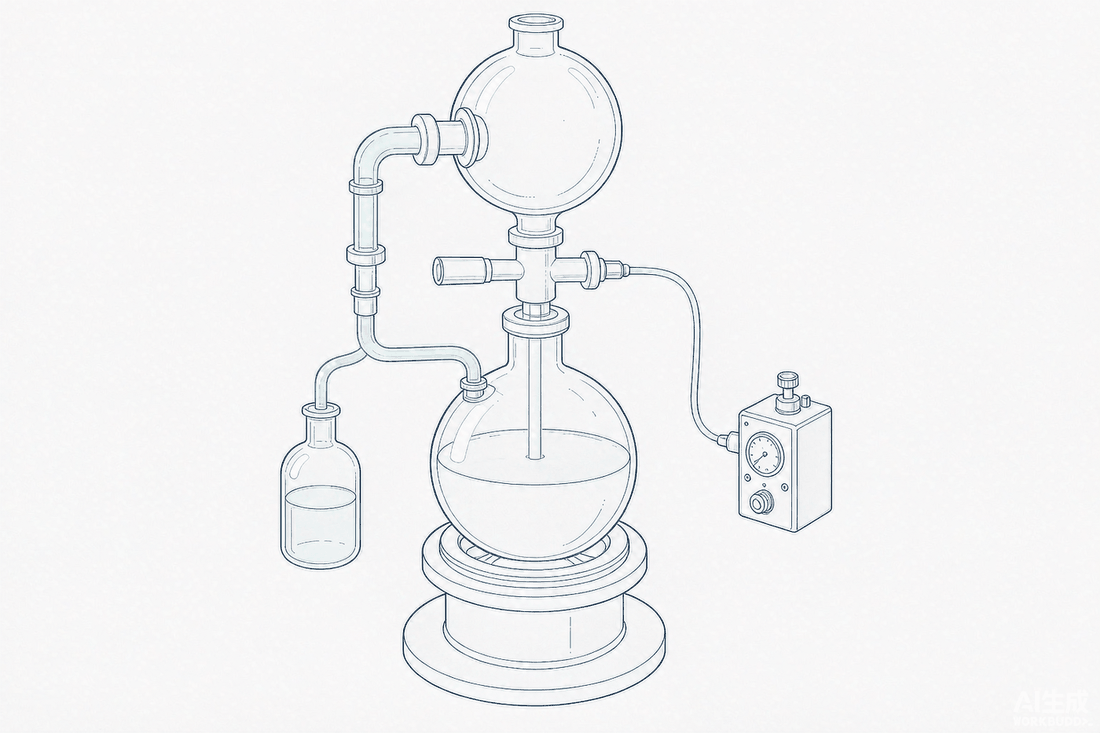
The chlorine gas correction method acknowledges that masking cannot block everything: first measure an "apparent COD" conventionally, then use nitrogen to carry the generated chlorine gas into an alkaline solution and titrate with sodium thiosulfate to obtain the "chlorine gas correction value"; only the difference between the two is the true COD. The preparation notes performed this subtraction on two sets of actual samples (Table 3).
| Sample | Chloride Ion | Apparent COD | Chlorine Correction Value | True COD | Ratio of Apparent Value to True Value |
|---|---|---|---|---|---|
| A Certain Industrial Wastewater | 5900 mg/L | 43.5~51.0 mg/L | 6.8~15.1 mg/L | 34.2~37.5 mg/L | 1.39 times (first parallel 47.4 vs. 34.2) |
| A Certain Surface Water | 18000 mg/L | 35.9~45.5 mg/L | 10.3~21.7 mg/L | 21.3~25.9 mg/L | 1.77 times (first parallel 37.6 vs. 21.3) |
The last two columns of Table 3 corroborate each other: as the chloride ion rises from 5900 to 18000, the factor by which the apparent value is elevated increases from 1.39 to 1.77. The factor is not a constant, because it depends on two things: whether the total amount of masking agent is sufficient, and how much organic matter is present. With more organic matter, dichromate is consumed faster, leaving less available to oxidize chloride ions, so the proportion oxidized actually decreases. This also explains why EPA 410.3 requires an additional correction factor of 1.2: it acknowledges that this proportion drifts with organic matter content.
There is another, more noteworthy phenomenon hidden in the arrangement of the six parallel values. The corrected values of the surface water group range from 10.3 to 21.7, with a range of 11.4, exceeding half of the mean; whereas the true values obtained by subtraction lie only between 21.3 and 25.9, with a range of 4.6. The corrected values are highly dispersed while the true values are instead stable, indicating that the apparent value and the corrected value rise and fall together: in a given digestion, when more organic matter is consumed, the proportion of chloride ions oxidized is also higher, both numbers become larger together, and part of this is canceled out after subtraction. This property makes the chlorine gas correction method usable in situations where "measurement is mandatory," but it also shows that its result rests on the subtraction of two numbers that are both rather unstable—so the proper practice is to use it only for high-chloride water that genuinely cannot be diluted, rather than treating it as a more accurate ruler.
IV. Ammonium Ion: No Interference on Its Own, Overestimation Only When Present Together with Chloride Ions
This is the most counterintuitive point. Potassium dichromate cannot oxidize ammonium ions, so in water containing ammonium but no chloride, ammonium contributes nothing to COD; in water containing chloride but no ammonium, chloride ions are still oxidized. But when both are present at the same time, ammonium ions are oxidized "incidentally," and COD is overestimated. The mechanism is clearly stated in the preparation notes: chloride ions are oxidized by potassium dichromate to generate chlorine gas, and the chlorine gas then oxidizes ammonium ions to monochloramine, polychloramines, or nitrogen gas, with the reaction written as 2NH₄⁺ + 3Cl₂ → N₂ + 6Cl⁻ + 8H⁺.
In other words, the chloride ion acts here as a "carrier": it first hands its electrons to potassium dichromate, then transfers the oxidizing capacity to the ammonium ion. Therefore, this interference occurs only when three preconditions hold simultaneously: sufficient chloride ions (enough to generate sufficient chlorine gas), sufficient ammonium ions (something available to be oxidized), and sufficiently high oxidant concentration (a high-concentration digestion system). If any one of the three is missing, the measured value does not change.
| Ammonium ions (as N) mg/L | 20 | 40 | 60 | 80 | 100 |
|---|---|---|---|---|---|
| Mean measured COD mg/L | 198 | 203 | 208 | 211 | 221 |
| Relative error RE | 1.0% | 1.5% | 4% | 5.5% | 11% |
The threshold is around ammonium nitrogen 80 mg/L: at 80, RE has just exceeded 5%, and at 100 it reaches 11%. In contrast, in the low-concentration digestion system (0.0250 mol/L oxidant, COD 40 mg/L, chloride ions still 10000), even at ammonium nitrogen 300 mg/L, RE is only 2.0%. The same mechanism, yet the two systems differ so much; the reason is still chlorine gas production: less oxidant means less chlorine gas generated, and less ammonium can be oxidized.
The significance of this for industrial wastewater is very specific. For coking wastewater, landfill leachate, livestock and slaughterhouse wastewater, nitrogen fertilizer and caprolactam wastewater, ammonia nitrogen is often in the range of several hundred to several thousand mg/L; these waters are also often simultaneously high in chloride (especially leachate and certain chemical mother liquors). In such waters, elevated COD may not mean more organics—it may mean ammonia nitrogen has been oxidized by chlorine gas. Conversely, if the dilution factor is increased in order to lower COD, chloride ions and ammonium ions are diluted together, and this interference weakens in step—but dilution also dilutes the true COD, and the number on the report is only valid for "the diluted water."
V. Hexavalent Chromium: The Only One That Shifts the Number Downward
The previous three all shift the number upward; hexavalent chromium shifts it downward. The reason is simple: hexavalent chromium is itself an oxidant; it has already oxidized a portion of the organics in the water sample, so potassium dichromate consumes less, and the calculated COD is naturally lower. The compilation notes provide a verifiable conversion: when sampling 10.0 mL, 10 mg/L of hexavalent chromium causes a negative error of 4.6 mg/L in the measured COD value, i.e., 0.46 mg oxygen / mg hexavalent chromium.
This 0.46 can likewise be calculated from electron transfer: in Cr₂O₇²⁻ each chromium is +6, and reduction to +3 requires 3 electrons; 1 mol chromium (52 g) corresponds to 3 mol electrons; each 4 mol electrons corresponds to 1 mol oxygen (32 g). Thus 3 ÷ 4 × 32 ÷ 52 = 0.4615. This is the same calculation as the 0.226 for chloride ions, only the electron count differs.
The measured data are in Table 5.9.1-4 of the compilation notes (continued 2): simulated high-concentration hexavalent chromium electroplating wastewater, COD about 200 mg/L, chloride ions 10000 mg/L, hexavalent chromium 40 mg/L; 6 parallel measurements gave 186, 193, 194, 188, 185, 191, mean 190, relative standard deviation 2.0%. The nominal 200 read as 190; the difference of 10 mg/L does not fully align with the calculation 40 × 0.46 = 18.4, because 200 is a prepared value rather than a certified standard, but the direction and magnitude are fully consistent.
Engineering implications and one easily reversed point. GB 21900—2008 specifies a hexavalent chromium discharge limit of 0.2 mg/L. Hexavalent chromium in compliant effluent brings at most a negative deviation of 0.09 mg/L, which can be ignored. Therefore this interference matters only in three places: workshop discharge outlets or segregated streams (passivation, chromic acid pickling, anodizing bath liquors), accidental pool water samples, and leachate in hazardous waste identification and disposal. Conversely, if a COD report for electroplating wastewater concludes that "organics appear to be very low," check hexavalent chromium first—the correction is true COD = measured value + 0.46 × hexavalent chromium concentration, rather than simply assuming the water is clean.
VI. COD Removal Agents: Shifting the Number Downward, and Even Making Titration Go Negative
Section 5.6.3 (3) of the compilation notes contains a statement that is almost a direct accusation: in recent years, "COD removal agents" have been frequently exposed; their main component is chlorate-type oxidizing substances, which cannot truly remove COD from water but merely mask the COD measurement process. Such wording is rare in a standard compilation note—it writes an enforcement issue into a methodology document.
The verification method used by the compilation team is worth learning from. They prepared two sets of solutions: ① COD 50 mg/L, chloride ions 1000 mg/L; ② the former plus sodium chlorate 50 mg/L. Acidified to pH below 2 per sampling and preservation requirements and stored at 4℃, TOC was measured for five consecutive days. Results: set ① 24.3, 24.5, 24.3, 24.5; set ② 24.7, 24.2, 24.5, 24.3—both sets were flat and completely overlapped. This step ruled out the explanation of "organics degrading during transport and storage" and pinned the problem to the digestion step: chlorate oxidizes organics first under acidic high temperature, so dichromate consumes less and the measured COD decreases accordingly; unreacted oxidant then consumes ferrous ammonium sulfate during titration, causing the measured value to go negative.
More critically, the answer to "can it be washed out" is: the compilation team tried shaking and standing, ultrasonication after acidification, and nitrogen blowing after acidification; for water samples containing various concentrations of chlorate, none could completely eliminate it. In other words, a water sample to which a COD removal agent has already been added cannot be saved even when sent to the laboratory. This has nothing to do with sampling, transport, or preservation.
| Component | Direction | Conversion Relationship | Occurrence Conditions | Can It Be Deducted Afterwards |
|---|---|---|---|---|
| Chloride Ion | High | 1 mg chloride ion ≈ 0.226 mg oxygen | The portion not masked by mercuric sulfate is fully counted | Yes, deducted by the chlorine correction method |
| Ammonium Ion (coexisting with chloride ion) | High | No fixed conversion; varies with chlorine gas production | High-concentration systems, ammonium nitrogen greater than 80 mg/L and chloride ion about 10000 | Cannot be deducted directly; only dilution or method change |
| Hexavalent Chromium | Low | 1 mg hexavalent chromium ≈ 0.46 mg oxygen (negative) | Chromium-containing passivation, chromic acid washing, and anodizing water samples | Yes, added back according to concentration |
| Chlorate-Type Removal Agents | Low, can reach negative values | No fixed conversion; depends on dosage and organic matter amount | Artificially dosed | No, and pretreatment cannot eliminate it either |
The last row of Table 5 gives a very useful field criterion: a sudden drop in COD while TOC remains unchanged is the fingerprint of a "false drop". If organic matter is truly removed, carbon must follow; if carbon does not leave while oxygen demand falls, an oxidant must have been added in between. This is the same type of criterion as the "data patterns required to be identified in the standard are the fingerprints of fraud on the data surface" discussed in 10-12, except that this time what is examined is the divergence of two indicators rather than constant values and zero values.
VII. Permanganate Index: A Range Difference of Two Orders of Magnitude, Not Interchangeable
The permanganate index is often treated as a "lightweight version of COD," which is a dangerous oversimplification. GB 11892—89 itself states clearly: the determination range is 0.5~4.5 mg/L, applicable to drinking water, source water and surface water, and not applicable to determining the organic pollution load in industrial wastewater; moreover, the permanganate index cannot serve as an indicator of theoretical oxygen demand or total organic matter content, because under the specified conditions many organic substances are only partially oxidized, and volatile organic substances are not included in the measured value.
Placing it alongside the COD limit values in one table makes it clear why the two cannot be directly compared (Table 6).
| Standard | Indicator | Method and Conditions | Class III (or Grade 1A) Limit | Remarks |
|---|---|---|---|---|
| GB 3838—2002 Surface Water | COD_Cr | Dichromate method, reflux 2 h | Class III ≤20 mg/L | Both Class I and II ≤15 |
| GB 14848—2017 Groundwater | Oxygen Consumption COD_Mn | Acidic or alkaline permanganate method, heating 30 min | Class III ≤3.0 mg/L | Class IV ≤10, Class V greater than 10 |
| GB 3097—1997 Seawater | COD_Mn | Alkaline potassium permanganate method, heating 10 min | Third Class ≤4 mg/L | The four classes are 2, 3, 4, 5 respectively |
| GB 18918—2002 Municipal Wastewater Treatment Plants | COD_Cr | Dichromate method | Grade 1A ≤50 mg/L | Grade 1B 60, Grade 2 100, Grade 3 120 |
| GB 8978—1996 Integrated Discharge | COD_Cr | Dichromate method | Grade 1 ≤100 mg/L | Grade 2 150~300, Grade 3 500~1000 |
In Table 6, the heating times in the second and third rows are only 30 min and 10 min, while those in the fourth and fifth rows are 2 h; the oxidants are also different. Therefore, there is no conversion relationship between 20 for surface water and 3.0 for groundwater, and it is wrong to say that "groundwater 3.0 is equivalent to surface water 15". HJ/T 132—2003 attempts to use a K value to convert the results of the potassium iodide alkaline permanganate method for high-chloride wastewater into COD, and the preparation notes evaluate it quite directly: the essence of this method is still the alkaline permanganate method, and its oxidation system, heating temperature and other conditions differ from those of the dichromate method; since COD is a conditional parameter, results from methods with different conditions are not comparable; deriving COD by conversion rather than by direct measurement is theoretically feasible, but its practical adoption is not widespread.
This sentence can serve as a general criterion: Whenever you see "multiply the result of Method A by a coefficient to obtain the result of Method B," first ask whether this coefficient holds only for a certain type of water and a certain concentration range. The K-value method requires first knowing the main pollutants in the wastewater and using standard substances to conduct experiments to calculate K. This holds true in the laboratory, but does not hold true at an enforcement site.
VIII. How to Choose: A Decision Table Based on Concentration Zones
Choosing a method is not about habit; it depends on two coordinates: chloride ion concentration and the approximate COD range. The former determines whether masking is sufficient, while the latter determines whether a higher or lower oxidant concentration should be selected. Table 7 is a zone table compiled according to current standards, and the fifth column lists common misconceptions.
| Chloride | COD Level | Preferred Method | Key Actions | Common Pitfalls |
|---|---|---|---|---|
| Less than 300 | 0.5~4.5 | GB 11892—89 Acidic Permanganate Method | Boiling water bath 30 min, sample 100.0 mL | Using it to evaluate Industrial Wastewater — method out of scope |
| Less than 1000 | 16~700 | HJ 828—2017 Dichromate Method | Add mercury sulfate at 20:1, solution not exceeding 2 mL | Assuming "adding mercury sulfate eliminates interference" |
| Less than 1000 | 15~1000 | HJ/T 399—2007 Rapid Digestion Method | Select 440 nm or 600 nm according to range | Treating it as an arbitration method — it is a guidance standard |
| 1000~20000 | Greater than 30 | HJ/T 70—2001 Chlorine Gas Correction Method | Nitrogen 5~10 mL/min, conduit in glass or PTFE | Connecting with silicone rubber tubing — results systematically high |
| Greater than 20000 | Any | Dilute then follow HJ 828, or acidification and stripping pretreatment | Record dilution factor and chloride after dilution | Recording only the factor, not the chloride after dilution |
The "silicone rubber tubing" in the fourth row of Table 7 is not a detail. The preparation notes included a controlled comparison: with a section of 3 cm silicone tubing inserted in the middle of the absorption conduit, all measured values of high-chloride standard samples were high (a 142 mg/L standard sample read 158~163, and a 21.4 mg/L one read 24~26). The reason is stated very specifically: laboratory rubber tubing is mostly natural rubber, containing numerous carbon-carbon double bonds; chlorine gas undergoes addition reactions with these double bonds, consuming part of the chlorine that should have been absorbed and titrated, so the correction value is low and the true value comes out high. Therefore the standard uniformly specifies that conduits and connecting tubes be glass or other inert materials that do not react with chlorine gas, with ground-glass joints at connections. This kind of pitfall where "equipment changes the result" belongs to the same family as "clean water tank efficiency cannot be directly applied to wastewater" in the 10-14 aerator article: every contact surface of the measuring device participates in the measurement.
IX. Ten Actions for Laboratories and Engineering
- Measure chloride first, then decide the method. Chloride is determined by the GB 11896 silver nitrate titration method. This step takes half an hour and can save all subsequent rework.
- The method number must be written on the report. "COD 78 mg/L" is not a complete conclusion; "HJ 828—2017, COD 78 mg/L" is. When three values conflict, the method number is the only coordinate that can locate the discrepancy.
- For water with high chloride and low COD, do not count on dilution. Dilution can reduce chloride and also reduce COD, but water with low COD has no margin to dilute in the first place—this is precisely why HJ 828 excludes "still greater than 1000 after dilution."
- For water samples containing hexavalent chromium, COD must be added back. Add back according to 0.46 × hexavalent chromium concentration, and note the correction process in the report.
- Measure TOC at the same time. It is not COD, but it is the only corroborating evidence unaffected by chloride, chlorate, or hexavalent chromium. When the two indicators diverge, first suspect that the water sample has been tampered with.
- Keep both the apparent value and the corrected value on file. Keeping only the true value is equivalent to discarding the only diagnostic information (how large the correction is, how much dispersion there is).
- Use glass sampling bottles, acidify to pH less than 2, and complete measurement within 4℃, 5 天. This is the original preservation requirement of HJ 828; plastic bottles both adsorb and release.
- Run blanks and spiked samples together. The actual sample spike recoveries in the preparation notes are 105% and 94%, both within the acceptable range, but without spiking you cannot know the matrix effect of the current batch.
- Separately flag water samples with high ammonia nitrogen. For water with ammonium nitrogen greater than 80 mg/L and high chloride, the COD result should note the possible presence of positive interference.
- When making a determination, first check which method the standard specifies. GB 8978 and GB 18918 specify the dichromate method; using values from rapid digestion or the permanganate index to compare against these two limits is formally invalid.
X. Conclusion
Returning to the three numbers at the beginning: 46, 78, 52. They can all be valid at the same time—the online instrument uses rapid digestion and may also include chloride compensation; the laboratory follows HJ 828, where chloride is mostly masked; the third party may have performed chlorine correction. All three numbers are correct under three different sets of conditions, but only one set of conditions corresponds to "the COD in the discharge standard."
If four things are kept firmly in mind, such disputes will be much fewer. First, chloride is not an interference but a reactant; 0.226 is a stoichiometric rather than empirical coefficient, and the portion that cannot be masked is counted in full. Second, the positive interference of ammonium ions requires chloride as a carrier; neither occurs without the other, so water with high ammonia nitrogen and high chloride must be treated separately. Third, hexavalent chromium and chlorate shift the numbers downward; the former can be added back according to 0.46, while the latter cannot be eliminated even by pretreatment. Fourth, the measurement ranges of COD and the permanganate index differ by two orders of magnitude; the standard itself states that they cannot be interchanged, and using them across categories is not a precision issue but an applicability issue.
Finally, a word for the habit of "one number for everything." The statement that COD is a conditional indicator is written in the definition in the standard and in the interference chapter of the preparation notes, yet it is often omitted from the report form. What really needs to be clearly stated is not that number, but those three conditions: what oxidant, what chloride concentration, what method number. Only when the conditions are stated does the number have meaning.
References
- Ministry of Ecology and Environment. Preparation Notes for "Water Quality — Determination of Chemical Oxygen Demand — Chlorine Gas Correction Method (Draft for Comments)", 2025 年 2 月 public consultation (including Table 3.1-1, Table 3.2-1, Table 5.6.3-1~3, Table 5.7.1-6~12, Table 5.9.1-4).
- Ministry of Ecology and Environment. Standard Text of "Water Quality — Determination of Chemical Oxygen Demand — Chlorine Gas Correction Method (Draft for Comments)", 2025 年 2 月.
- HJ 828—2017 "Water Quality — Determination of Chemical Oxygen Demand — Dichromate Method", issued on 2017-03-30, implemented on 2017-05-01, replacing GB/T 11914—1989.
- HJ/T 70—2001 "High-Chlorine Wastewater — Determination of Chemical Oxygen Demand — Chlorine Gas Correction Method".
- HJ/T 399—2007 "Water Quality — Determination of Chemical Oxygen Demand — Rapid Digestion Spectrophotometric Method" published draft, issued on 2007-12-07, implemented on 2008-03-01.
- GB 11892—89 "Water Quality — Determination of Permanganate Index", implemented on 1990-07-01 (determination range 0.5~4.5 mg/L; when chloride ion exceeds 300 mg/L, oxidation in alkaline medium is adopted).
- GB 3838—2002 "Environmental Quality Standards for Surface Water" Table 1 (COD limits 15/15/20/30/40 mg/L).
- GB 14848—2017 "Standard for Groundwater Quality" Table 1 (oxygen consumption CODMn 1/2/3/10 mg/L classification).
- GB 3097—1997 "Sea Water Quality Standard" and GB 17378.4—2007 "Specifications for Oceanographic Survey — Part 4: Seawater Analysis" 32 Chemical Oxygen Demand — Alkaline Potassium Permanganate Method.
- GB 18918—2002 "Discharge Standard of Pollutants for Municipal Wastewater Treatment Plant" (Grade I A 50 mg/L).
- GB 8978—1996 "Integrated Wastewater Discharge Standard" Table 4 (Grade I 100 mg/L).
- GB 5084—2021 "Water Quality Standard for Farmland Irrigation" Table 1 (paddy field 150, dry field 200 mg/L).
- GB 21900—2008 "Discharge Standard of Pollutants for Electroplating" (hexavalent chromium 0.2 mg/L).
- HJ/T 132—2003 "High-Chlorine Wastewater — Determination of Chemical Oxygen Demand — Potassium Iodide Alkaline Potassium Permanganate Method".
- GB/T 31195—2014 "High-Chlorine and High-Ammonia Wastewater — Determination of Chemical Oxygen Demand — Chloride Ion Correction Method" (chloride ion not exceeding 2000, ammonium ion not exceeding 1000, COD greater than 50 mg/L).
- GB/T 34500.2—2017 "Methods for Chemical Analysis of Rare Earth Slag and Wastewater — Part 2: Determination of Chemical Oxygen Demand (COD)" (chloride ion less than 35000 mg/L).
- HY/T 264—2018 "Domestic Sewage from Offshore Oil Exploration and Development — Determination of Chemical Oxygen Demand — Silver Nitrate Masking-Dichromate Oxidation Method".
- DB 37/T 3737—2019 (Shandong), DB 63/T 2016—2022 (Qinghai), DB 65/T 4366—2021 (Xinjiang) local standards for COD determination in high-chlorine water.
- US EPA Method 410.3 (1978); DIN 38409-H41 (1980) Determination of Chemical Oxygen Demand, as cited in Table 3.1-1 of the Preparation Notes.
- HJ 501—2009 "Water Quality — Determination of Total Organic Carbon — Combustion Oxidation-Nondispersive Infrared Absorption Method".
- Luo Ping, Zou Jiaqing. Influence and Elimination of Cl⁻ in COD Determination of High-Concentration Saline Wastewater. Journal of Nanjing University of Chemical Technology, 1999, 21(6): 76-78.
- Liu Juan, Wu Haoyu. Exploration of COD Determination Methods for High-Chlorine Wastewater. Industrial Water Treatment, 2011, 31(4): 66-69.
- Zhang Haiping, Li Chunxia, Huang Zhenrong. Comparison of Various Methods for COD Analysis of High-Chlorine Wastewater. Environmental Science and Management, 2011, 36(12): 120-123.
Note: The values marked "self-calculated" in the text (0.226 g O₂/g chloride ion, 0.46 g O₂/g hexavalent chromium, 226 mg/L and 4.5 times) are derived independently based on electron transfer relationships, and the formulas have been provided; all other data come from the original standard texts or original tables of the Preparation Notes listed above, with table numbers indicated. The figures are process schematics and are not to scale.