


 Nationwide (petrochem, coking, coal chem, pharma, dyeing, food)
 Pilot to full-scale (10s–10,000s m³/d)
Hydrolysis Acidification Pretreatment: Soften the Tough Macromolecular Organics First So Aerobic Treatment Can Get to Work
Many industrial wastewaters "look high in COD but degrade poorly" — macromolecular dyes, pesticide intermediates and heterocyclic compounds simply won't break down in the aerobic tank. Hydrolysis acidification is the unit that does the "softening": under anaerobic (but non-methanogenic) conditions, extracellular enzymes cut large molecules into small ones and turn insoluble particles into soluble substances, raising the B/C ratio so the downstream aerobic stage can actually get to work. Using the HJ 2047—2015 standard and real multi-industry ledgers, this article explains the mechanism, the control windows and the sizing logic in one pass.
1. Principle: hydrolysis + acidification cuts "large molecules" into "small molecules"
Conventional anaerobic digestion has four steps (hydrolysis → acidification → acetogenesis → methanogenesis); hydrolysis acidification takes only the first two, using patient, deliberate work to solve what a faster process cannot chew through:
- Retention and adsorption: particulate and colloidal organics in the influent are first physically retained by the reactor's high-concentration sludge (hydrolysis sludge) and adsorbed onto the zoogleal flocs — a fast physicochemical step;
- Hydrolysis: hydrolytic bacteria secrete extracellular enzymes (proteases, lipases, cellulases, etc.) that break macromolecules such as proteins, lipids and polysaccharides into soluble small molecules like peptides, fatty acids and monosaccharides;
- Acidogenesis: acidogenic bacteria further convert these small molecules into volatile fatty acids (VFA, such as acetic acid and propionic acid), alcohols and hydrogen. This is precisely where the B/C improvement comes from — large molecules become small ones, and BOD₅ becomes "more substantial" relative to COD.
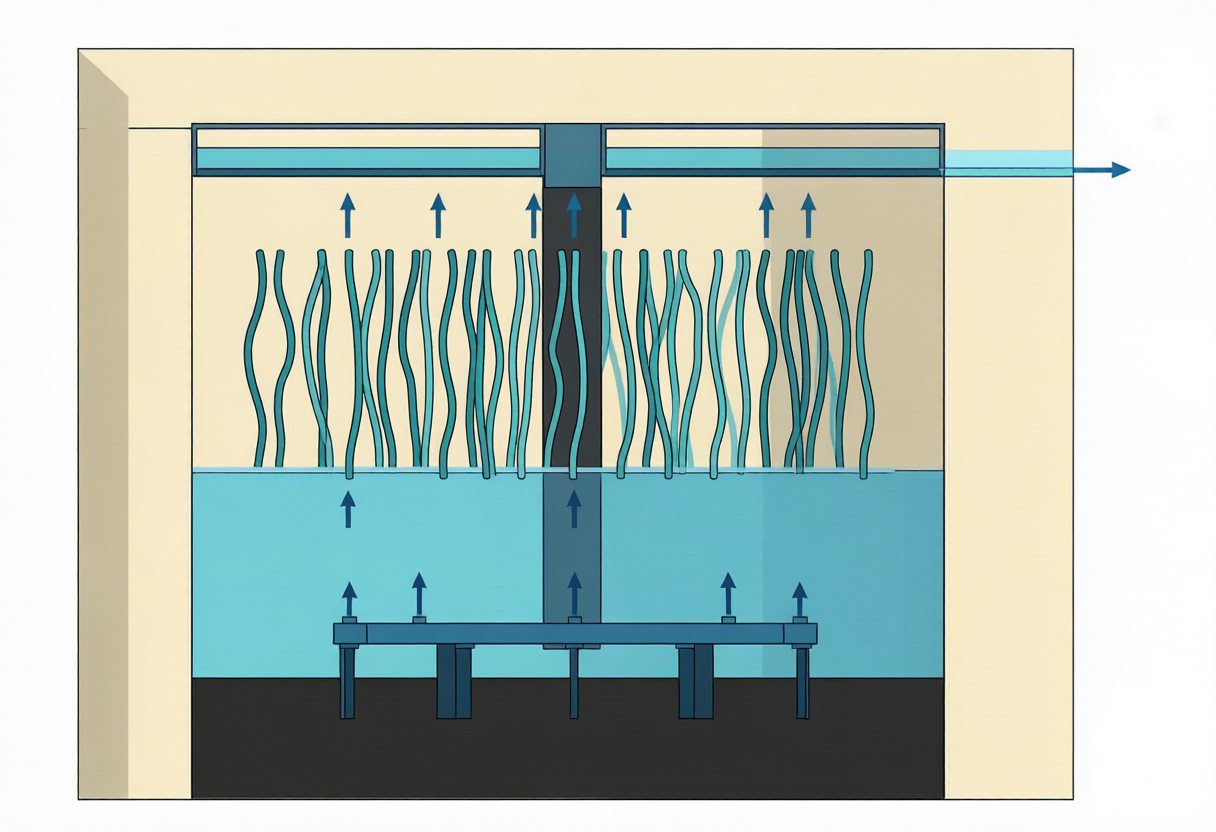
Because the reaction is held at the non-methanogenic stage, the system needs no strict insulation (ambient 10~35℃ is enough) and produces essentially no biogas, so the structure is far simpler than a UASB. The upflow hydrolysis acidification reactor (the type recommended by HJ 2047—2015) uses uniform bottom water distribution to "lift" the sludge bed; the wastewater flows upward through the sludge bed to complete sludge-water contact and is discharged from the top, while the sludge is naturally retained by gravity with no return required.
2. Three control windows: ORP / pH / temperature (distinguishing it from full anaerobiosis)
Hydrolysis acidification works only on the premise of "keeping it from becoming methanogenesis". Once methanogenesis kicks in, the process not only loses its flexibility as a pretreatment and its ambient-temperature operation, but also easily runs out of control through abrupt pH rise and sludge flotation. In engineering, three windows pin it to the first two stages:
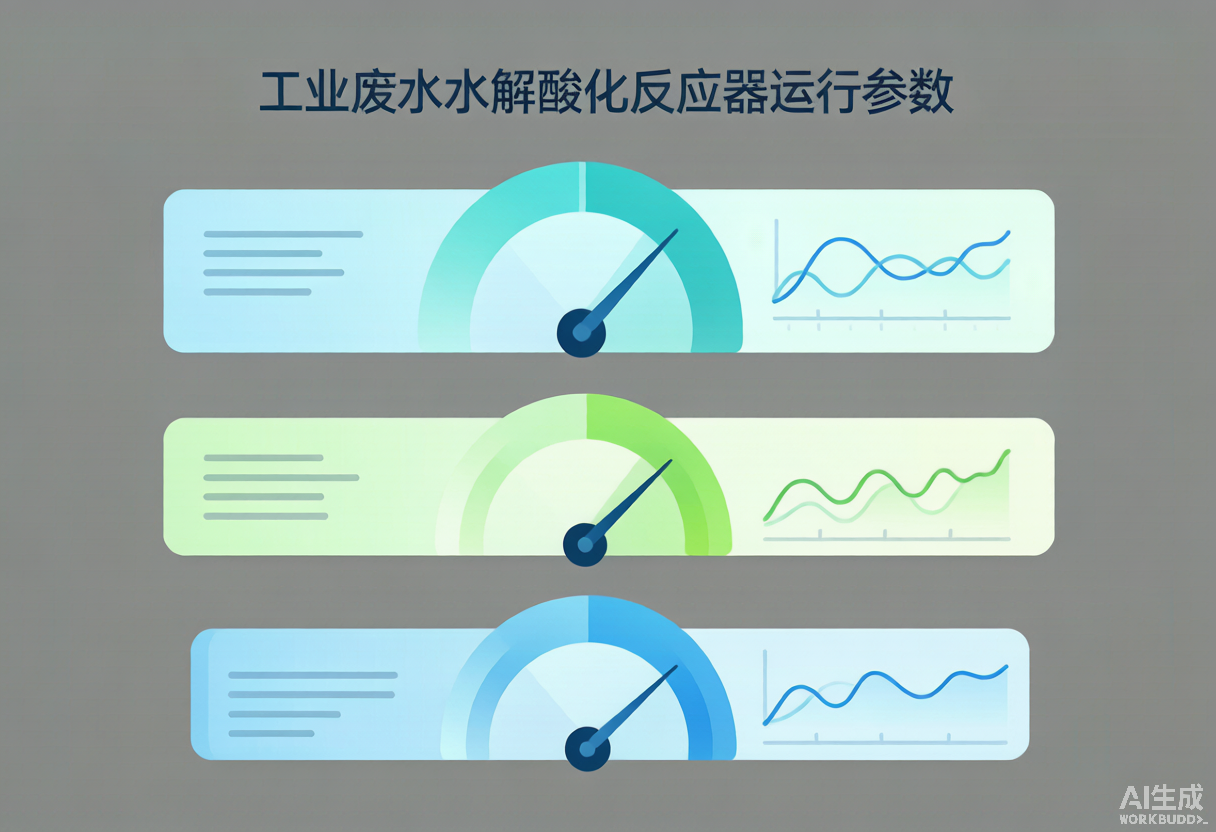
- ORP (oxidation-reduction potential): maintain a reducing environment of −100 ~ −300 mV, which is enough to suppress methanogens (which require a more negative potential and a longer generation time) while keeping hydrolytic/acidogenic bacteria active.
- pH: the acidification stage is optimal at 5.5 ~ 6.5. Note that this is not "the more acidic the better" — an overly low pH inhibits hydrolytic enzyme activity; most projects rely on the influent itself or a small alkali dose to hold pH in this narrow band.
- Temperature: ambient 10~35℃ is sufficient, with no need to hold 35±1℃ as mesophilic anaerobic digestion does. This is the key reason it is more trouble-free than a UASB and better suited as a pretreatment.
The essential difference from full anaerobic digestion (UASB/IC): a UASB must "cultivate" methanogens, needs 35℃, needs a three-phase separator to collect biogas, and its HRT runs to days; hydrolysis acidification "does not cultivate" methanogens, runs at ambient temperature with an HRT of only a few to a dozen or so hours, and is positioned as "early soil loosening". Confusing the two is often the root cause of selecting the wrong process and of operational failures.
3. Design parameter ranges (per HJ 2047—2015)
The Technical Specification for Hydrolysis-Acidification Reactor for Wastewater Treatment Engineering (HJ 2047—2015, issued by the Ministry of Ecology and Environment, effective 2016-01-01, first issue, guidance standard) gives recommended HRT values tiered by water quality and is the most authoritative basis for engineering design:
| Wastewater type | Biodegradability / non-dissolved COD fraction | Hydraulic retention time HRT (h) |
|---|---|---|
| Municipal wastewater | Good or average | 2 ~ 4 |
| Brewery / slaughtering / food / sugar wastewater | Good, non-dissolved COD > 60% | 2 ~ 6 |
| Papermaking / coking / coal chemical / petrochemical / tanning / oily / textile dyeing wastewater and industrial-park wastewater | Average, non-dissolved COD about 30% ~ 60% | 4 ~ 12 |
| Other refractory organic wastewater | Poor, non-dissolved COD < 30% | 10 or more |
The standard (and similar engineering references) also gives reactor geometry and flow parameters: an upflow velocity of 0.5 ~ 2.0 m/h (lowered, or with recycle added, for refractory wastewater); an effective water depth of 4 ~ 8 m and a freeboard of 0.5 ~ 1.0 m; elastic or combined packing may be suspended, with the packing height ideally 1/2 ~ 2/3 of the effective depth; for readily degradable wastewater the volumetric loading can reach 4.8 ~ 12.0 kgCOD/(m³·d) (see HJ 2004—2010, slaughtering wastewater standard), while refractory wastewater commonly takes a conservative 0.8 ~ 1.5 kgCOD/(m³·d).
4. The real engineering ledger (all from published projects / pilots)
| Industry / scale | Process and key conditions | Effluent / removal performance | Source tier |
|---|---|---|---|
| Petrochemical wastewater | Hydrolysis acidification pretreatment | COD removal 46.5%, petroleum hydrocarbons 67.3%; B/C raised from 27.9% to 34.4% | Industry review (dowater, Zhong Huawen et al.) |
| Coking wastewater / pilot | Anaerobic hydrolysis 10 h (sludge 4 g/L, 28℃) | B/C raised from 0.29 to 0.62; 5-month continuous flow: COD 94.1%, TN 80%, NH₃-N 93.3%, volatile phenol 99.97% | University journal pilot (peer-reviewed) |
| Coking wastewater / pilot | Three-stage upflow hydrolysis acidification sludge expanded bed + A²O | Hydrolysis stage average COD removal 57.72% (max 66.67%); full train COD 91.38% (max 95.73%), NH₃-N 97.20%, cyanide 81.53%, sulfide 92.07% | University journal pilot (peer-reviewed) |
| Coal gasification wastewater | Anaerobic hydrolysis acidification (333 d operation) + aerobic + ozone | Influent COD 4400 mg/L, effluent < 60 mg/L; COD removal 96%, total phenol/NH₄⁺-N 99.9%; energy use and sludge reduced 30%, cost 0.135 $/m³ | RSC Adv (peer-reviewed) |
| Pharmaceutical park tail water / 70,000 t·d⁻¹ | Ozone 20~30 mg/L + hydrolysis acidification 6~9 h, then co-treatment with domestic wastewater | B/C raised from under 0.1 to about 0.3; annual COD reduction over 30,000 t and ammonia nitrogen over 2,000 t; cost about CNY 1.15 per tonne of water | Industry/project report (CE.cn) |
| Printing and dyeing wastewater / 2000 m³·d⁻¹ | H/O process, hydrolysis acidification HRT 6 h, elastic three-dimensional packing | Influent COD 1200~1500, B/C only 0.22; after hydrolysis acidification raises biodegradability, downstream contact oxidation meets the standard stably | Industry technical document (dowater) |
| Chemical-synthesis pharmaceutical wastewater | Hydrolysis acidification volumetric loading 3~4 kgCOD/(m³·d), intermittent aeration through perforated pipes to prevent settling | COD removal under 20%, but B/C raised from 0.34 to above 0.45 and drug residues degraded by about 60%; final system COD 6800~9200 → 180~250 mg/L | Industry/project report (NetEase case) |
| 1,4-butanediol (BDO) chemical wastewater | Pre-aerated hydrolysis acidification (raw water B/C only 0.11) | B/C raised to 0.19, COD removal about 28%, formaldehyde removal about 76% (reducing downstream toxicity) | Industry technical document (dowater) |
5. What it can and cannot do (process positioning)
Hydrolysis acidification is a "pretreatment specialist", but by no means a "universal removal unit":
- What it can do: ① raise biodegradability (B/C commonly from the 0.2 range to the 0.4 range, most cases gaining 0.1~0.3); ② detoxify/reduce inhibition (e.g., 76% formaldehyde removal for BDO, ~60% pesticide residue reduction); ③ buffer water-quality and flow fluctuations (the sludge bed retains a high concentration of microbes); ④ remove some SS and insoluble COD as a bonus.
- What it cannot do: ① it is not the main removal unit — its COD removal is usually only 10%~30% (even under 20% for some chemical wastewater), so do not expect it to bring COD down to the discharge value; ② it does not remove salt or nitrogen/phosphorus (unless coupled downstream with anammox etc.); ③ it offers limited improvement for fully dissolved, extremely refractory small molecules (such as certain stable heterocycles).
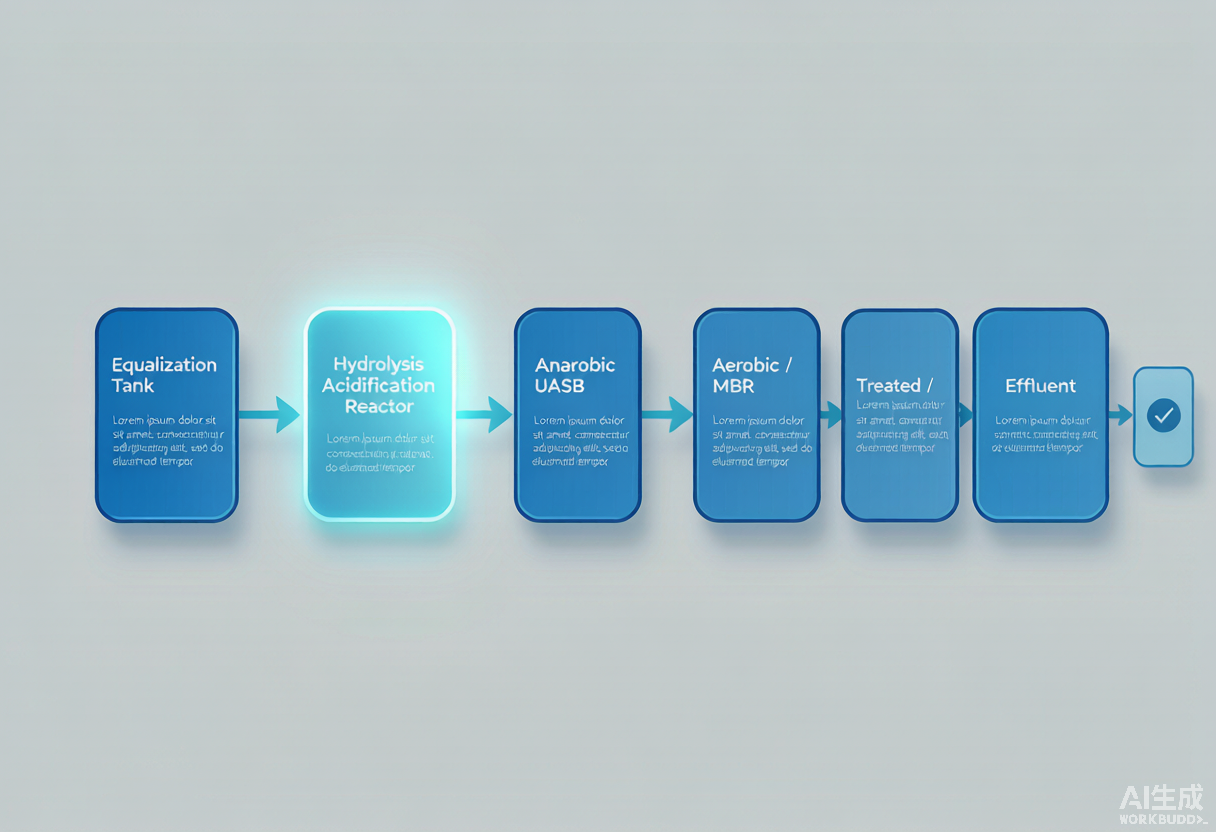
In a word: hydrolysis acidification softens the "hard bone", and the real "chewing" is left to the downstream anaerobic/aerobic/membrane stages. It is most often placed before UASB, A/O, contact oxidation or MBR to form a "pretreatment + main biological treatment" combo.
6. Five pitfalls engineers must watch closely
1. Sludge washout
An upflow reactor retains sludge by its own gravity, but an overly high upflow velocity or uneven water distribution will "flush away" the sludge. The clarification zone should be ≥1.0 m high, with scheduled multi-point sludge withdrawal to stabilize the sludge level — otherwise the rising sludge level overflows from the launder, losing both sludge and suspended solids. Data from the Beijing Miyun wastewater plant show that under flow fluctuations the sludge concentration can dynamically balance between 20~60 g/L.
2. Water-distribution clogging
One-pipe-per-orifice distribution clogs very easily in high-suspended-solids wastewater. Engineering experience recommends pulsed, branched water distribution with provisions for backwashing, to avoid short-circuiting (water "taking a shortcut" around the sludge bed).
3. Methanogenesis "crossing the line"
An over-long HRT, too high a temperature or a loss of ORP control can all slip into methanogenesis, bringing pH swings and sludge flotation. Always pin ORP at −100~−300 mV and pH at 5.5~6.5, and take HRT from the standard's tiers to avoid this.
4. Sulfate / hydrogen sulfide
When the influent sulfate is high, sulfate-reducing bacteria compete with acidogens for substrate and produce H₂S (odorous, corrosive and inhibitory). The pharmaceutical case shows that keeping influent sulfate ≤ 1500 mg/L (adding lime to precipitate part of the excess first) is a prudent practice.
5. Nutrients and alkalinity
Many industrial wastewaters lack N and P and need urea and phosphate supplemented at BOD₅:N:P ≈ 100:5:1; acidification produces VFA and consumes alkalinity, so influents with large pH swings should have automatic dosing in the equalization tank to hold pH at 6~9.
7. One-line sizing advice
Suitable for: industrial wastewater with high COD but low B/C (about 0.2 or lower), abundant macromolecules/colloids, large water-quality fluctuations, and the need to "raise biodegradability before the main biological stage" — petrochemical, coking, coal chemical, pharmaceutical, printing and dyeing, food processing and papermaking are all typical.
Not suitable for: scenarios pursuing "one-step COD removal" (its own COD removal is limited); or wastewaters that are already readily degradable with a high B/C (going straight to aerobic treatment is more economical). Applying hydrolysis acidification to the "hard bones that need softening" is the way to get the most value from it.
References (real sources)
- Ministry of Ecology and Environment. HJ 2047—2015 Technical Specification for Hydrolysis-Acidification Reactor for Wastewater Treatment Engineering. Effective 2016-01-01 (first issue, guidance standard).
- Ministry of Ecology and Environment. HJ 2004—2010 Technical Specification for Slaughtering and Meat Processing Wastewater Treatment Engineering.
- Zhong Huawen, et al. Hydrolysis acidification pretreatment of petrochemical wastewater research data (COD removal 46.5%, petroleum hydrocarbons 67.3%, B/C 27.9%→34.4%). Cited from the dowater review Hydrolysis Acidification Process for Wastewater Treatment, 2020.
- Zhao Dachuan, et al. Hydrolysis acidification reactor treating domestic wastewater (HRT 3 h, B/C 0.42→0.67, COD 73.2%). From the same review.
- Shenyang "12th Five-Year" pharmaceutical park tail water co-treatment project with municipal wastewater (70,000 t/d, B/C 0.1→0.3, cost about CNY 1.15 per tonne). CE.cn environmental technology report, 2018.
- H/O process project at a Huzhou printing and dyeing plant (2000 m³/d, influent COD 1200~1500, B/C 0.22, hydrolysis acidification HRT 6 h). dowater technical document.
- A chemical-synthesis pharmaceutical wastewater treatment project (hydrolysis acidification volumetric loading 3~4 kgCOD/(m³·d), B/C 0.34→0.45+, drug residue degradation about 60%). Industry project case report.
- Coking wastewater iron-carbon micro-electrolysis–hydrolysis acidification–immobilized high-efficiency bacteria–coagulation (B/C 0.20→0.39→0.44, HRT 48 h COD 3717→393→65 mg/L). cqvip journal abstract.
- Composite biological reactor for coking wastewater (anaerobic hydrolysis 10 h, B/C 0.29→0.62; 5-month continuous flow COD 94.1%, volatile phenol 99.97%). University journal / Industrial Water Treatment pilot study.
- Coal gasification wastewater: anaerobic hydrolysis acidification + aerobic + ozonation (influent COD 4400 mg/L, effluent <60, COD 96%, cost 0.135 $/m³). RSC Advances (peer-reviewed, DOI: c5ra04215a).
- Three-stage upflow hydrolysis acidification sludge expanded bed + A²O pilot for coking wastewater (hydrolysis stage COD removal 57.72%, full train 91.38%, ammonia nitrogen 97.20%, cyanide 81.53%, sulfide 92.07%). University journal pilot study.
- 1,4-butanediol (BDO) production wastewater pre-aerated hydrolysis acidification (B/C 0.11→0.19, COD removal about 28%, formaldehyde removal about 76%). dowater technical document.