



 Across multiple industries nationwide (groundwater remediation / municipal efflu
 Pilot-scale to full-scale engineering (from tens to tens of thousands of m³/d)
Sulfur-Based Autotrophic Denitrification (SAD): Nitrogen Removal Without Carbon Dosing — A "Zero-Carbon Source" Pathway for Deep Denitrification of Low C/N Industrial Wastewater
After anaerobic pretreatment or biological treatment, many industrial wastewaters have a dismally low BOD₅/TN ratio, leaving heterotrophic denitrification "starved for carbon"—either requiring heavy methanol dosing for carbon supplementation (costly and raising concerns over secondary pollution), or total nitrogen stubbornly failing to meet surface water or reuse standards. Sulfur-based autotrophic denitrification (SAD) offers a different route: sulfur-oxidizing bacteria use reduced sulfur species (elemental sulfur, thiosulfate, sulfide) as electron donors and inorganic carbon in the water as "food," reducing nitrate to nitrogen gas without relying on organic carbon. Drawing on recent published literature and engineering data, this article lays out the stoichiometry, parameter windows, real-world cost accounting, and practical engineering realities in plain terms.
I. Mechanisms and Stoichiometry: Sulfur Oxidized, Nitrogen Reduced, Acid Released
The core of SAD lies in sulfur-oxidizing bacteria (dominated by Thiobacillus spp., with relative abundances commonly reaching 40%–60% in the literature) that oxidize reduced sulfur under anoxic conditions while using nitrate as the electron acceptor. The classic stoichiometric equation using elemental sulfur as the electron donor (Batchelor & Lawrence, 1978) remains widely applied:
1.1 S⁰ + 0.4 CO₂ + 0.76 H₂O + 0.08 NH₄⁺ + NO₃⁻ → 0.5 N₂ + 0.08 C₅H₇O₂N + 1.1 SO₄²⁻ + 1.28 H⁺
From this equation, two "hard numbers" of critical engineering importance can be derived: for every 1 g of nitrate nitrogen removed, approximately 2.5 g of elemental sulfur (S⁰) is consumed, while approximately 7.5 g of sulfate (SO₄²⁻) is produced. In other words—denitrification inevitably generates "acid + sulfate" in tandem; these are the twin constraints of SAD, which will be addressed specifically in the engineering realities section below.
Different sulfur sources each have their own characteristics:
- Elemental sulfur (S⁰): Insoluble in water, cheapest, and most stable, but microbial attachment is slow and startup typically takes weeks;
- Thiosulfate (S₂O₃²⁻): Soluble, fast startup, high rates, but produces more sulfate per unit of nitrogen removed;
- Sulfide (S²⁻): Naturally present in sulfur-laden industrial wastewater, enabling "simultaneous sulfide removal and denitrification," but poorly controlled systems can release H₂S and accumulate nitrite.
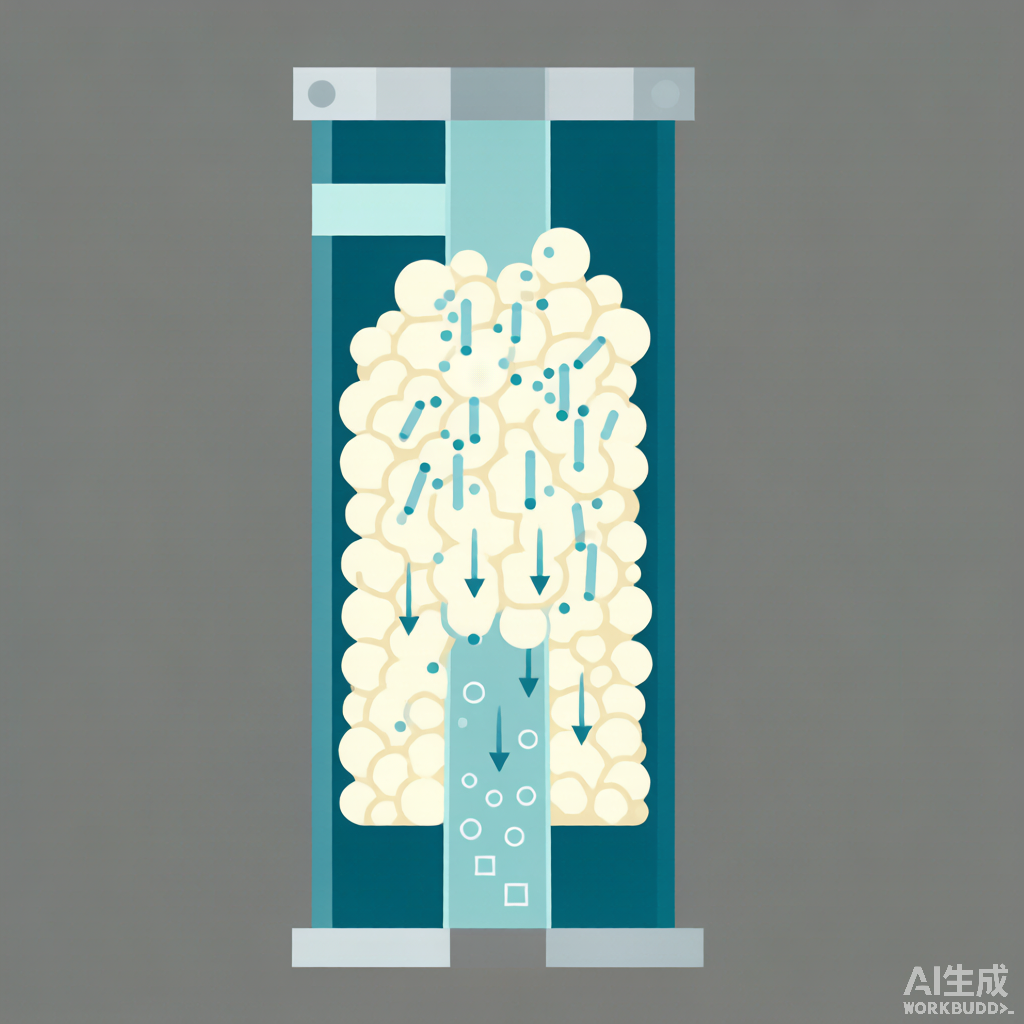
II. Key Parameter Windows: S/N Ratio, HRT, Loading Rate, pH, Temperature
- S/N ratio: Liu Jialong et al. (2026) observed in enrichment experiments that S/N=2:1 favored rapid start-up, while S/N=1:1 favored microbial community construction; the batch optimum was S/N=2:1, HRT=24 h, with nitrate removal of 82.83%; the correlation coefficient between sulfate production and nitrate removal reached 0.949–0.977.
- HRT: The S⁰ system typically operates at 6–24 h; review reports indicate that when HRT>6 h, both NO₃⁻-N and TN can reach 100%, whereas shortened HRT directly reduces nitrate removal (SDAD-ASBR from 12 h→2.4 h, nitrate removal from 93.14%→77.04%).
- Nitrate loading rate (NLR): S⁰ packed-bed reactors in practice fall within the 0.08–0.75 kg N/(m³·d) range (Zhou et al.'s engineered filter reached a maximum of 0.75; SLAD literature reports operation in the 175–700 g/(m³·d) range).
- pH: Optimal range 6.5–8.0; the reaction generates acidity, and without buffering, pH can drop from 7.5 to <5.0, hence limestone (CaCO₃) or bicarbonate is commonly added to supplement alkalinity.
- Temperature: Mesophilic conditions of 17–35℃ perform well (engineered filters remain efficient at 17–20℃); at low temperatures, activity declines, requiring extended HRT or insulation.
- DO: Anoxic conditions are required (aerobic conditions inhibit denitrification and compete for electrons).
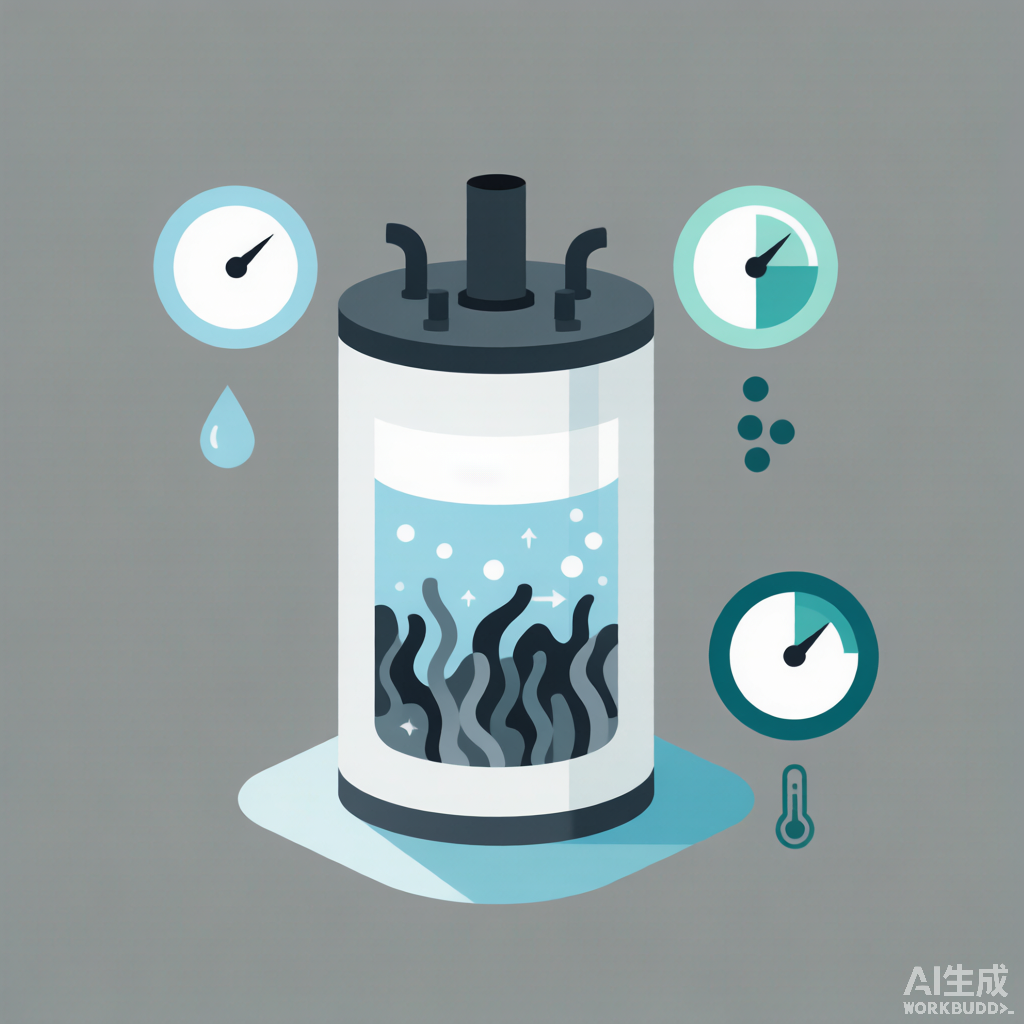
3. Real-World Research and Engineering Data (All from Public Literature/Projects)
| Scenario / Scale | Process & Key Operating Conditions | Removal Performance & Key Parameters | Source |
|---|---|---|---|
| Low-pollution water enrichment experiment (batch) | S/N=2:1, HRT=24 h, S⁰ substrate | Nitrate removal 82.83%; maximum specific denitrification rate 1.807 mgN·g⁻¹VSS·h⁻¹; Thiobacillus abundance 40.80%–62.32%; sulfate production correlated with nitrate removal 0.949–0.977 | Liu Jialong et al., Journal of Environmental Engineering Technology, 2026 (doi:10.12153/j.issn.1674-991X.20260192) |
| Sulfide-driven autotrophic denitrification ASBR (SDAD-ASBR) | n(S)/n(N)=1, S²⁻ 300 mg/L, NO₃⁻-N 131.25 mg/L | Sulfide/nitrate removal 99.97%/84.34%; HRT 12h→2.4h: sulfide>99%, nitrate 93.14%→77.04% (shorter HRT significantly reduced nitrate removal) | Industrial Water Treatment, 2024, 44(10):151-157 |
| S⁰-limestone packed bed (S/L ratio screening) | S/L=1:1 / 2:1 / 3:1 parallel columns | S/L=3:1 gave maximum nitrate reduction; nitrate loading 0.66 gNO₃⁻-N/(L·d) | Kilic et al. (cited in dowater technology review, 2025-10-12 ) |
| S⁰-limestone vs S⁰-bicarbonate | Fixed-bed bioreactor comparing alkalinity sources | Autotrophic denitrification rate 0.1 vs 0.36 gNO₃⁻-N/(L·d); bicarbonate achieved higher nitrogen removal efficiency | Sahinkaya et al. (cited in dowater technology review) |
| S⁰-limestone (SLAD) long-term operation | Packed bed, operated under anoxic conditions | At HRT>6 h, both NO₃⁻-N and TN removal reached 100%; operational strategy relied on limestone dissolution to replenish alkalinity | dowater technology review (based on SLAD literature) |
| SADCF composite-media biological filter (engineering scale) | Filter 6 m×6 m×6 m, SADCF media 5–10 mm, influent nitrate 3.1–13.6 mgN/L, water temperature 17–20℃ | Nitrate volumetric loading 0.08–0.58 kgN/(m³·d), maximum 0.75 kgN/(m³·d); 5–7 天 air-water backwashing; Thiobacillus 23.0% + Ferritrophicum 27.7% | Zhou et al., Bioresource Technology, 2021 (doi:10.1016/j.biortech.2021.125699) |
| Sulfur-limestone autotrophic denitrification (SLAD) | Packed column, loading 175–700 gNO₃⁻-N/(m³·d) | Maximum denitrification rate 384 gNO₃⁻-N/(m³·d); at loading 175–225 g/(m³·d) removal ≈95%; backwashing synthetic water 6 月 / real groundwater 1–2 月 | Flere et al., Journal of Environmental Engineering, 1999, 125(8):721 (doi:10.1061/(ASCE)0733-9372(1999)125:8(721)) |
| Bioelectrochemical + sulfur autotrophic (groundwater) | Groundwater 20.9–22.0 mgNO₃⁻-N/L, HRT 4.2–2.1 h | NLR 0.12–0.24 kgN/(m³·d); NO₃⁻-N removal 95%–100%; effluent sulfate <250 mg/L meeting drinking water standards | Wan et al., Bioresource Technology, 2008 (doi:10.1016/j.biortech.2008.05.042) |
4. Process Comparison: SAD Is Not Meant to Replace Anyone
| Dimension | Sulfur-Based Autotrophic Denitrification (SAD) | Heterotrophic Denitrification (Methanol/Acetic Acid) | Shortcut Nitrification-Denitrification | Biological Aerated Filter (BAF) |
|---|---|---|---|---|
| Carbon Source | No external carbon; only inorganic carbon required (CO₂/HCO₃⁻) | External organic carbon required (e.g., methanol) | Carbon source required (internal or external) | Heterotrophic; carbon source required |
| Applicable C/N Ratio | Low C/N, insufficient carbon source | Requires higher C/N or carbon supplementation | Low to medium C/N | Medium C/N |
| Main By-Products | Sulfate accumulation + acidification | Excess sludge + secondary pollution risk from carbon dosing | Nitrite accumulation needs control | Sludge + filter media loss |
| Startup Speed | Slow (S⁰: several weeks); faster with thiosulfate | Fast | Medium (requires nitritation control) | Medium |
| Typical Loading Rate | 0.08–0.75 kgN/(m³·d) (S⁰) | High, up to several kgN/(m³·d) | High | Denitrification 0.8–4.0 kgNO₃-N/(m³·d) |
| Best-Fit Scenario | Low C/N advanced nitrogen removal; "waste control by waste" for sulfur-bearing wastewater | Universal, high-load nitrogen removal | Energy-saving and carbon-reducing nitrogen removal | Multi-stage filter advanced treatment |
V. Engineering Practice Insights (5 items; recommended for manual review before use in design)
References (Verifiable Sources)
- Batchelor B, Lawrence A W. A stochastic model of bacterial growth. Biotechnology and Bioengineering, 1978 (the classical stoichiometric equation for elemental sulfur autotrophic denitrification has been widely adopted).
- Liu Jialong, Zhao Yaxu, Zhou Yuren, et al. Denitrification performance and microbial analysis of sulfur autotrophic denitrification under different sulfur-to-nitrogen ratios and operation strategies[J]. Journal of Environmental Engineering Technology, 2026. doi:10.12153/j.issn.1674-991X.20260192.
- Study on nitrogen and sulfur removal performance and functional bacteria of sulfur autotrophic denitrification ASBR process[J]. Industrial Water Treatment, 2024, 44(10): 151-157.
- Sulfur autotrophic denitrification technology for wastewater treatment (technical review, including data from Kilic, Sahinkaya, SLAD, etc.). dowater.com, 2025-10-12.
- Zhou Y, Chen F, et al. Denitrification performance and mechanism of biofilter constructed with sulfur autotrophic denitrification composite filler in engineering application. Bioresource Technology, 2021, 125699. doi:10.1016/j.biortech.2021.125699.
- Flere J M, et al. Nitrate removal with sulfur-limestone autotrophic denitrification (SLAD) processes. Journal of Environmental Engineering, 1999, 125(8): 721. doi:10.1061/(ASCE)0733-9372(1999)125:8(721).
- Wan D, Liu H, Qu J, et al. Using the combined bioelectrochemical and sulfur autotrophic denitrification system for groundwater denitrification. Bioresource Technology, 2008. doi:10.1016/j.biortech.2008.05.042.
- Pyrite-based autotrophic denitrification for remediation of nitrate contaminated groundwater (review, including Soares 2002, Sierra-Alvarez 2007, Moon 2008, Qambrani 2013). Bioresource Technology, 2014. doi:10.1016/j.biortech.2014.01.3510.
- Advanced denitrification method for tailwater of wastewater treatment plants (sulfur autotrophic + HRT 0.35 h removal efficiency up to 100%, hydrotalcite for sulfate removal). dowater.com, 2018-01-20.
- Kilic E, et al. Sulfur-limestone autotrophic denitrification packed-bed performance at S/L 1:1, 2:1, 3:1 (cited via dowater review).
- Sahinkaya E, et al. Comparison of S⁰-limestone and S⁰-bicarbonate autotrophic denitrification rates (cited via dowater review).
- Sierra-Alvarez R, et al. Autotrophic denitrification with elemental sulfur and limestone (1:1) granules, 98.8% nitrate removal (cited via Bioresource Technology 2014 review).