


 Across multiple industries nationwide (pesticides/dyes/pharmaceuticals/petrochem
 Pilot-scale to full-scale commercialization (tens of thousands to hundreds of th
Catalytic Wet Air Oxidation (CWAO): Using Catalysts to Pull High-Temperature Liquid-Phase Oxidation into a Mild Range — A Hardcore Pretreatment for High-Concentration Refractory Industrial Wastewater
Facing pesticide/dye/pharmaceutical/petrochemical wastewater with COD from tens of thousands to hundreds of thousands mg/L, high salinity, high toxicity, and extremely poor biodegradability (B/C<0.3), ambient-temperature Fenton, ozonation, and electro-Fenton often "cannot crack it." CWAO takes another path: in liquid water at 150–300℃, 2–8 MPa, it uses oxygen from air to directly burn organic matter into CO₂ and H₂O. This article uses public engineering and journal data from Lanzhou Institute of Chemical Physics (LICP)/Dalian Institute of Chemical Physics, CAS, chemical equipment sources, RSC, and ScienceDirect to fully explain the mechanisms, parameter windows, real cost accounting, and engineering pitfalls.
1. Principles: The Four Steps of Liquid-Phase Catalytic Oxidation and the "Downshifting" Effect of Catalysts
The reaction pathway of CWAO is a classic thermal oxidation chain: organic matter is first oxidized into hydroperoxides, alcohols, ketones, and aldehydes, then bond cleavage produces small-molecule carboxylic acids (acetic acid being the tough "hard bone" to crack), and finally mineralization to CO₂ and H₂O; nitrogen-containing organics follow another route to become NH₄⁺, N₂, and NO₃⁻, sulfur-containing compounds become SO₄²⁻, and phosphorus-containing compounds become PO₄³⁻. The greatest difference from ambient-temperature AOP is: it does not rely on ·OH slowly attacking at room temperature, but rather uses high temperature to turn dissolved oxygen in water into a strong oxidant—so "temperature" is the primary driving force.
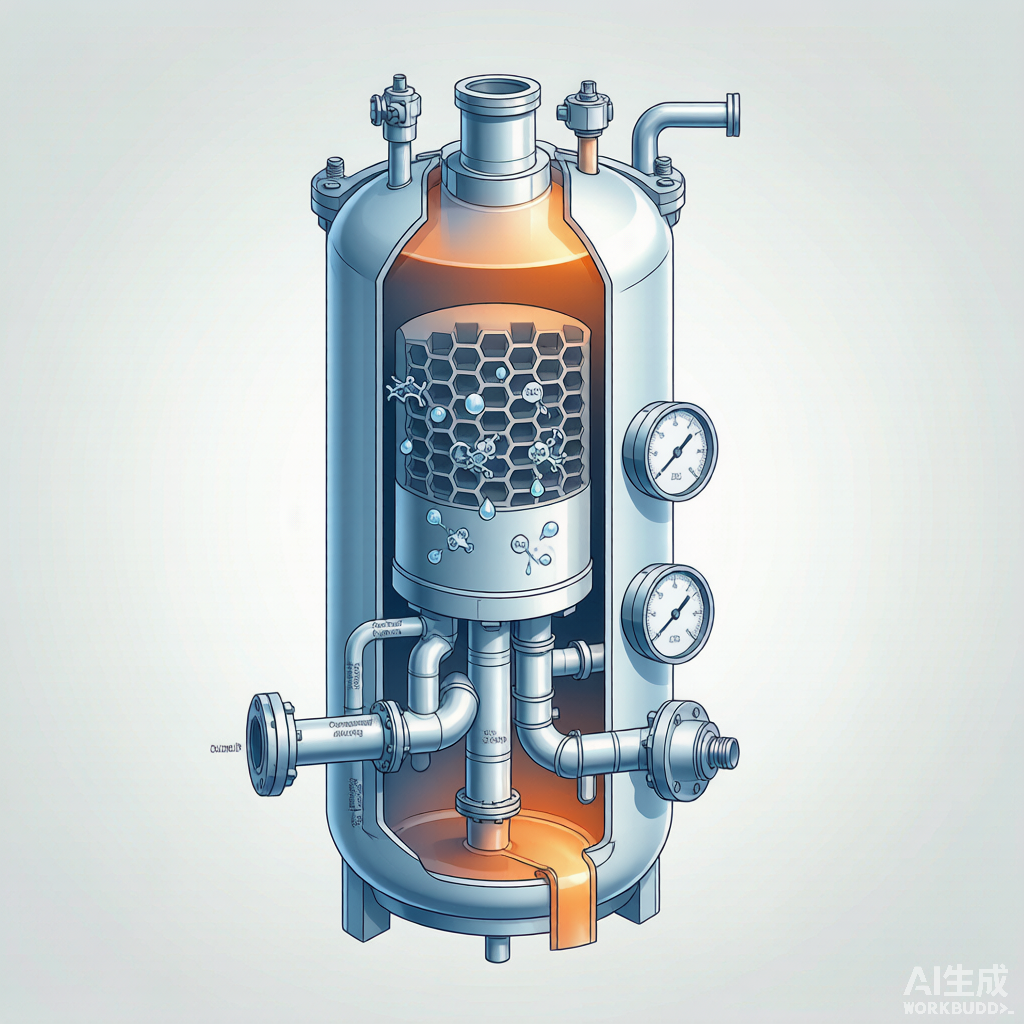
The role of the catalyst is to lower the activation energy and "downshift" the reaction. The patented nano-metal catalyst from Lanzhou Institute of Chemical Physics (LICP), CAS, has a precious metal loading of only 0.3 wt.% (commercial catalysts domestically and internationally typically use 1–5 wt.%), achieving COD removal of 99% for phenol treatment at 110℃, while most literature reports similar reactions requiring >140℃; the same catalyst, treating mixed organics with COD up to 21 万 mg/L at 243℃, 3.0 MPa, and space velocity 1.5 h⁻¹, achieved 99% removal in the first 20 h of continuous operation over 210 h, stabilizing at 93–95% after 30 h (LICP National Engineering Research Center technology introduction).
Three levels of relationships must be clarified here to avoid confusion with the ambient-temperature technologies in this series: WAO (no catalyst) relies purely on thermal oxidation and requires heating water to 200–320℃, 10–20 MPa to be fast enough—both equipment and investment are "heavy"; CWAO, with the addition of catalysts, brings the window down to 150–250℃, 2–6 MPa, allowing more conventional heat-resistant steel for materials at the same removal rates, significantly reducing investment; while the Fenton/ozone/electro-Fenton/persulfate processes covered earlier in this series are ambient-temperature free-radical oxidation, effective only for soluble, mineralizable low-to-medium concentration wastewater—they are nearly powerless against the "hard bones" of COD at the hundred-thousand level with high salinity and high toxicity. These three are complementary technologies completely offset on the temperature dimension, not replacements for one another.
2. Three Core Parameter Windows (The Fundamentals of Design and Operation)
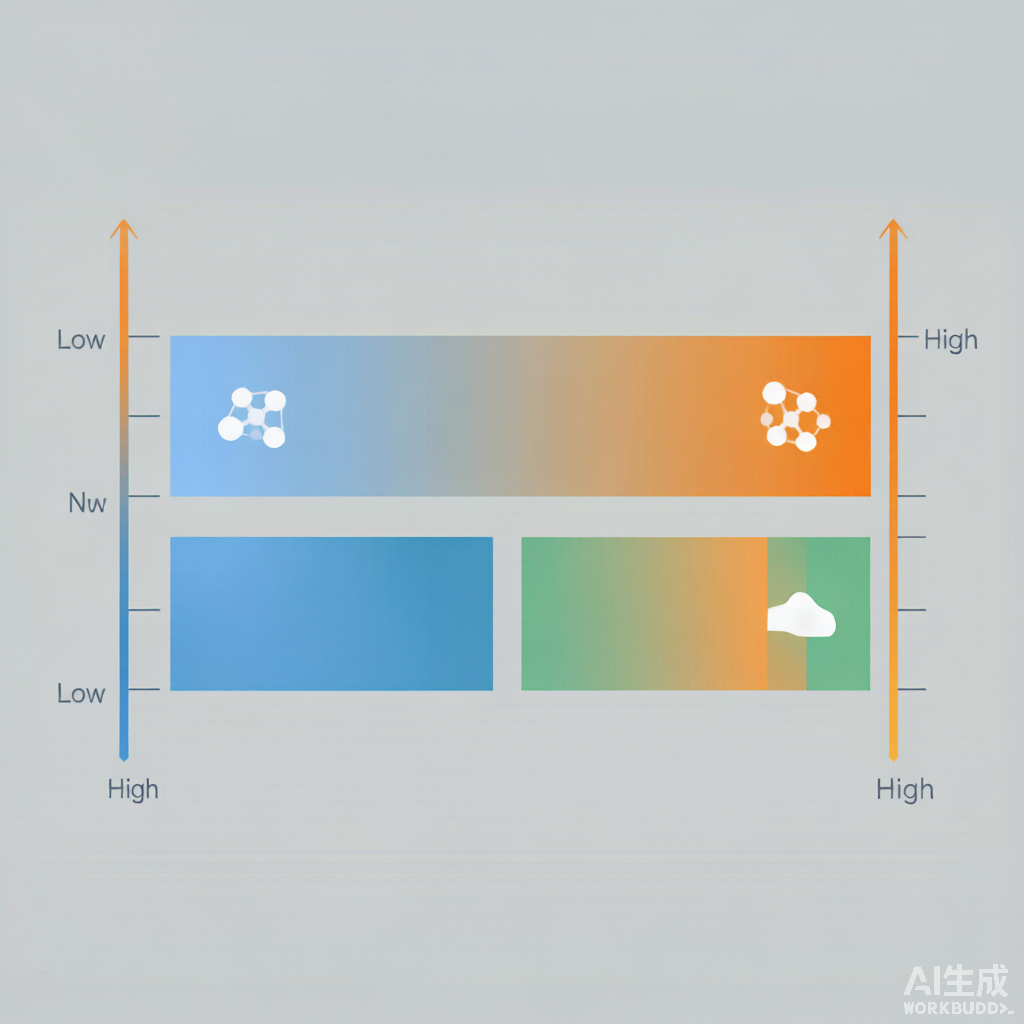
① Temperature: The Economic Range Is Mostly 150–280℃
Below 150℃, the reaction is kinetically controlled and oxidation is too slow; above 250℃, the saturated vapor pressure of water rises sharply, a large amount of organic matter "escapes" into the gas phase, and the rate of diffusion into catalyst pores decreases—removal efficiency actually drops. A process patent gives a preferred window of 150–250℃, pressure 2.0–6.0 MPa, with oxygen dosed at 1.1–1.2 times the theoretical oxygen demand, achieving COD removal >94.15%, with effluent COD for wastewater at 10000–50000 mg/L falling in the range of 40–1855 mg/L (patent application 201810389974.1).
② Pressure: The Core Purpose Is to "Maintain the Liquid Phase"
When pressure is insufficient, water vaporizes and reaction efficiency collapses. This patent explicitly states that when pressure is below 2.0 MPa, oxygen solubility is too low and COD oxidation is slow; when above 6.0 MPa, organic matter tends to polymerize and deposit carbon on heat exchanger tubes, causing blockage. Therefore, 2.0–6.0 MPa is adopted; commercial WAO systems are typically rated at 10–20 MPa, while the CWAO end is mostly at 2–8 MPa.
③ Residence Time: Typically 30–120 min
The longer the time, the more thorough the mineralization, but the larger the reactor and the higher the investment. In a continuous-flow pilot study reported in RSC 2026 , under an oxygen partial pressure of 244℃ and 27 bar (≈2.7 MPa), a Fe-Ag-CNF/ACB catalyst was used to treat industrial wastewater with COD ≈ 12 万 mg/L, achieving 99% COD reduction. The effluent COD after treatment was < 2000 mg/L, requiring approximately 9.77 g of catalyst per liter of wastewater (Environ. Sci.: Water Res. Technol., 2026, d5ew00745c).
III. Real-World Engineering Cost Accounting (All from Public Engineering / Journal / Patent Sources)
| Wastewater / Scale | Process & Key Operating Conditions | Performance | Source |
|---|---|---|---|
| Fukang Pharmaceutical wastewater (bench-scale) / COD 106704 mg/L | LICP catalyst, 245℃, space velocity 1.5 h⁻¹ | COD removal 80–90% | Technology introduction, Lanzhou Institute of Chemical Physics National Engineering Research Center |
| Dishwashing liquid water / COD 77640; sucrose / 21644; emulsifier OP / 1618 | LICP catalyst, 230–245℃, space velocity 1.5–4.8 h⁻¹ | COD removal 99.7% / 97–99.9% / 99% | Same as above |
| Pesticide production wastewater / 4.8 万 t·a⁻¹ (≈131 t·d⁻¹) | Two-stage CWAO, COD 10–12 万 mg/L, salinity 10–15% | COD reduction 90%, daily COD reduction 12960 kg, 2017-06 commissioning | Environmental Catalysis Engineering Research Group, Dalian Institute of Chemical Physics, CAS (Limin Chemical) |
| Dye intermediate wastewater / 2.0 万 t·a⁻¹ | CWAO unit, 2021-08 commissioning | Stable industrial-scale operation | Same as above (Zhejiang Youchuang) |
| Saccharin production wastewater / 2.9 万 t·a⁻¹ | CWAO unit, investment 1500 万, completed 2015-12 | Stable industrial-scale operation | Same as above (Tianjin North Food) |
| High-salinity refractory pesticide wastewater | 280℃, oxygen partial pressure 4.2 MPa, pH 2.0, 150 min | COD removal 98.0%, color removal >99% | Chemical Equipment 2007, 26(3):417 |
| Industrial wastewater / COD ≈ 12 万 mg/L | Trickle bed, Fe-Ag-CNF/ACB, 244℃, O₂ 27 bar | COD reduction 99%, effluent <2000 mg/L | RSC Environ. Sci.: Water Res. Technol. 2026 |
| Refinery spent caustic (large European refinery) | CWAO, air as oxidant | COD 150000 → <500 mg/L; total sulfides up to 20000 → <2 mg/L | Aqua Dynamics technical documentation [to be verified] |
The ledger reveals a clear signal: CWAO has already delivered industrial-scale units for pesticide, dye, and saccharin wastewater with high salinity and high COD (annual treatment capacity of 2–4.8 万 tons), mostly configured as a zero-liquid-discharge architecture of "two-stage oxidation + downstream evaporation crystallization"; meanwhile, journal bench-scale studies focus on milder temperatures (180–250℃) and regenerable catalysts. A note of caution: vendor figures such as the Aqua Dynamics refinery spent caustic data in the table are from technical documentation and should be re-verified against primary sources before formal design citation.
IV. Catalysts: Noble Metals vs. Non-Noble Metals (The Watershed in Selection)
| Type | Representative | Activity / Temperature | Lifespan & Limitations | Cost & Positioning |
|---|---|---|---|---|
| Noble metals Pt / Pd / Ru | Pt-Pd/TiO₂-ZrO₂ honeycomb (NS-LC process) | High activity, good low-temperature performance: complete oxidation of phenol/formaldehyde/acetic acid/glucose at 220℃–4 MPa | Long lifespan, stable | Expensive (1–5 wt.% loading), for high value-added/demanding applications |
| Non-noble metals Cu / Mn / Fe / Ce | Cu-Fe, Ni/Mg-Al, Cu-Mn-Ce composite oxides | Printing and dyeing wastewater: Cu-Fe 210℃/90 min/pH 5.1–5.4 removal 87.9%; Ni/Mg-Al 180℃, O₂ 2.5 MPa TOC ~80% | Prone to poisoning and deactivation; Cu leaching is a common issue (partial Fe substitution for Cu improves stability) | Low cost, first choice for large-scale/cost-sensitive applications |
| Activated carbon-supported metals / carbon nanofibers | AC, Fe-Ag-CNF/ACB | MDEA wastewater 230℃/5.0 MPa/90 min continuous 168 h, MDEA 98%, COD ~90% | Combines adsorption + catalysis; RSC 2026 seven-step in-situ regeneration enables 4 cycles | Medium cost; regenerability is a key direction |
5. Engineering Realities (5 pitfalls that must be watched)
6. Horizontal Positioning: CWAO's Place in the "High-Temperature Mineralization" Route
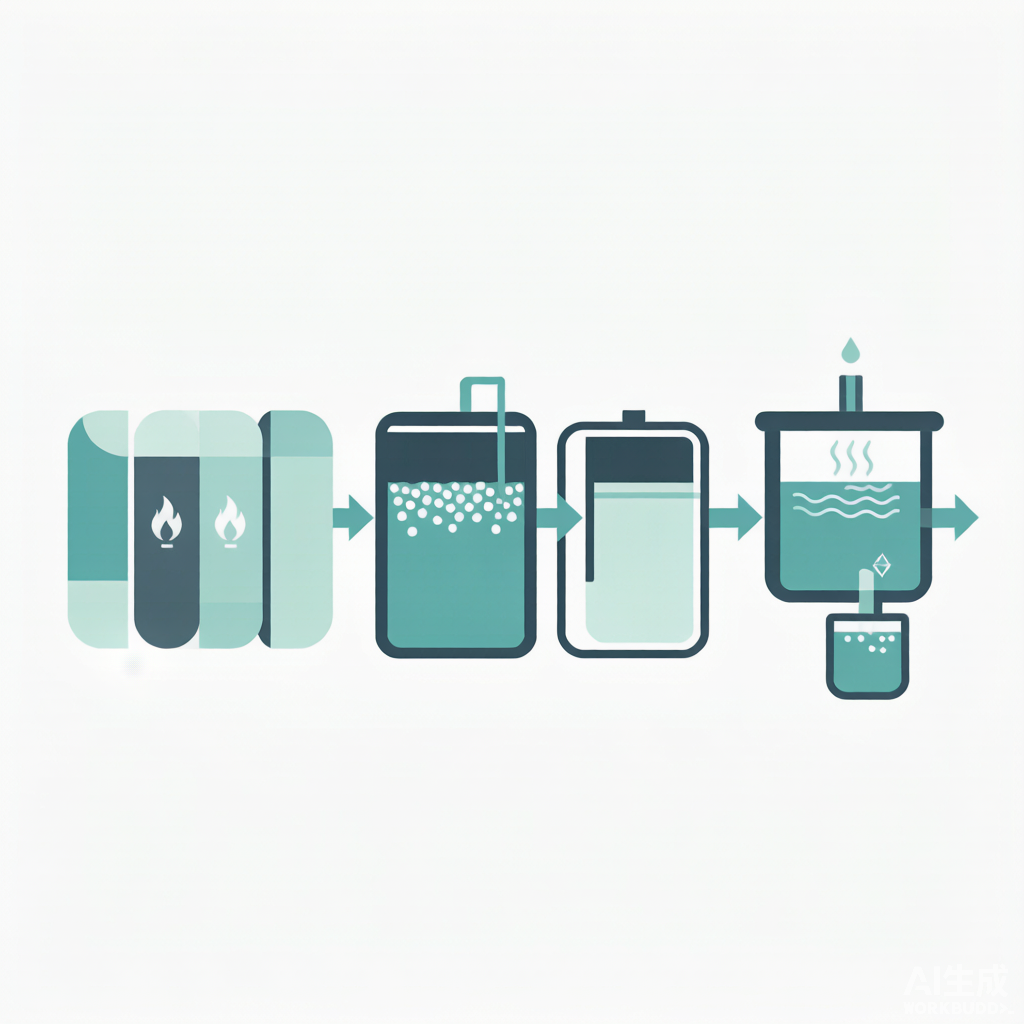
Arranging high-concentration refractory wastewater treatment routes along a temperature spectrum provides clear clarity: ambient-temperature AOP (Fenton/Ozonation/Electro-Fenton/Persulfate) is suitable for soluble organics at low-to-medium concentrations; CWAO/WAO is suitable for "detoxification pretreatment" of wastewater with tens of thousands to hundreds of thousands of mg/L COD and high salinity/toxicity, using high temperature to eliminate toxicity and improve B/C; Multi-Effect Evaporation / MVR handles the final salt separation and zero liquid discharge. CWAO is generally not used alone as a "final treatment"—its value lies in converting wastewater that biological treatment "cannot handle" into wastewater that downstream biological or evaporation processes "can accept," serving as the bridging high-temperature detoxification step in the entire high-difficulty wastewater treatment chain.
7. One-Sentence Selection Recommendation
Suitable for: Pesticide/dye/pharmaceutical/petrochemical/coal chemical wastewater with COD ranging from tens of thousands to hundreds of thousands of mg/L, high salinity, high toxicity, poor biodegradability (B/C<0.3), and resistant to conventional biological treatment—used as detoxification pretreatment or ZLD front-end.
Not suitable for: Low-concentration wastewater (<5000 mg/L)—in such cases, CWAO energy consumption is too high to be economical, and biological treatment or ambient-temperature AOP (Fenton/Ozonation/Electro-Fenton/Persulfate) should be prioritized. CWAO and ambient-temperature AOP are complementary routes—"high-temperature mineralization" versus "room-temperature free radicals"—not substitutes for each other.
References (Verifiable Sources)
- National Engineering Research Center of Lanzhou Institute of Chemical Physics, Chinese Academy of Sciences. Treatment of High-Concentration Organic Wastewater by Catalytic Wet Air Oxidation (Technical Introduction). licp.cas.cn.
- Environmental Catalysis Engineering Research Group (Dalian Institute of Chemical Physics, CAS). Commissioning Cases of CWAO Industrial Units for Limin Chemical / Zhejiang Youchuang / Tianjin North Food. environmental-catalysis-engineering.dicp.ac.cn.
- Study on Wet Oxidation of High-Salinity Refractory Pesticide Wastewater. Chemical Equipment, 2007, 26(3):417.
- Catalytic Wet Air Oxidation of Wastewater of the Herbicide Fomesafen Production with CeO₂-TiO₂ Catalysts. Energy Engineering, 2015, 32:389–395 (Wang et al.).
- Study on heterogeneous catalytic wet air oxidation of high concentration MDEA-containing wastewater. ScienceDirect, 2021 (COD 61.2 g/L, 230℃, 5.0 MPa, 90 min, MDEA 98%/COD~90%).
- Catalytic Wet Air Oxidation of Organics-Laden Wastewater: In situ Catalyst Regeneration and Process Scale-up. Environ. Sci.: Water Res. Technol., 2026 (d5ew00745c; COD≈120000 mg/L, 244℃, 27 bar O₂, 99% COD).
- Catalytic Wet Air Oxidation Process for High-Concentration Organic Wastewater (Patent Application 201810389974.1). dowater.com Technical Library.
- Luck F. Wet Air Oxidation — past, present and future. Catalysis Today 1999 (NS-LC process Pt-Pd/TiO₂-ZrO₂, as cited in 220℃/4 MPa).
- Isgoren M, Gengec E, Veli S. WAO of malathion by Box-Behnken design. PubMed 2017 (60–120℃, 20–40 bar, optimized 97.8%).
- Aqua Dynamics. Catalytic Wet Air Oxidation (CWAO) Technical Documentation (Refinery Spent Caustic Case, values [to be verified]).