


 Across multiple industries nationwide (Power/Steel/Petrochemical/Printing & Dyei
 Pilot-scale to full-scale implementation (from tens to tens of thousands of m³/d
Reverse Osmosis (RO) and Nanofiltration (NF): "Sieving" Out Salts with a Single Membrane — The Last Physical Barrier for Industrial Wastewater Reuse
After biochemical, coagulation, and oxidation processes reduce organic matter and suspended solids to very low levels, industrial wastewater reuse still hits a hard constraint—salt. This article focuses on the two membranes most frequently misapplied and most underestimated in pressure-driven membrane separation: Reverse Osmosis (RO) and Nanofiltration (NF). They require no chemicals and produce no sludge, relying on "pressure + selective permeation" to retain dissolved salts and organic matter of specific molecular weights on the membrane surface. They are irreplaceable physical barriers in the "graded reuse and zero liquid discharge" chain for industrial wastewater.
1. Principles: Pressure-Driven + Size Exclusion + Charge (Donnan) Effect
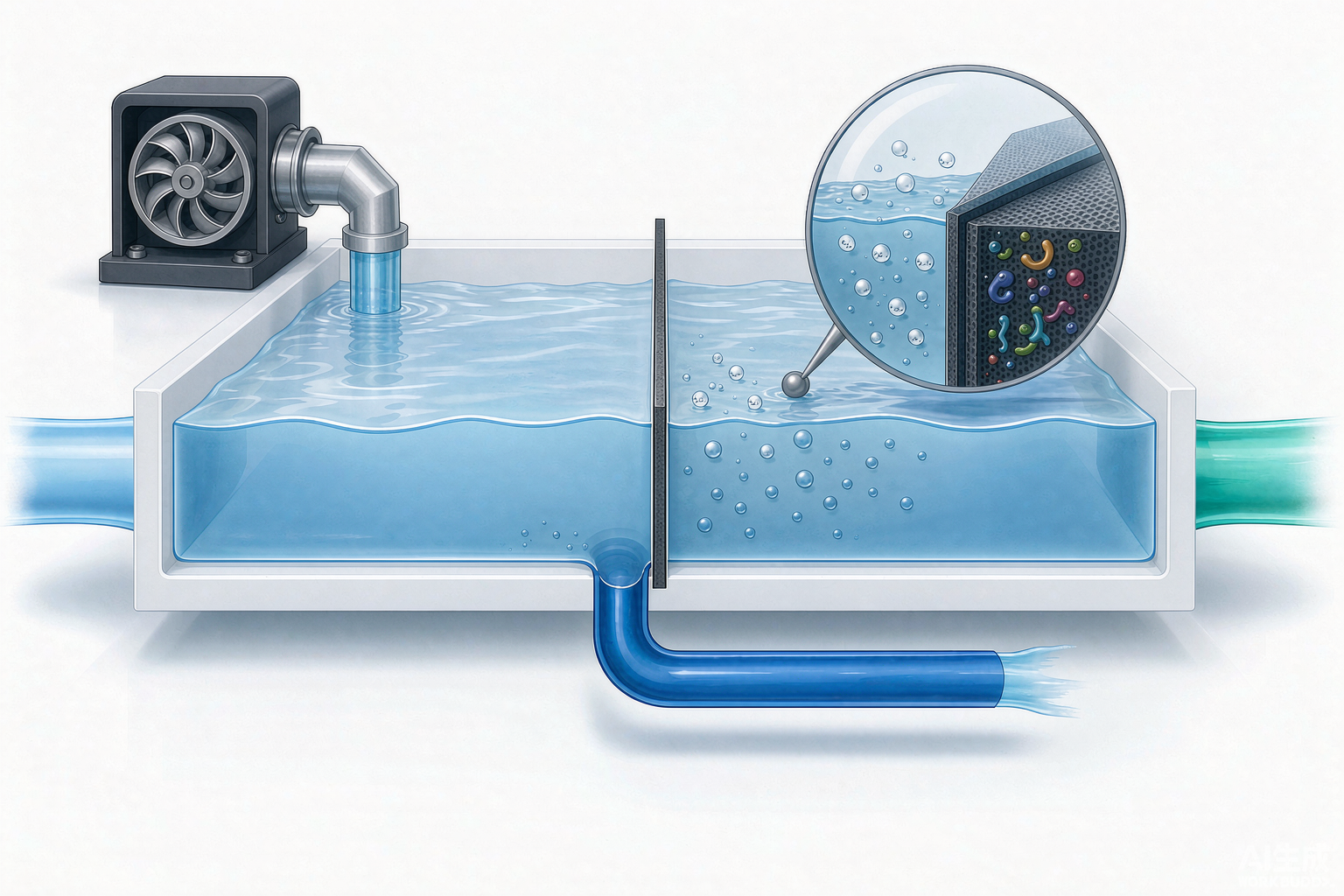
RO/NF membranes are composite membranes with a dense active layer (predominantly aromatic polyamide TFC membranes), with surface pore sizes on the order of 0.1–1 nm. When the high-pressure pump pushes the feed stream across the membrane surface, two phenomena occur:
- Size exclusion: Ions/molecules larger than the membrane pores and "free volume" are retained; the dense layer of RO allows almost only water molecules to pass, while NF has slightly larger pores (molecular weight cut-off MWCO of 200–1000 Da), permitting small monovalent salts to pass.
- Charge (Donnan) effect: The NF membrane surface carries a negative charge, strongly rejecting divalent/multivalent anions (SO₄²⁻, hardness ions Ca²⁺/Mg²⁺) through electrostatic repulsion, while offering low resistance to monovalent Na⁺/Cl⁻ permeation—this is the physical basis for NF's "softening without desalination" capability.
Because separation relies on "pressure pushing + membrane retaining," RO/NF require no chemical addition and produce virtually no sludge. Permeate quality depends solely on the membrane itself and feed water characteristics, making them the most "stable and controllable" stage in advanced reuse applications. The trade-off: high pressure means energy consumption, and concentrate means salt must go somewhere—these two factors dictate that they must be "applied where they belong."
Two critical engineering concepts are often overlooked: transmembrane pressure (TMP) and concentration polarization. As water molecules permeate the membrane, retained salts and organics accumulate at the membrane surface, forming a "concentration boundary layer" that reduces effective driving pressure and causes permeate flux decline. This is why RO operating pressure must significantly exceed the solution osmotic pressure (empirically 1.2–1.5 times the osmotic pressure), and why high flux paradoxically accelerates fouling—cross-flow velocity and turbulence intensity must be designed sufficiently high to "wash away" the polarization layer.
2. RO or NF? Three Parameter Tables for Clarity
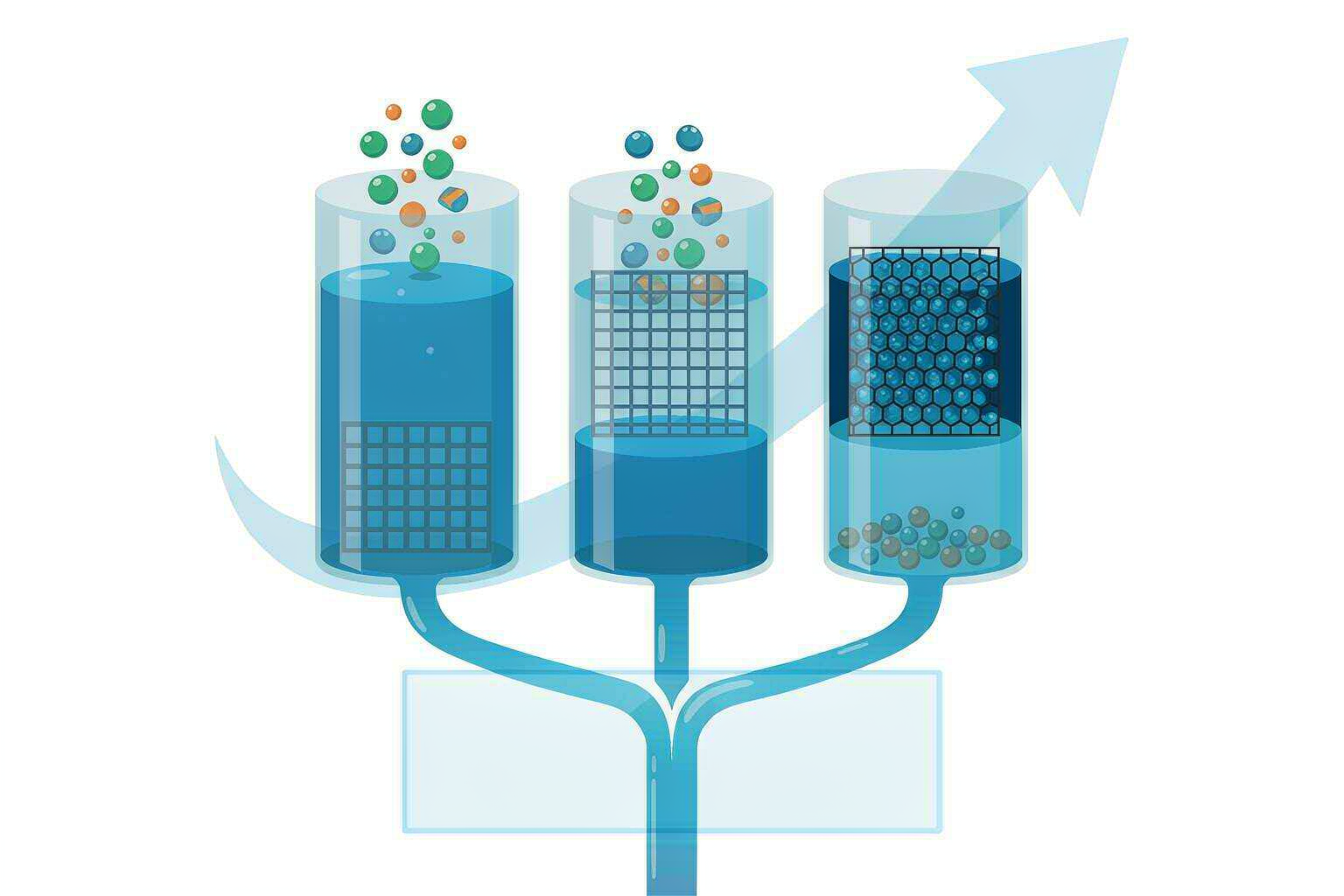
Choosing the wrong membrane means either insufficient desalination or wasted energy. The following ranges represent the baseline for engineering selection (compiled from public technical references including Jingmei Filtration Operation Guide, hydropure/Shihu Industrial Control, etc.):
| Parameter | Reverse Osmosis (RO) | Nanofiltration (NF) |
|---|---|---|
| Operating Pressure | Brackish water membrane 1.0–2.5 MPa; ultra-low pressure 0.8–1.5 MPa; seawater membrane 5.0–8.0 MPa | 0.5–2.0 MPa (approximately 1/2–1/3 of RO brackish water) |
| Desalination Capacity | NaCl rejection 95–99% (up to 99%+ for new membranes), near-complete desalination | NaCl 30–80%; divalent ions/hardness 90–98%; organics above 300 Da 85–95% |
| Typical Flux | 18–22 LMH (optimal), strictly not exceeding 25 LMH (sharp rise in fouling) | 15–30 LMH (some references cite 10–50) |
| System Recovery Rate | Industrial wastewater 60–70%; brackish water 70–80%; seawater 40–50% | 85–95% (constrained by CaCO₃/CaSO₄/silica solubility limits) |
| Relative Energy Consumption | Baseline | Saves approximately 30–60% pump energy compared to RO for the same water quality |
| Feed Water Requirements | SDI≤3 (preferably ≤2), turbidity≤0.1 NTU, residual chlorine<0.05 mg/L, hardness≤200 mg/L | pH 2–11 (continuous), residual chlorine<0.1 mg/L, temperature 5–45℃ |
III. Real Engineering Cost Ledger (All from Public Literature and Engineering Cases)
| Industry / Scale | Process & Key Operating Conditions | Effluent / Removal Performance | Source |
|---|---|---|---|
| Stainless steel product wastewater / ZLD project | Pretreatment + three-stage RO + MVR, three-stage pressures 1.2/1.7/2.2 MPa, concentrate reflux 50% | Conductivity 2075–2133 → <30 μS/cm; COD 88%, NH₃-N 65%, TN 88%, TP 97%; recovery rate 87–92%; overall salt rejection >98%; RO operating cost 5.35 元/m³ | China Water & Wastewater, 2021, 37(17):94–99 (peer-reviewed) |
| Fertilizer plant cooling tower blowdown | Microfiltration (5/1 μm) + carbon filtration pretreatment SDI=5, RO pressure 0.275–0.413 MPa | Influent TDS 2500 mg/L → optimum 270 mg/L; maximum desalination 89.2%; maximum recovery 56.0% (0.413 MPa) | IISc Journal (peer-reviewed, public abstract) |
| Electroplating wastewater / reuse | Softening (hardness <0.03 mmol/L) + multimedia + 5 μm cartridge + RO, design pressure 1.2–1.5 MPa | Salt rejection ≥97% (new membrane 99%+); permeate conductivity <50 μS/cm (GB 21900—2008 Table 3); water production rate 65–75% (large flow 80%+); overall reuse rate 85%+; membrane life 3–5 年 | Changhai Environmental Protection engineering solution (【to be verified】supplier source) |
| Printing and dyeing industrial park / centralized reuse 1 万 t/d | Hydrolysis acidification + contact oxidation + UF-RO dual-membrane desalination | Park wastewater 100% reused, fresh water intake reduced by 30%, annual cost savings exceeding 2000 万 yuan; concentrated brine treated by electrodialysis to recover mirabilite (Na₂SO₄) with purity 98% | Park ZLD case study (【to be verified】engineering report) |
| Textile biochemical secondary effluent / 7500 m³/d | PVDF ultrafiltration + low-energy RO dual-membrane process | Permeate 4500 m³/d, system recovery ≥60%, first-year salt rejection ≥97%, salt removal >99% | Tianchuang Environmental dual-membrane case study (【to be verified】supplier source) |
| Coal-fired power plant FGD wastewater / ZLD | Pretreatment + two-stage RO concentration (TDS≈30000, Cl⁻≈15000 mg/L) | Two-stage RO volume reduction 80%+, system salt rejection >99.9%, heavy metal removal >99%, permeate fully reused | Power plant FGD wastewater ZLD case study (【to be verified】engineering report) |
4. Membrane Selection: Material and Configuration
- Material: The current mainstream is aromatic polyamide (PA/TFC) composite membranes, which offer chemical resistance and a wide pH operating range (RO feed 6–8.5, NF continuous 2–11). Representative brands include Dow (DuPont), Hydranautics, and Toray. Anti-fouling variants (e.g., Dow BW30FR) are used for wastewater with high organic content or high turbidity. Fatal weakness: sensitivity to residual chlorine — feed water residual chlorine must be <0.05 mg/L (NF <0.1), otherwise irreversible oxidation occurs, requiring sodium bisulfite reduction.
- Configuration: Spiral-wound is the absolute industrial mainstream; 8 -inch elements reduce pressure vessel costs in large projects. Disc-tube (DTRO) offers wide flow channels and high solids tolerance, specifically designed for landfill leachate/high-salinity brine. NF and RO share common configurations.
5. Pretreatment and Membrane Fouling: The Critical Determinant of RO/NF Success
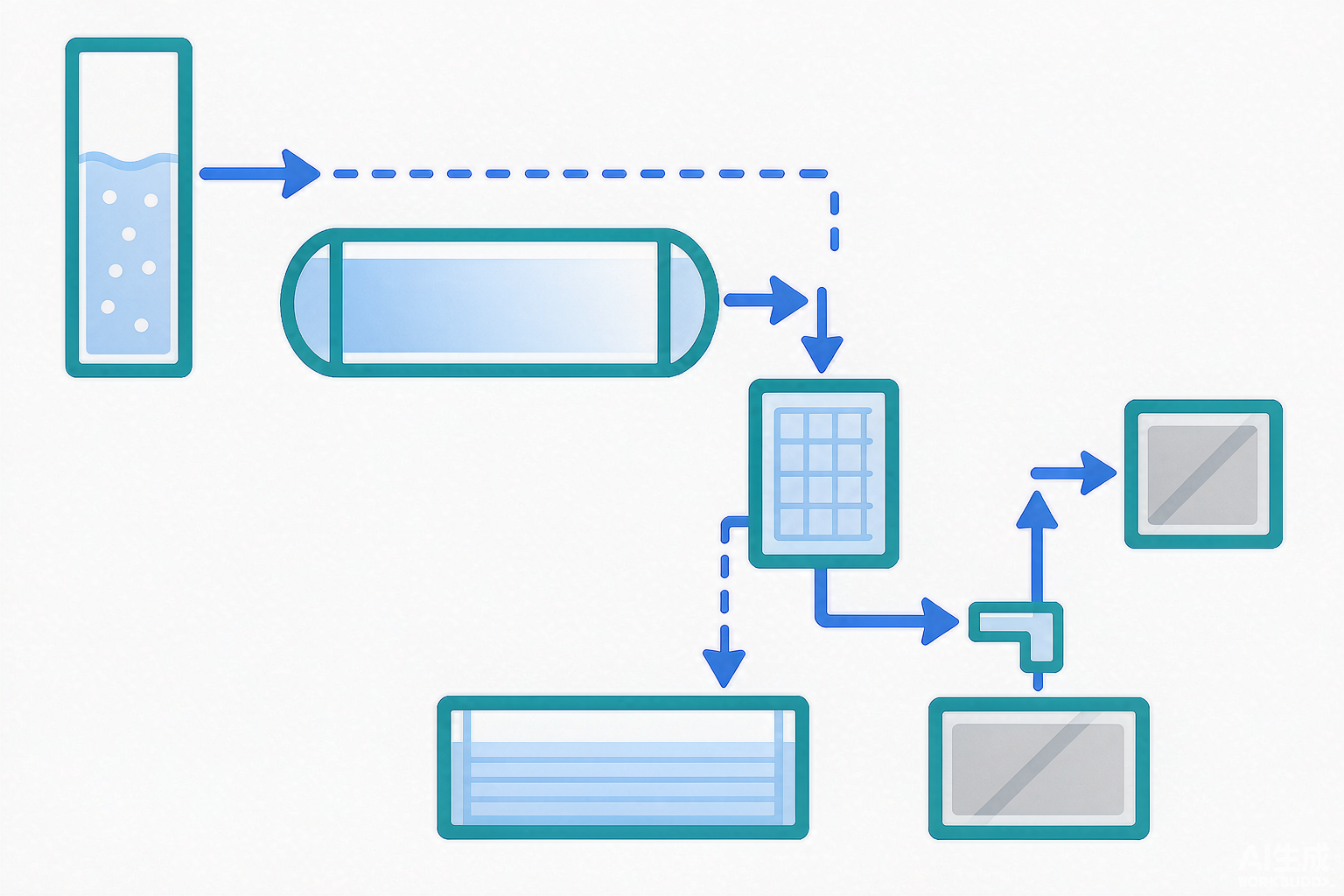
Membranes rarely "fail" on their own; what actually cripples a system is fouling and scaling. Nearly all failure cases stem from inadequate pretreatment:
- Colloids/Suspended Solids → SDI: RO feed water SDI must be ≤3 (preferably ≤2), turbidity ≤0.1 NTU; UF/MF upstream is the standard practice in dual-membrane processes, reducing SDI to below 3 before RO feed is acceptable.
- Scaling → Antiscalant/Softening: High-hardness, high-salinity wastewater must be softened or dosed with antiscalants (polyacrylate-based) before RO; otherwise CaCO₃/CaSO₄/silica crystallize on the membrane surface, causing irreversible damage. This is precisely the rationale for "softening + RO" (electroplating case) and NF upstream (hardness reduction).
- Organics/Oil → Activated Carbon/Biological Treatment: Feed water TOC is recommended at ≤500 ppb level (some references use mg/L and require conversion), safeguarded by upstream biological treatment plus activated carbon.
- Microorganisms → Disinfection: System protection is required during shutdown; control residual chlorine during operation and perform frequent CIP (chemical cleaning) to restore flux.
A frequently underestimated parameter is the Silt Density Index SDI15: it measures the rate at which a microfiltration membrane is plugged over 15 minutes under a constant pressure of 0.207 MPa. RO feed requires SDI15≤3, which is not easily achievable for industrial wastewater with high organic/colloidal content — often requiring multi-stage protection via "multi-media + activated carbon + UF." Every cent saved on pretreatment will be repaid many times over in membrane cleaning and replacement.
6. 4 Pitfalls That Engineering Must Watch Closely
1. Concentrate Disposal Must Be Planned in Advance
RO/NF typically produces 20–35% concentrate with salinity 2–3 times that of the feed water, which cannot be directly reused. Either a second-stage RO raises recovery (total recovery up to 85–90%), or the concentrate goes to DTRO/Electrodialysis/evaporation-crystallization for ZLD. Uncontrolled concentrate = a system built in vain.
2. Higher Recovery Is Not Always Better
For industrial wastewater RO, keeping recovery at 60–70% is the safe zone; blindly pushing to 80%+ triggers scaling on the concentrate side, TMP spikes, and drastically shortened membrane life. NF is similarly capped at approximately 85–95% due to scaling constraints — don't force it either.
3. Residual Chlorine Is the Hidden Killer
PA membranes degrade rapidly upon exposure to residual chlorine; feed water residual chlorine <0.05 mg/L is an ironclad rule. Reductant dosing and online ORP monitoring must be in place, otherwise the entire membrane inventory will be ruined within months.
4. Energy Consumption Rises Linearly with Salinity and Recovery
RO energy consumption per ton of water is dominated by the high-pressure pump: approximately 1–3 kWh/m³ for brackish water, substantially higher for seawater; NF can save 30–60% of pumping energy due to lower operating pressure. Minimizing the "desalination requirement" during selection (use NF whenever possible instead of RO) is the most direct lever for reducing OPEX.
7. One-Sentence Selection Recommendation
Suitable for: Industrial wastewater where biological/oxidation effluent already meets discharge standards but requires "desalination and reuse" or "near-zero liquid discharge" — power, steel, petrochemical, printing and dyeing, electroplating, semiconductor, and chemical industrial parks. NF is particularly suited for softening, color removal, and dye/salt separation; RO handles final deep desalination and pure water production.
Not suitable for: Cases where influent suspended solids/oil/hardness are extremely high without pretreatment, or where the goal is merely "COD reduction without desalination"—in such scenarios, AO, Fenton, and Activated Carbon are more cost-effective. Reserve RO/NF for the hard requirement of "water reuse and desalination," and be sure to configure UF pretreatment + softening/antiscalant + concentrate disposal routes.
References (Verifiable Sources)
- Zhao Lijuan, Shao Qiyun, Xie Qingjie. Application of Reverse Osmosis in Zero Liquid Discharge Engineering of Stainless Steel Product Manufacturing Wastewater[J]. China Water & Wastewater, 2021, 37(17):94–99.
- Recovery and reuse of water from effluents of cooling tower (fertilizer unit, RO at 275–413 kPa). Indian Institute of Science Journal (public abstract).
- Changhai Environmental Protection. Electroplating Wastewater "Softening + Reverse Osmosis" Combined Process Achieving 85% Recovery Rate (engineering solution). changhaihuanbao.com (【to be verified】supplier source).
- Shandong Zhongsheng Environment. Hydrofluoric Acid Wastewater Reverse Osmosis Treatment Process Parameters and Resource Recovery Solution (photovoltaic/semiconductor industry). wateretechs.com (【to be verified】supplier source).
- Jingmei Filtration. Comprehensive Guide to Reverse Osmosis Equipment Selection, Installation, and Standardized O&M / Key Points for Efficient Operation and Membrane System Maintenance. jingmeiguolv.com (engineering O&M technical documentation).
- Zhongsheng Environmental. What Is a Nanofiltration System? 2026 Working Principle (NF parameter comparison matrix). hydropurewater.com.
- Shihu Industrial Control. Why Nanofiltration Technology Has Become the Industrial Separation "All-Rounder" (northern drinking water plant hardness 350→<50 mg/L case study). hyxgeo.com (engineering documentation).
- Torvexus. Nanofiltration Membranes in Water Treatment (Cape Town 15 万 m³/d, Taiwan Hsinchu Science Park 2 万 m³/d semiconductor wastewater NF case studies).
- Tianchuang Environmental. Dual-Membrane Process for Water Quality Upgrading and Reuse in Industrial Wastewater Resource Recovery Solutions (Hangzhou Dali Textile 7500 m³/d case study). tchjkj.cn (【to be verified】supplier source).
- Coal-fired power plant/printing and dyeing industrial park zero liquid discharge case studies (two-stage RO volume reduction 80%+, park 100% water reuse). Engineering reports (【to be verified】).