



 National Multi-Industry (Pharmaceutical / Printing and Dyeing / Petrochemical /
  Pilot-scale to full-scale engineering (from tens to tens of thousands of m³/d)
Biological Contact Oxidation Process: Solving "High Load · No Bulking · No Recycle" in One Submerged Biofilm Tank
Contact oxidation is not just another type of aeration tank, but an aerobic process where biofilm is "submerged" in water with bottom air blower aeration — it combines the advantages of both biofilm processes and the Activated Sludge process, yet avoids sludge bulking and requires no sludge return. This article uses the HJ 2009-2011 specification ranges and multiple real-world engineering cost accounts to clarify the key control parameters at once: media selection, volumetric loading, HRT, air-to-water ratio, and DO.
1. Principle: One Tank, Two States, Layered Biofilm
Wastewater flows upward through the media. Organic matter is first adsorbed onto the biofilm surface, then hydrolyzed into small molecules by extracellular enzymes secreted by microorganisms, and finally oxidized and decomposed into CO₂ and H₂O. Since the biofilm thickness on the media can reach 2–4 mm, the inner layer of the film is anoxic while the outer layer is aerobic, creating an "anaerobic—anoxic—aerobic" layered structure on the same media, theoretically providing the conditions for simultaneous nitrification and denitrification (SND).
Key quantitative concepts: The biomass concentration in a contact oxidation tank can reach 6000–14000 mg/L (6–14 g/L), which is 2–4 times that of the conventional Activated Sludge process (2–4 g/L); the BOD₅ volumetric loading specified in the standards can reach 2.0–3.0 kg/(m³·d) (for domestic/similar wastewater), so for the same treatment capacity, the tank volume can be significantly smaller than that of the Activated Sludge process. Biofilm formation typically completes within 2–4 weeks (at normal temperature); the startup period can be shortened by adding seed sludge, controlling DO at 2–4 mg/L, pH at 6.5–8.5, and supplementing nutrients at a BOD₅:N:P ratio of 100:5:1 .
This process did not emerge from nowhere: it was developed in the early 20 th century 70 年s by Professor Botho Böhnke at RWTH Aachen University in Germany, based on combining biological filters with Activated Sludge aeration. It was promoted in China in the 80 年s following the domestic production of media such as honeycomb straight tubes and three-dimensional corrugated sheets. The reason it is so "robust" lies fundamentally in the coexistence of two phases — the attached biofilm acts as a "resident microbial community" that withstands loading fluctuations, while the suspended sludge acts as a "mobile force" that compensates for mass transfer. This gives it superior shock resistance compared to purely suspended systems, and because no return is needed, it completely avoids the filamentous sludge bulking that plagues the Activated Sludge process. Meanwhile, the DO in the tank is generally maintained at a relatively high level of 2.5–3.5 mg/L, allowing sufficient endogenous respiration of microorganisms and a complete food chain. Combined with the self-decomposition of part of the biofilm in the anaerobic layer, the sludge yield is significantly lower than that of the Activated Sludge process (specified as 0.2–0.4 kgVSS/kgBOD₅).
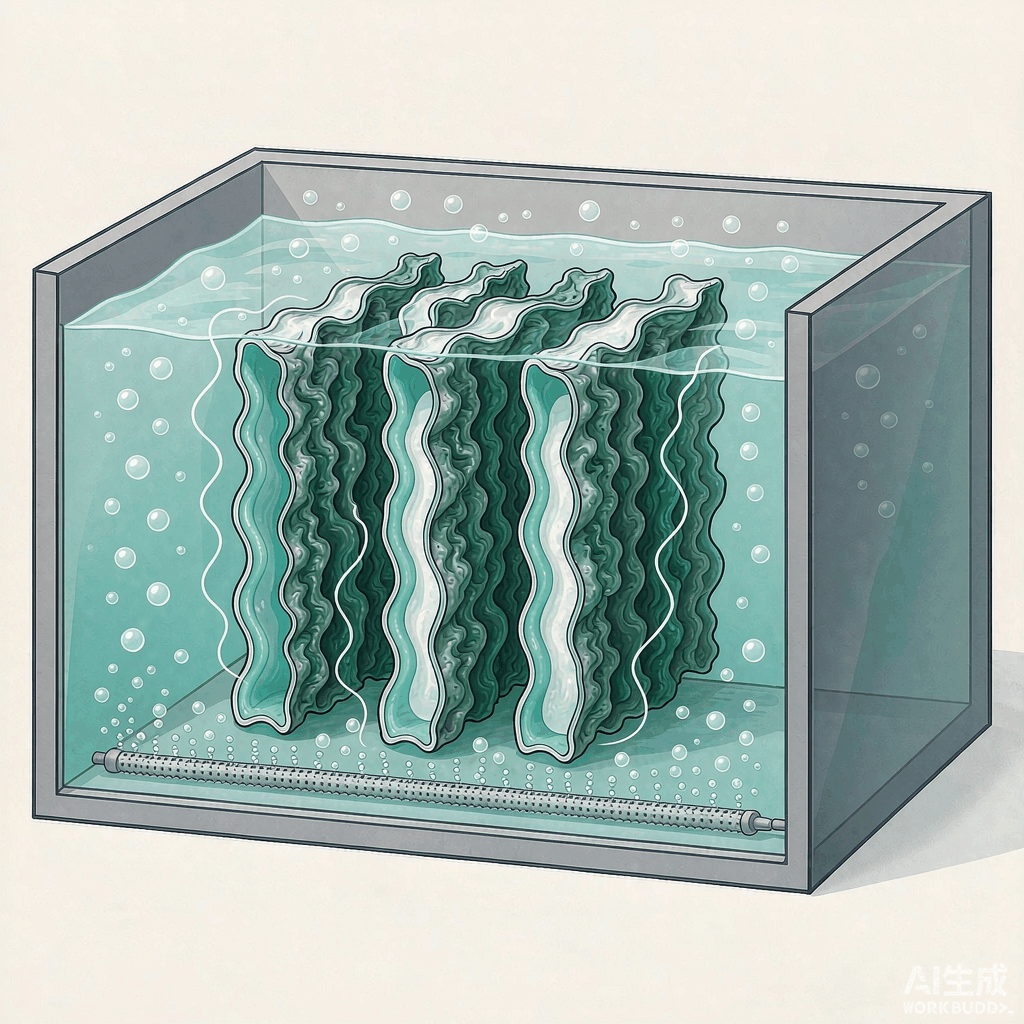
2. Core Design Parameters: Governed by HJ 2009-2011 and GB 50684-2011
The design of a contact oxidation tank is centered on the media volumetric loading method (for chemical wastewater, using the air-to-water ratio to determine air supply is generally not recommended). The ranges given by the two national-level specifications are highly consistent and can be directly applied in design documents:
| Parameter | HJ 2009-2011 Range | GB 50684-2011 (Chemical Industry) Range | Remarks |
|---|---|---|---|
| BOD₅ volumetric loading (carbon oxidation) | 0.5–3.0 kg/(m³ media·d) | 1.0–3.0 kg BOD₅/(m³·d) | For industrial wastewater, mid-to-upper range is recommended |
| Carbon oxidation + nitrification | Denitrification HRT 4–16 h | BOD₅ 0.2–1.0; nitrification 0.1–0.4 kg NH₃-N/(m³·d) | When denitrification is required, verify against nitrification loading |
| Total HRT | 2–6 h (carbon oxidation); 4–16 h (denitrification) | — | For industrial wastewater, ≥8 h is recommended |
| Air-to-water ratio | Minimum 2:1–3:1, maximum 15:1–20:1 (domestic) | Air-to-water ratio not recommended for aeration sizing | For industrial wastewater, pilot testing or reference to similar projects is recommended |
| DO / pH / water temperature | DO 2–4; pH 6.5–9.5; 12–37℃ | DO 2.5–3.5 mg/L | Influent BOD₅/COD should be >0.3 |
| Media fill ratio / effective water depth | Suspended 50–70%, floating 30–60% | Effective water depth 4–6 m | Fill ratio >70% is prone to clogging |
| Sludge yield | — | 0.2–0.4 kg VSS/kg BOD₅ | Lower than Activated Sludge process |
In terms of design, the volumetric loading method directly determines the tank volume. Taking carbon oxidation as an example, effective media volume V = Q·C₀ / (N·1000), where Q is the design flow rate (m³/d), C₀ is the influent BOD₅ concentration (mg/L), and N is the selected BOD₅ volumetric loading (kg/(m³·d)). For example, with 1000 m³/d, influent BOD₅ of 300 mg/L, and a loading of 1.5 , V≈200 m³; dividing by the media fill ratio (e.g., 60%) gives the total tank volume. When denitrification is required, the same tank volume must also be checked against the nitrification volumetric loading of 0.1–0.4 kg NH₃-N/(m³·d), and the larger of the two values shall be adopted. The air-to-water ratio is used only for verifying aeration supply (domestic sewage 2:1–20:1). For industrial wastewater, due to high pollutant concentrations and high oxygen demand, the standard does not recommend using the air-to-water ratio for aeration sizing; instead, aeration shall be calculated directly based on the three factors: oxygen demand, mixing, and anti-clogging requirements.
3. Media Selection: Trade-off Between Specific Surface Area and Anti-Clogging Performance
Media is the "heart" of contact oxidation, requiring high specific surface area, high void ratio, easy biofilm attachment, and good mechanical strength. The sludge concentration and organic loading rates on different media specified in the appendix of the specification show significant differences (values represent MLSS on media and BOD₅ volumetric loading rate):
| Media Type | Specific Surface Area (m²/m³) | Sludge Concentration on Media (kgMLSS/m²) | Organic Loading Rate (kgBOD₅/m³·d) | Application |
|---|---|---|---|---|
| Soft Fiber Media | 2000–2500 | 0.5–1.5 | 2.0–3.0 | High-strength organic wastewater |
| Semi-Soft Media | — | 1.5–2.0 | 1.5–2.0 | General purpose |
| Elastic Three-Dimensional Media | 280–350 | 2.5–3.0 | 1.5–2.0 | Food/slaughter/petrochemical, anti-clogging |
| Fiber Bundle Composite Media | 500–800 | 0.5–2.5 | 2.0–2.5 | Pharmaceutical/refractory wastewater |
| Suspended Media (MBBR Carrier) | 300–600 | 3.5–5.5 | 6.5–9.5 | Retrofit and upgrade |
In engineering practice, elastic three-dimensional media and composite media are the most commonly used: the former offers a specific surface area of 280–350 m²/m³, void ratio ≥96%, anti-clogging performance, and a price of 80–150 元/m³; the latter provides higher biomass and also supports denitrification. The filling ratio is typically 50%–70% (70% is commonly used for elastic media).
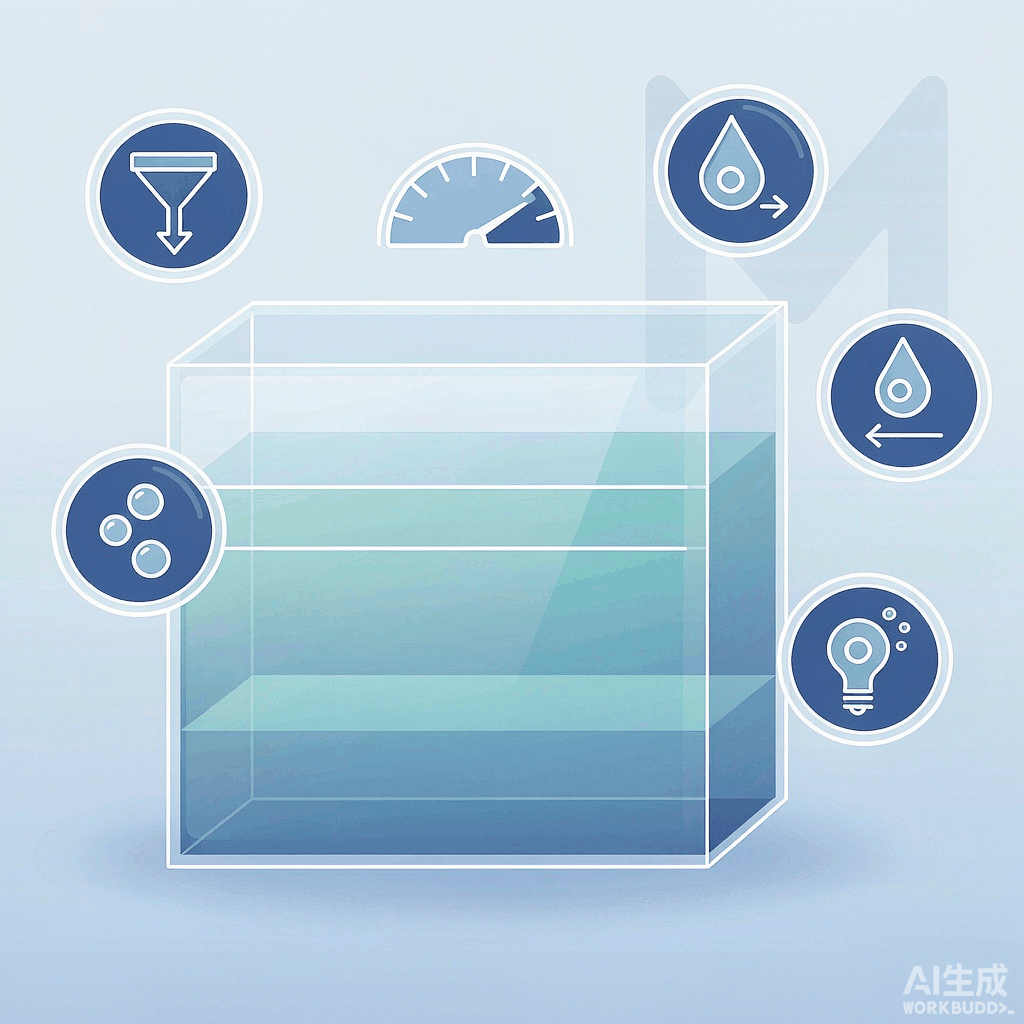
IV. Real Project Cost Ledger (All from Public Engineering Cases)
| Industry / Scale | Process & Key Operating Conditions | Effluent / Removal Performance | Source Level |
|---|---|---|---|
| Antibiotic wastewater / 2700 m³/d | Hydrolysis Acidification (HRT 17h, air-to-water ratio 5:1) + contact oxidation (HRT 14.3h, air-to-water ratio 45:1,, semi-soft media 1800m³) | Removal volumetric load: acidification 4.93, oxidation 5.15 kg COD/(m³·d); effluent COD reduced to 443 mg/L | Industry engineering report (dowater 2009) |
| Biopharmaceutical wastewater / 200 m³/d | Hydrolysis Acidification–contact oxidation, influent COD 4622/BOD 1209/SS 1356/color 1000× | Effluent COD 316/BOD 95/SS 324/color 220; removal 93%/92%/76%/78%, meeting GB 8978-1996 Grade III | Peer-reviewed (Industrial Water & Wastewater 2008) |
| Traditional Chinese medicine manufacturing / project | Hydrolysis Acidification–EGSB–contact oxidation combined process | COD/BOD/SS/NH₃-N removal 98.4%/99.5%/98.1%/92.7%; effluent 81/9.1/19.2/7.3 mg/L | Peer-reviewed (China Water & Wastewater 2018) |
| Chemical synthesis pharmaceutical (amoxicillin) / full-scale project | UASB + micro-aerobic hydrolysis + CASS + contact oxidation (BCOT), influent COD 4016–13093, NH₃-N 156–650 | COD/NH₃-N/amoxicillin removal 97%/93.4%/97.2%; effluent ~104/9.4 mg/L | SCI (J Hazard Mater 2011, DOI:10.1016/j.jhazmat.2011.09.053) |
| Printing and dyeing wastewater / project | Hydrolysis Acidification (HRT 7.8h) + contact oxidation (HRT 4.8h, volumetric load 1.5, elastic media 480m³) | Influent COD 500–1200 → effluent 170 mg/L; COD/BOD removal >85%, meeting GB 4287-92 Grade II | Industry website (China Water Network) |
| Petrochemical wastewater / industrial application | Polyester waste filament as media, air-to-water ratio 30–40:1, HRT 6–8h, volumetric load 1.0–1.6 kg/(m³·d) | COD 1500–1800 → <150 mg/L, removal rate >90%, meeting national Grade II discharge standard | Wanfang journal (Industrial Water Treatment 2003) |
| Brewery wastewater / research | A/O biological contact oxidation (optimal conditions) | COD removal up to 96.7% | Literature research citation |
| Ammonia-nitrogen polluted river water / pilot scale | Single-stage aerobic vs. anoxic/aerobic two-stage contact oxidation, total HRT 8h | Two-stage COD/NH₃-N removal 92%/83%; single-stage only 82%/32% | Dissertation (napstic 2013) |
V. Contact Oxidation vs MBR vs SBR vs Activated Sludge
| Dimension | Biological Contact Oxidation | MBR | SBR | Activated Sludge |
|---|---|---|---|---|
| Biological Phase | Attached biofilm + small amount of suspended sludge | Attached (membrane retention) + suspended | Suspended flocs | Suspended flocs |
| Biomass Concentration | 6–14 g/L | 8–12 g/L | 2–4 g/L | 2–4 g/L |
| Sludge Return | Not required | Not required (membrane retention) | Cyclic decanting/sludge discharge | Requires 50–100% return |
| Volumetric Loading (COD) | 1.0–3.0 | 1.0–2.0 | 0.5–1.5 | 0.5–1.5 |
| Sludge Bulking | None | None | Occasional | Common |
| Shock Resistance | Strong | Strong | Moderate | Moderate |
| Effluent SS | Requires downstream sedimentation | <5 mg/L | Requires sedimentation | Requires secondary clarifier |
| Footprint / O&M | Compact / Simple | Smallest / Moderate (membrane replacement) | Moderate / Moderate | Large / Relatively high |
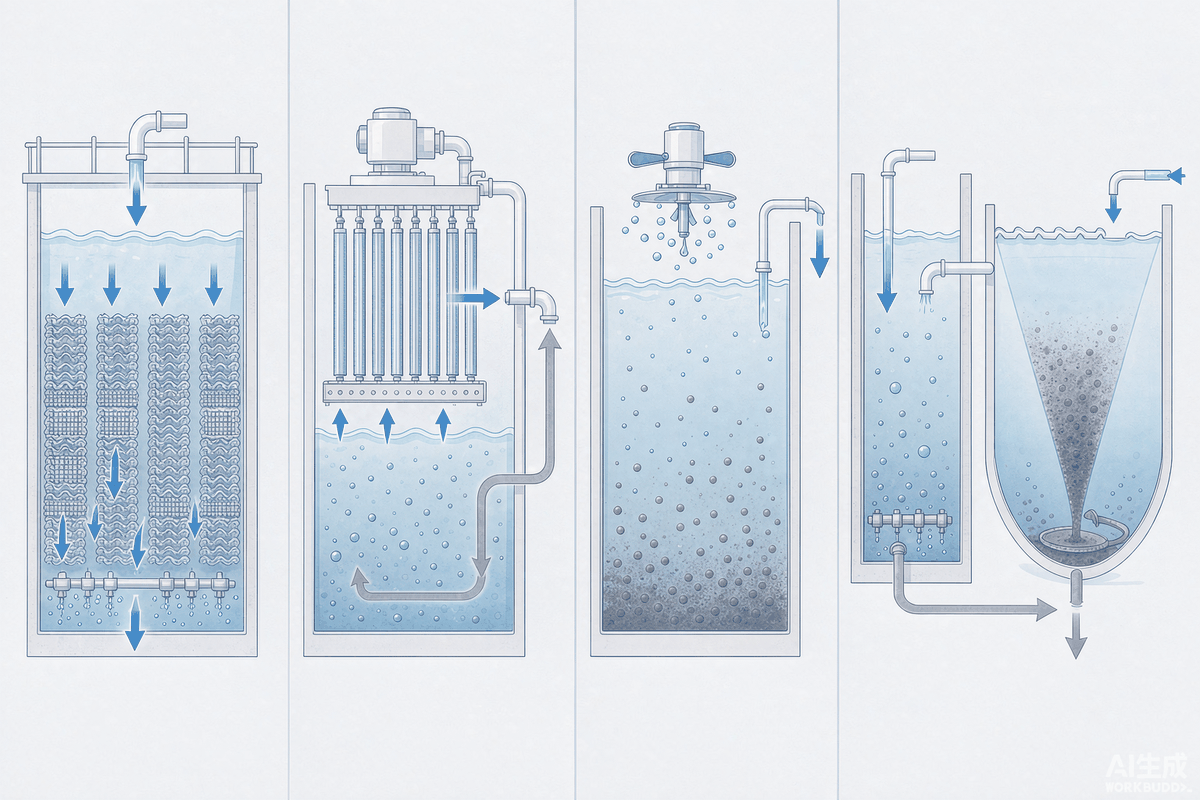
6. Engineering Realities: 5 Pitfalls That Must Be Watched
② Single-stage aerobic treatment has weak nitrogen removal; an anoxic stage must be added for denitrification. Two-stage (anoxic/aerobic) contact oxidation can achieve NH₃-N removal of up to 83%, while single-stage aerobic treatment achieves only about 32% (river water remediation pilot test); when nitrogen removal is required, verify against the nitrification volumetric loading of 0.1–0.4 kgNH₃-N/(m³·d), and ensure C/N≥4:1.
③ A higher air-to-water ratio is not always better. For domestic wastewater, the minimum air-to-water ratio is 2:1–3:1 and the maximum is 15:1–20:1; for industrial wastewater, it should be determined by testing. Blindly increasing the air-to-water ratio only raises blower energy consumption, with diminishing marginal returns on removal efficiency.
④ Media clogging is the primary operational risk. A filling ratio >70% or a backwashing interval exceeding 15 天 can easily cause media compaction; suspended/elastic media require regular combined air-water backwashing (air rate 40–60 m³/h·m², duration 15–30 min, cycle 7–15 天).
⑤ Efficiency drops sharply at low temperatures. When the water temperature falls below 10℃, the COD removal rate can decline by over 50%; in northern winters, insulation or extended HRT is required. Nitrifying bacteria are more sensitive to low temperatures, so denitrification systems especially require insulation.
7. References and Data Sources
- [1] HJ 2009-2011 "Technical Specification for Wastewater Treatment by Biological Contact Oxidation Process". Ministry of Environmental Protection. (BOD₅ volumetric loading, HRT, air-to-water ratio, filling ratio, pretreatment triggers, sludge yield)
- [2] GB 50684-2011 "Code for Design of Wastewater Treatment and Reuse in Chemical Industry", Article 8.2. Contact oxidation tank volumetric loading, effective water depth, sludge yield.
- [3] Ning Wei, Shi Weihong, Zhou Zhenghua. Treatment of biopharmaceutical wastewater by hydrolysis acidification-biological contact oxidation process[J]. Industrial Water & Wastewater, 2008, 39(2):94-96.
- [4] Wan Jinbao, Yu Xiaoling, Deng Mi, et al. Treatment of pharmaceutical wastewater by combined hydrolysis acidification-EGSB-biological contact oxidation process[J]. China Water & Wastewater, 2018, 34(14).
- [5] Chen Z, Wang H, Ren N, et al. Simultaneous removal of organic substrates and NH₃-N by a novel combined process in treating chemical synthesis-based pharmaceutical wastewater[J]. Journal of Hazardous Materials, 2011, 197: 165-173. DOI:10.1016/j.jhazmat.2011.09.053.
- [6] Treatment of antibiotic wastewater by hydrolysis acidification-biological contact oxidation process[EB/OL]. Wastewater Treatment Engineering Network (dowater), 2009-07-10.
- [7] Treatment of petrochemical wastewater by biological contact oxidation with polyester waste filaments[J]. Industrial Water Treatment (Wanfang gyscl200309007), 2003.
- [8] Treatment of printing and dyeing wastewater by hydrolysis acidification-biological contact oxidation process[EB/OL]. China Water Network (h2o-china), Paper 4479.
- [9] Pilot study on A/O/O biofilm process for low C/N ratio high-nitrogen municipal wastewater treatment[D]. Thesis (napstic, 2013).
- [10] Study on enhanced biological contact oxidation process for ammonia-nitrogen polluted river water[D]. Thesis (napstic, 2013).
- [11] Biological contact oxidation tank[DB/OL]. Baidu Baike (compiling HJ 2009-2011, GB 18918-2002 compliance cases and A/O brewery/food engineering data).