


 Across multiple industries nationwide (coal chemical / landfill leachate / pharm
 Pilot-scale to full-scale engineering (tens to thousands of m³/d)
Electrocatalytic Oxidation (BDD/DSA Anodes): Installing a "Cold Combustion" Reactor for High-Salinity Refractory Wastewater
Conventional AOPs either rely on chemical dosing (Fenton/Ozone/Persulfate) or membrane stacking (NF/RO). Electrochemical oxidation instead generates hydroxyl radicals and active chlorine in situ at the anode surface, "cold-combusting" organics into CO₂ and H₂O—no chemical addition, no sludge generation throughout the process. Based on peer-reviewed journals and engineering cost ledgers, this article provides a definitive breakdown of anode selection, the current efficiency–specific energy consumption–current density triangle, and chlorinated byproduct risks.
1. Principle: The Anode Surface Is the "Reaction Field"
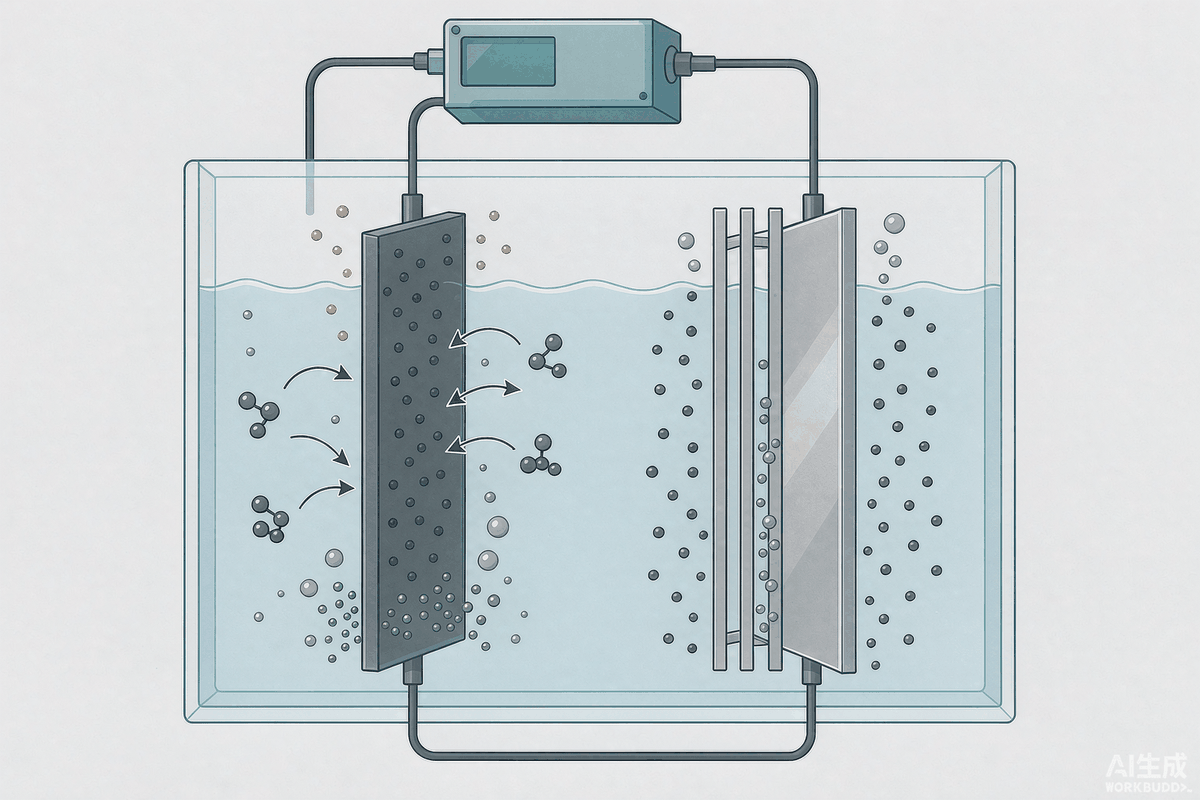
Insert two electrode plates into wastewater and apply DC current—the physical chemistry unfolds within a few nanometers of the water film at the anode surface. Two types of reactions proceed in parallel:
- Direct oxidation: Organic R first adsorbs onto the anode surface (M), where it is oxidized via electron transfer into R′ (converted to lower-toxicity/smaller molecules) or completely mineralized to CO₂. Direct oxidation is often the dominant pathway at high concentrations and low conductivity, but it is rate-limited by two factors—first, the mass transfer of R from the bulk solution to the anode surface; second, the anode surface can become "passivated" by reaction byproducts.
- Indirect oxidation: The anode first electrolyzes water/electrolytes to generate strong oxidants, which then return to the bulk solution to attack R. The two most important side reactions are:
- M + H₂O → M(·OH) + H⁺ + e⁻ (physically adsorbed ·OH at the anode surface, standard potential 2.8 V, nearly non-selective, capable of complete organic mineralization);
- 2 Cl⁻ → Cl₂ + 2e⁻, Cl₂ + H₂O → HClO + HCl, HClO ↔ H⁺ + ClO⁻ (active chlorine system, the dominant pathway in chloride-bearing wastewater).
Comninellis' classic classification divides anodes into two categories: active anodes (DSA/Ti-RuO₂-IrO₂, Pt, graphite—low oxygen evolution overpotential, ·OH exists as chemically adsorbed M(·OH), favoring electrochemical "conversion"—breaking large molecules into smaller ones without necessarily achieving complete mineralization); non-active anodes (BDD, PbO₂, SnO₂, Ti₄O₇—high oxygen evolution overpotential, ·OH exists as physically adsorbed M(·OH), favoring electrochemical "combustion"—directly burning organics to CO₂). These two routes have distinctly different preferences for saline wastewater and refractory organics—the next section presents real data to substantiate this.
2. Key Operating Parameters: Current Density, Mineralization Current Efficiency, and Specific Energy Consumption Cannot Be Optimized Independently
Three core metrics define electrochemical oxidation performance:
- Current density j (mA/cm² or A/m²): The amount of current per unit electrode area, which determines the upper limit of ·OH/active chlorine generation rate;
- Mineralization Current Efficiency MCE (%): The proportion of charge actually used to convert carbon into CO₂ relative to the total charge passed;
- Specific Energy Consumption SEC (kWh/kgCOD or kWh/m³): The electrical energy consumed per unit COD removed or per unit volume of water treated, a parameter that directly determines OPEX.
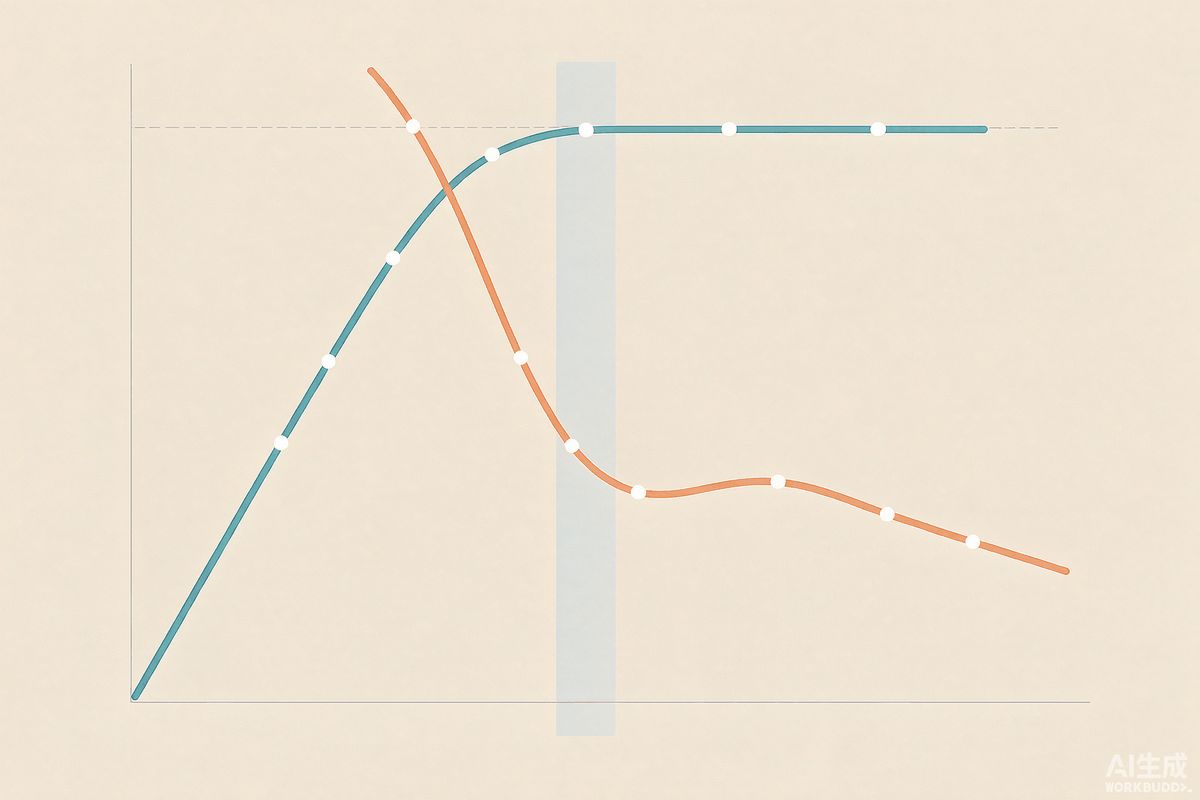
The three are coupled through Faraday's law: high MCE → low SEC; low j (≤ limiting current density jlim) → high MCE; high j → side reactions (oxygen evolution, chlorine evolution) compete for charge → MCE drops sharply and SEC rises sharply. This is the fundamental reason why energy consumption data in electrocatalytic oxidation literature spans four orders of magnitude from 2.0 to 20,800 kWh/kgCOD—SEC values measured at different j/different residence times are simply not in a comparable range. A Water Research 2025 review noted that among 2005–2025 年 6000+ papers, the reporting rate of key parameters (j, full/half-cell potential, MCE, SEC) was only 11%–27%, making cross-study comparison "nearly impossible."
3. Anode Selection: Active vs. Non-Active, Based on Salinity and Target Pollutants
The anode is the "heart" of electrocatalytic oxidation. The selection logic is not "which is best" but "which matches the water quality":
| Anode Type | Representative Electrodes | Oxygen Evolution Overpotential | Primary Oxidation Pathway | Advantageous Scenarios | Limitations |
|---|---|---|---|---|---|
| Active Anodes (DSA) | Ti/RuO₂-IrO₂, Ti/IrO₂-Ta₂O₅, Pt, Graphite | Low (<1.7 V) | Indirect · Active Chlorine / Selective Electrochemical Conversion | High-salinity wastewater with Cl⁻ ≥ several thousand mg/L (landfill leachate, electroplating, printing and dyeing); high instantaneous current efficiency for chlorine production (reviewed by Kraft et al.); | Incomplete mineralization for non-chloride wastewater; RuO₂ dissolves in strong acids, accelerated lifetime (ALT) approx. 45–400 h (depending on current density) |
| Non-active Anodes | BDD (Boron-Doped Diamond), PbO₂, SnO₂, Ti₄O₇ | High (2.2–2.8 V) | ·OH Physical Adsorption / Complete Mineralization | Deep mineralization of refractory organics in low Cl⁻ streams; wide oxidation window (BDD 2.5–3.0 V), capable of attacking benzene rings/heterocycles/halogenated hydrocarbons | BDD is expensive per plate and difficult to scale up in area; PbO₂ has short lifespan and Pb²⁺ leaching risk (GB 21900 Table 3 total lead 0.5 mg/L limit); SnO₂ requires Sb doping |
For chlorine-containing systems, a 2025 review in Water Research highlights a counterintuitive engineering fact: DSA is actually safer in high-salinity wastewater, because the active chlorine generated by DSA "knows what it wants to do"—it primarily follows the Cl₂/HClO/ClO⁻ pathway, producing chlorate (ClO₃⁻) and perchlorate (ClO₄⁻) byproducts at levels 50–100 times lower than BDD; whereas BDD under high Cl⁻ conditions is "too oxidative," even oxidizing ClO⁻ further into ClO₃⁻/ClO₄⁻. This point is often glossed over by domestic manufacturers—see the risk section below.
IV. 7 Real-World Engineering Ledgers (Including Peer Reviews and Manufacturer Disclosures)
| Wastewater Type | Anode / Reactor | Key Operating Conditions | Removal Performance | Specific Energy Consumption | Source |
|---|---|---|---|---|---|
| Coal chemical high-salinity organic wastewater (IRO) | Ti/RuO₂/IrO₂ ‒ Ti (plate) | j 30 mA/cm², spacing 1.5 cm, pH≈5, 0.5 h | COD 77.3% (vs. ozone 60.5%), continuous 12 h still 58.7%, Na₂SO₄ purity >99% | 20.6 kWh/kgCOD | Wang et al., Sep Purif Technol 2024 (DOI in Ref. 1) |
| Landfill leachate (stabilized) | Ti/IrO₂-RuO₂ (DSA) + HClO₄ support | j 32 mA/cm², 80℃, pH 3, 240 min, supplemented with 100 mM NaCl | COD 90%, TC 65%, complete removal of color and total phenols | 35 kWh/kgCOD (75%/35 without NaCl addition) | Turro et al., J Hazard Mater 2011 (DOI:10.1016/j.jhazmat.2011.03.085) |
| Landfill leachate UF effluent (post-MBR) | BDD vs. 4 DSA types (PtO₂-IrO₂/RuO₂-TiO₂/RuO₂-IrO₂/IrO₂-Ta₂O₅) | j 60–360 A/m², 4 h | BDD: COD 68.2–92.0%, TOC 64.9–86.8%; DSA: COD 36.5–92.0% | BDD 111.2 kWh/m³ (136 kWh/kgCOD); DSA 7.3–111.2 kWh/m³ | Urtiaga et al., 2018 (Elsevier reference) |
| Petrochemical RO concentrate | Nb/BDD (niobium-based BDD) | j 5/10/20 mA/cm², 5 h | TOC 71% after 3 h at 20 mA/cm², kinetics switch at 3 h | 66.5 kWh/kgCOD ("low energy consumption") | da Silva et al., IJERPH 2019, 16(5) |
| Distillery wastewater (synthetic + real) | BDD | 300 A/m², 14 h | Phthalic acid/tyrosol/catechin >99.9%, COD 98.3%, B/C ratio increased to 0.99 | Increased significantly with j (see original for specific values) | Baía et al., Water 2022, 14(5):750 |
| Wood processing wastewater (after chemical pretreatment) | BDD | j 106 mA/cm², NaCl 4 g/L, 480 min | COD 97%, TOC 97% (current efficiency significantly decreased without NaCl) | 779 kWh/kgCOD (extreme conditions); 239 kWh/kgCOD with COD 93% after optimization at 45 mA/cm² | Ong et al., Int J Environ Anal Chem 2022, 102(19):7659 |
| Olive mill wastewater (OMW) | BDD | j 20 A, 40,000 mg/L COD concentrate, 15 h | COD 19%, phenols 36% | 96 kWh/kgCOD (counterexample for highly refractory high-COD) | Cañizares et al., Water Res 2009, 43(17):3999 |
This ledger reveals three key insights: First, the SEC gap depends primarily on the combination of j and residence time, not on whether the anode itself is expensive—for the same wastewater, increasing j from 30 to 106 mA/cm² raises SEC from 20.6 to 239 and then to 779 kWh/kgCOD; Second, high-COD concentrates (e.g., OMW 40000 mg/L) can only be reduced by 19% even with BDD, indicating that electrocatalytic oxidation is not a "no concentration limit" process—above 10000 mg/L, COD should first be reduced via concentration/anaerobic/chemical oxidation before entering electrocatalysis; Third, Cl⁻ acts as an amplifier—for wood processing wastewater, adding 4 g/L NaCl with the same BDD pushes the TOC rate to 97%, but at the cost of byproduct risks (see Section 6).
V. Boundaries with Contemporary AOPs: When to Choose Electrocatalysis and When Not To
| Dimension | Electrocatalytic Oxidation (BDD/DSA) | Fenton (Fe²⁺/H₂O₂) | Catalytic Ozonation (O₃/AC or O₃/H₂O₂) | Electro-Fenton (EF, CD + In-situ H₂O₂) |
|---|---|---|---|---|
| External chemical dosage | None (electricity is the only input) | High (FeSO₄ + 30% H₂O₂) | Medium (liquid oxygen / O₃ + optional H₂O₂) | Low (small amount of Fe²⁺/Fe³⁺ catalyst) |
| Sludge / by-products | No sludge; ClO₃⁻/ClO₄⁻ generated when Cl⁻ is present | Iron sludge 3–5 kg/t treated water (massive hazardous waste) | None; off-gas requires destruction; bromate risk when Br⁻ is present | Iron sludge reduced by an order of magnitude vs. Fenton; higher power consumption |
| Typical SEC | 20–70 kWh/kgCOD (engineering range) | Nearly no power consumption, but FeSO₄ + H₂O₂ equivalent to approx. 0.5–2 元/kgCOD | 10–15 kWh/kg O₃ + O₃/COD 0.5–2 kg/kg | 30–80 kWh/kgCOD (see Part 2026-08-12 ) |
| Applicability to Cl⁻ | Wide (·OH pathway without Cl⁻, active chlorine pathway with Cl⁻) | Wide | Severely limited with Br⁻ | Wide |
| Footprint / modularity | High (modular for small flows), but large scale requires numerous electrode plates | Medium (reaction tank + sedimentation tank) | Medium | Medium (requires power supply + cathode material) |
| Deep decarburization / TDS reduction | Yes (BDD·OH achieves near-complete mineralization) | Limited (constrained by ·OH concentration and pH) | Medium (O₃/AC can be relatively high) | Medium |
Empirical boundary: influent B/C < 0.2, COD on the order of thousands of mg/L, Cl⁻ ≥ thousands of mg/L, target of "near-complete mineralization" — select DSA electrocatalysis; low COD, low Cl⁻, target of B/C enhancement — select Fenton or Electro-Fenton; high COD + high salinity + high Cl⁻ but target is only "breaking down refractory compounds" — select electrocatalysis as pretreatment, followed by biological treatment.
VI. Risks and Realities: Chlorinated Byproducts, Electrode Lifespan, and Energy Consumption Truths
- Chlorinated byproducts must be monitored. In electrocatalytic oxidation systems containing Cl⁻, Cl₂/HClO/ClO⁻ are generated, and ClO⁻ is further oxidized to ClO₂⁻ (chlorite), ClO₃⁻ (chlorate), and ClO₄⁻ (perchlorate). GB 5749—2022 Standards for Drinking Water Quality sets limits of 0.7 mg/L for both ClO₂⁻ and ClO₃⁻, while ClO₄⁻ has a limit of 0.07 mg/L in local standards of multiple provinces. PbO₂ and SnO₂ anodes also pose a risk of Pb²⁺/Sb³⁺ leaching, requiring discharge verification against total lead and total antimony in Table 3 of GB 21900 .
- Electrode lifespan ALT ≠ actual service life. RuO₂-IrO₂/Ti exhibits ALT > 45 h at 4000 m A/cm² in 1.0 M H₂SO₄ (Journal of Chongqing University 2022); IrO₂-Ta₂O₅/Ti can reach 300–400 h under the same conditions; BDD has a theoretical lifespan of 50+ years, with accelerated lifetime tests by manufacturers showing >200 h (1 M H₂SO₄, 2 A/cm²). However, when commercial pages claim "electrode lifespan 3–5 年," they often only count coupon immersion time, excluding losses from scaling/polarization/passivation restarts; power supply manufacturer pages citing actual DSA service life of 1000–3000 h (approximately 42–125 d) are closer to real operating conditions—the two metrics must not be conflated.
- Order-of-magnitude conflicts in per-ton water costs—must verify independently. Equipment vendors' product pages often state "0.8–1.2 元/t," while actual electrocatalytic projects treating membrane concentrate report 10–30 元/t, and FCD electrode manufacturers self-report 9–12 元/t. Back-calculating from SEC 20.6 kWh/kgCOD + COD 1000 mg/L + electricity price 0.6 元/kWh: electricity alone ≈ 12.4 元/t; 0.8–1.2 元/t is only reasonable for polishing stages with COD ≤ 50–100 mg/L. During the design phase, always calculate SEC yourself using "j × EC × t × electricity price ÷ ΔCOD"—do not directly copy commercial claims.
- Current efficiency "exceeding 100%" is an anomaly signal. A Water Research 2025 review analyzing 6000+ publications found that among 37 fully reported studies, the average MCE was 302% with a median of 27%, and anomalous values spanning 50 ×—such as "model systems 8–10% vs. fish processing wastewater 365%"—often result from unreported half-cell potentials, Cl⁻-mediated indirect oxidation, or multi-step reactions being folded into charge calculations. When design reviews encounter papers with MCE > 100%, first check whether "indirect chlorine-mediated" contributions are disclosed.
- Engineering cost curve: 5000+ mg/L COD is the economic threshold. Membrane processes such as MD/RO/ED treating high COD of 5000+ mg/L face sharply rising membrane fouling and replacement costs, whereas electrocatalysis responds to increased influent COD primarily through higher j and extended residence time—a single-variable controllable parameter. This is the engineering logic behind electrocatalytic oxidation's true entry point as "pre-treatment before membrane/biological processes": reducing COD from 5000–10000 to 500–1000 mg/L brings downstream biological/membrane system loads back into their comfort zone.
VII. Typical Process Positioning: Electrocatalysis as the "Bottle Opener"
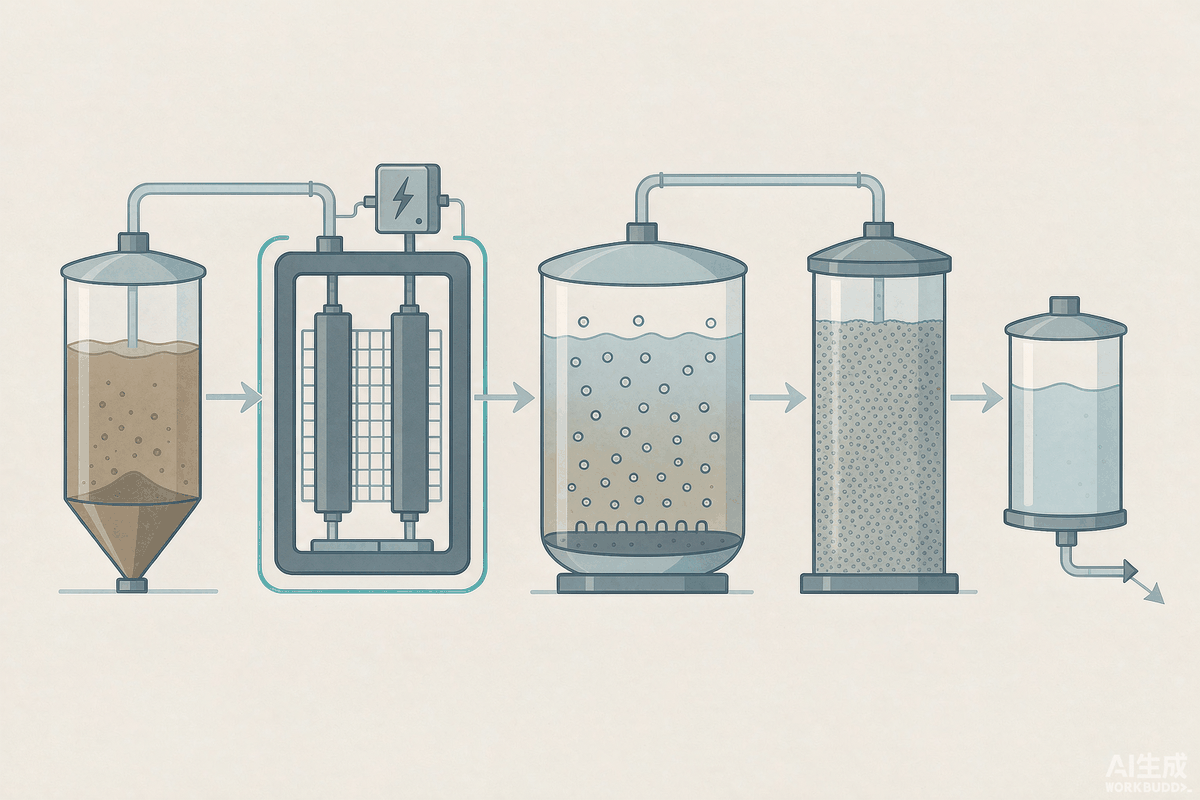
Based on the above inventory and process positioning, electrocatalytic oxidation (BDD/DSA) is suitable for: ① Pretreatment of high-salinity refractory industrial wastewater (improving B/C); ② Volume reduction of membrane concentrate/RO brine (protecting membranes and extending service life); ③ Final polishing treatment (effluent COD ≤ 50 mg/L, B/C > 0.4, toxicity reduction). Not suitable for: ① Low-concentration (< 100 mg/L COD) large-scale municipal sewage — less economical than biological treatment + ozonation; ② Conditions with extremely low Cl⁻ and extremely high COD — the main pathway relies on ·OH but current efficiency is insufficient, requiring large amounts of electrical energy as a fallback; ③ High-hardness wastewater fed directly into BDD — Ca²⁺/Mg²⁺ scaling on the cathode zone progressively consumes effective electrode area, requiring upstream softening or acid addition + polarity reversal.
① BDD single-plate cost is high, and single-plate area is difficult to exceed 0.5 m²; engineered assembled plates have large areas with uneven resistance distribution, requiring "grouped power supply" to control current deviation within ±8% (verified in Liaoning Yinuo FCD process).
② DSA outperforms BDD under conditions with Cl⁻ ≥ 3000 mg/L (active chlorine indirect pathway + safer byproduct profile) — do not adopt a "BDD-only" mindset.
③ Polarity reversal (swapping anode and cathode every 10–30 min) significantly inhibits cathode scaling and anode passivation, and is a key parameter for long-term operation (Gaohui Power Supply case).
④ Electrocatalytic oxidation must be preceded by "pretreatment" — grit removal/oil separation/air flotation to remove SS and oil; otherwise, oil film wrapping around the electrodes will directly halve the effective area.
⑤ When coupled with evaporation crystallization, electrocatalysis first reduces COD to ≤ 1000 mg/L, followed by MVR evaporation crystallization, which significantly reduces MVR steam consumption per ton of water and impurity salt rate (coking salt separation case: Na₂SO₄ 97.17%/NaCl 98.62%, impurity salt rate 12.10%, see Articles 2026-08-23 ).
References
- Wang et al. Electrochemical catalytic oxidation treatment of highly saline organic wastewater in coal chemical industry. Separation and Purification Technology, 2024. (ScienceDirect S1383586624046690, Ti/RuO₂/IrO₂, j 30 m A/cm², COD 77.3%, SEC 20.6 kWh/kgCOD)
- Turro E, Giannis A, Cossu R et al. Electrochemical oxidation of stabilized landfill leachate on DSA electrodes. Journal of Hazardous Materials, 2011, 190(1-3):460-465. DOI:10.1016/j.jhazmat.2011.03.085 (Ti/IrO₂-RuO₂, j 32 m A/cm², 80℃, COD 90%, SEC 35 kWh/kgCOD)
- Urtiaga A et al. Electrooxidation as post treatment of ultrafiltration effluent in a landfill leachate MBR treatment plant: Effects of BDD, Pt and DSA anode types. Journal of Hazardous Materials, 2018 (BDD vs 4 DSA comparison, COD 36.5–92%, TOC 31.3–86.8%)
- da Silva S W, Venzke C D, Welter J B et al. Electrooxidation Using Nb/BDD as Post-Treatment of a Reverse Osmosis Concentrate in the Petrochemical Industry. International Journal of Environmental Research and Public Health, 2019, 16(5). (Nb/BDD, petrochemical ROC, TOC 71%, SEC 66.5 kWh/kgCOD)
- Baía A, Lopes A, Nunes M J et al. Removal of Recalcitrant Compounds from Winery Wastewater by Electrochemical Oxidation. Water, 2022, 14(5):750. DOI:10.3390/w14050750 (BDD, winery wastewater, j 300 A/m², 14 h, COD 98.3%, B/C 0.99)
- Ong Y T et al. Electro-oxidation of woodworking wastewater by using boron-doped diamond electrode. International Journal of Environmental Analytical Chemistry, 2022, 102(19):7659-7672. (BDD, woodworking, COD 97%/SEC 779 kWh/kgCOD @ limiting j; optimized j 45 m A/cm² SEC 239 kWh/kgCOD)
- Cañizares P, Paz R, Sáez C et al. Boron-doped diamond anodic treatment of olive mill wastewaters: Statistical analysis, kinetic modeling and biodegradability. Water Research, 2009, 43(17):3999-4009. (BDD, OMW 40000 mg/L, COD 19%, SEC 96 kWh/kgCOD)
- Comninellis C, Chen G (Eds). Electrochemistry for the Environment. Springer 2010. (Classical classification of active/inactive anodes, definition of mineralization current efficiency)
- Sirés I, Brillas E, Oturan M A et al. Electrochemical advanced oxidation processes: today and tomorrow. A review. Environmental Science and Pollution Research, 2014, 21:8336-8367. (EAOP review: EF/PEF/SPEF/BDD)
- Martínez-Huitle C A, Ferro S. Electrochemical oxidation of organic pollutants for the wastewater treatment: direct and indirect processes. Chemical Society Reviews, 2006, 35(12):1324-1340. (Fundamentals of direct vs indirect oxidation mechanisms)
- Kraft A et al. Electrochemical ozone production for swimming pool and spa water treatment—An analysis of actual and theoretical performance. Journal of Solid State Electrochemistry, 2009. (Comparison of instantaneous current efficiency for chlorine evolution: DSA vs BDD)
- [QC2026] Chen et al. Progress, Gaps, and Opportunities in Electrocatalytic Oxidation of Wastewater: A Review. Water Research, 2025. DOI:10.1016/j.watres.2025.125164 (6000+ bibliometrics, KPI standardization protocol for model systems vs real wastewater)
TIANYI TECH · Industrial Water Treatment Technology Series · All data are annotated with public literature and engineering sources; items marked 【To be verified】/【To be supplemented】 require manual review · This article bears no responsibility for unauthorized reproduction
您提供的内容似乎不完整,缺少需要翻译的中文文本。请提供待翻译的中文内容,我将根据术语表为您翻译成地道的英文。