



 Across multiple industries nationwide (rare earth/cobalt smelting, municipal rec
 Pilot-scale to full-scale implementation (from tens to tens of thousands m³/d)
Breakpoint Chlorination: A Chemical Denitrification Method That "Oxidizes Ammonia Nitrogen to Nitrogen Gas" with a Pool of Chlorine
Biological nitrogen removal (nitrification/denitrification, PN/A) relies on microorganisms, while stripping works by "blowing" ammonia away; breakpoint chlorination, by contrast, directly doses chlorine to oxidize ammonia nitrogen into harmless nitrogen gas. It reacts quickly, is unaffected by water temperature, and provides simultaneous disinfection—but it consumes large amounts of chlorine, raises salinity, and requires management of byproducts. Using public data from the Canadian Drinking Water Quality Guidelines, Science Popularization China (Kepu Zhongguo), and the Journal of Environmental Engineering (Huanjing Gongcheng), this article explains the chlorine-to-nitrogen ratio, pH, contact time, and real-world engineering cost accounting in one go.
1. Principle: Multi-step chloramine reactions and the "breakpoint curve"
Chlorine entering water first hydrolyzes to hypochlorous acid (the actual oxidizing species):
Cl₂ + H₂O → HOCl + H⁺ + Cl⁻; HOCl ⇌ H⁺ + OCl⁻ (as pH rises, the OCl⁻ fraction increases; at pH≈7.5 , HOCl:OCl⁻≈1:2).
Hypochlorous acid then reacts stepwise with ammonia nitrogen, sequentially forming three chloramines (combined residual chlorine), ultimately oxidized to nitrogen gas:
- Monochloramine: NH₄⁺ + HOCl → NH₂Cl + H₂O + H⁺;
- Dichloramine: NH₂Cl + HOCl → NHCl₂ + H₂O;
- Trichloramine (NCl₃): NH₂Cl + 2HOCl → NCl₃ + 2H₂O;
- Complete oxidation to N₂: NH₂Cl + 0.5HOCl → 0.5N₂ + 1.5H⁺ + 1.5Cl⁻.
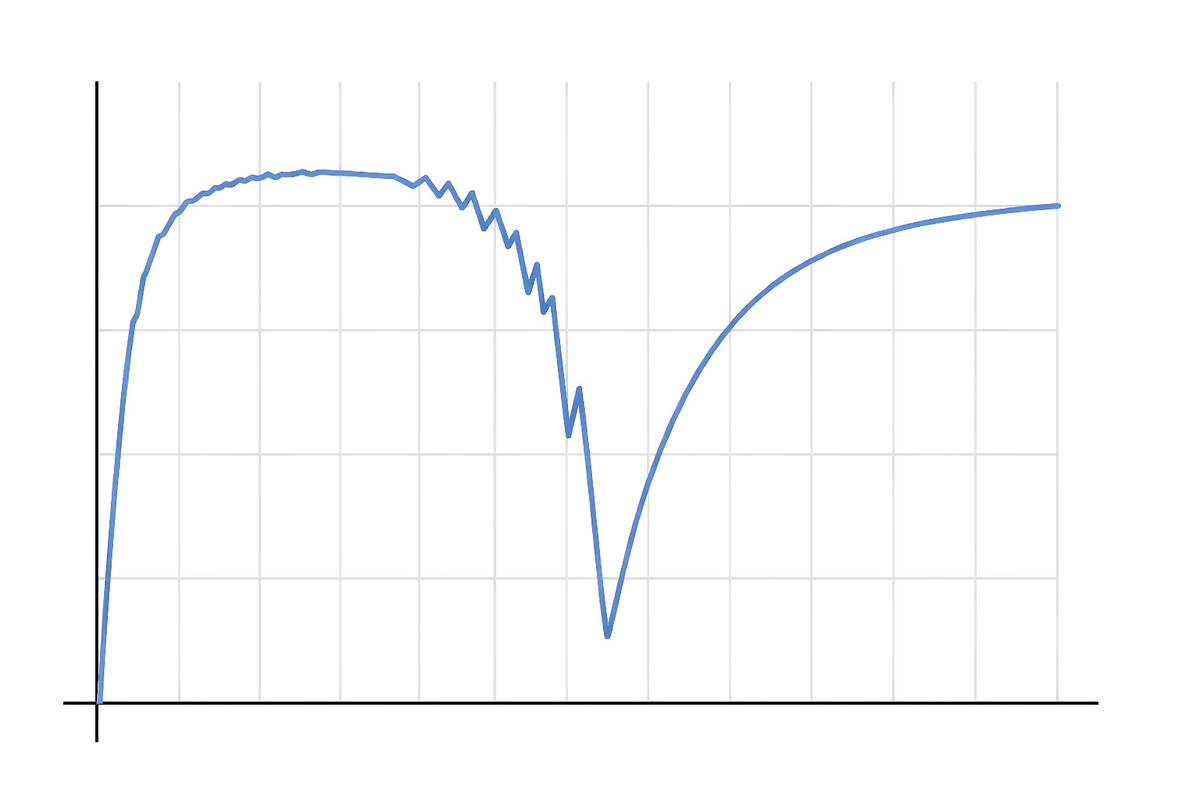
Overall oxidation pathway (expanded by 2 ×): 2NH₄⁺ + 3HOCl → N₂ + 3H₂O + 5H⁺ + 3Cl⁻. According to this equation, the chlorine required to oxidize ammonia nitrogen to nitrogen gas (as Cl₂) has a theoretical mass ratio to ammonia nitrogen of 7.6:1 (i.e., 3 m mol Cl₂ corresponds to 2 m mol NH₄⁺-N, with a mass ratio of 213:28.1≈7.6:1). This is precisely the breakpoint on a "chlorine dose—residual chlorine" curve: below the breakpoint, combined residual chlorine predominates (rising then falling); past the breakpoint (Cl/N≈7.6), residual chlorine is at its minimum and ammonia is almost fully oxidized; further chlorine addition produces free residual chlorine. Both the Canadian drinking water quality technical documents and Science Popularization China reach the same conclusion: the theoretical breakpoint Cl₂:NH₃-N ratio is 7.6:1, while actual engineering practice requires 8:1~10:1 (because reducing substances, pH, and temperature consume chlorine). Within the 8~10:1 range, approximately 85%~90% of the ammonia nitrogen products is N₂, with small amounts converted to NO₃⁻-N and NCl₃, and essentially no N₂O/NO/NO₂ produced.
2. Three core control parameters: the fundamentals of selection and operation
① Chlorine-to-nitrogen ratio (Cl/N)—"how much chlorine to dose"
The theoretical ratio is 7.6:1, but actual operation uses 8:1~10:1; above 10:1 , it enters "breakpoint chlorination disinfection" (predominantly free chlorine—fast disinfection but high chlorine consumption). The empirical chlorine demand decreases with the degree of pretreatment: raw water requires approximately 10~13:1, secondary effluent 9~12:1, and secondary effluent followed by lime clarification and filtration can be reduced to 8~10:1 (per municipal wastewater reuse for circulating cooling water references). For complete reaction, oxidizing 1 mg mg/L of ammonia nitrogen generally requires dosing 9~10 mg mg/L of chlorine gas.
Chemical cost calculation: If influent NH₃-N=30 mg/L, approximately 300 mg/L (0.3 kg/m³) of chlorine is required based on the 10:1 ratio; if NH₃-N=300 mg/L, chlorine consumption reaches 3 kg/m³ — this is precisely why high-concentration wastewater must first undergo stripping or MAP to reduce the load, with breakpoint chlorination serving only as a "final polishing" step. Chlorine prices fluctuate with market conditions; for specific chemical costs per ton of water, it is recommended to calculate based on current liquid chlorine/sodium hypochlorite quotations using the above ratios. Breakpoint chlorination is generally not used as a primary process for high-volume, high-concentration wastewater.
② pH — "Which pathway do byproducts take"
Engineering practice typically adopts pH 6.5~7.5 (near neutral), while authoritative guidelines recommend 7.0~8.0. This is the window where the breakpoint reaction is fastest, but the products are pH-sensitive: at lower pH (<6), nitrogen trichloride NCl₃ readily forms (strong chlorine odor, irritating); at higher pH (>8), nitrate products increase — experimental data show NO₃⁻-N of approximately 0.7 mg/L at pH6 , rising to approximately 10 mg/L at pH8 . Additionally, Cl/N>9 can also induce NCl₃ formation. Therefore, NaOH or lime should be used to adjust alkalinity before and after chlorine dosing.
③ Contact time + alkalinity consumption
Typical contact time is 30~60 min (range 0.5~2 h): when ammonia nitrogen <2 mg/L, chlorine is often dosed past the breakpoint for free chlorine disinfection with 30 min contact time; when ammonia nitrogen >2 mg/L, combined chlorine disinfection can be performed near the peak point with 60 min contact time. Breakpoint chlorination generates acid — oxidizing 1 mg/L NH₃-N requires approximately 14.3 mg/L (design value: 15 mg/L) of alkalinity (as CaCO₃) for neutralization; otherwise, pH drops and the reaction slows down.
III. Real Engineering Cost Accounts (All from Public Literature and Case Studies)
| Industry / Water Quality | Process & Key Operating Conditions | Performance | Source |
|---|---|---|---|
| Non-ferrous metal smelting (high NH₃-N cobalt-bearing wastewater) | Stripping first to remove 70% ammonia nitrogen + breakpoint chlorination as subsequent step; raw water NH₃-N up to thousands of mg/L, high salinity (partially up to 30 g/L), difficult to biodegrade | Effluent NH₃-N <15 mg/L, meeting the national secondary discharge standard; scaled up from pilot test to engineering practice | Song Weifeng et al. Environmental Engineering, 2006, 24(5):12-13 (CSCD core, cited 41) |
| Rare earth smelting wastewater | pH=7, reaction 10~15 min, Cl/NH₄⁺=8:1 optimal; residual chlorine reduced with Na₂SO₃ | NH₄⁺-N removal rate 98%, residual chlorine meets discharge standard | Wastewater nitrogen and phosphorus removal methods (Minyuan Environmental, reported test) |
| Municipal sewage | Breakpoint chlorination for direct ammonia removal | Effluent NH₃-N <0.1 mg/L | Same as above (jxmyhb technical data) |
| Pesticide wastewater (NH₃-N<100 mg/L) | m(Cl₂):m(N)=8.2:1, pH=7, reaction 30 min | Ammonia nitrogen removal rate 80% | Breakpoint chlorination (Baidu Baike · Science China) |
| Municipal reclaimed water reuse in recirculating cooling water | Cooling tower aeration, pH 7.0~8.0, influent NH₃-N 20~50 mg/L, concentration cycles 2 | Circulating water NH₃-N <1 mg/L (ammonia control to prevent copper corrosion, reduced chlorine dosage) | Municipal wastewater reuse in recirculating cooling water (Gongkong.com) |
| Equipment supplier solution (to be verified) | Sodium hypochlorite breakpoint chlorination, applicable to NH₃-N 50~500 mg/L | Removal rate 90%~95%; equipment investment approx. 8~15 万 yuan/100 m³·d | Shandong Zhongsheng Environmental (wateretechs, commercial source, to be verified) |
4. 4 Things That Must Be Monitored Closely During the Project (Including Fact-Checking)
1. Residual Chlorine Must Be Removed
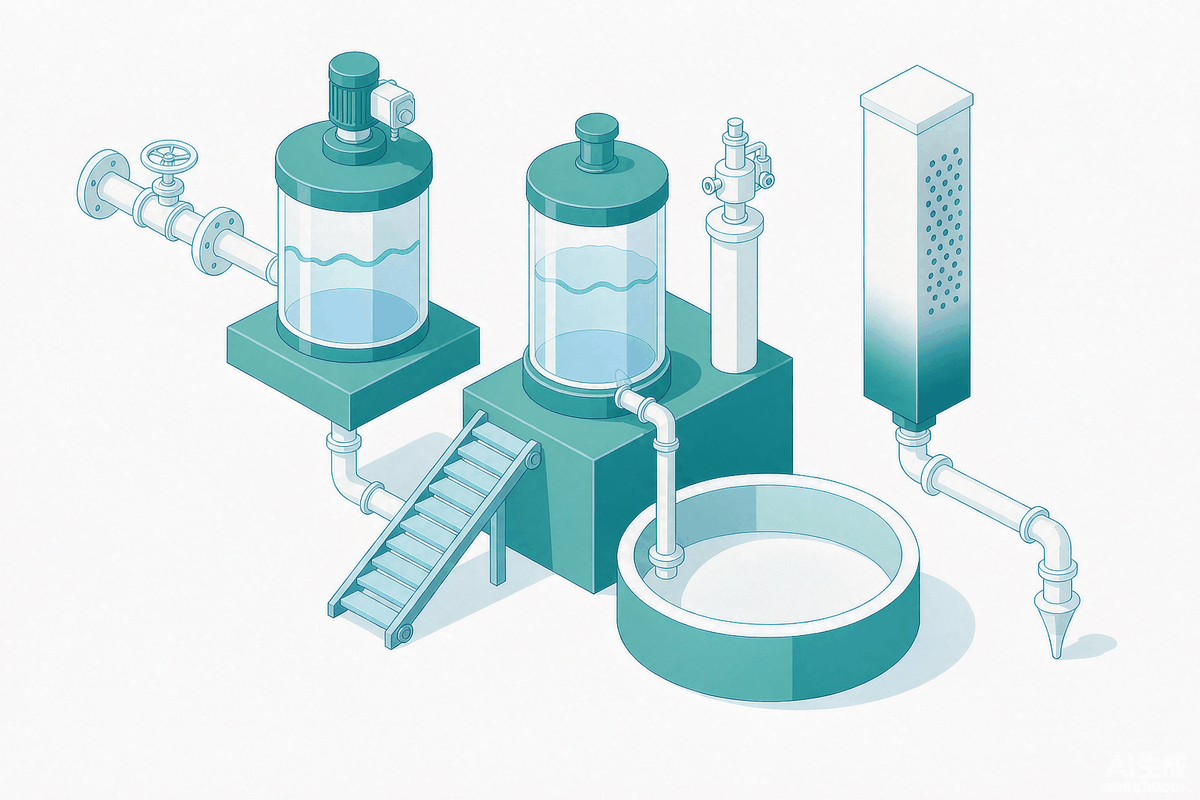
After the breakpoint, the effluent carries free/combined residual chlorine, which must be removed before discharge or reuse: Sulfur dioxide method (SO₂/Cl₂ mass ratio 0.9:1, fast reaction, low cost); or Activated carbon bed filtration (requires 3 bed layer, contact time 30 min, can further reduce 10%~20% ammonia nitrogen, but higher cost). Direct discharge without dechlorination will poison aquatic organisms in the receiving water body.
2. Dual Increase in Alkalinity and TDS
Each oxidation of 1 mg/L NH₃-N generates approximately 4 mol H⁺ (chlorine hydrolysis 1.5 + oxidation 2.5), requiring 14.3~15 mg/L alkalinity for neutralization; meanwhile, chlorine converts to Cl⁻, and if lime/NaOH is used, salts are also introduced, resulting in elevated effluent TDS. For high-salinity wastewater (e.g., cobalt-containing wastewater 30 g/L), the salt balance must be carefully calculated.
3. By-Products: NCl₃, Nitrate, Halogenated Organics
Low pH or Cl/N>9 generates trichloramine NCl₃ (strong chlorine odor, irritates eyes and nose); high pH increases nitrate; if the water contains organic matter, free chlorine will generate trihalomethanes (THMs) and other disinfection by-products (potential carcinogenic risk). Therefore, influent should first undergo removal of organics/reducing substances (S²⁻, Fe²⁺, NO₂⁻, etc.) to reduce "ineffective chlorine consumption" and by-products.
4. Chemical Selection and Safety
Commonly used: liquid chlorine (strong oxidation, requires high-pressure cylinders, stringent safe storage requirements), sodium hypochlorite (available chlorine 12%~14%, unstable, easily decomposes under heat and light, not suitable for long-term storage), bleaching powder/calcium hypochlorite (available chlorine 32%~36% / 80%). Calculate dosage after converting to available chlorine; liquid chlorine systems must be managed as hazardous chemicals.
5. How to Select Among Other Ammonia Nitrogen Removal Processes
| Process | Mechanism | Applicable NH₃-N | Typical Removal Rate | Cost / Constraints | By-products / Risks | Temperature Impact |
|---|---|---|---|---|---|---|
| Breakpoint Chlorination | Chemical oxidation to N₂ | Low concentration (polishing/disinfection) | 90%~100% (optimal 80%~98%) | High chemical cost (9~10 mg Cl₂/mg N) + alkali consumption + TDS increase | NCl₃/NO₃⁻/THMs | Largely unaffected (usable at low temperature) |
| Air Stripping | Physical transfer of NH₃ (ammonia water recoverable) | Medium to high concentration | 85%~95% (single stage) | Alkali consumption (pH≈11) + air-to-water ratio + energy consumption | Requires off-gas treatment/ammonia recovery | Low efficiency at low temperature |
| MAP (Struvite) | Chemical precipitation as magnesium ammonium phosphate (phosphorus recoverable) | Medium concentration | 90%+ | Magnesium/phosphorus chemical cost | Phosphorus-rich sludge; product must meet agricultural standards | Unaffected |
| Sulfur-based Autotrophic Denitrification | Biological (S⁰+NO₃⁻→N₂) | Low C/N | 80%~90% | Low operating cost, slow startup, sulfate accumulation | Sulfate/acidification | Temperature-dependent (optimal at mesophilic range) |
| Partial Nitritation-Anammox | Biological (PN/A) | High ammonia nitrogen | >85% | Low oxygen demand, low carbon requirement, strict control | N₂O (greenhouse gas) | Reduced activity at low temperature |
6. One-Sentence Selection Recommendations
Suitable for: ① Disinfection and ammonia control of reclaimed water / recirculating cooling water (preventing copper corrosion, reducing chlorine dosage); ② Emergency deep ammonia removal during low-temperature, shock-loading, or maintenance transition periods; ③ End-of-pipe ammonia removal for high-salinity, poorly biodegradable wastewater (e.g., cobalt/rare earth smelting where biological treatment is constrained); ④ Reuse scenarios with extremely stringent effluent ammonia-nitrogen requirements (<0.1~1 mg/L).
Not suitable for: Use as the main process for high-concentration, high-flow wastewater — chlorine dosage and operating costs are high, with significant increases in TDS and by-products. The load should first be reduced via stripping or MAP, then breakpoint chlorination is applied as the "final polish" — this is both cost-effective and minimizes by-products.
Most economical application — end of reclaimed water plants: In reclaimed water / water reuse plants, breakpoint chlorination is typically placed after secondary treatment or MBR as an end-of-line unit: it serves both as the final safeguard for NH₃-N (reducing residual ammonia nitrogen from biological effluent to <1 mg/L) and achieves disinfection through free residual chlorine, meeting the ammonia nitrogen and residual chlorine requirements of reuse standards such as GB/T 19923 "The Reuse of Urban Recycling Water — Water Quality Standard for Industrial Uses." At this point, influent ammonia nitrogen has already been reduced to the order of a few mg/L, keeping chlorine consumption and operating costs manageable — this is the most cost-effective application scenario for the process.
References (Verifiable Sources)
- Health Canada. Guidelines for Canadian Drinking Water Quality — Technical Document: Ammonia (Breakpoint chlorination section: theoretical Cl₂:NH₃-N = 7.6:1, actual 8–10:1, optimum pH 7.0–8.0, chlorine demand approximately 8–10 times the ammonia concentration). canada.ca.
- Science Popularization China. Chlorination Breakpoint (Breakpoint Chlorination Method) [DB/OL]. Baidu Baike. Reaction equations, theoretical 7.6:1 ratio, effects of pH/Cl/N on products (N₂/NO₃⁻/NCl₃), residual chlorine removal (SO₂ 0.9:1, activated carbon 3 layers 30 min).
- Song Weifeng, Luo Dingfa, Wang Xiaowu, et al. Experimental Study and Engineering Practice of Breakpoint Chlorination for High NH₃-N Cobalt-Containing Wastewater Treatment[J]. Environmental Engineering, 2006, 24(5):12-13. (CSCD core, cited 41 times; stripping removes 70% + breakpoint chlorination → effluent <15 mg/L)
- Tan Yuhu, Sun Ge, Liu Bonian, et al. Breakpoint Chlorination Treatment of Ammonia-Nitrogen Wastewater and Process Design Scheme[J]. Water Pollution & Treatment, 2015, 3(2):32-36.
- Liu Hengsong, Peng Yuling, Ding Wei. Study on Ammonia Nitrogen Removal from Wastewater by Breakpoint Chlorination[J]. Rural Economy and Science-Technology, 2016, 27(2):147-148.
- Ammonia Nitrogen Removal When Municipal Wastewater is Reused for Recirculating Cooling Water (breakpoint chlorination empirical chlorine demand table, alkali consumption 14.3 mg CaCO₃/mg NH₃-N) [DB/OL]. Gongkong.com.
- Breakpoint Chlorination (chlorine dosage formula y=10.74x+0.964 (free chlorine) / y=4.379x+3.213 (combined chlorine), pesticide wastewater 8.2:1/pH7/30min/80%) [DB/OL]. Baidu Baike·Science Popularization China.
- Nitrogen and Phosphorus Removal Methods for Wastewater (rare earth smelting wastewater pH7/10–15min/98%/Cl:NH₄⁺=8:1, municipal wastewater <0.1 mg/L) [DB/OL]. Minyuan Environmental Protection.
- Breakpoint Chlorination Method (Cl₂:N = 7.6:1, oxidation of 1 mg ammonia nitrogen requires 9–10 mg chlorine, pH 6–7, contact time 0.5–2 h, removal rate 90%–100%) [DB/OL]. Baidu Baike·Science Popularization China.