



 Across multiple industries nationwide (petrochemical / power plant / printing an
 Pilot-scale to full-scale implementation (from tens to hundreds of thousands of
 Ozone-Biological Activated Carbon (O₃-BAC): Twisting "Ozonation + Activated Carbon Adsorption + Biofilm Degradation" into One Rope for Reliable Advanced Treatment of Refractory Industrial Wastewater
Single ozonation often "breaks chains without mineralizing," while activated carbon alone is prone to saturation—O₃-BAC uses ozone to break down large-molecule organics into smaller ones, enhancing biodegradability, then hands off to a biological activated carbon filter for a triple-action of "adsorption + biofilm degradation + in-situ biological regeneration." This article draws on public pilot and engineering data from Environmental Science, China Water & Wastewater, Front. Environ. Sci. Eng., and other sources to spell out parameter windows—dosage, contact time, EBCT, carbon bed height—and real-world removal rates in one go.
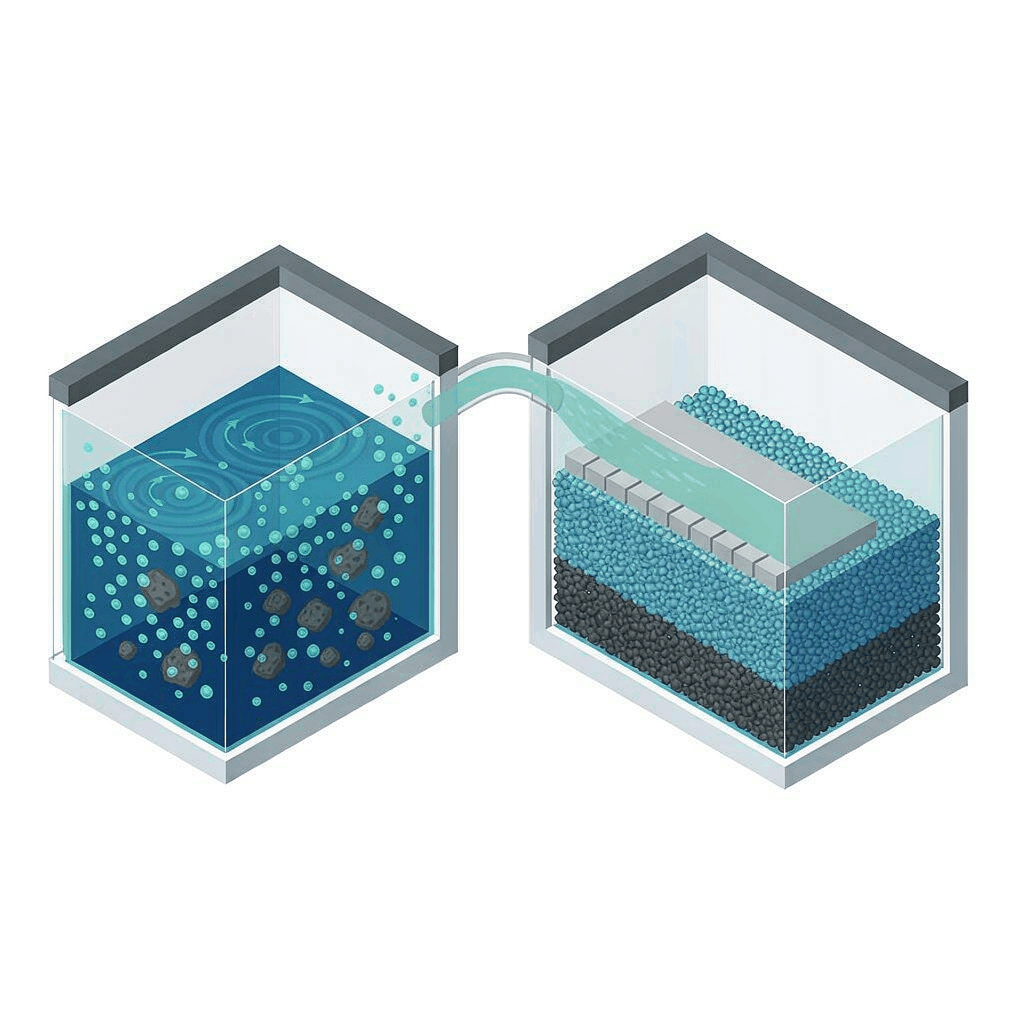
1. Principle: Triple Synergy—Ozone Does the "Breaking," BAC Does the "Consuming" and "Regenerating"
The essence of O₃-BAC lies in "two stages, each with its own role, complementing each other":
① Ozone Pre-oxidation—Shattering Macromolecules and Lifting B/C
Ozone has an oxidation-reduction potential of approximately 2.07 V (direct oxidation), while the hydroxyl radicals (·OH) generated from its decomposition reach 2.8 V (indirect oxidation). It selectively attacks organics containing unsaturated double bonds and aromatic rings, breaking long-chain and cyclic macromolecules into small-molecule fatty acids, raising wastewater biodegradability (B/C) from approximately 0.2 to above 0.4 (as cited in the Henan Chemical Industry 2020 review); meanwhile, residual oxygen from ozone reactions provides an oxygen-rich environment for the downstream BAC carbon bed. Note: ozone's primary role is "chain breaking and structural modification" rather than complete mineralization—absolute COD removal is typically only 20%–31%; the real "bottom-line reduction" happens in the BAC stage.
② BAC Adsorption + Biofilm Degradation + In-situ Biological Regeneration
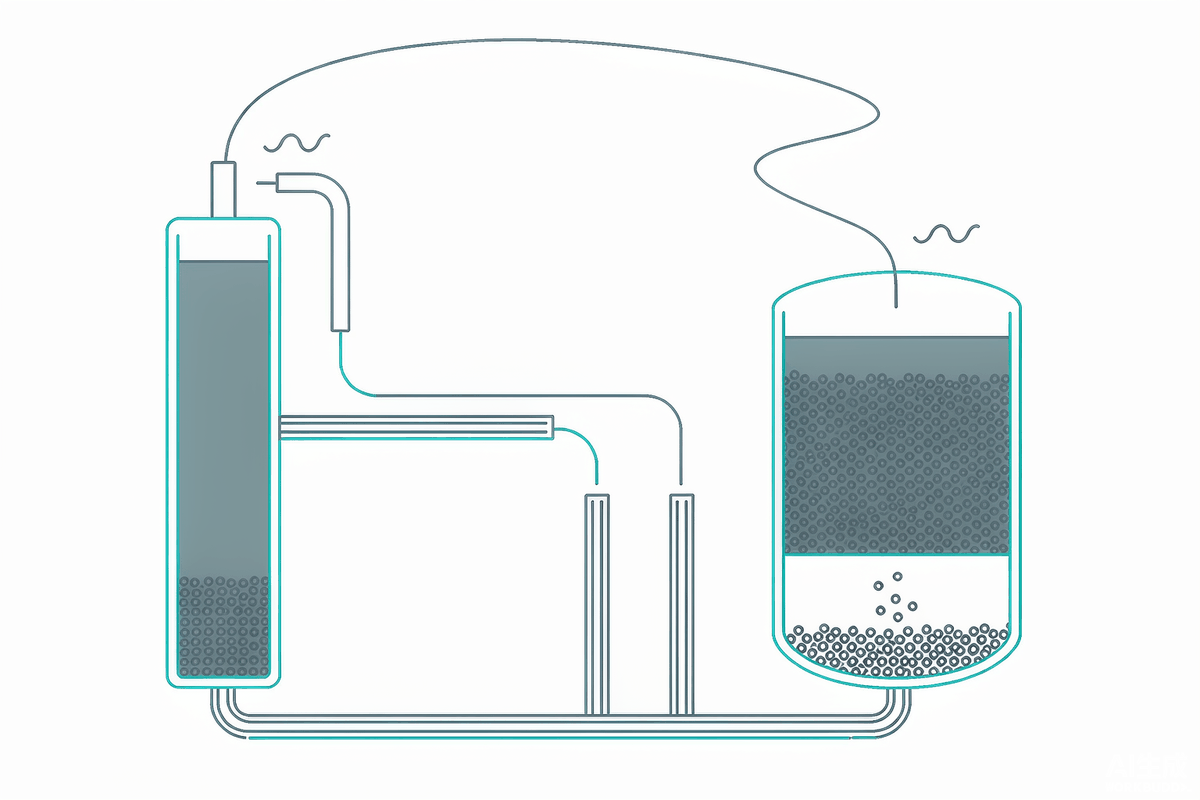
Activated carbon typically has a specific surface area of 800–1500 m²/g (drinking water advanced treatment experience values of 1000+ m²/g). After biofilm attachment, aerobic bacteria such as Bacillus and Pseudomonas colonize the carbon surface, forming a biofilm that ultimately mineralizes adsorbed small-molecule organics into CO₂ and H₂O; more critically, microbial metabolism desorbs surface organics and restores adsorption sites, achieving in-situ biological regeneration—this is the fundamental reason activated carbon life extends from 3–6 months to 2–3 年.
2. Parameter Windows: Ozone Dosage, Contact Time, BAC Filtration Rate, Carbon Bed Height, EBCT
The ranges below are compiled from IntechOpen's "Biological Activated Carbon Treatment Process," Baidu Baike BAC entry design experience values, Kelier/Chuanghuan ozone engineering guidelines, and multiple pilot verifications; given the significant scale differences between industrial wastewater and drinking water advanced treatment, they are labeled separately.
| Parameter | Industrial Wastewater Advanced Treatment | Drinking Water / Reclaimed Water Advanced Treatment | Basis Level |
|---|---|---|---|
| Ozone Dosage | 10–30 mg/L (low concentration 10–20, high concentration 20–30) | 0.5–2.5 mg/L | Engineering guidelines + Pilot-scale verification |
| Ozone Contact Time | 10–20 min (industrial) / Petrochemical pilot 40 min | 20–30 min (contact tower) | Pilot-scale + Engineering guidelines |
| BAC Filtration Rate | 4–8 m/h (industrial advanced treatment) | 8–15 m/h (general) | IntechOpen + Operational experience |
| Carbon Bed Depth | 1.5–3 m (optimal 2.0–2.5 m; <2.0 m requires larger footprint, >2.5 m offers limited improvement and poorer backwashing) | Baidu Baike BAC design experience | |
| Empty Bed Contact Time (EBCT) | 12–30 min (petrochemical effluent pilot reached 1.5 h) | 8–10 min (odor removal) / 12–15 min (CODMn removal) | Drinking water pilot + Industrial pilot |
| Air-to-Water Ratio | 4–6 : 1 (ensuring effluent DO > 1 mg/L) | IntechOpen | |
| Backwash Cycle | 7–15 天 (industrial) | Approx. 4 天 (Huangpu River pilot) | Engineering guidelines + Pilot-scale |
III. Real Engineering Cost Ledger (All from Public Pilot and Engineering Cases)
| Industry / Scale | Key Operating Conditions | Removal Performance (Source) | Reference |
|---|---|---|---|
| Petrochemical wastewater treatment plant effluent / Pilot-scale | O₃ contact 40 min, dosage 20 mg/L; BAC EBCT 1.5 h | Effluent COD 24 mg/L, removal 40.4% (vs. BAC alone +10%); UV254 removal 55.1%; <1 kDa fraction 69%→87% | Environmental Science 2018,39(10):4628-4635 (PKU Core) |
| Petrochemical effluent in North China / Thesis research | O₃ 20 mg/L, 40 min → B/C 0.28; BAC EBCT 1.5 h | O₃ stage COD 20%/UV254 31%; BAC stage COD 30%/UV254 36%; Combined COD 40%/UV254 55%, effluent <30 mg/L; O₃ increased to 30 mg/L under shock loading | napstic Master's Thesis 2019 |
| Industrial wastewater from a power plant / Trial | Optimal ozone 15 min, pH≈8.0, O₃/TOC=3.0; O₃-BAC flow 0.60 L/h | Post-ozonation B/C 0.21, TOC removal 33.95%, COD removal 47.69%; O₃-BAC effluent TOC≈11.30 mg/L (removal 70%), COD≈42 mg/L (removal 68%), turbidity reduced by 87.08% | VIP Journal (cited 4) |
| Daqing Petrochemical wastewater / Engineering trial | O₃ dosage 6 mg/L, contact 30 min, carbon column residence 30 min | COD removal 69%, oils 86%, color 88% | Yao Hong et al. China Water & Wastewater 2003,19(6):39-41 |
| Printing and dyeing wastewater biochemical effluent / Pilot-scale (E-H₂O₂-O₃-BAC) | O₃ 120 g/h, H₂O₂ 0.63 mmol/L, HRT 2.0 h; BAC contact 40 min; continuous 31 天 | COD 56.4%, UV254 89.5%, color 89.3%; operating cost ≈3.35 元/t; influent COD <90→effluent <40, meeting Class V surface water standard | 2024 Core Journal (napstic platform) |
| Printing and dyeing/leather industrial park secondary effluent / 36 m³·d⁻¹ pilot-scale | Optimal O₃ 25 mg/L | O₃ stage COD 17.4%/color 54.3%/TOC 14.7%/UV254 47.5%; COD removal 50% after biofilm 32 天 stabilization; during stable period COD 100→50 mg/L, color 112.5→5 ×, meeting GB 18918-2002 Class I-B | Chen L. Front. Environ. Sci. Eng. 2012, DOI:10.1007/s11783-011-0280-z |
| Waste incineration leachate secondary effluent / Pilot-scale | O₃ dosage 200 mg/L, two-stage series O₃-BAC | COD 75.9%±2.1%, UV254 78.8%±2.9%, color 96.8%±0.9%; effluent COD <100, color <40 ×, meeting GB 16889-2008; single-stage only COD 68.2%, requiring 290 mg/L to achieve two-stage 200 mg/L performance | Environmental Science 2015 |
| Reclaimed water plant in Beijing / 10 万 m³·d⁻¹ (full-scale) | Gradient ozone dosage 12+8 mg/L | COD 50–60→15–20 mg/L (65–75%), ammonia nitrogen 5–8→<0.5 mg/L, color 30–40→<5 ×, meeting Class IV surface water standard; energy consumption 0.45–0.55 kWh kWh/m³ | gqhb168 industry report [to be verified] |
4. Comparison Benchmarks: O₃-BAC vs. Standalone Ozonation / Standalone GAC / O₃-BAF / RO
| Comparison Item | Ozonation Alone | Activated Carbon (GAC) Adsorption Alone | O₃-BAF | O₃-BAC (This Paper) |
|---|---|---|---|---|
| Core Mechanism | Chemical oxidation for chain cleavage | Physical adsorption | Ozone + ceramsite biofilm | Ozone + activated carbon adsorption + biofilm |
| Effect on Refractory COD | Chain cleavage and restructuring, limited mineralization | Rapid adsorption saturation, prone to exhaustion | Primarily biodegradation | Triple safeguard: oxidation + adsorption + degradation |
| Activated Carbon/Media Lifespan | — | 3–6 months | Semi-permanent (no adsorption saturation) | 2–3 年 (biological regeneration) |
| Bromate Risk | Prone to exceedance in bromide-containing wastewater | None | Moderate | Lower (ozone dosage reduced by 30–40%) |
| Desalination Capacity | None | None | None | None (requires downstream UF/RO for desalination) |
O₃-BAC and RO operate at different levels: the former removes organic matter, color, odor, and trace emerging contaminants (removal rates of 80%–95% for bisphenol A, antibiotics, etc., per industry reports [to be verified]), but does not desalinate; UF+RO must follow for desalination in reuse applications. In practice, O₃-BAC is typically placed after secondary effluent and before RO to first reduce organic load and mitigate membrane fouling.
5. Engineering Reality Checks (5 items — please verify carefully before submission)
6. One-Sentence Selection Recommendations
Suitable for: Advanced removal of refractory organics from secondary effluent/polished effluent, color and odor reduction, pretreatment before reclaimed water/reuse, and control of trace emerging contaminants such as bisphenol A and antibiotics; especially when influent B/C is low (<0.1–0.2) and standalone biological treatment "cannot crack it," O₃-BAC is a highly cost-effective "bottle opener + safety net" combination.
Not suitable for: Scenarios requiring only desalination for reuse (leave to RO/NF), extremely high COD requiring substantial preliminary reduction (anaerobic/aerobic should first bring the load down), or high-salinity streams with no desalination plan. Treating O₃-BAC as a "universal advanced treatment" will be both costly and unable to achieve full removal rates.
References (Real Sources)
- Li Ruozhen, et al. Characteristics and microbial community analysis of O₃-BAC advanced treatment of petrochemical wastewater treatment plant effluent[J]. Environmental Science, 2018, 39(10):4628-4635.
- Dissertation. Enhanced degradation of organic matter in petrochemical wastewater treatment plant effluent by O₃-BAC and system optimization[D]. National Academic Search Platform for Science and Technology Information (napstic), 2019.
- Ozone-biological activated carbon process pilot test for industrial wastewater from a power plant (removal of refractory organic matter). VIP Journal Database (cited 4 times).
- Yao Hong, Ma Fang, Li Guibai, et al. Advanced treatment of petrochemical wastewater by ozone-biological activated carbon process[J]. China Water & Wastewater, 2003, 19(6):39-41.
- Application research on advanced treatment of printing and dyeing wastewater based on E-H₂O₂-O₃ oxidation—BAC filter process[J]. 2024 Core Journal (National Academic Platform for Science and Technology Information, napstic).
- Chen L, et al. Effects and Mechanisms of Ozone/Biological Activated Carbon Process for Advanced Treatment of Industrial Park Wastewater. Front. Environ. Sci. Eng., 2012, DOI:10.1007/s11783-011-0280-z.
- Comparative study on single-stage and two-stage series ozone-biological activated carbon advanced treatment of landfill leachate[J]. Environmental Science, 2015.
- Li Xuan, Lü Xiwu. Study on removal characteristics of trace organic pollutants in water by O₃-BAC process (pilot test on Huangpu River raw water for drinking water treatment).
- Wang Yaru, Cui Xiaodong, Wang Xinyu. Advances in application of ozone-biological activated carbon technology in advanced water treatment[J]. Henan Chemical Industry, 2020, 37(6):4-6.
- IntechOpen. Biological Activated Carbon Treatment Process for Advanced Water and Wastewater Treatment (BAC design parameters: filtration rate 8–15 m/h, carbon bed depth 1.5–3 m, gas-water ratio 4–6:1).
- Baidu Encyclopedia BAC entry (empirical values for EBCT and carbon bed height design).
- Keli'er/Chuanghuan Ozone. Principles and operational optimization of O₃-BAC combined advanced treatment process (engineering guide for parameter windows, including bromate control and ozone utilization efficiency).