


 Across multiple industries nationwide (coal chemical / fine chemical / pharmaceu
 From bench-scale testing to full-scale engineering applications (wastewater trea
Macroporous Adsorption Resin: Using "Molecular Catchers" to Precisely Capture and Recover Phenols, Dyes, and Antibiotics from Wastewater
Activated carbon can adsorb, but regeneration is troublesome, it tends to pulverize, and recovering the original substances is difficult; ion exchange only recognizes charge. Macroporous adsorption resin sits between the two—it relies on van der Waals forces, π-π stacking, and hydrogen bonding to "physically capture" hydrophobic organic compounds, yet can be easily desorbed and regenerated with ethanol or dilute alkali, and can even recover phenols, dyes, and pesticides directly as raw materials. This article draws on the resin adsorption process pioneered by Academician Zhang Quanxing's team, along with multiple peer-reviewed/industrial plant data sets, to explain the mechanisms, resin selection, and engineering economics in one go.
1. Principles: Predominantly physical adsorption, achieving reversible capture through "hydrophilic–hydrophobic balance"
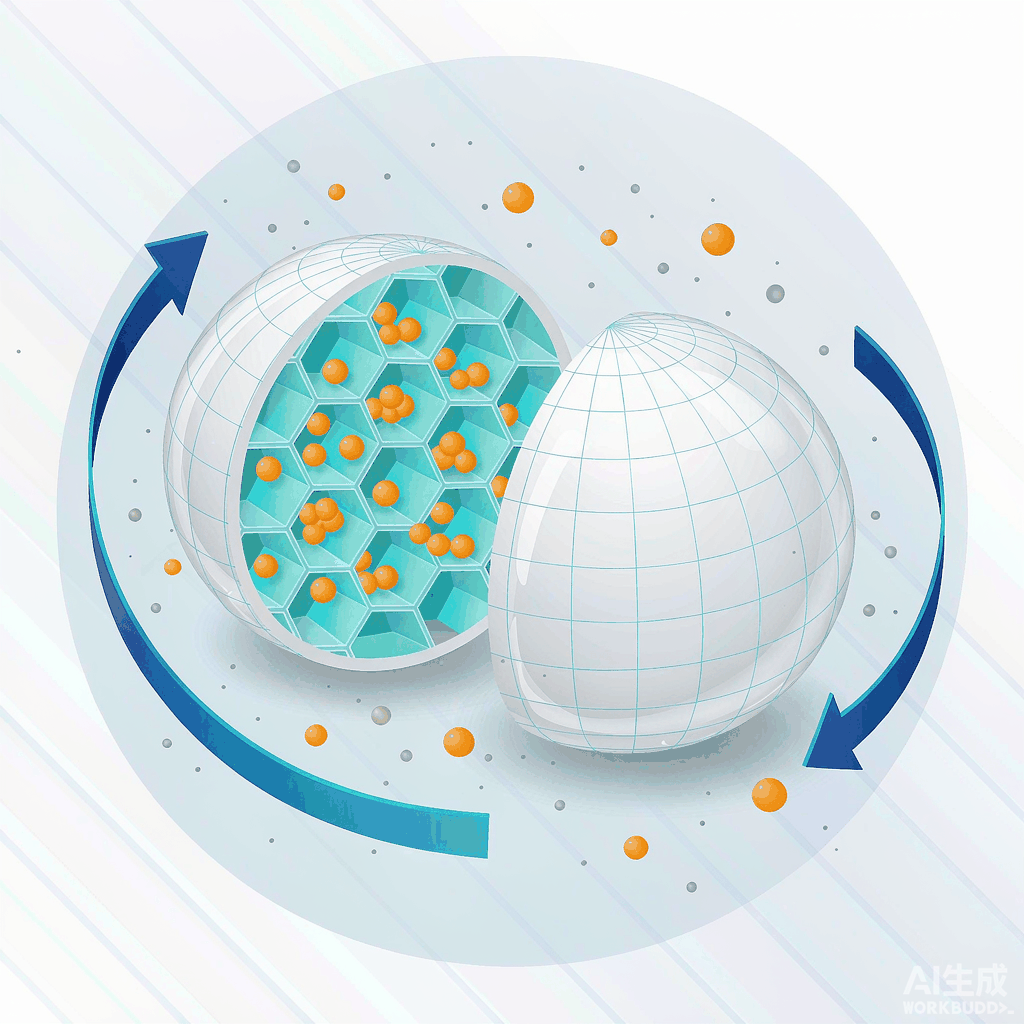
Macroporous adsorption resin does not rely on chemical bonds, but rather on three types of weak interactions to "anchor" target compounds onto the pore surface:
- Van der Waals forces + π-π stacking: Most effective for non-ionic aromatic compounds (phenols, anilines, dyes, pesticide intermediates)—the stronger the hydrophobicity, the larger the molecule, and the easier π-π interaction with the resin matrix, the stronger the adsorption;
- Hydrogen bonding: Provides additional capture force for weakly polar molecules containing —OH, —NH, or —COOH groups (e.g., p-nitrophenol, certain antibiotics);
- Pore sieving: The graded pore design (microporous–mesoporous–macroporous) allows the resin to preferentially adsorb organic compounds within a specific molecular weight range (e.g., 500–5000 Da)—this is the source of "selectivity."
The key point lies in reversible desorption: by altering the hydrophilic–hydrophobic balance of the system, adsorption is reversed. Neutral hydrophobic organics are eluted and desorbed by rinsing with organic solvents such as ethanol/methanol/acetone; weakly acidic compounds like phenols are desorbed with dilute alkali (NaOH) which converts the molecules into hydrophilic sodium phenolate, and the concentrated stream can be sent to an acidification stage to recover phenol. Precisely because it "captures accurately and releases readily," the resin can be recycled for years without the single-use consumption typical of activated carbon.
2. Resin selection: Polarity must "match" the target pollutant
The core of resin selection is polarity matching. The mainstream matrix is styrene–divinylbenzene (St-DVB), further classified into three grades by surface polarity:
- Non-polar (e.g., AB-8, H-103, XAD-4): Relies on hydrophobic interactions, specifically targeting non-ionic hydrophobic aromatics—phenol, aniline, anthraquinone/azo dye intermediates, pesticides—the first choice for phenol-containing and dye wastewater.
- Weakly polar/nitrogen-containing weak base (e.g., NDA-150, D301): Contains amide or tertiary amine groups, providing hydrogen bonding plus weak ionic interactions for phenols and weakly acidic organics, suitable for polar pollutants and antibiotics that are difficult to desorb.
- Strongly polar/chelating type: Exhibits specificity for certain functional groups (e.g., aminophosphonic acid chelating nickel, chromium), already applied in deep heavy metal removal [commercial source, to be verified].
Specific surface area and pore size distribution determine capacity: non-polar resins typically have specific surface areas ≥950 m²/g, with phenol selectivity up to 90%; polar resins push saturated adsorption capacity for p-nitrophenol to the 250 mg/g level through hydrogen bonding. Incorrect selection leads to the awkward situation of "incomplete adsorption and failed desorption," so bench-scale testing to establish the resin–pollutant–desorbent three-way match is essential before equipment installation.
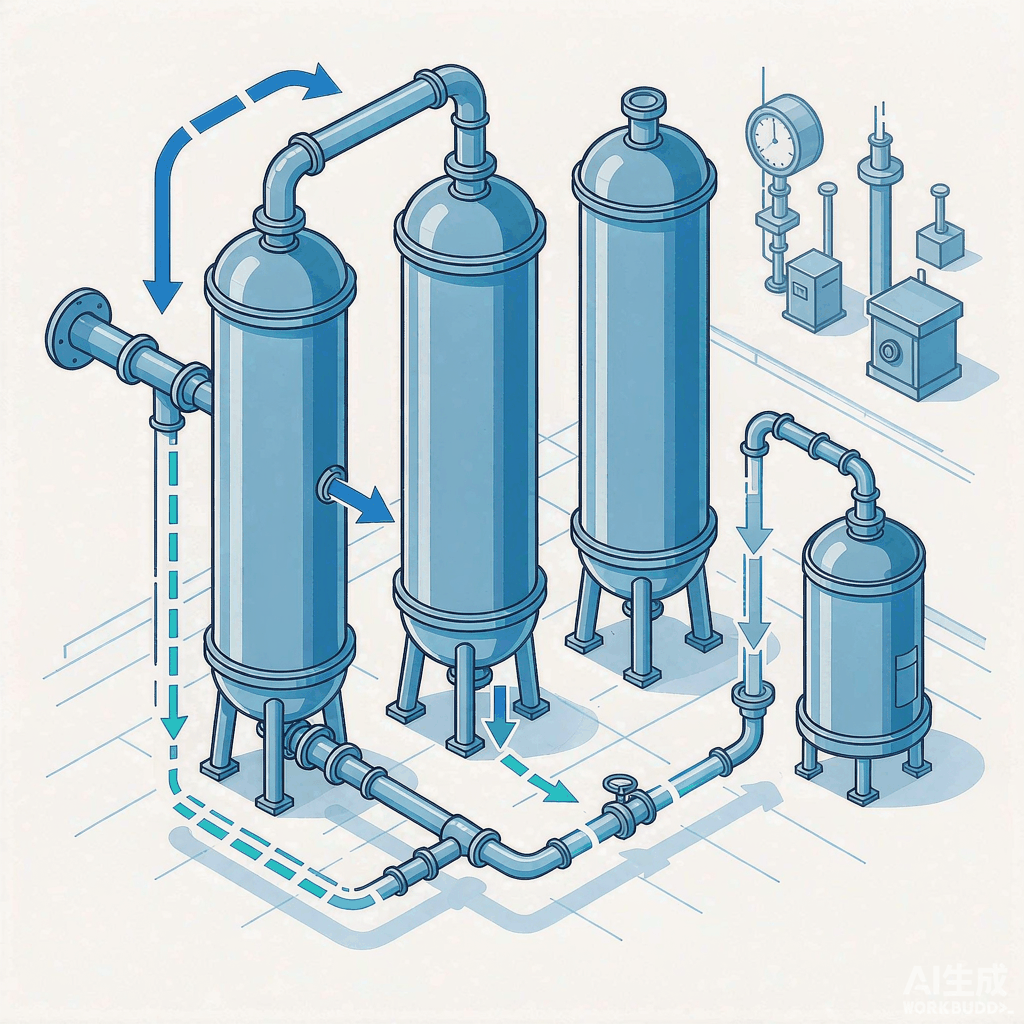
Within the entire process chain, macroporous resin typically occupies the position of "advanced polishing + recovery" after biological treatment and before membrane separation: for example, one printing and dyeing process is "Hydrolysis Acidification + Aerobic + Sand Filtration + Resin Fixed Bed" (see CN103043857A), where biological treatment consumes the readily degradable COD, and the resin specifically captures the recalcitrant aromatic/dye compounds; if the downstream effluent is to be reused, UF/RO desalination is then connected. It is not suitable as a primary removal unit, but rather upgrades "compliance discharge" into a value-added step of "compliance + raw material recovery."
III. Real-World Engineering Cost Accounting (Peer-Reviewed + Industrial Installations, Each Item Sourced)
| Wastewater / Scale | Resin & Key Operating Conditions | Performance (Removal / Recovery) | Source |
|---|---|---|---|
| High-concentration phenolic wastewater containing Glauber's salt (phenol plant using sulfonation-alkali fusion process, phenol 10000–20000 mg/L, pH 1–2) | H-103 dual columns in series, flow rate 3–6 BV/h, treating 6000–15000 mg/L of phenol for 10–30 BV | Working adsorption capacity 150–250 mg/ml, adsorption rate >99.95%, effluent phenol 1–5 mg/L; desorption rate >95% with 1M+0.5M NaOH (40–60℃), phenol recovery >95%, COD removal >70%; 1989 industrial unit at Changzhou No. 2 Chemical Plant | Review of industrial applications of resin adsorption by Zhang Quanxing's team |
| Sodium p-nitrophenolate wastewater (Nanjing Chemical Plant, 5000 t/a, 65 t/d, phenol 3000–9000 mg/L) | CHA-101 resin, adsorption at room temperature for 20 BV | Effluent phenol <0.5 mg/L, phenol removal 99.9%, COD removal >95%; desorption with 60–70℃ solvent recovering sodium phenolate >90%, industrial unit in operation for 10+ years | Jiangsu Institute of Petrochemical Technology industrial application (cited in review) |
| p-Nitrophenol production wastewater (C₀=2643 mg/L) | NDA-150 novel resin, Langmuir fitting | Maximum adsorption capacity 125.3 mg/g, saturated adsorption capacity 254.9 mg/g, breakthrough volume 41 BV, desorption rate 98.1% with 10 BV desorbent, regeneration rate >90% after 6 cycles | Study on treatment of p-nitrophenol production wastewater with novel macroporous resin (peer-reviewed) |
| Phenol simulated wastewater (C₀=1000 mg/L) | H-103 resin, pH=4, 25℃ | Equilibrium reached at 20 min, Langmuir Qm=103.64 mg/g; dynamic optimal treatment of 32 BV at 4 BV/h; rapid and complete desorption with 70% ethanol at 4 BV/1.5 BV/h | Can. J. Chem. Eng. (doi:10.1002/cjce.20289) |
| Phenol wastewater | XDA-200 resin, optimal pH=6.4, 298K | Static equilibrium adsorption capacity 277 mg/g; one-step desorption rate 82.8% with 0.5 m mol/L NaOH | Water Treatment Technology, 2008, 34(2) |
| Phenolic wastewater (Changzhou Yongtaixing Chemical) | SD300 resin, 5 cycles of repeated tests | Adsorption capacity up to 100 g/L-R, elution rate 95.7–99.5%, good repeatability | Zhengguang Industrial SD300 application case |
| Nitrobenzene/nitrochlorobenzene wastewater (nitro compounds 639 mg/L) | CHA-111 resin | Adsorption rate >99%, effluent reduced to 5.4 mg/L; desorption with isopropanol >97%, concentrate recovered by distillation | Zhang Quanxing et al., Ion Exchange and Adsorption |
| Printing and dyeing wastewater (hydrolysis + aerobic + sand filtration + resin fixed bed) | St-DVB resin column height 1250 mm, water flow rate 6.25–7.00 m/h, HRT 11–12 min | Backwash every 96 h (5–6 BV/h, 10–20 min), saturated after 280 h of operation; regeneration with 4% NaOH at 12 BV/h rinsing 2–3 h, capacity virtually unaffected; effluent meets Grade A standard | CN103043857A patent |
4. Key Parameter Windows (Baseline from Pilot to Full-Scale Operation)
| Parameter | Typical Range | Engineering Notes |
|---|---|---|
| Space Velocity (SV) | 1–6 BV/h (fixed bed commonly 1–4 BV/h) | Too fast causes premature breakthrough and insufficient adsorption; too slow leads to clogging and large footprint |
| Superficial Velocity | 6–7 m/h (patented value for printing and dyeing) | Converted from BV/h based on column diameter; the two are equivalent |
| Adsorption Temperature | Ambient – 100℃ | Mostly operated at ambient temperature; higher temperature favors desorption |
| Applicable pH | Non-polar: neutral to slightly acidic; phenolics eluted with weak alkali | Alters ionization state of pollutants to regulate adsorption/desorption |
| Desorbent | Ethanol/methanol/acetone (neutral organics); 0.5–5% NaOH/HCl (phenols/acids) | 2–4 BV, usually counter-current rinsing |
| Backwash / Regeneration Cycle | Backwash every 96 h (printing and dyeing); saturation cycle from days to weeks | Depends on influent concentration and loading |
| Working Adsorption Capacity | 100–250 mg/ml or 100–280 mg/g | Depends on resin type and target pollutant |
5. Macroporous Resin vs. Activated Carbon vs. Ion Exchange: Each Plays Its Part
| Dimension | Macroporous Adsorption Resin | Granular/Powdered Activated Carbon (GAC/PAC) | Ion Exchange Resin |
|---|---|---|---|
| Adsorption Mechanism | Van der Waals/π-π/Hydrogen bonding (physical + weak chemical) | Physical pore adsorption (broad-spectrum) | Electrostatic/ion exchange (charge-based) |
| Applicable Targets | Non-ionic/weakly ionized hydrophobic organics (phenols, dyes, pesticides, antibiotics) | Broad-spectrum organics, color, odor | Ionic species (heavy metals, cations/anions) |
| Selectivity | High (screened by pore structure and polarity) | Low (broad-spectrum) | High (charge-based) |
| Regeneration | Desorption with ethanol/dilute alkali/acetone, multiple cycles (3–5 年) | Thermal regeneration 3–5 cycles, high loss | Acid/alkali/salt regeneration |
| Resource Recovery | Direct recovery of original substances (sodium phenolate, dyes) | Difficult to recover original substances | Recovery of ions (often requires further treatment) |
| Service Life | 3–5 年 | 1–2 年 (prone to pulverization) | Several years |
| Limitations | No desalination; influent requires oil and suspended solids removal | Uncontrollable pulverization, difficult regeneration | Ionic species only; susceptible to competing ion interference |
6. Engineering Realities (The 6 most common pitfalls on site)
7. Selection Recommendations at a Glance
Suitable for: Organic wastewater containing phenols/aromatics/dyes/pesticides/antibiotics that is recalcitrant to biological treatment yet contains recoverable value — particularly scenarios requiring discharge standard upgrades (Class 1A/special discharge limits), advanced pretreatment for reclaimed water reuse, and "waste-treats-waste" resource recovery. Industrial installations have been validated across flow rates from tens to tens of thousands of m³/a.
Not suitable for: High-salinity inorganic wastewater, or wastewater dominated by readily biodegradable small molecules with no recoverable value — direct biological treatment or activated carbon is more economical in those cases. Reserve macroporous resin for the hard requirement of "deep removal + preferably recovering something of value."
References (Verifiable Sources)
- Zhang Quanxing, Chen Jinlong, Xu Zhaoyi, et al. Treatment of toxic organic chemical wastewater by resin adsorption and its resource recovery[J]. Polymer Bulletin, 2005(4):116-121.
- Study on adsorption characteristic of macroporous resin to phenol in wastewater. Can. J. Chem. Eng. (doi:10.1002/cjce.20289).
- Adsorption performance of macroporous resin for phenol in organic wastewater[J]. Water Treatment Technology, 2008, 34(2):24-27.
- Treatment of p-nitrophenol production wastewater using novel macroporous resin (NDA-150, peer-reviewed abstract).
- Treatment of industrial wastewater containing p-nitrophenol by resin adsorption (CHA-111, Ion Exchange and Adsorption/review citation).
- Treatment of sodium p-nitrophenolate wastewater by resin adsorption[J]. Ion Exchange and Adsorption, 1989, 5(2):95-101 (Zhang Quanxing et al.).
- A method and apparatus for treating printing and dyeing wastewater using macroporous adsorption resin. Chinese Patent CN103043857A.
- Application of macroporous resin in high-concentration organic wastewater treatment (including industrial case review of high-salinity phenolic wastewater with mirabilite).
- Zhengguang Industrial SD300 macroporous adsorption resin — phenolic wastewater application case.
- Mitsubishi DIAION HP20 macroporous adsorption resin — chemical wastewater retrofit project case (kshuiye.com, commercial source, to be verified).