



 Across multiple industries nationwide (petrochemical / petroleum / pharmaceutica
 Pilot-scale to full-scale implementation (10 to 32,000 m³/d)
Photo-Fenton: Adding "a Beam of Light" to Fenton — Let Iron Recycle Itself, Making Refractory Industrial Wastewater Easy to Treat
Classic Fenton chemistry relies on Fe²⁺ to split H₂O₂ into ·OH radicals, but the reaction rapidly converts Fe²⁺ to Fe³⁺, and Fe³⁺ catalyzes H₂O₂ at a rate over a thousand times slower—iron "stuck" as Fe³⁺ becomes the rate-limiting step. The ingenuity of Photo-Fenton is introducing a beam of UV or sunlight to photoreduce Fe³⁺ back to Fe²⁺, allowing the iron ion to cycle and regenerate without being consumed. This article draws on published literature and real engineering cost data to lay out the mechanisms, quantum yields, parameter windows, and engineering realities in plain terms.
1. Mechanisms: Fenton Reaction + Three Photochemical Pathways
The initiation step of classic Fenton is extremely fast:
Fe²⁺ + H₂O₂ → Fe³⁺ + OH⁻ + ·OH (k ≈ 40–80 L·mol⁻¹·s⁻¹)
But the reaction between Fe³⁺ and H₂O₂ is nearly four orders of magnitude slower (k ≈ 0.002–0.01 L·mol⁻¹·s⁻¹), so iron "settles" as Fe³⁺ and the system quickly deactivates—this is the root cause of iron sludge and chemical consumption in dark Fenton. Light allows the following three reactions to take over (Pignatello et al., 2006; Ruppert et al., 1993):
- Photoreduction of Fe³⁺ (main pathway): In weakly acidic water at pH 2–3 , the photoactive species is Fe(OH)²⁺, which upon light absorption cleaves to produce ·OH and regenerates Fe²⁺:
Fe(OH)²⁺ + hν → Fe²⁺ + ·OH - Direct photolysis of H₂O₂: Under short-wavelength UV (λ < 300 nm), H₂O₂ is directly split into two ·OH radicals, providing an additional radical source independent of the iron cycle.
- Photolysis of iron-carboxylate complexes: When Fe³⁺ is complexed with oxalic acid, citric acid, etc. (i.e., "photo-Fenton-like" systems), the absorption band red-shifts into visible light, enabling efficient cycling even under sunlight.
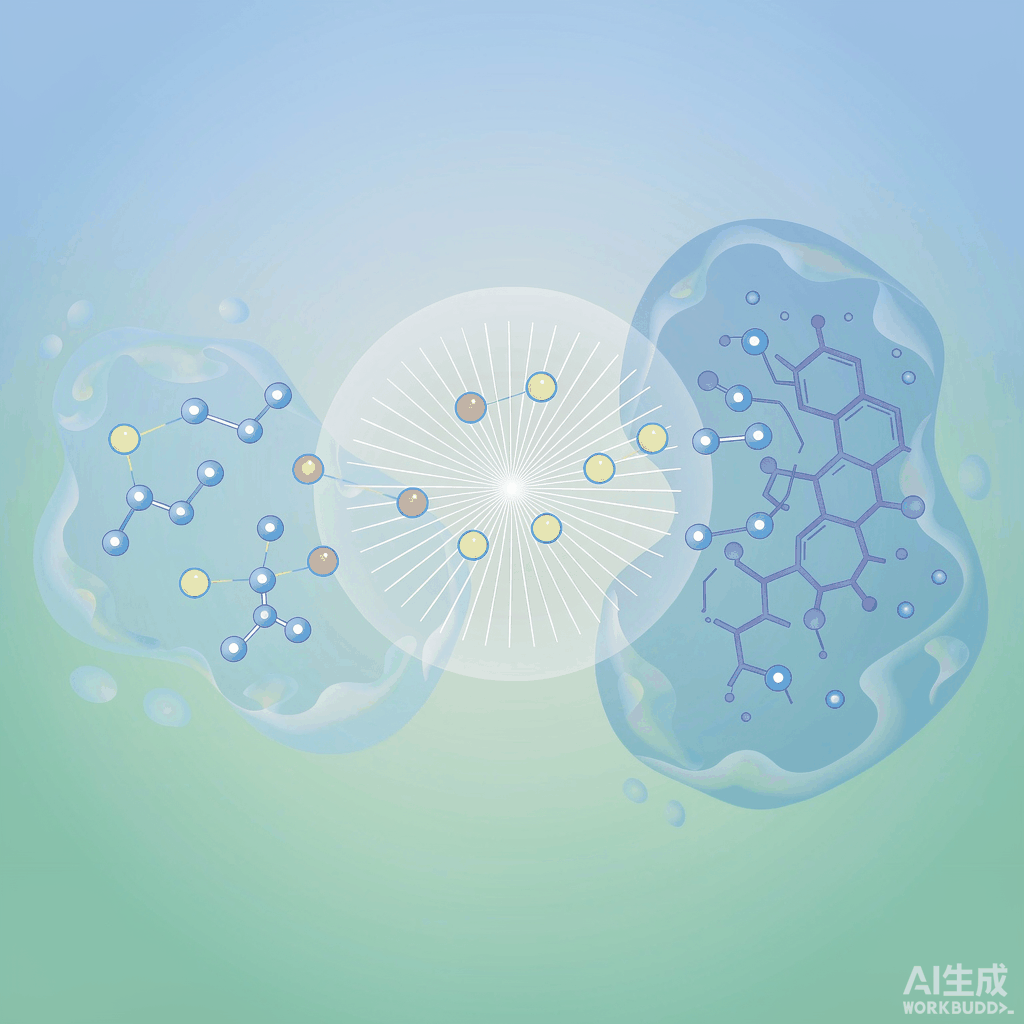
Quantum yield is the metric for "how many ·OH radicals are produced per photon absorbed." The quantum yield of ·OH from Fe(OH)²⁺ photolysis is approximately φ = 0.14 @313 nm, dropping to 0.017 @360 nm (Faust & Hoigné, 1990)—the shorter the wavelength, the higher the efficiency, which is precisely why UV lamps (254/365 nm) outperform ordinary visible light. Meanwhile, ferrioxalate complexes reach φ ≈ 1 at 436 nm (SciELO, 2025), which is why solar energy + complexing agents can push the working pH to 5–6.5, relying on a fundamentally different absorption mechanism.
2. Four Core Parameter Windows: Light Source, pH, Iron, Hydrogen Peroxide
① Light Source—UV Lamp or Sunlight
Artificial light sources predominantly use 254 nm (germicidal/mercury lamps) or 365 nm (blacklight/LED) UV, with short wavelengths being most efficient; solar Photo-Fenton employs Compound Parabolic Collector (CPC) trough concentrators, most economical within the "sun belt" (latitudes ±35°). The light source only supplies photons and does not directly consume chemicals, so the OPEX savings in Photo-Fenton come primarily from "reduced iron dosing."
② pH—Textbooks Say 2.8–3.2, But Don't Be Dogmatic
The optimal pH for the homogeneous Fe²⁺/Fe³⁺ system is indeed 2.8–3.2 (where iron exists as Fe(OH)²⁺ and H₂O₂ does not undergo excessively rapid non-productive decomposition). However, when oxalic acid/citric acid complexation is introduced, the operating pH can be stably extended to 5–6.5 — the subsequent cost-benefit analysis will present a pilot-scale case demonstrating 68.7% COD removal at pH 6.5 . pH selection should be based on "iron speciation + light source," rather than rigidly adhering to 3.
③ Fe²⁺ and ④ H₂O₂ — Excess is a Trap
Both follow the principle of "too little is insufficient, too much acts as a scavenger." Fe²⁺ reacts with ·OH (Fe²⁺ + ·OH → Fe³⁺ + OH⁻), and H₂O₂ does as well (H₂O₂ + ·OH → HO₂· + H₂O); both are "parasitic reactions" that convert the highly reactive ·OH into much weaker peroxyl radicals. Multiple sources consistently indicate that once Fe²⁺ exceeds approximately 0.75 g/L and H₂O₂ exceeds approximately 1–3 mL/L, the removal efficiency plateaus or even declines.
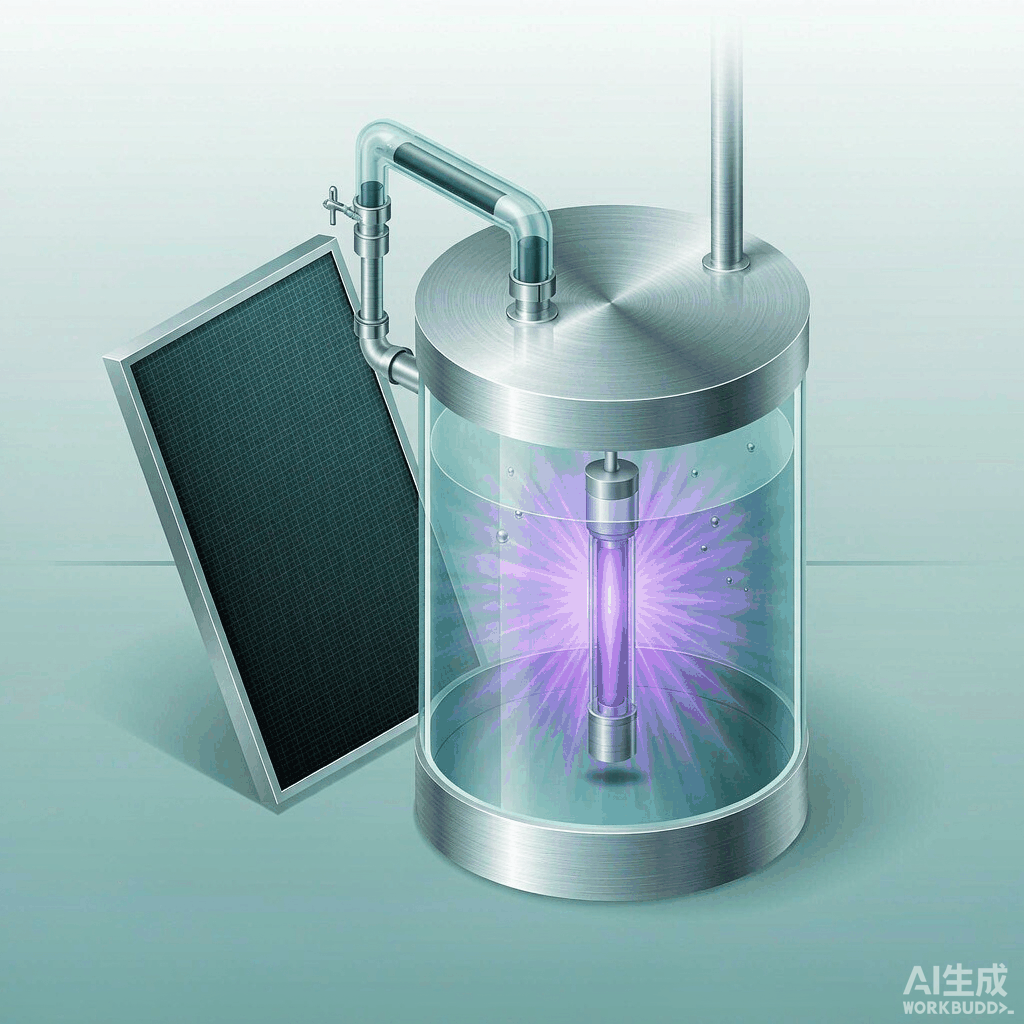
In terms of engineering reactor design, photo-Fenton has the highest requirement for "light transmission": artificial light reactors predominantly employ quartz or high-transmittance UV sleeves to submerge UV lamps directly in the reaction solution (sleeve fouling directly reduces photon flux), or utilize externally irradiated transparent reaction channels; solar CPC trough collectors use parabolic reflectors to concentrate both direct and diffuse light onto the receiver tube, with the tilt angle fixed according to local latitude, requiring virtually no tracking. Regardless of configuration, the principle is to ensure "photons reach the water body" — water with high turbidity, deep color, or high suspended solids will block light first, in which case coagulation-sedimentation pretreatment should be installed upstream, or photo-Fenton should be relocated downstream of biological treatment. Reaction time typically ranges from 30–60 min (faster at bench scale), with residence time ensured through batch operation or plug-flow series configuration, rather than indefinite extension.
III. Real-World Cost-Benefit Analysis (All Data from Public Literature and Engineering Practice)
| Industry / Scale | Photo-Fenton Conditions (Light Source·pH·Dosage·Time) | Removal Performance | Source |
|---|---|---|---|
| Petrochemical Wastewater / Solar Photo-Fenton Pilot | Solar CPC; CCD optimal pH 6.5, H₂O₂ 15.65 mM, Fe²⁺ 2.09 mM; 280 min | COD removal 68.67% ± 2.8% (improved vs. dark Fenton) | Case Stud. Chem. Environ. Eng. (ScienceDirect) 2022, Vinosh Muthukumar et al. |
| Petroleum Wastewater / Hybrid (Photo-Fenton + Reed Adsorption, BBD) | pH 3.8, Fe²⁺ 20 mM, H₂O₂ 400 mM; subsequent adsorption | COD 69.97%, phenol 95.66% (R²=0.97–0.98) | Environ. Technol. Innov. 2021 |
| Printing and Dyeing Wastewater / Batch UV/H₂O₂/Fe²⁺ | pH 3, Fe²⁺ 80 mg/L, H₂O₂ 200 mg/L, 60 W UV, 5–10 min | COD 52%, color 90% | Mahidol / Elsevier (Textile dyeing wastewater photo-oxidation) |
| Landfill Leachate / Photo-Fenton vs. Dark Fenton (RSM) | Fe 195–265 mM, H₂O₂/Fe²⁺ 15.5–20.55, pH 3.75–5.55, oxidation 30 min | COD removal >80% for 17200 mg/L leachate, additional ~10% over dark Fenton; UV-driven Fe regeneration saves ~25% iron | Ghanbarzadeh Lak et al., 2018 (Landfill leachate RSM) |
| Olive Mill Wastewater / Dark vs. Light Comparison (MSc Thesis) | Dark Fenton: 20 g/L H₂O₂ + 7 g/L Fe²⁺ + pH 3.5; Photo-Fenton: 15 g/L H₂O₂ + 7 g/L Fe²⁺ + pH 3.5 | Dark: COD 45%/TPC 82% (40 min); Photo: COD 75%/TPC 86% (60 min reaching COD 80%/TPC 97%) | IPB MSc Thesis (Mansouri, 2023) |
| Cosmetic Wastewater / Photo-Fenton and Photo-Fenton-like | pH 3, H₂O₂ 1 mL/L, Fe²⁺ 0.75 g/L, 40 min | COD 95.5% (Fe²⁺) / 91.4% (Fe³⁺ photo-Fenton-like) | Arabian J. Chem. / Sci. Rep. 2025, doi:10.1038/s41598-025-18131-6 |
| Printing and Dyeing Wastewater / Solar Photo-Fenton Process Optimization | pH 3, Fe²⁺ 0.2 g/L, 40℃, 60 min, H₂O₂ 1 mL/L, 100 L/h | COD 85%, TOC 82%, color 100%; decolorization rate drops to 67.45% at pH 10 | Sci. Rep. 2024, doi:10.1038/s41598-024-58610-w |
| Pharmaceutical Wastewater / Semi-Industrial Solar CPC Pilot | Ferrioxalate complexation, pH 2.7, Fe(II)/TOC>0.5, continuous operation | Max TOC removal 79% within 2 h ([TOC]₀ 20–400 ppm) | Sci. Total Environ. (ScienceDirect) 2016, "Semi-industrial autonomous plant" |
| Humic Acid (Drinking Water NOM) / Solar Photo-Fenton | 3 mM Fe, 10 mM H₂O₂, pH 3 | 10 mg/L HA removal 73% | ACS Omega 2024, doi:10.1021/acsomega.4c10339 |
| China Engineering Cases / Industry Specification T/CECS 20××-2026 [To be verified · Commercial Source] | Photo-Fenton as advanced treatment stage; a pharmaceutical park 30000 m³/d, a viscose fiber plant 32000 m³/d | Pharmaceutical park: influent COD≤110→effluent≤50 mg/L; viscose fiber effluent COD 150→40 mg/L; claimed ·OH yield +30%+, iron salt and sludge −50%+ | Anlis ONYX Industry Specification Review Draft (2026) |
IV. Photo-Fenton vs. Other Advanced Oxidation Processes: Respective Boundaries
| Process | Oxidant / Catalyst | Optimal pH | Key Advantages | Key Limitations |
|---|---|---|---|---|
| Dark Fenton | H₂O₂ + Fe²⁺ | 2.8–3.2 | No light source required, simple equipment, rapid startup | High iron sludge production, rate-limited by Fe³⁺ accumulation, incomplete mineralization |
| Photo-Fenton | H₂O₂ + Fe²⁺ + Light | 2.8–3.2 (can ↑ with complexation) | Iron redox cycling, reduced chemical dosage, deeper mineralization | Requires light transmission and source, still produces iron sludge, hindered by high turbidity |
| Ozonation / Catalytic Ozonation | O₃ (± catalyst) | 6–9 relatively broad | No iron sludge, rapid decolorization, no secondary metal pollution | Bromate risk, limited mineralization, high energy consumption |
| Electro-Fenton | In-situ cathodic H₂O₂ generation + Fe²⁺ | ≈ 3 | Continuous Fe²⁺ generation, easy control, can couple with electrocatalysis | Electrode and energy costs, mass transfer limitations |
| TiO₂ Photocatalysis | Semiconductor + UV/visible light | Relatively broad | No chemical dosing, no metal sludge | Low quantum efficiency, difficult powder recovery, limited at high COD |
| PS-AOP | Persulfate + activator | Relatively broad | Long SO₄·⁻ lifetime, salt tolerance, strong penetration | Sulfate accumulation, toxicity of activators such as Co |
5. One-Sentence Selection Recommendation
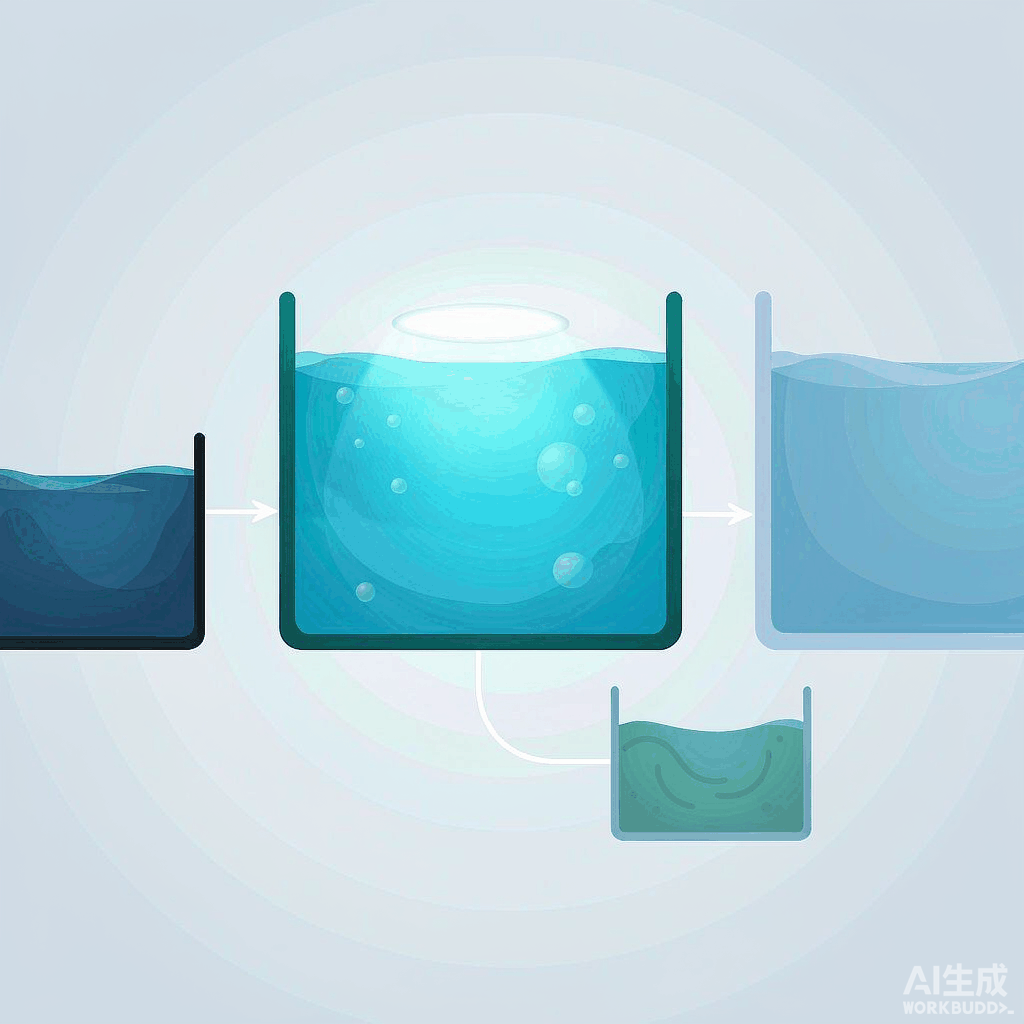
Suitable for: Industrial wastewater containing refractory organics, low-to-medium salinity, and reasonable light transmittance (petrochemical, petroleum, pharmaceutical, printing and dyeing, leachate, chemical industrial parks), especially when dark Fenton iron sludge and chemical consumption become a burden, or when the daily treatment volume is large enough to amortize the cost of light sources/solar land footprint. Solar photo-Fenton offers outstanding economics in the "sun belt" with high-volume scenarios.
Not suitable for: Water with high turbidity/high color that severely blocks light (light cannot penetrate), downstream processes sensitive to iron ions, or high-volume scenarios that purely pursue lowest initial investment with lenient discharge limits — in such cases, dark Fenton or biological treatment is often more economical. Reserve photo-Fenton for the hard requirements of "deep mineralization and iron sludge reduction."
A specific trade-off: for the same printing and dyeing wastewater, if only "color removal to meet standards" is required, dark Fenton or ozonation may be more direct; if COD is refractory, B/C is low, and membrane reuse is required downstream, photo-Fenton offers better long-term OPEX due to iron cycling, deep mineralization, and reduced iron sludge. Conduct bench-scale comparison tests before deciding — don't jump straight in just because "photo-Fenton sounds more advanced."
References (Verifiable Sources)
- Vinosh Muthukumar P, Gopalakrishnan B, Bharathiraja B. Experimental design approach for petrochemical wastewater treatment using solar assisted photo Fenton process. Case Studies in Chemical and Environmental Engineering (ScienceDirect), 2022 (doi:10.1016/j.csce.2022.100284 ).
- Hybrid Photo-Fenton oxidation and biosorption for petroleum wastewater treatment and optimization using Box–Behnken Design. Environmental Technology & Innovation, 2021 (doi:10.1016/j.eti.2021.101482).
- Treatment of textile dyeing wastewater by photo oxidation using UV/H₂O₂/Fe²⁺ reagents. Mahidol University / Elsevier.
- Ghanbarzadeh Lak M, Sabour MR, Ghafari E, Amiri A. Energy consumption and relative efficiency improvement of Photo-Fenton for landfill leachate treatment (RSM). 2018.
- Mansouri R. Technical and economic feasibility of Fenton and photo-Fenton's oxidation for industrial wastewater treatment (olive pomace oil wastewater). MSc Thesis, IPB, 2023 (hdl:10198/30243).
- Ebrahiem E E, et al. Removal of organic pollutants from industrial wastewater by applying photo-Fenton oxidation technology. Arabian Journal of Chemistry / Scientific Reports, 2025, 15:33335 (doi:10.1038/s41598-025-18131-6).
- Novel collector design and optimized photo-Fenton model for sustainable textile wastewater treatment. Scientific Reports, 2024, doi:10.1038/s41598-024-58610-w.
- Solar photo-degradation of a pharmaceutical wastewater effluent in a semi-industrial autonomous plant (ferrioxalate-assisted). Science of The Total Environment (ScienceDirect), 2016 (doi:10.1016/j.scitotenv.2016.03.196).
- Toward the Development and Optimization of a Solar Photo-Fenton Degradation Method for NOM Removal. ACS Omega, 2024, doi:10.1021/acsomega.4c10339.
- Faust B C, Hoigné J. Photolysis of Fe(III)-hydroxy complexes as sources of OH radicals in clouds, fog and rain. Environ. Sci. Technol., 1990, 24:79–89 (quantum yield φ 0.14@313nm / 0.017@360nm).
- Pignatello J J, Oliveros E, MacKay A. Advanced oxidation processes for organic contaminant destruction based on the Fenton reaction and related chemistry. Crit. Rev. Environ. Sci. Technol., 2006, 36:1–84.
- ONYX Environment. "Technical Specification for Photo-Fenton Oxidation Wastewater Treatment Engineering" (T/CECS 20××-2026 draft for review) passed review (industry/commercial source, data [to be verified]).