


 Multiple industries nationwide (electroplating/leather making/chemical/electroni
 Pilot to full-scale engineering (tens to tens of thousands of m³/d)
Nanoscale Zero-Valent Iron (nZVI) Reduction Technology: One Nano Iron Particle Reduces and Detoxifies Hexavalent Chromium, Chlorinated Organics, and Dyes in One Step
Nano zero-valent iron (nZVI) consists of Fe⁰ elemental particles with a size of 1–100 nm, relying on the Fe⁰ bulk to provide electrons, reducing hexavalent chromium to low-toxicity trivalent chromium, dechlorinating chlorinated organics, and reducing nitro/azo dyes to readily biodegradable forms. This article uses real removal data from publicly available peer-reviewed literature to clarify the mechanisms, parameter windows, modification strategies, trade-offs with other reduction methods, and engineering constraints.
Fe⁰ → Fe²⁺ + 2e⁻, with a standard potential of −0.44 V (vs SHE), several orders of magnitude more active than coarse iron filings—this is the key to its ability to "detoxify" at the minute scale.
I. Mechanism: Fe⁰ Donates Electrons, Pollutants Are "Reduced and Detoxified"
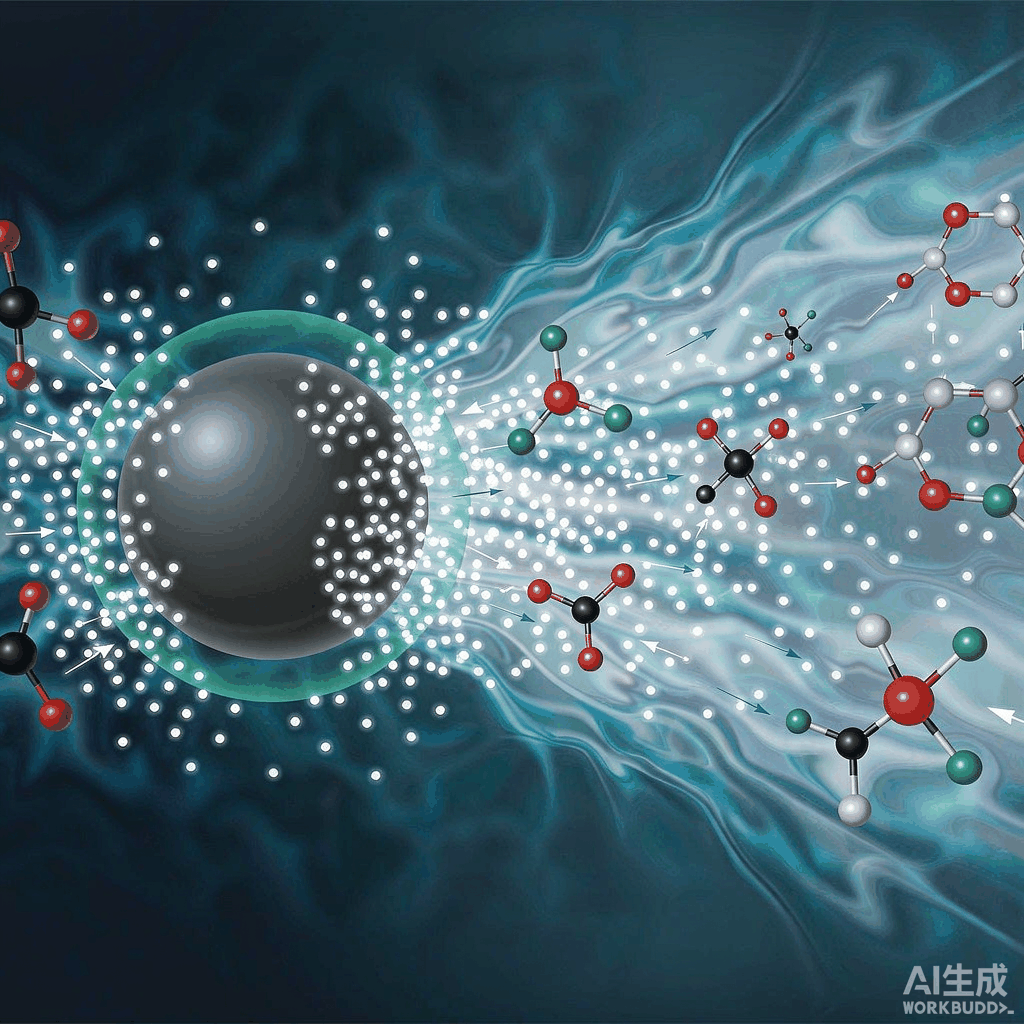
After nZVI is dosed into water, iron continuously dissolves and releases electrons under acidic or near-neutral conditions: Fe⁰ + 2H⁺ → Fe²⁺ + H₂↑. These electrons, together with surface Fe²⁺/Fe³⁺, reduce high-valence or halogenated pollutants into low-toxicity forms that are easy to precipitate or biodegrade. Three typical reactions:
- Hexavalent chromium → trivalent chromium:
Cr₂O₇²⁻ + 3Fe⁰ + 14H⁺ → 2Cr³⁺ + 3Fe²⁺ + 7H₂O, followed byCr³⁺ + 3OH⁻ → Cr(OH)₃↓co-precipitation. The toxicity of Cr(VI) is about 100 times that of Cr(III); reduction is "detoxification." - Dechlorination of chlorinated organics: such as trichloroethylene (TCE) and perchloroethylene (PCE), under Fe/Pd bimetallic catalysis, C–Cl bonds are broken via hydrogenolysis or β-elimination, ultimately producing non-halogenated end products such as ethylene/ethane.
- Nitro/azo reduction: nitrobenzene → aniline, azo dyes → aromatic amines (azo bond cleavage for decolorization), the products' biodegradability is significantly improved, often used as "detoxification pretreatment" before biological treatment.
Mechanism key point: the theoretical molar ratio for Cr(VI) reduction is 1 mol nZVI reducing 1 mol Cr(VI), i.e., theoretical reduction capacity of about 929 mg Cr/g Fe (Su et al., Sustainability 2024 review). However, literature measurements are generally far below this—the review states outright that "few cases achieve satisfactory material utilization," indicating that passivation and mass transfer are the core constraints for engineering application.
II. Key Parameter Windows: Acidity Is the Prerequisite, Dosage Is the Lever
Four knobs affecting nZVI reduction efficiency, highly consistent across public literature:
① pH—almost all high-efficiency data are in the acidic range
Acidic conditions (pH 2–6) are most favorable: low pH inhibits iron ion passivation and promotes Cr(VI) reduction. As pH increases, iron ions rapidly precipitate and coat the particle surface, causing removal efficiency to plummet. Example: functionalized biochar-supported nZVI (NZVI/BBC-0.4) achieves 99.6% Cr(VI) removal at pH 2, 0.45 g/L, 10 min, 33.2% higher than bare nZVI; MCM-41 -stabilized nZVI achieves 84.5% removal at pH 6, 100 mg/L Cr(VI), 0.5 g/L, 60 min.
② Dosage—positively correlated with initial concentration
For initial Cr(VI) 5 / 10 / 20 mg/L, an nZVI dosage of about 0.08 / 0.25 / 0.55 g/L can achieve 99% removal (Chemical Engineering Journal 2015, based on pH/ORP/DO online monitoring). Insufficient dosage leads to incomplete reduction, while excessive dosage causes a surge in iron sludge.
③ Reaction time—minute scale
nZVI reacts extremely fast: most Cr(VI) reduction is completed within 10–90 min; dechlorination of chlorinated organics also mostly occurs at the hour level. Compared with coarse iron filings/micro-electrolysis (often requiring hours to tens of hours), this is the greatest speed advantage of nZVI.
④ Modification Methods—Combating Passivation and Agglomeration
Bare nZVI is prone to agglomeration and oxidative passivation. The four types of modification—supported, bimetallic, sulfidated, and immobilized (see Section 4)—are the main pathways to improve utilization efficiency.
III. Real Data Ledger (All from Publicly Peer-Reviewed Literature)
| Target Pollutants / System | Conditions and Dosing | Removal / Rate | Source |
|---|---|---|---|
| Cr(VI) (chromium-containing wastewater batch) | Initial 5/10/20 mg/L, nZVI 0.08/0.25/0.55 g/L, pH/ORP/DO monitoring | Removal 99% (30–90 min) | Chemical Engineering Journal, 2015 |
| Cr(VI) / Functionalized biochar-supported nZVI (NZVI/BBC-0.4) | 0.45 g/L, pH 2, 10 min | 99.6% (+33.2% vs. bare nZVI), real water >92% | 2026 Journal (functionalized biochar-supported nZVI for Cr(VI) removal, volume/pages [to be supplemented]) |
| Cr(VI) / MCM-41 stabilized nZVI | 100 mg/L, pH 6, 0.5–1.0 g/L, 35℃, 60 min | 84.5%; kobs 0.0168/min | J. Water Reuse Desal., 2012 |
| TCE dechlorination / Fe/Pd alginate immobilized beads | 50 g/L Fe/Pd-alginate (3.7 g Fe/L) | TCE >99.8%; kobs 6.11 h⁻¹; km 1.6 L·h⁻¹·g⁻¹; metal leaching <3% | J. Hazard. Mater., 2010 (doi:10.1016/j.jhazmat.2009.11.145) |
| PCE dechlorination / Pd/Fe bimetallic | Surface-normalized rate (without humic acid) | ksa 33.47±7.21 L/(m²·h) | Water Research, 2005 (doi:10.1016/j.watres.2005.01.005) |
| p-Nitrophenol 4-NP reduction / hydrogel-supported nZVI | 400 mg/L 4-NP, pH 3–9, 45 min | Reduction 95% (pH 5–9 >99%); kobs 0.0885–0.101 min⁻¹ | 2018 Journal (hydrogel-supported nZVI for p-nitrophenol reduction, volume/pages [to be supplemented]) |
| Total chromium / actual electroplating wastewater (BC-nZVI) | Biomass activated carbon-supported nZVI, actual electroplating wastewater | Total Cr removal significantly improved vs. bare nZVI | Water, 2020 (doi:10.3390/w12010089) |
| Cr(VI) + Acid Red 73 / sulfidated biochar-supported nZVI (BC-S-nZVI) | 300 min, continuous column operation | Cr(VI) 99.9% + AR73 96.9%; saturation capacity 87.3/63.7 mg/g; column stable operation 432 h | Langmuir, 2026 (doi:10.1021/acs.langmuir.6c00084) |
IV. Modification Strategies: Four Types of "Anti-Passivation" Additions
1. Supported on Porous Carriers (Biochar / Bentonite / MCM-41 / Alginate)
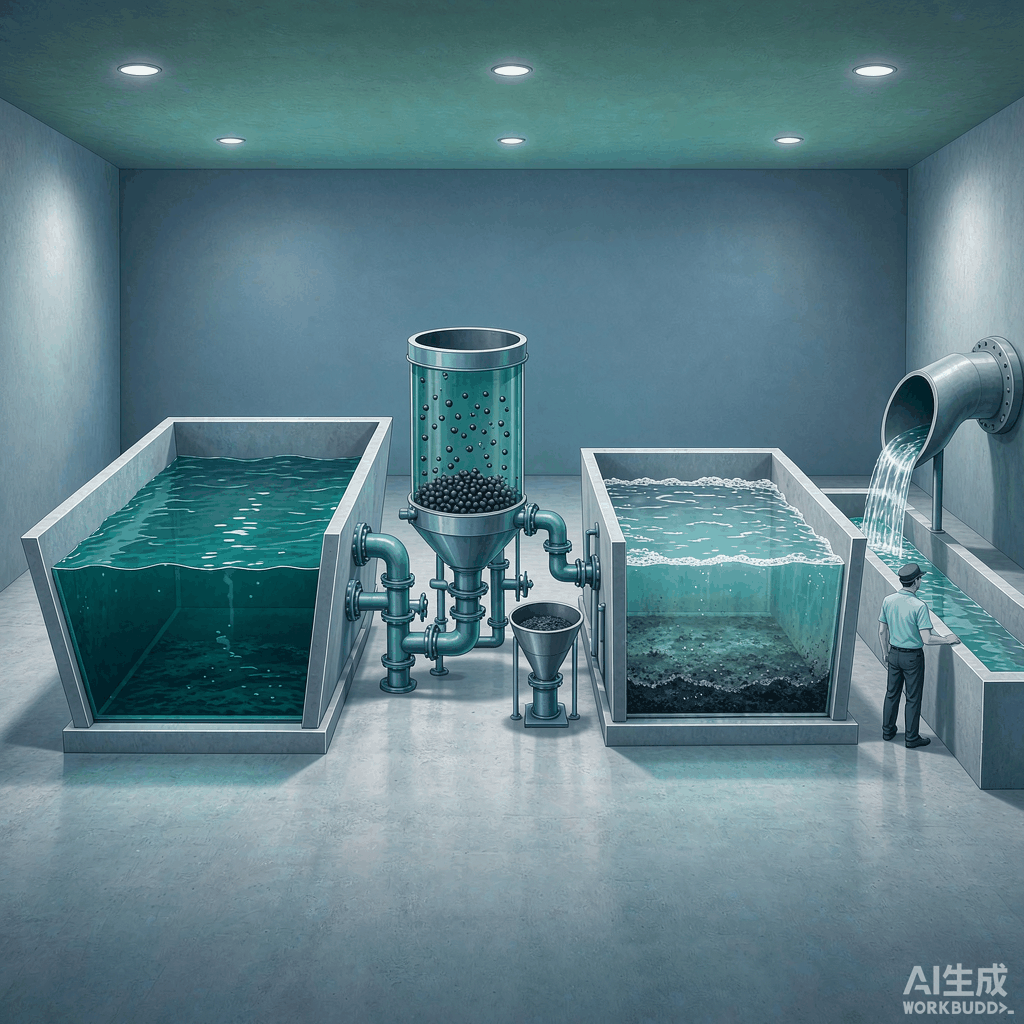
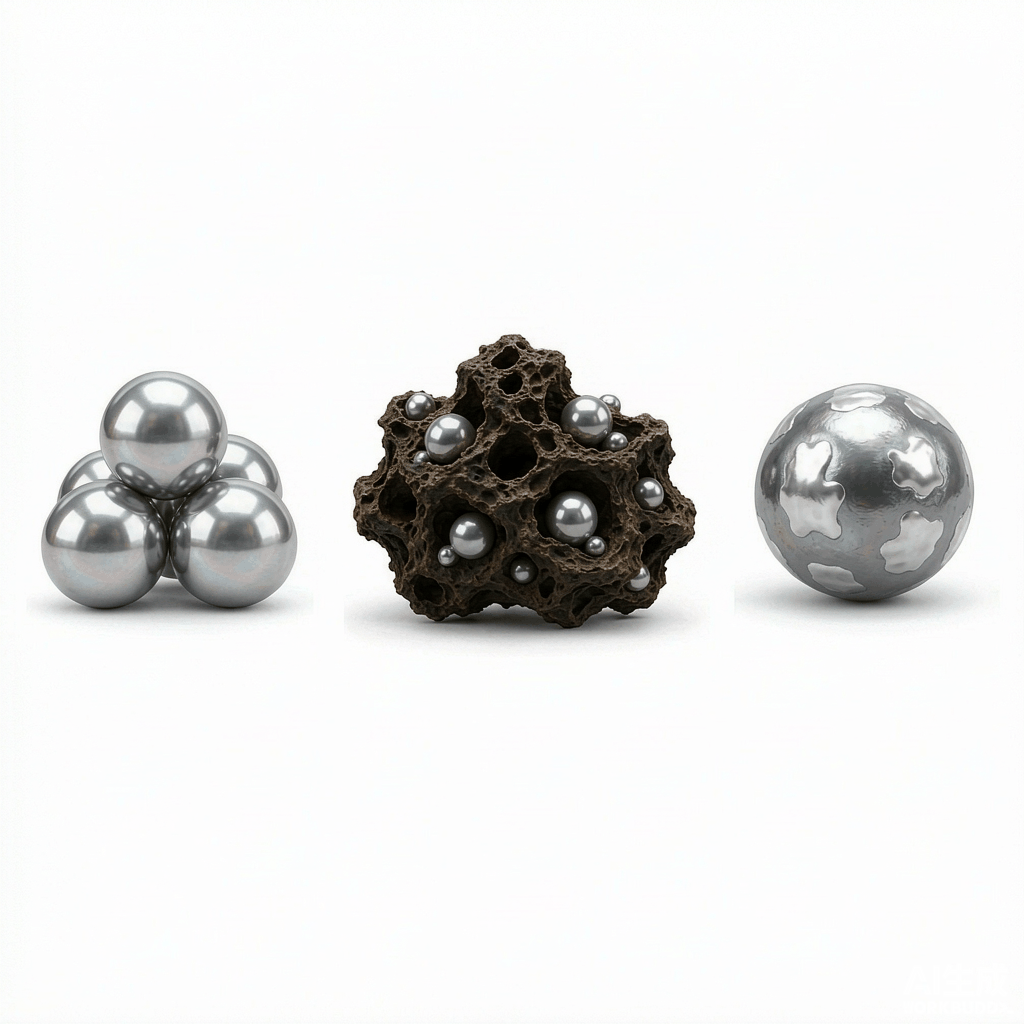
The carrier disperses nano-iron, inhibits agglomeration and oxidation, and facilitates fixed-bed/column continuous operation. Rice straw 400℃ biochar-supported nZVI (mass ratio 4:1) achieves a Cr(VI) adsorption-reduction capacity of approximately 40 mg/g at pH 4 ; sulfidated biochar-supported nZVI (BC-S-nZVI) combines dispersion and catalytic activity, with no decay in continuous column 432 h.
2. Bimetallic (Fe/Pd, Fe/Ni, Fe/Cu, Fe/Ag)
Noble metals such as Pd catalyze H₂ hydrogenation on the surface, boosting the dechlorination rate by orders of magnitude: the surface-normalized TCE dechlorination rate of Fe–Pd is approximately 6800 times that of bare nZVI, and the electron utilization efficiency εₑ increases from 2% to approximately 100% (ES&T 2018, doi:10.1021/acs.est.8b01735). The trade-off is enhanced hydrogen evolution side reactions and higher cost.
3. Sulfidation (S-nZVI)
The surface FeSx layer mitigates agglomeration and oxidation, provides additional active sites, achieves an electron utilization efficiency of approximately 72%, and simultaneously suppresses hydrogen evolution, offering high engineering cost-effectiveness.
4. Immobilization (Hydrogel / Alginate Beads)
Embedding nZVI in a carrier facilitates continuous flow and recovery, allows controllable metal leaching (Fe/Pd-alginate metal leaching <3%), and also reduces the environmental migration risk of nanoparticles.
V. Process Trade-offs with Other Reduction Methods
| Method | Reduction Mechanism | Chemical Dosing/Energy Consumption | Applicable Pollutants | Main Constraints |
|---|---|---|---|---|
| Nano Zero-Valent Iron nZVI | Fe⁰ bulk directly donates electrons | Requires nZVI dosing; generates iron sludge | Cr(VI), chlorinated organics, nitro/azo compounds, some heavy metals | Requires acidic pH; passivation and deactivation; hazardous waste disposal of iron sludge |
| Sulfite Reduction | NaHSO₃ etc. reduces Cr(VI)→Cr(III) followed by precipitation | Requires reducing agent + acid; sludge | Mainly Cr(VI) | pH 2.5–3; requires precise ORP control |
| Iron-Carbon Micro-Electrolysis (Internal Electrolysis) | Iron filings–carbon particles micro-galvanic cell indirect reduction | Packing media dosing, no external chemicals required | Broad-spectrum refractory organics + heavy metals | pH 2–6; compaction and passivation require aeration |
| Electrochemical Reduction | Applied current cathode direct reduction | High power consumption; electrode wear | Low concentration, high-value recovery | Energy consumption and electrode cost |
VI. 5 Hard Truths That Must Be Watched Closely in Engineering
VII. Process Positioning: When to Use nZVI
Suitable for:High-concentration, poorly biodegradable industrial wastewater containing Cr(VI)/chlorinated organics/nitro/azo dyes, as a detoxification pretreatment (converting toxic forms into low-toxicity/readily biodegradable forms), followed by biological treatment; it is also suitable for waste-to-waste treatment (biochar loading, waste biomass carriers).
Not suitable for:Large water volumes where the sole goal is the lowest cost, or where the target is desalination/SS removal (nZVI does not desalinate or remove SS). It is often combined with biological treatment: nZVI reductive detoxification → biological degradation (e.g., nitro→amino is more biodegradable).
References (Real Sources)
- Choi H, et al. Application of pH, ORP, and DO monitoring to evaluate Cr(VI) removal from wastewater by the nZVI process. Chemical Engineering Journal, 2015 (nZVI dosage 0.08/0.25/0.55 g/L corresponding to 5/10/20 mg/L Cr(VI) removal 99%).
- Montesinos V N, et al. Highly efficient removal of Cr(VI) from water with nanoparticulated zerovalent iron: Fe(III)-Cr(III) passive outer layer structure. J. Hazard. Mater., 2014 (pH 3, Fe:Cr molar ratio 3 , 30 min complete conversion; passive layer Raman/XPS characterization).
- Kim H J, et al. Degradation of TCE by nZVI immobilized in alginate bead. J. Hazard. Mater., 2010, 176:1038–1043 (doi:10.1016/j.jhazmat.2009.11.145).
- Wang C B, Zhang W X. Synthesizing nanoscale iron particles for rapid and complete dechlorination of TCE. Environ. Sci. Technol., 1998 (foundational study on Fe/Pd bimetallic dechlorination).
- He F, et al. Dechlorination of excess TCE by bimetallic and sulfidated nZVI. Environ. Sci. Technol., 2018, 52(15):8627–8637 (doi:10.1021/acs.est.8b01735, Fe–Pd rate approximately 6800×, εₑ 2%→100%).
- Mu Y, et al. Synergistic removal of Cr(VI) and Acid Red 73 by biochar-supported sulfidated nZVI. Langmuir, 2026, 42(8):6548–6559 (doi:10.1021/acs.langmuir.6c00084).
- Zhang B, Zhu B H, et al. Nanoscale zero valent iron supported by biomass-activated carbon for total chromium removal from electroplating wastewater. Water, 2020, 12(1):89 (doi:10.3390/w12010089).
- Su Y, et al. From Nano Zero-Valent Iron to Nanocomposite Materials for Sustainable Water Treatment. Sustainability, 2024, 16(7):2728 (doi:10.3390/su16072728, review of theoretical capacity 929 mg/g and utilization rate).
- Lu M, et al. Synthesis of MCM-41 stabilized NZVI and its use in removal of Cr(VI). J. Water Reuse Desal., 2012, 5(2):149 (pH 6, 100 mg/L Cr(VI), 60 min removal 84.5%).
- Wang X, et al. Dechlorination of PCE by palladized iron in the presence of humic acid. Water Research, 2005, 39 (doi:10.1016/j.watres.2005.01.005, ksa 33.47±7.21 L/(m²·h)).
- 2026 Journal. Functionalized biochar-supported nZVI for Cr(VI) removal (NZVI/BBC-0.4, pH 2, 0.45 g/L, 10 min removal 99.6%; volume and pages [to be supplemented]).
- 2018 Journal. Porous semi-IPN temperature-sensitive hydrogel-supported nZVI for reduction of nitrophenol (4-NP reduction 95%, kobs 0.0885–0.101 min⁻¹; volume and pages [to be supplemented]).