


 Nationwide multi-industry (municipal upgrading / printing and dyeing & textiles
  Pilot to full-scale engineering (5,000 m³/d to 350,000 m³/d scale)
Magnetic Coagulation High-Efficiency Sedimentation: Why the Same "Magnetic Powder Dosage" Can Range from 1 mg/L to 5000 mg/L
—It only moves the solid phase, never the dissolved phase: the floc budget of magnetic ballasted coagulation, "recovery rate" as the real cost engine, and nine real engineering ledgers
I. Positioning: A "Solid-Liquid Separation Accelerator," Not a Pollutant Removal Device
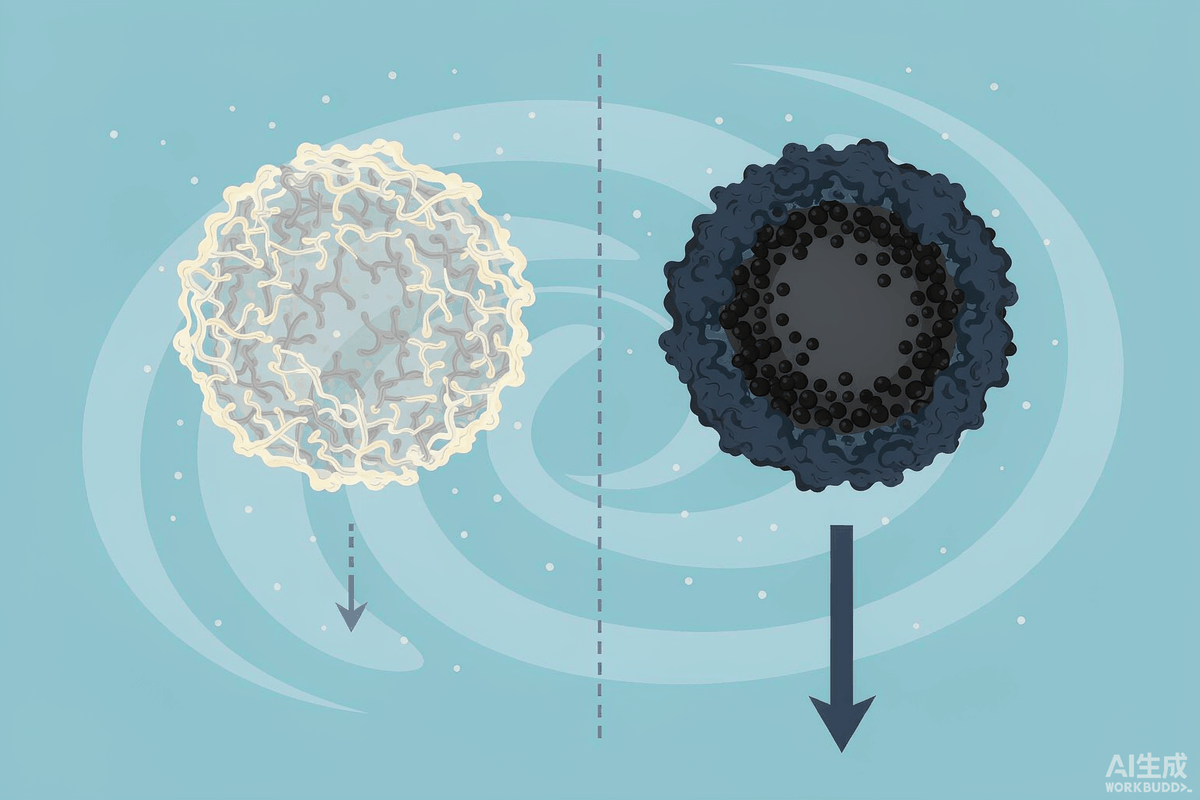
The process core of magnetic coagulation (magnetic ballasted coagulation, magnetic flocculation, ballasted magnetic seed enhanced coagulation) is nothing new: it is still chemical coagulation + sedimentation, except that an inert carrier with a density more than 2 times that of ordinary flocs—magnetite powder of several tens of micrometers in particle size—is dosed into the reaction tank. The magnetic powder acts as a "nucleus" within the floc, making the floc both smaller and heavier, multiplying the settling velocity, which in turn multiplies the surface loading rate of the sedimentation tank and proportionally reduces its footprint. That is all—yet the engineering value it delivers is enormous, which is why it has been deployed on a large scale in upgrading and retrofitting projects in recent years.
The statement of its capability boundary must be precise: magnetic coagulation is only effective against pollutants present in suspended or colloidal form—SS, particulate and colloidal organic phosphorus, COD present in suspended and colloidal form, color, and heavy metals already converted into hydroxides. Against dissolved pollutants, it is essentially powerless. This is not an inference but a measured fact: continuous monitoring at a 25 万 m³/d upgrading project in southern Zhejiang showed that both the influent and effluent ammonia nitrogen of the magnetic coagulation clarifier were below 2.5 mg/L, with no significant removal effect; there was essentially no removal effect on total nitrogen, because most of the nitrogen in secondary clarifier effluent exists as nitrate ions, and "ions are not solids—magnetic powder cannot move them."[1] In the same project, COD removal was only 36.8%, while the researchers also noted that about 80% of the COD in secondary clarifier effluent exists in dissolved form—meaning its efficiency against the removable fraction (suspended and colloidal COD) is actually quite high.[1]
Magnetic coagulation, high-density sedimentation, and sand-ballasted sedimentation all belong to the same family—enhanced solid-liquid separation units. What they change is the "solid-liquid separation speed," not the "pollutant form." Ammonia nitrogen (NH₄⁺), nitrate nitrogen (NO₃⁻), dissolved orthophosphate, and dissolved small-molecule organics all lack a separable physical form in such units, and no amount of magnetic powder, PAC, or PAM dosing will change that. The monitoring conclusions from the southern Zhejiang project have already made this clear: ammonia nitrogen and total nitrogen show "essentially no removal"[1]. If effluent nitrogen indicators exceed limits, the correct action is to go back and fix the upstream biological process, not to add chemicals at the magnetic coagulation unit. Conversely, if a total nitrogen reduction target is written into the magnetic coagulation technical agreement, the supplier can only "fudge" a good-looking total figure by increasing coagulant dosage—which is both ineffective and causes the excess sludge volume to multiply.
II. Mechanism: The Magnetic Powder Does Only Three Things, and the Fourth Has Yet to Be Proven
Regarding the strengthening mechanisms of magnetic coagulation, the review by Wang Kaijun's team at Tsinghua University[2] provides the clearest layered explanation, which can be summarized in engineering terms as three things, plus a fourth that remains questionable.
First: increasing the number of particles and raising the collision probability. During the reaction stage, magnetic seeds significantly increase the number of particles in the system, and the effective collision probability rises accordingly. The literature reports that the GT value of a magnetically enhanced coagulation system (the total number of collisions between two particle phases per unit volume of water within a given time T) is significantly higher than that of conventional coagulation.[2] This is purely physical strengthening and is also the least problematic link.
Second: charge neutralization. The isoelectric point of magnetic powder is around pH≈7. When the water pH is below the isoelectric point, the magnetic powder surface carries a positive charge and can combine with negatively charged colloidal particles in water through charge neutralization, forming magnetic flocs with magnetic powder as the "core," and the system zeta potential approaches zero.[2] This explains a counterintuitive phenomenon: magnetic coagulation often performs better under weakly acidic conditions than under neutral conditions—but it also conflicts with the fact that "phosphorus removal requires slight alkalinity," so in actual engineering the pH is kept within the compromise window of 6~8, and it is generally recognized that phosphorus removal efficiency decreases when pH is too high.[2]
Third: making the flocs heavier. This is the most direct and most beneficial one. Magnetic seed flocs differ from the uniform sponge-like flocs formed by conventional coagulation—they are smaller in volume, higher in density, more compact, and lower in moisture content, with magnetic powder evenly distributed inside the flocs to form several aggregates with magnetic powder as the core.[2] Some studies provide quantitative comparison: the settling velocity of magnetic flocs is 5.64 times that of ordinary coagulation flocs, and sludge production is reduced by 18.25%.[2] The figures in industry engineering materials vary slightly (about 5 times, 5~10 times, 10~20 times, etc.[9][14][15]), but the conclusion of "multi-fold acceleration" is a consensus. Dense flocs also bring two additional benefits: lower sludge moisture content and lower subsequent dewatering costs; and significantly enhanced resistance to shock loading.
Fourth (questionable): catalytic effect of the weak magnetic field on the surface of magnetic powder on organic phosphorus. An engineering paper in Water & Wastewater Engineering proposed this speculative mechanism when explaining "better removal of organic phosphorus"[1]; however, when reviewing adsorption-coagulation synergistic research, the review[2] focused on the point that "coagulation can only remove suspended and colloidal substances, and dissolved small molecules require adsorption technology as a supplement," and gave a valuable pilot-scale conclusion: by compounding 20 mg/L activated carbon on the basis of magnetic coagulation, the average dissolved COD concentration in the effluent during pre-concentration of municipal sewage can be reduced from 86 mg/L to 40 mg/L.[2] The practical implication is clear—enhanced removal of organic phosphorus is more likely to come from "carriers extending the floc-pollutant contact path + activated carbon-type adsorbents filling the gap," rather than from magnetic field catalysis. This mechanism is not recommended as a design basis.
Two other engineering parameters are worth remembering separately: in terms of coagulant type, iron-based is slightly better than aluminum-based[2]; and the particle size of magnetic powder is not better the smaller it is—the review clearly points out that too small a particle size is significantly affected by inertial centrifugal force, is not conducive to floc growth, and the formed flocs are easily broken, 75~105 μm is the suitable range reported in the literature, and mixed use of different particle sizes has more advantages than a single screened particle size.[2]
This is not a case of someone writing it wrong, but rather the two types of equipment systems have different particle size requirements. "Super magnetic separation" type equipment centered on magnetic disk adsorption pursues sub-millimeter (or even micron-level) magnetic seeds and ultra-fast separation, so commercial materials often write 1~10 μm or 5~50 μm[15]; while magnetic coagulation clarifiers (the loading sedimentation path) rely mainly on gravity settling, with magnetic recovery as a supplement. Magnetic powder that is too fine will be carried out of the flocs by centrifugal force, and the recovery rate will decrease—what is actually used in engineering is 200~400 mesh, i.e., about 38~74 μm[1]. The two differ by an order of magnitude. If, during selection, the particle size of "super magnetic separation magnetic seeds" is directly applied to a "magnetic coagulation clarifier," the result will be a surge in magnetic powder loss and runaway cost per ton of water. Conversely, the simultaneous appearance in the same technical specification of "5 μm magnetic powder" and "clarifier surface loading 20 m³/(m²·h)" is itself self-contradictory[1][2][15].
III. Ledger One: The two calibers of magnetic powder "dosage," differing by 1000 times
Magnetic powder is an inert carrier. It is not consumed like PAC or PAM, but circulates in the system. Therefore, it has two completely different "quantities," which are widely conflated in engineering:
Inventory — the concentration of magnetic powder maintained in the tank, which determines whether flocs can form. The design value for a 25 万 m³/d project in southern Zhejiang is 5000 mg/L (i.e., 5 g/L)[1]; commercial materials often write it as "magnetic seed dosage 1–3 g/L"[15][14]. Make-up amount (loss amount) — the amount that needs to be replenished per ton of water due to incomplete recovery; this is the item that directly enters the per-ton water cost. The design value for the same project is 5 mg/L, with actual conversion during commissioning of 7–8 mg/L[1]; the measured make-up amount for a high-efficiency sedimentation tank retrofit project is 1.2 mg/L[8]; a plant in Jiangxi is 2.5 g/m³ (i.e., 2.5 mg/L)[9]. In addition, there is a one-time investment: during commissioning, initial dosing of 4–5 t.[1][8]
IV. Ledger Two: The Real Cost Engine Is Recovery Rate, Not Settling Velocity
Since magnetic powder relies on circulation, the "recovery rate" simultaneously determines the make-up amount and the per-ton water cost. Industry engineering data give the expected engineering value for recovery rate: drum-type permanent magnetic separators can generally be controlled at around 99.5%; under conditions of suitable magnetic powder particle size and relatively high purity, the magnetic powder loss converted to per-ton water can be controlled below 8 mg/L.[1] Equipment data mention indicators ranging from "≥95%" to "≥99%," and the "super magnetic separation" pathway even gives a magnetic medium recovery rate of 99.6%[15]; the internationally mainstream carrier clarification process gives a magnetite recovery rate specification of >90%.[10]
What happens when the recovery rate drops has a clear magnitude: field experience shows that when the recovery rate is below 90%, annual operating costs will increase by more than 15%.[15]This explains why the operational focus of magnetic coagulation projects is not on the clarifier, but on the seemingly inconspicuous high-shear machine and magnetic separator — they are the cost engine of this process, not auxiliary equipment. The cost statistics of the southern Zhejiang project confirm that magnetic powder is not the protagonist: direct operating cost during commissioning is about 0.11 元/m³, of which chemical costs account for the vast majority, and magnetic powder dosing cost is only about 0.015 元/m³.[1]
V. Structure: Four Reaction Zones Plus a Magnetic Powder Recovery Chain
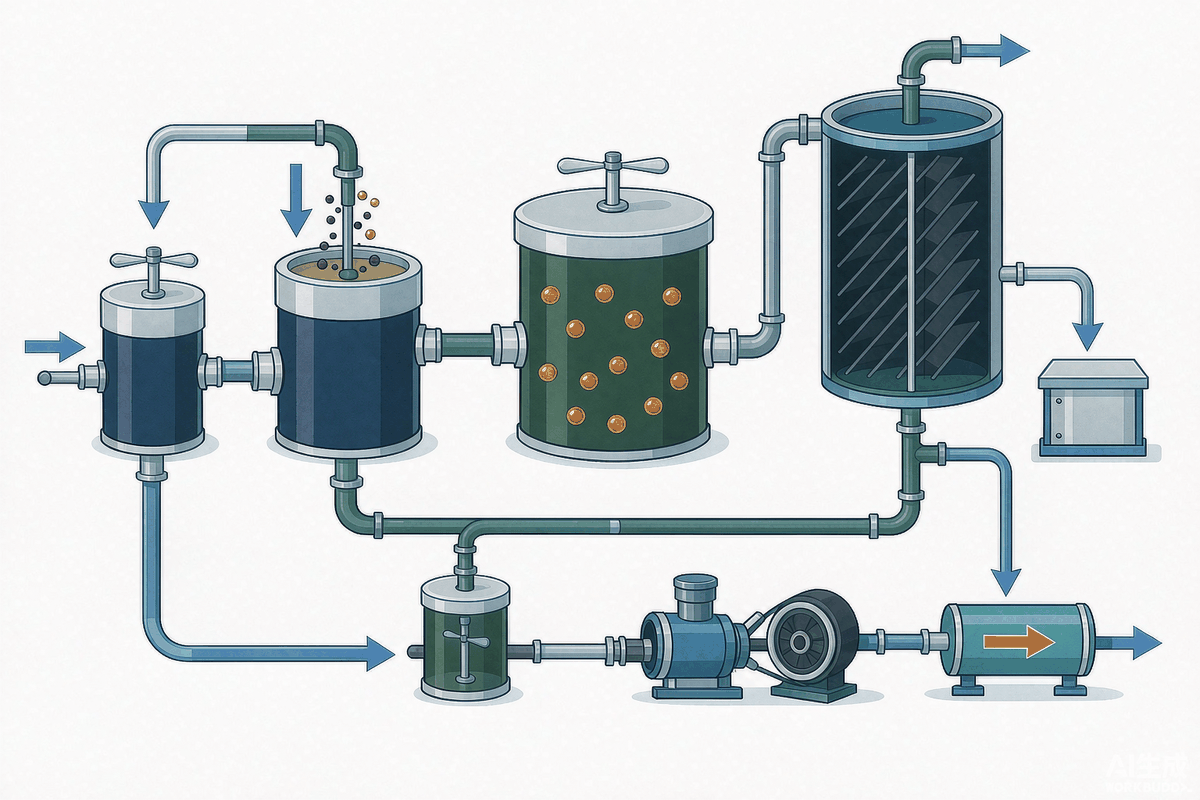
The system consists of four parts: magnetic flocculation reaction system, high-efficiency clarification system, chemical dosing system, and magnetic powder recovery system.[1]The reaction tank is generally divided into 3–4 compartments — the first compartment doses coagulant with high-intensity mixing, the second compartment doses external magnetic powder and returned magnetic powder/returned sludge, the third compartment doses PAM to form large flocs, and the fourth compartment strengthens contact flocculation before entering the clarifier.[1][14]Due to the addition of magnetic powder, the mixing and flocculation time is reduced from the conventional around 20 min to within 8 min, the sedimentation tank retention time is reduced to below 15 min, and the total system retention time is usually 10–20 min.[1][14]The measured retention time distribution given by the southern Zhejiang project is: mixing zone 140 s, first reaction zone 60 s, second reaction zone 135 s.[1]
Mixing control is a practical detail: because the mixed liquor has a high overall density and a high power demand, the mixing speed in compartments 1 and 2 is generally controlled at 200~300 r/min, while compartments 3 and 4 are reduced to about 80 r/min, with variable frequency drives used to adapt to changes in magnetic powder inventory.[1] The window reported in the literature is fast mixing at 250~500 r/min and slow mixing below 100 r/min.[2]
The recovery chain is the "heart" of this process: the magnetic sludge at the bottom of the tank first enters a high-shear machine (high-speed shear floc disruption machine) — with an Archimedean spiral cutter head made of high-strength wear-resistant alloy, which relies on high-speed shear to break up flocs and separate the magnetic powder from the sludge; it then enters a rotary drum permanent magnetic separator (fixed magnetic poles + rotating non-magnetic drum, with a magnetic field strength of about 500~5000 Gs), which attracts the magnetic powder onto the drum surface for recovery, while the non-magnetic sludge is discharged to dewatering.[1] The reflux ratio is generally about 10% (design documents also give a range of 4%~8%[14]), and the excess sludge volume is about 0.5%~2% of the design daily treatment capacity.[14][15]
There are several "must-do" points in supporting equipment selection, all stemming from the high density and high abrasiveness of the magnetic powder: the submerged parts of the sludge scraper need to use SS304 with passivation treatment; pumps conveying magnetic sludge should preferably be cam rotor pumps or vertical slurry pumps, piping should preferably be plastic-lined pipe, and valves should be wear-resistant pinch valves; because magnetic powder easily deposits and hardens in pipelines, a high-pressure flushing system with flushing water pressure greater than 0.6 MPa needs to be provided; after magnetic powder dosing, fine particles will settle at the lower part of the inclined tubes/plates, so the strength requirements for the inclined tubes are higher than for other types of clarifiers.[1] In addition, there are two design items that are easily overlooked: corners of the clarifier where the surface water flow is slow are prone to algae growth (nutrients and color are low, and light penetration depth can reach about 15 m), so shading covers or a small amount of sodium hypochlorite dosing are needed; and magnetic coagulation has limited removal capacity for floating matter with a density less than water, so debris on the tank surface needs to be carried out by the effluent over the triangular weir, therefore a simple filtration system after magnetic coagulation is process-wise necessary.[1]
VI. Nine Real Engineering Case Ledgers
| Project / Source | Scale and Key Parameters | Measured Performance |
|---|---|---|
| Upgrading and Expansion of a Wastewater Treatment Plant in Southern Zhejiang[1] Water & Wastewater Engineering |
25 万 m³/d, magnetic coagulation clarifier + fiber rotary disc filter; magnetic powder 200~400 mesh Fe₃O₄, inventory in tank 5000 mg/L; maximum surface loading rate in sedimentation zone 23.5, average 18 m³/(m²·h); design PAC(10%) 132 mg/L, PAM 1.0 mg/L, magnetic powder supplement 5 mg/L. During commissioning, 300 mesh magnetic powder used, initial dosage 4 t, daily supplement 200~300 kg (equivalent to 7~8 mg/L), PAC 45~90 mg/L, PAM 0.8~1.5 mg/L | SS 16.3→5.8 mg/L (removal rate 64%); TP 1.1→0.18 mg/L (removal rate 84%, consistently better than Grade 1A); COD 52.2→33 mg/L (36.8%); BOD₅ 21→7 mg/L; NH₃-N both influent and effluent <2.5 mg/L, no significant removal; essentially no TN removal; direct operating cost approximately 0.11 元/m³ (magnetic powder approximately 0.015 元/m³) |
| Upgrading of Zhanjiang Xiashan Wastewater Treatment Plant[6] MIIT Major Environmental Protection Technology and Equipment Catalog Supply-Demand Matching Guide |
25 万 m³/d, 4 sets of magnetic coagulation systems, 6.25 万 m³/d per set; completed in 2019 年 11 月 | Influent TP≤5, SS≤20 mg/L → effluent TP<0.3, SS<5 mg/L; annual SS reduction 1370 t, annual TP reduction 430 t; investment 110 元/(m³·d), operating cost 0.06 元/m³; footprint of 5 万 m³/d system approximately 400 m², about 1/10 of conventional coagulation |
| Conversion of High-Efficiency Sedimentation Tank to Magnetic Coagulation[8] | Original 1 groups of 1.75 万 m³/d high-efficiency sedimentation tanks converted to 1 groups of 3.5 万 m³/d magnetic coagulation sedimentation tanks (capacity doubled, no additional land use); PAC(10%) 80~100 mg/L, anionic PAM 0.5~0.8 mg/L, initial magnetic powder dosage 5 t, magnetic powder supplement 1.2 mg/L; commissioning completed in 2018 年 3 月, project investment approximately 300 万 yuan | Actual influent SS 8~36, TP 0.22~1.29 mg/L → effluent SS 1~4.4, TP 0.01~0.24 mg/L (design effluent SS 5, TP 0.3); stable compliance maintained even at influent flow of 4 万 m³/d; magnetic powder recovery rate >99.5% |
| Enhanced Denitrification Project of Shaoxing Keqiao Jiangbin Water Treatment Plant[7] National Ecological and Environmental Science and Technology Achievement Transformation Comprehensive Service Platform (Printing and Dyeing Wastewater) |
20 万 m³/d, Activated Carbon + magnetic coagulation (sequential dosing of Activated Carbon, PAC, magnetic powder, PAM), commissioned in 2019 年 3 月 | Influent COD average 88.34, SS average 9.56 mg/L → effluent COD average 63.78, SS average 4.56 mg/L; average COD removal rate 27.8% (removal amount 24.56 mg/L), average SS removal rate 52.29% (removal amount 5 mg/L) |
| Magnetic Coagulation Upgrading of a Municipal Wastewater Treatment Plant in Jiangxi[9] | Optimal operating parameters: PAC 25 mg/L, PAM 1 mg/L | Effluent TP≤0.20, SS≤2 mg/L, far superior to Grade 1A; magnetic powder loss only 2.5 g/m³; operating cost approximately 0.09 元/m³ |
| Pilot Test of Magnetic Ballasted Flocculation at a Wastewater Treatment Plant in Tianjin Development Zone[5] (journal name to be supplemented) |
Secondary clarifier effluent, orthogonal + response surface optimization; magnetic powder B + anionic PAM; G₁/G₂/G₃ = 80/50/20 s⁻¹, T₁/T₂/T₃ = 6/4/6 min | Optimal Total Phosphorus removal rate approximately 85%; PFS dosage required to meet DB12/599—2015 upgrading standard only 9.20 mg/L |
| Magnetic Coagulation Enhanced Carbon Capture[3] Water & Wastewater Engineering 2025, National Key R&D Program |
Applied at the front end of wastewater treatment (chemically enhanced sedimentation), coagulant dosage 60 mg/L | COD capture rate 72.82%, TP capture rate 90.49%, sedimentation rate greatly improved; the compression effect of magnetic powder on sludge enhanced the concentration degree of organic matter and phosphorus |
| Magnetic Flocculant (Magnetic Core-Shell Type)[4] Water & Wastewater Engineering 2009, Zhejiang Provincial Research Institute of Environmental Science |
Prepared by solid-liquid surface reaction of magnetite powder + concentrated sulfuric acid, with "core-shell structure"; dosage 80 mg/L, compared with PAC and PFS in beaker tests | CODCr removal rate 45.8%, Total Phosphorus removal capacity close to PFS; flocs denser and faster settling than PAC/PFS; sludge volume 71% and 44% of PFS and PAC respectively; magnetic cores accounting for approximately 61% of dosage can be recovered by magnetic separation |
| UK/US Full-Scale Ballasted Clarification Cases[10][11][12][13] | UK Knostrop (population equivalent 99 万, full-flow treatment 5600 L/s, single φ32 m high-rate clarifier, commissioned in 2024 年 9 月); US Billerica (2007 pilot test, completed in 2010, flocculation tank HRT 6 min, approximately 8 年 operating data); US Marlay-Taylor (BioMag retrofit, intervention analysis) | Knostrop monthly average TP 0.25 mg/L (target 0.4 mg/L), recorded 0.1 mg/L during performance testing; Billerica pilot verified that increasing coagulant dosage alone can achieve 0.05 mg/L, without post-filtration, permit limit 0.2 mg/L monthly average; Marlay-Taylor effluent TN reduced by 98%, TP reduced by 77% (including biological enhancement, not a single chemical unit) |
VII. Process Comparison: Magnetic Coagulation vs Sand-Ballasted Clarification vs High-Density Sedimentation
| Indicator | Magnetic Coagulation High-Efficiency Sedimentation | Sand-Ballasted Clarifier (Microsand) | High-Density Sedimentation Tank |
|---|---|---|---|
| Carrier | Magnetic powder Fe₃O₄ (true density approx. 5.2 g/cm³, approx. 2 times that of quartz sand[10]) | Microsand (particle size approx. 100~150 μm[14]), density 2.7~3.0 g/cm³[15] | No external carrier, relies on sludge return contact flocculation |
| Recovery method / recovery rate | High-shear machine + rotary drum permanent magnetic separator, engineering expectation ≥99.5%[1] | Hydrocyclone, recovery rate up to 99.5%[15] | Not required |
| Surface loading rate m³/(m²·h) | Design 15~40 (commonly 20~40); actual engineering value 18~23.5[1][14] | 10~25[14] | 10~12[14] |
| Applicable influent SS | <2000 mg/L[14] | <1000 mg/L[14] | <1500 mg/L[14] |
| Total retention time | 10~20 min (flocculation can be <8 min)[1][14] | 25~35 min[14] | 30~45 min[14] |
| Effluent SS / TP | <5 mg/L / TP<0.5 mg/L (including organic phosphorus)[14] | approx. 10 mg/L / inorganic TP≤0.5 mg/L[14] | approx. 10 mg/L / inorganic TP<0.8 mg/L[14] |
| COD removal capacity | 30~40% (can be combined with Activated Carbon to enhance soluble COD removal[2]) | 10~20% | approx. 10% |
| Grade 1A upgrading | Usually no subsequent filtration required (but simple filtration is still recommended in engineering practice[1]) | Subsequent filtration required | Subsequent filtration required |
| Key shortcomings | Magnetic powder wear/deposition and caking, magnetic equipment maintenance, ineffective for dissolved pollutants | Microsand replenishment and wear, cyclone maintenance | Large footprint, average guarantee rate for effluent TP |
VIII. Five Engineering Truths
Question one: am I removing the solid phase or the dissolved phase? If it is ammonia nitrogen/TN/dissolved COD — magnetic coagulation is not the answer.
Question two: am I short of land or short of money? Short of land, and requiring effluent SS≤5 / TP≤0.3 — magnetic coagulation has the greatest advantage; has land, loose standards — a conventional high-density sedimentation tank is more cost-effective.
Question three: what are the influent oil and grease and SS levels? Oil and grease >50 mg/L requires air flotation first; SS >200 mg/L suggests a pre-sedimentation tank; COD >500 mg/L requires biological treatment in combination, as magnetic coagulation alone has limited effect[15].
9. References
- Tang Kaifeng, Wang Xuyang, Zhao Lejun, Yue Shangchao. Application of Magnetic Ballasted Coagulation and Clarification Technology in the Field of Advanced Wastewater Treatment[J]. Water & Wastewater Engineering, 2018, 44(10). (Tianjin Municipal Engineering Design & Research Institute, Tianjin Enterprise Key Laboratory of Infrastructure Durability; Case study of a 25 万 m³/d upgrading and expansion project of a wastewater treatment plant in southern Zhejiang)
- He Conghui, Wang Qi, Liang Ruisong, Wang Kaijun. Research and Application Progress of Magnetic Enhanced Treatment Technology in Municipal Wastewater Treatment[J]. Acta Scientiae Circumstantiae, 2021, 41(1): 54-69. (School of Environment, Tsinghua University, State Key Joint Laboratory of Environmental Simulation and Pollution Control)
- Study on the Performance and Mechanism of Magnetic Coagulation Enhanced Carbon Capture in Municipal Wastewater[J]. Water & Wastewater Engineering, 2025, 51(6): 32-38, 45. (National Key R&D Program 2022YFC3203101; Heilongjiang Provincial Key R&D Program 2024ZX03C04)
- Xu Haolong, Wang Changzhi, Zhang Yidan. Preparation, Characterization and Flocculation Performance of Magnetic Flocculant[J]. Water & Wastewater Engineering, 2009, 35(S2): 319-322. (Zhejiang Environmental Protection Science Design & Research Institute)
- Experimental Study on Magnetic Ballasted Flocculation for Optimized Advanced Phosphorus Removal from Wastewater. (Secondary clarifier effluent of a wastewater treatment plant in Tianjin Development Zone, orthogonal experiment + response surface optimization; Journal name and volume/issue to be supplemented)
- Ministry of Industry and Information Technology. Catalogue of Major Environmental Protection Technology and Equipment Encouraged by the State (2020 年 Edition), Guide No. 12 for Supply-Demand Matching: Typical Cases of Eutrophic Water Body Treatment Technology and Equipment. (Upgrading and Reconstruction Project of Zhanjiang Xiashan Wastewater Treatment Plant)
- National Comprehensive Service Platform for Transfer and Transformation of Eco-Environmental Scientific and Technological Achievements. Application of Activated Carbon + Magnetic Coagulation in Printing and Dyeing Wastewater. (Enhanced Denitrification Project of Shaoxing Keqiao Jiangbin Water Treatment Co., Ltd., 20 万 m³/d, commissioned on 2019-03-01)
- Engineering Application of SediMag® Magnetic Coagulation Technology in High-Efficiency Sedimentation Tank Retrofit. (Industry engineering case data; high-efficiency sedimentation tank 1.75 万 → 3.5 万 m³/d retrofit project)
- Hao Tong, Yun Dandan, Wang Lujun, Liang Shuo, Wang Jucan, Zhao Qiaohua. Application of WORLD'S Magnetic Coagulation Technology in Upgrading and Reconstruction of Municipal Wastewater Treatment Plants. (Beijing World Water Technology Co., Ltd.)
- Xylem. Ballasted Clarification — Phosphorus Removal Solutions (CoMag® / BioMag™). (Magnetite true density 5.2, floc settling up to approximately 30 times faster, CoMag effluent TP as low as 0.04 mg/L, magnetite recovery rate >90%)
- Water Industry Journal. How ballasted clarification is transforming phosphorus removal. (Yorkshire Water Knostrop WwTW, UK, commissioned in 2024 年 9 月)
- Sustainability Matters. Solving phosphorus removal challenges with magnetite ballasted technology at Billerica Wastewater Treatment Facility, MA, USA. (Approximately 8 年 operational data)
- Ayaa P, Stevens D K, McFarland M. Estimating the Effect of Magnetite on Nitrogen and Phosphorus Removal Using Intervention Analysis[J]. ASCE. (Marlay-Taylor Water Reclamation Facility, Maryland, USA, BioMag retrofit intervention analysis)
- Datang Water. DT High-Efficiency Magnetic Coagulation Sedimentation Technology (process comparison and design parameter data; magnetite reaction time, sludge return rate, process comparison table, etc.). [Commercial data, values should be traced back to original literature]
- Compilation of commercial data and encyclopedic sources on magnetic coagulation equipment (surface loading rate, magnetite particle size, recovery rate, loss rate, cost per ton of water, and other multi-source compilation criteria). [Commercial/aggregated sources, key values must be manually verified]