


 Nationwide multi-industry (municipal wastewater treatment plants / printing and
  Pilot to engineering scale (13 tDS/d to 300 tDS/d, corresponding to 1500 t/d of
 Sludge Conditioning and Advanced Dewatering: 60% Moisture Content Is Not a "Technical Limit" but an Indicator Derived Backward from Downstream Disposal
— The "design value" and "actual value" of conditioners can differ by half; on the lime route, "dewatering and volume reduction" is a muddled account, and the dewatering recipe upstream may not be accepted by the power plant downstream
I. Positioning: First Comes the Disposal Outlet, Then the Moisture Content Target
Clarify the sequence, and many selection disputes disappear automatically: first determine the disposal outlet → then determine the moisture content threshold → finally select the dewatering equipment and conditioning formula. Reverse the order, and it becomes "buy the machine first, then find a place to dump the sludge"—this is the root cause of budget overruns in a large number of retrofit projects in the industry. The Shanghai Tianshan Wastewater Treatment Plant sludge deep dewatering project has a design capacity of only 13 tDS/d, yet a total investment of approximately 2600 万 yuan; the process is "centrifugal thickening + chemical conditioning + diaphragm filter press," with only one goal: press the moisture content below 60% to ensure the downtown sludge has an outlet.[6] The Shenzhen Nanshan Wastewater Plant has a treatment capacity of 800 t/d (80% moisture content wet sludge), treating sludge at approximately 97.5% moisture content after thickening, using an ultra-high-pressure elastic pressing route.[7] The investment scale, equipment configuration, and chemical scheme of the two plants are hardly comparable, because their downstream is not the same "user."
There is an easily overlooked physical constraint here: mechanical dewatering cannot remove all the water. Tian Yu and others at Shenyang Jianzhu University, using the vacuum filtration method to measure specific resistance, found that when sludge moisture content drops below 97%, the sludge specific resistance increases significantly[5]—meaning the pressure required for further dewatering rises non-linearly. The reason lies in the next section.
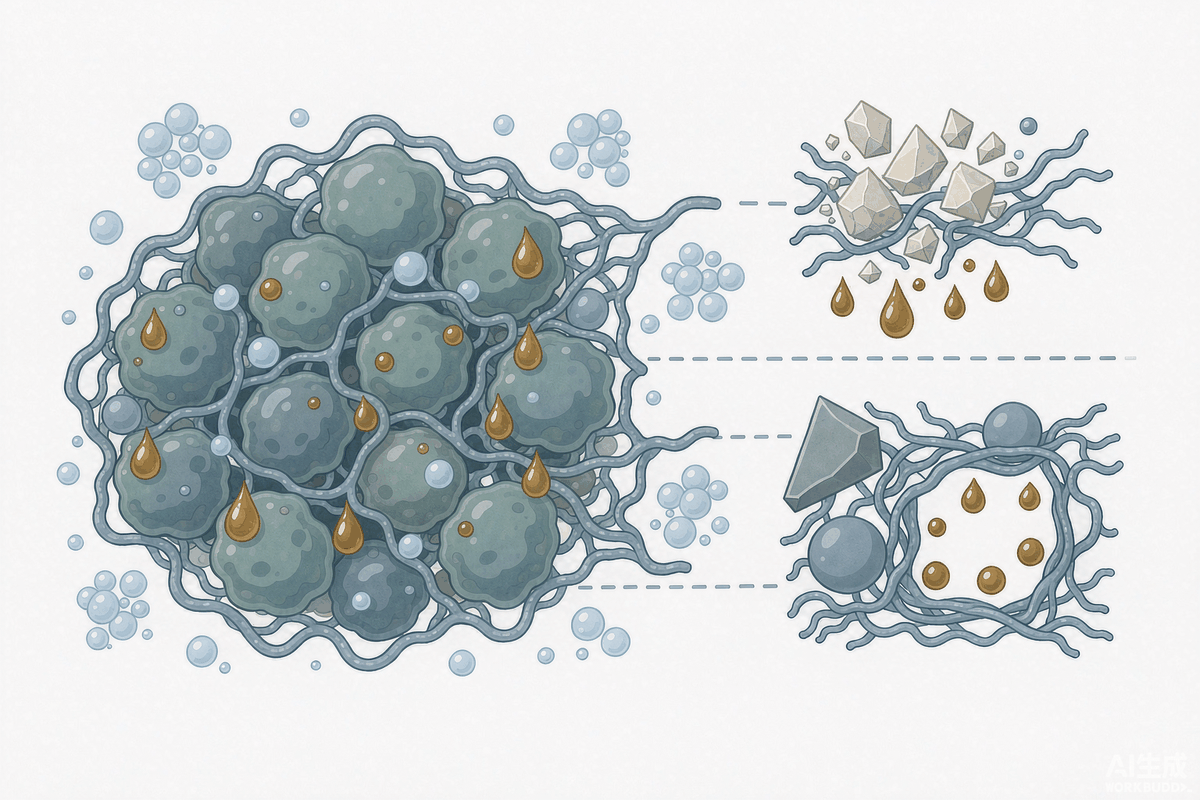
II. Mechanism: Water Is Locked in a Colloidal Cage by EPS
The water in sludge is not one kind of water. Free water can be removed directly by gravity settling; interstitial water hides in the gaps between flocs, and mechanical dewatering can carry away a portion; capillary water is adsorbed by fine pores and requires a higher pressure gradient; bound water is bound to solid surfaces and to extracellular polymeric substances through hydrogen bonds, and mechanical pressure is essentially ineffective. This is why "raising the plate-and-frame filter press pressure from 1.0 MPa to 2.0 MPa only drops the moisture content by a few points," while the "wall breaking" route can pull the moisture content down by a large margin in one go.
The "cage" that traps water is Extracellular Polymeric Substances (EPS). The literature classifies EPS into three layers by extraction difficulty: Soluble EPS (S-EPS), Loosely Bound EPS (LB-EPS), and Tightly Bound EPS (TB-EPS).[11]One highly illustrative set of experimental data is: in S-EPS, capillary water accounts for 59.17% and adsorbed water accounts for 40.83%; in TB-EPS, capillary water is 54.77% and adsorbed water is 45.23%; while in LB-EPS, the capillary water proportion reaches as high as 99.99%.[12]In other words, different layers of EPS "grip" water differently, and which layer a conditioning method targets directly determines the upper limit of dewatering performance.
This causal chain can be quantified: tests on tannery sludge show that Specific Resistance to Filtration (SRF) and Capillary Suction Time (CST) are exponentially correlated with total EPS content, R² = 0.99; after conditioning with Polymeric Ferric Sulfate (PFS) + carbide slag, SRF dropped from 4.58×10¹⁴ to 1.68×10¹² m/kg, a full two orders of magnitude.[10]The same study also provides another linear relationship: total EPS content is linearly correlated with the leaching concentrations of Cr and Zn, R² = 0.92~0.96; after conditioning, the residual fraction proportions of Cr and Zn increased from 25.7%, 20.9% to 73.0%, 75.2% respectively.[10]—Dewatering and stabilization are, at the EPS level, the same thing.
Accordingly, there are only two paths for conditioning: first, breaking the walls—using chemical oxidation, acid hydrolysis, ultrasound, enzymatic hydrolysis, or thermal treatment to destroy the EPS structure and release bound water; second, building roads—inserting rigid skeleton particles into the flocs to prop open interconnected drainage channels, giving water a path to flow. The former's benefit centers on "water being released," while the latter's benefit centers on "water being able to flow out"—their dosage logics are completely different, which is the core divergence to be discussed in the next section.
Taking Fe(II)-activated potassium periodate (KIO₄) conditioning as an example, the optimal conditions are initial pH 6.8, KIO₄ dosage 1.4 mmol/g VSS, Fe(II)/KIO₄ molar ratio 1.2, at which CST decreased by 64.34%, SRF decreased by 84.13%, but the cake moisture content decreased by only 6.69%.[9]Mechanistically, the reaction is dominated by high-valent Fe(IV) and the accompanying •OH, converting tightly bound TB-EPS into soluble S-EPS, and the flocs change from dense to loose and porous.[9]This set of data shows that: filtration performance indicators (CST, SRF) and final cake moisture content are not the same thing. The former measures "how fast water runs," while the latter measures "how much water remains." Using SRF reduction to promise a moisture content target is the most common mismatch in technical agreements. The literature also clearly points out that enhanced oxidation capacity does not necessarily improve dewatering performance—one study used hydroxylamine to strengthen the Fenton system, and although oxidation capacity increased, sludge dewatering performance actually deteriorated.[9]
III. Account Book One: The "design value" and "actual value" of conditioners can differ by half
The route of "FeCl₃ and CaO chemical conditioning + diaphragm filter press" has been verified by a super-large-scale project in China. Yao Jie (Shanghai Municipal Sewerage Co., Ltd.) provided benchmarks through small-scale and full-scale tests: when FeCl₃ and CaO dosages account for approximately 8% and 20% of the sludge dry solids respectively, the sludge moisture content can stably reach below 60%, meeting landfill requirements; the results were subsequently applied to the Bailonggang sludge deep dewatering project, achieving stable, continuous, and compliant operation.[1]The design scale of Bailonggang is 1500 t/d (calculated at a moisture content of 80%, i.e., 300 tDS/d), with a total of 26 units of plate-and-frame diaphragm filter presses, filtration pressure generally above 1.0 MPa, basically completed in 2012 年 6 月, commissioning started in 7 月, and after 4 months the treatment capacity stably reached the design scale, the cake moisture content was controlled below 60%, and the dewatered sludge volume was reduced by more than 35%.[2][4]
But design values are ideal values under ideal sludge properties. Another deep dewatering project in Shanghai with the same scale of 300 tDS/d (completed in 2012 年 10 月, total project investment 2.61 亿 yuan, receiving sludge from 11 surrounding wastewater treatment plants) specifies in its documents FeCl₃ 8% and lime 20%; while the actual operational statistics for 2014 年 are: FeCl₃ dosage rate 11.8%, lime dosage rate 30.3%, annual average treatment capacity 283 tDS/d.[3]That is to say, the actual dosages are 40%~50% higher than the design values.
IV. Ledger Two: "Lime Bulking" Turns Dewatering Reduction into a Muddy Account
The most direct benefit of deep dewatering is reduction—smaller volume means lower transport and disposal costs. But along the chemical conditioning route, this benefit must be discounted, and the discount is not small.
Two independent lines of evidence point to the same conclusion. The first comes from the engineering side: in the Bailonggang project, "adding 20% of CaO will bulk up the sludge by more than 20%, bringing difficulties to subsequent treatment and disposal."[4]The second comes from the process side: the commonly used conditioners are ferric chloride as well as quicklime, fly ash, etc., and relative to sludge with a moisture content of 80%, the total amount of inorganic substances added is 6%~10%, which means that after the sludge is dewatered to 50%, its weight increases by 30%~50% compared with dewatering without chemicals, so sludge reduction is not actually achieved.[13]
Putting these two statements together, the logic becomes clear: conditioners "exchange solid phase for liquid phase." The dewatering rate increases, but the inorganic solid phase entering the system also increases—if the downstream billing is by weight (landfill, transport, incineration), then the reduction achieved by "lowering the moisture content from 80% to 60%" will be partly eaten up by the "6%~10% increase in dry basis weight" and, more critically, by dilution of the calorific value. The three associated downstream impacts are clear: after entering the landfill, leachate containing chloride ions and high COD will impose a relatively large shock load on the landfill leachate system; in the incineration stage, the larger amount of inorganic matter causes a decrease in calorific value and an increase in ash content; and alkaline substances such as quicklime will also cause corrosion and scaling in the furnace.[13]
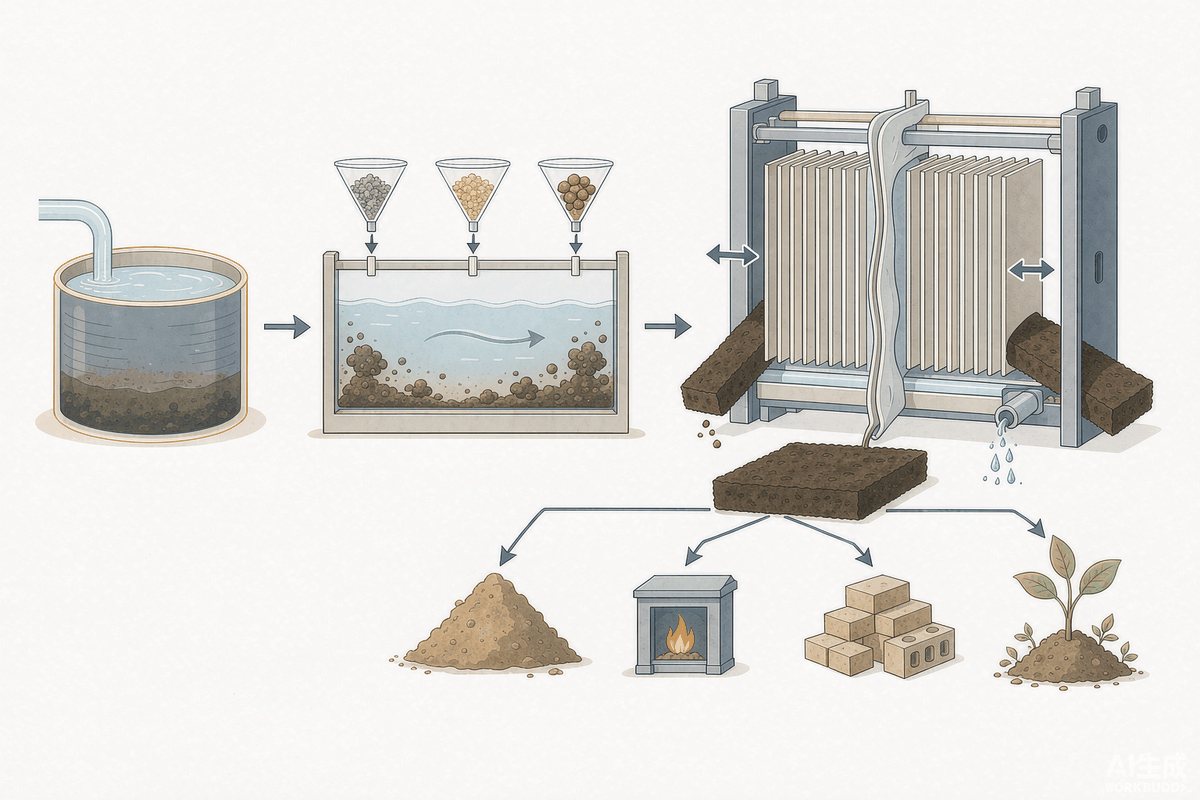
V. Conflict: The Dewatering Prescription from Upstream May Not Be Accepted by the Power Plant Downstream
This is the single most noteworthy issue in this article. For a large number of domestic wastewater treatment plants, the outlet for sludge is co-incineration in coal-fired power plants—the Shenzhen Yantian waste incineration plant co-incinerates about 40 t/d of sludge; the sludge drying and incineration system of Unit 150 MW at Huadian Tengzhou Xinyuan Thermal Power has been in operation since the end of 2008 年, using boiler flue gas from the power plant to dry sludge with a moisture content of 75%~80% before blending it into the coal conveying system, with a co-incineration ratio of about 5%.[5]On this route, the dewatering index is only an entry ticket; the real acceptance standard is in the boiler.
A study on co-incineration in coal-fired power plants gives clear design constraints: ① chlorine and sulfur significantly affect equipment and pipeline corrosion, slagging characteristics, and flue gas pollutant emissions, and the chlorine content in the dry basis of sludge should not exceed 1.57% or the sulfur content should not exceed 3.11%, therefore "chlorine-containing or sulfur-containing sludge conditioners should not be used for sludge dewatering"; ② iron salt conditioners, especially FeCl₃ or Fe₂(SO₄)₃, should not be added for sludge dewatering—iron-bearing minerals readily form low-temperature eutectics with other minerals and aggravate boiler slagging, and the iron-to-calcium ratio in the sludge should be controlled to avoid synergistic slagging when the iron-to-calcium ratio approaches 1; ③ after the CaO content exceeds 30%, the ash melting point shows an upward trend, and CaO can perform in-furnace desulfurization, therefore "a certain amount of lime may be added for sludge dewatering."[14]In the study, of 9 sludge samples, 4 showed moderate slagging, 1 showed moderate-to-severe slagging, and 4 showed severe slagging.[14]
The previous section just stated that FeCl₃ 8% + CaO 20% is a mature formula verified by the Bailonggang project, while this section says that iron salts should not be added and chlorine-containing conditioners should not be used for power plant co-combustion—FeCl₃ happens to cross both red lines of "chlorine-containing" and "iron-containing" at the same time. This is not a matter of who is wrong, but rather the two routes have different evaluation systems: when landfill is the outlet, the evaluation indicators are moisture content and shear strength; when power plant co-combustion is the outlet, the evaluation indicators expand to dry-basis chlorine, sulfur, iron, calcium, and ash fusion point. The same sludge, with a different outlet, requires a different formula.
The realistically feasible alternative directions are three: use chlorine-free iron salts (such as Polymeric Ferric Sulfate, Ferric Sulfate) to replace FeCl₃, first removing the chlorine red line; use industrial waste residues such as carbide slag and steel slag to replace part of the lime—the PFS + carbide slag combination for tannery sludge has already reduced SRF by two orders of magnitude and achieved moisture content below 60% at all radial positions[10]; and make compromises on the co-combustion ratio, "for sludge predicted to have severe slagging, power plants should minimize the sludge co-combustion ratio and increase the frequency of boiler coking inspection and maintenance."[14] Conversely, if the "FeCl₃ + lime" formula is directly transferred into a power plant synergistic incineration project, the dewatering indicators may look excellent, but the boiler-side account will be very ugly. The technical agreement must incorporate downstream constraints into the chemical selection conditions, rather than only specifying moisture content.
There are two bases for lime dosage in public literature, and engineering documents and process reviews mix them very commonly:
· On a sludge dry basis: Yao Jie's experiments obtained FeCl₃ 8% + CaO 20%[1], and Bailonggang/a certain Shanghai plant both design and compile statistics according to this basis[2][3];
· On a wet sludge basis: the expression for lime stabilization technology is "depending on the lime dosage ratio (as a proportion of wet sludge) (5%~30%), sludge with a moisture content of 80% can reach a moisture content of 74.0%~48.2% at the equipment outlet."[8]
Converted according to sludge with a moisture content of 80% (dry basis as a proportion of wet sludge 20%): 5%~30% on a wet sludge basis is equivalent to 25%~150% on a dry basis; while "CaO at 20% on a dry basis" converts back to only 4% on a wet sludge basis. The same "lime dosage" can differ by nearly an order of magnitude when the basis is changed. If quotations, technical agreements, and operating reports do not specify the basis, horizontal comparison is meaningless—combined with the sensitivity that lime consumption accounts for 70%~90% of total operating costs in lime stabilization processes, this is enough to invalidate the entire cost model.[8]
VI. Skeleton Builders: The Dosage Window Is a Double-Edged Sword
Since oxidative cell disruption consumes chemicals and the lime route increases volume, the "road-building" (skeleton builder) route appears attractive: use cheap or even free solid particles to prop open drainage channels, with low cost and inorganic by-products. But real data show that this route has a very narrow dosage window, and neither end works well.
First, excessive dosage is instead ineffective. A study by Harbin Institute of Technology (funded by National Key R&D Program 2016YFC0305404) used three agricultural biomasses—wheat straw powder (WSP), corn straw powder (CSP), and rice husk powder (RHP)—as skeletons. The results showed that: when pH is controlled at 3, sludge dewatering performance is best, and after deep dewatering the sludge cake moisture content drops to 61.5%; after adding WSP, CSP, and RHP, the sludge specific filtration resistance drops to 7.32×10⁸, 7.41×10⁸, 8.29×10⁸ s²/g, respectively. But another conclusion from the same study is: when WSP, CSP, and RHP are dosed at 0.75 g/g DS, they also cannot improve sludge dewatering performance; and when pH is below 2, or when pH rises from 8 to 11, both capillary suction time and specific filtration resistance increase significantly.[15] Mechanistically, acid (pH=3) promotes sludge decomposition of EPS and release of bound water, while biomass as aggregate provides water channels—the two routes must exist simultaneously to be effective, and simply piling up skeleton material does not solve the problem.
Second, skeleton agents use "solid phase" to exchange for "liquid phase." Zhang Panyue's team at Hunan University used FeCl₃-modified rice husk biochar (MRB–Fe) to condition sludge. The optimal modification conditions were FeCl₃ concentration 3 mol/L and ultrasound 1 h, with an optimal dosage as high as 60% DS; under these conditions SRF decreased by 97.9%, and during 0.03 MPa vacuum filtration for 6 min, the sludge cake moisture content dropped from 96.7% to 77.9%, SV₃₀ dropped from 96% to 60%, and net sludge yield increased by 28 times.[16] What does a dosage of 60% DS mean? It means that more than one-third of the solids in the influent sludge are externally added—the dewatering indicators look good, but the sludge quantity account may not.
Third, it has a second benefit that is often overlooked: filtrate quality. Wu Yan et al. of Chongqing Three Gorges University (funded by National Natural Science Foundation of China 31670467, 51808089; Transactions of the Chinese Society of Agricultural Engineering, Vol. 35, No. 2, 2019 年) compared rice husk powder + FeCl₃ with FeCl₃ alone: specific resistance reduced by 59.73%, sludge net yield increased by 45.27%, cake solids content increased from 13.99% to 23.97%, and more critically, filtrate turbidity dropped from 11.89 NTU to 2.91 NTU, and soluble COD dropped from 664.87 mg/L to 79.93 mg/L.[17] For plants where the filtrate needs to be returned to the biological system, this benefit is often worth more than the dewatering metrics themselves—because returning filtrate COD is equivalent to adding a circulating load to the biological tank, and rice husk powder cuts this load by nearly ninety percent. Mechanistically, rice husk powder itself has no flocculating effect; only under the action of ferric ions can it mutually attract with sludge particles and enter the interior of the flocs, thereby improving the incompressibility and permeability of the cake.[17]
Similar studies have broadened the feasible space of this route even further: fly ash + quicklime as a composite skeleton conditioner, sludge specific resistance reduced from 10⁹ s²/g in raw sludge to 10⁷ s²/g, and without adding cement externally, the solidified body of the dewatered cake achieved 7 d unconfined compressive strength greater than 100 kPa, with excellent solidified geotechnical performance.[18] The best results were achieved with aluminum ammonium enhancer 2% + sawdust 20% (dry basis): SRF reduced by 89.9%, CST reduced by 73.1%, and the cake surface became rough, with numerous pores and cracks formed by floc aggregates, allowing water to flow out smoothly.[19] However, another set of figures in this study deserves attention: under the optimal combination, the cake had organic matter content of only 9.12% and calorific value of 13,972 kJ/kg[19]—the skeleton agent improves dewatering while also diluting the organic matter. If incineration is the downstream route, this loss of calorific value must be factored in. A combination of sludge-based biochar + ultrasonic disintegration + chitosan re-flocculation can reduce SRF by 92.98%, CST by 78.46%, and cake moisture content by 16.35%.[20]
VII. Real Engineering and Experimental Ledger
| Project / Source | Scale and key parameters | Measured performance |
|---|---|---|
| Sludge Advanced Dewatering Facility of Shanghai Bailonggang Wastewater Treatment Plant[2][4] Yao Jie · Research and Application of Key Technologies for Sludge Advanced Dewatering[1] Water Purification Technology/Shanghai Municipal Sewerage Co., Ltd. |
Design capacity 1500 t/d (based on moisture content 80%) = 300 tDS/d; "FeCl₃ + lime" chemical conditioning + diaphragm filter press; 26 plate-and-frame diaphragm filter presses, filtration pressure generally ≥1.0 MPa; 2012 年 6 月 basically completed, commissioning started in 7 月; Yao Jie established the baseline through small-scale prototype + full-scale machine tests (National Major Science and Technology Program for Water Pollution Control and Treatment 2010ZX07319-002, 2013ZX07315-003) | Baseline formula: when FeCl₃ and CaO dosages account for approximately 8% and 20% of sludge dry solids respectively, moisture content can be stably reduced to below 60%; after 4 months of commissioning at Bailonggang, the treatment capacity stably reached 300 tDS/d, cake moisture content was controlled below 60%, and sludge volume was reduced by more than 35%; dosing 20% CaO caused sludge volume increase of more than 20% |
| Operation Optimization of Sludge Advanced Dewatering at a Wastewater Treatment Plant in Shanghai[3] Statistical analysis of engineering operation |
Scale 300 tDS/d, serving 11 surrounding wastewater treatment plants; completed in 2012 年 10 月, total project investment 2.61 亿 yuan; 26 sets of diaphragm filter presses (20 domestic + 6 imported), single-unit capacity ≥15 tDS/d, ≤4 h per batch; moisture content after conditioning controlled at around 95%; design FeCl₃ 8% + lime 20% (of dry solids) | 2013—2017 年 operating volume increased year by year; 2014 年 annual average treatment 283 tDS/d, actual FeCl₃ dosage rate 11.8%, lime dosage rate 30.3% (approximately 40%~50% higher than design values); effluent meets GB/T 23485—2009 (moisture content ≤60%, shear strength ≥25 kN/m²) |
| Sludge Advanced Dewatering Project of Shanghai Tianshan Wastewater Treatment Plant[6] | Design capacity 13 tDS/d, total investment approximately 2600 万 yuan; "centrifugal thickening + chemical conditioning + diaphragm filter press dewatering"; equipped with high-standard odor control works | Sludge moisture content reduced to below 60%, meeting the requirements for transport to landfill disposal |
| Electro-osmotic High-dry Dewatering (Xianning Project, Hubei[21]/25 t/d Demonstration Project[4]) | Xianning project scale 20 t/d (80% moisture content), "mechanical pressing + electro-osmosis" coupling, ambient temperature without chemicals, investment 580 万 yuan, footprint approximately 500 m², commissioned in 2014 年 9 月; demonstration project completed in 25 t/d, 2014 年 | Moisture content 80% → 40%; volume reduction 60%~70%; power consumption 80~90 kWh/t (demonstration project total power consumption 80~120 kWh/t); calorific value 1000~1300 kCal/kg (demonstration project lower heating value 4186~5443 kJ/kg); pathogens killed, partial heavy metals removed, cake odor minimal |
| PPP of Wastewater Treatment Plant in Hexi Industrial Cluster Zone, Xiajiang County[22] Comprehensive industrial park case |
Scale 10000 m³/d; sludge stream adopts "belt pre-thickening + high-pressure diaphragm plate-and-frame filter press" synergistic dewatering, with pre-thickening and chemical conditioning | Sludge moisture content reduced to below 60%; project has been operating stably for 4 年, effluent continuously superior to Grade 1A (COD≤41.0, NH₃-N≤3.6, TN≤13.2, TP≤0.42 mg/L); direct operating cost 1.356 元/t |
| Acid-base and Agricultural Biomass Aggregate Conditioning[15] Journal of Harbin Institute of Technology 2019 |
Three agricultural biomasses: wheat straw powder WSP/corn straw powder CSP/rice husk powder RHP; National Key R&D Program 2016YFC0305404; two-factor investigation of pH and dosage | At pH=3, cake moisture content after advanced dewatering decreased to 61.5%; after dosing WSP/CSP/RHP, filtration specific resistance decreased to 7.32×10⁸ / 7.41×10⁸ / 8.29×10⁸ s²/g respectively; dosing 0.75 g/g DS could not improve dewatering performance; at pH<2 or pH 8→11, CST and specific resistance increased significantly |
| FeCl₃-modified Rice Husk Biochar (MRB–Fe)[16] Hunan University |
Optimal modification conditions: FeCl₃ concentration 3 mol/L, ultrasonic time 1 h; optimal dosage 60% DS; investigation of SRF/moisture content/SV₃₀/net sludge yield | Compared with raw sludge, SRF decreased by 97.9%; after 0.03 MPa vacuum filtration 6 min, cake moisture content 96.7% → 77.9%; SV₃₀ decreased from 96% to 60%; net sludge yield increased by 28 times; mechanism is positive charge neutralization + incompressibility and permeability of the skeleton structure |
| Rice Husk Powder Additive for Improving Sludge Dewatering Performance[17] Transactions of the Chinese Society of Agricultural Engineering 2019, 35(2) |
Control group "FeCl₃ dosed alone"; National Natural Science Foundation of China 31670467, 51808089; simultaneous measurement of cake solids content, filtrate turbidity, and soluble COD | Specific resistance decreased by 59.73%, net sludge yield increased by 45.27%; cake solids content 13.99% → 23.97%; filtrate turbidity 11.89 → 2.91 NTU; soluble COD 664.87 → 79.93 mg/L (rice husk powder itself has no flocculation effect and requires Fe³⁺ synergy) |
| Inorganic Slag and Lignocellulosic Skeleton Builders[18][19] | Fly ash + quicklime composite conditioning (target moisture content 98.5%, National Natural Science Foundation of China 51078162); sawdust + aluminum-ammonium enhancer composite conditioning (aluminum-ammonium 2%, sawdust 20%, both as ratios of sludge dry weight) | Fly ash + quicklime: specific resistance decreased from 10⁹ to 10⁷ s²/g (two orders of magnitude), without external cement addition the solidified cake 7 d unconfined compressive strength >100 kPa; sawdust + aluminum-ammonium: SRF decreased by 89.9%, CST decreased by 73.1%, cake surface rough with pores and cracks, optimal combination cake organic matter 9.12%, calorific value 13,972 kJ/kg |
| Tannery Sludge PFS + Carbide Slag + Vacuum Preloading[10] Chemical Engineering Journal |
Landfill tannery sludge (high moisture content, containing Cr/Zn, rich in EPS); polymeric ferric sulfate (PFS) + carbide slag (CCR) conditioning, combined with PVD vacuum preloading model test | SRF 4.58×10¹⁴ → 1.68×10¹² m/kg; SRF, CST and total EPS content index correlation R²=0.99; residual fraction of Cr, Zn 25.7%/20.9% → 73.0%/75.2%; moisture content at all radial positions <60% and heavy metal leaching meets remediation targets |
| Investigation of Conditioner Constraints for Co-incineration in Power Plants[14] 9 sludge samples |
Investigation of effects of chlorine, sulfur, CaO, Fe₂O₃ on equipment and pipeline corrosion, slagging characteristics, and flue gas emissions; indicators include ash fusion point, silica-alumina ratio, silica ratio, acid-base ratio, and comprehensive discriminant index | Sludge dry basis Cl ≤1.57% or S ≤3.11%; iron salt conditioners (especially FeCl₃, Fe₂(SO₄)₃) should not be added, iron-calcium ratio should be controlled to avoid approaching 1; after CaO >30%, ash fusion point turns upward and in-furnace desulfurization is possible; among 9 samples, 4 showed moderate slagging, 1 moderate to severe, 4 severe slagging |
VIII. Key Parameter Highlights
| Stage | Parameter | Value / Definition Key Points |
|---|---|---|
| Moisture content threshold (result indicator) | Determined by downstream outlet | Co-landfilling: ≤60%, shear strength ≥25 kN/m² (GB/T 23485—2009)[3]; storage and off-site transport have stricter criteria; brickmaking requires strict control of chemical dosage and compliance with sludge quality for brickmaking; power plant co-combustion additionally requires dry basis Cl ≤1.57% / S ≤3.11%[14] |
| Dewatering performance characterization | SRF (specific resistance to filtration) / CST (capillary suction time) | SRF unit s²/g or m/kg, not the same meaning as CST; SRF, CST correlate with total EPS content index (R²=0.99)[10]; cake moisture content is an independent indicator and cannot be extrapolated from SRF reduction[9] |
| Inorganic conditioning (FeCl₃ + lime) | Dosage (as % of sludge dry basis) | Design basis: FeCl₃ 8% + CaO 20%[1]; actual engineering can reach 11.8% + 30.3% (varies with temperature and process, 40%~50% higher than design)[3]; lime consumption accounts for 70%~90% of lime stabilization process operating cost[8] |
| Lime stabilization (mixed stabilization) | Lime dosage (as % of wet sludge) | 5%~30%, corresponding to moisture content 80% sludge outlet moisture content 74.0%~48.2%[8]; ⚠ mixing with "dry basis" definition will differ by nearly an order of magnitude |
| Membrane filter press | Filtration / squeezing pressure, batch time | Bailonggang / Shanghai plant project: filtration pressure generally ≥1.0 MPa, single unit ≥15 tDS/d, per batch ≤4 h, conditioned feed moisture content controlled at around 95%[2][3] |
| Skeleton builder (acidic synergy) | pH and dosage | pH =3 is optimal (cake moisture content 61.5%); avoid two deterioration zones: pH<2 and pH 8→11; there is an upper dosage limit, no improvement at 0.75 g/g DS[15] |
| Skeleton builder (biochar / biomass) | Modification conditions and dosage ratio | Rice husk biochar FeCl₃ modification: 3 mol/L, ultrasonic 1 h, optimal dosage 60% DS[16]; rice husk powder requires Fe³⁺ synergy to enter the floc interior[17]; sawdust optimal 20% DS (with aluminum ammonium enhancer 2%)[19] |
| Skeleton builder (inorganic slag) | Waste-to-waste substitution | Fly ash + quicklime: specific resistance 10⁹ → 10⁷ s²/g, 7 d unconfined compressive strength >100 kPa[18]; PFS + carbide slag: SRF reduced by two orders of magnitude, Cr/Zn residual fraction increased to 73.0%/75.2%[10] |
| Oxidation / cell disruption pre-conditioning | Dosage and pH | Fe(II)/KIO₄: pH 6.8, KIO₄ 1.4 mmol/g VSS, Fe(II)/KIO₄ molar ratio 1.2 → CST −64.34%, SRF −84.13%, moisture content only −6.69%[9]; ⚠ stronger oxidation capacity does not equal better dewatering |
| Electro-osmotic dewatering | Power consumption and pressure | No-chemical route total power consumption 80~120 kWh/t, moisture content 80%~85% → 60%~40%, cake lower heating value 4186~5443 kJ/kg[4]; 20 t/d scale project power consumption 80~90 kWh/t, investment 580 万 yuan, footprint approximately 500 m²[21] |
| Chemical and energy consumption order of magnitude comparison | Power consumption comparison | Centrifugal dewatering 3~5 kWh/t > belt filter press 1.5~2.5 > plate and frame filter press 0.8~1.2[23]; PAM dosage typically 0.2%~0.5% of sludge dry weight[23] |
IX. Comparison of Five Advanced Dewatering Routes
| Route | Achievable Moisture Content | Main Cost | Applicable Outlet | Key Reminder |
|---|---|---|---|---|
| Chemical Conditioning + Diaphragm Filter Press (FeCl₃ + Lime / PFS + Residue) | ≤60% (fully engineering-verified) | High chemical cost share; dry-basis weight gain 6%~10%, when dewatered to 50% the total weight may instead increase by 30%~50%[13]; filtrate contains Cl⁻ and high COD | Co-landfilling, sealed off-site transport; after formulation modification can extend to co-incineration | Dosage must be calibrated on a dry basis with jar tests; actual values are often 40%~50% higher than design[3]; filtrate return load must be accounted for |
| Lime Stabilization (Mix Stabilization / Drying) | Outlet 74.0%~48.2% | Significant volume increase; lime consumption accounts for 70%~90% of operating cost, per-ton operating cost 50~150 元; fixed assets about 2~4 万 yuan/t sludge (80% moisture content)[8]; dust and alkaline corrosion | Landfill cover soil, co-landfilling | Essentially "stabilization" rather than "volume reduction"; suitable for plants without drying capability that only need to meet standards for off-site transport |
| Skeleton Builder Enhancement (Biomass / Biochar / Fly Ash / Residue) | Around 60% after deep dewatering; can improve compressibility | High dosage (20%~60% DS) dilutes organic matter and calorific value; chemicals and dosing equipment need to be matched | Landfilling, building material solidification, partial incineration | Neither end of the dosage window works well (excess is ineffective)[15]; filtrate quality improvement is an easily overlooked secondary benefit[17] |
| Electro-Osmotic High-Dry Dewatering | 40%~60% (can reach <40%) | Power consumption 80~120 kWh/t; high equipment cost; high maintenance requirements for electrodes and membranes | Land application, incineration (higher calorific value), on-site volume reduction | No chemicals added, avoiding iron/chlorine/sulfur constraints, best adaptability in power plant co-firing and building material scenarios[4][21] |
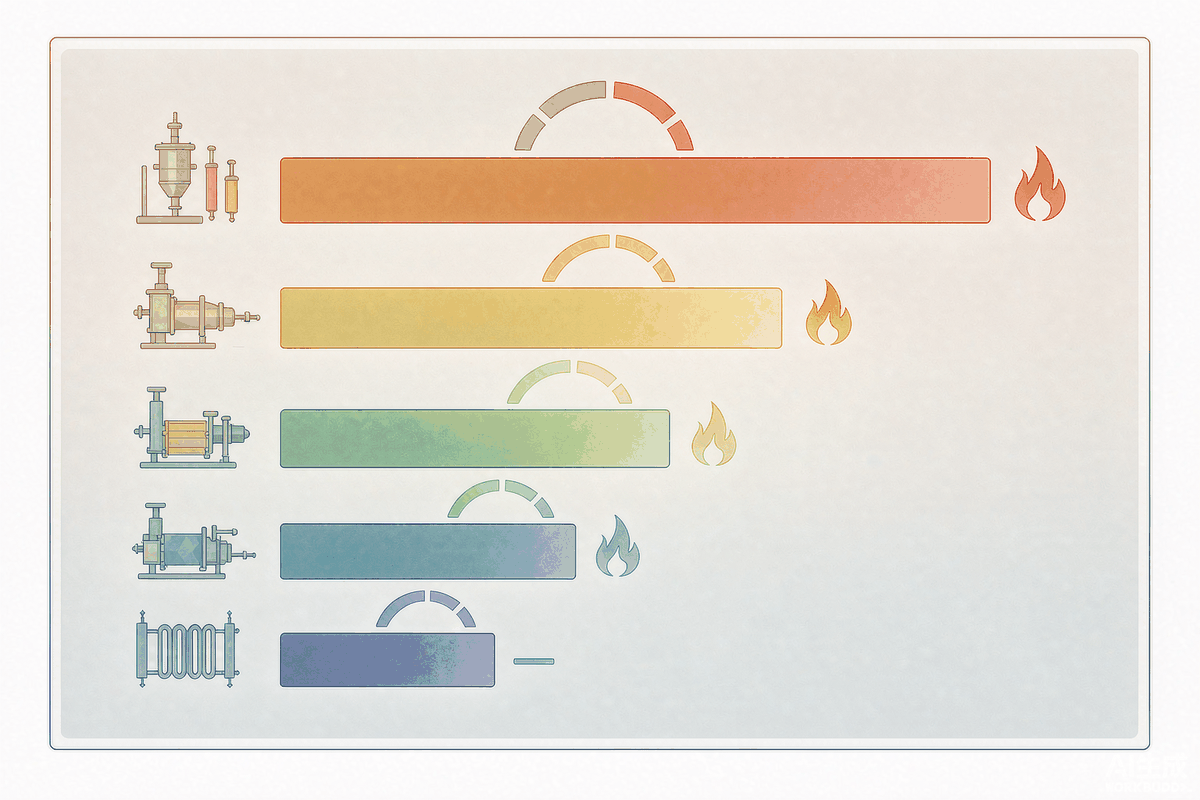
| Thermal Drying / Thermal Hydrolysis | Can reach below 40% or even below 30% | Highest investment and operating cost; large tail gas volume and cooling water volume; odor and dust risks[13]; thermal hydrolysis additionally has odor and operational complexity issues | Incineration, land application, pre-treatment for Anaerobic Digestion | Heat source (flue gas/waste heat/biogas) determines economics; should be justified as a "disposal route" rather than "dewatering equipment" in terms of sequence |
X. Five Engineering Truths
References
- Yao Jie. Research and Application of Key Technologies for Advanced Sludge Dewatering. Shanghai Municipal Sewerage Co., Ltd., 2013. (Small-scale prototype and full-scale machine tests; when the dosage of FeCl₃ and CaO accounts for approximately 8% and 20% of the sludge dry basis, the moisture content stably reaches below 60%; the results were applied to the Bailonggang Project. Funding: National Major Science and Technology Program for Water Pollution Control and Treatment 2010ZX07319-002)
- Design and Trial Operation of the Advanced Sludge Dewatering Facility at Bailonggang Wastewater Treatment Plant[J]. Water Purification Technology. (Design capacity 1500 t/d (calculated at moisture content 80%); FeCl₃ and lime chemical conditioning + diaphragm filter press; basically completed in 2012 年 6 月, commissioning started from 7 月; after 4 months of commissioning, stably reached 300 tDS/d, sludge cake moisture content <60%. Funding: National Major Science and Technology Program for Water Pollution Control and Treatment 2013ZX07315-003, Shanghai International Science and Technology Cooperation Fund 11230705100)
- Exploration of Operation Optimization of Advanced Sludge Dewatering at a Wastewater Treatment Plant in Shanghai. (Capacity 300 tDS/d; completed in 2012 年 10 月, total investment 2.61 亿 yuan; receives sludge from 11 wastewater treatment plants; design FeCl₃ 8%, lime 20%; 26 sets of diaphragm filter presses (20 domestic + 6 imported), single unit ≥15 tDS/d, each batch ≤4 h; 2014 年 annual average 283 tDS/d, actual FeCl₃ 11.8%, lime 30.3%; implements GB/T 23485—2009 moisture content ≤60%, shear strength ≥25 kN/m²)
- Xu Zhenjia, Zhang Xueying, et al. Dewatering Technologies for Excess Sludge from Municipal Wastewater Treatment Plants[J]. Water Purification Technology. (Adding 20% CaO will increase sludge volume by more than 20%; Tian Yu et al. measured specific resistance by vacuum filtration, and the specific resistance increased significantly after moisture content <97%; electro-osmosis + plate-and-frame filter press combination reduced moisture content from 80%~85% → 60%~40%, total power consumption without chemicals 80~120 kWh/t, a 2014 年 25 t/d demonstration project operated for one year with sludge cake <40%, lower heating value 4186~5443 kJ; Huaneng Tengzhou Xinyuan Thermal Power 150 MW flue gas drying and co-combustion; Shenzhen Yantian Waste Incineration Plant co-combusted approximately 40 t/d of sludge)
- Wu Yan, Ping Wei, Wang Xiang, Zhong Yinhai, Wang Maoqing, Liu Xingwang, Liu Yuhuan, Xia Hengrong. Study on Improving Sludge Dewatering Effect with Rice Husk Powder Additive[J]. Transactions of the Chinese Society of Agricultural Engineering, 2019, 35(2). (Chongqing Three Gorges University; National Natural Science Foundation of China 31670467, 51808089. Compared with adding ferric chloride alone: specific resistance decreased by 59.73%, net sludge yield increased by 45.27%, sludge cake solid content 13.99% → 23.97%, filtrate turbidity 11.89 → 2.91 NTU, soluble COD 664.87 → 79.93 mg/L; rice husk powder itself has no flocculation effect and needs to enter the interior of flocs under the action of Fe³⁺)
- Advanced Sludge Dewatering Project of Shanghai Tianshan Wastewater Treatment Plant. (Design capacity 13 tDS/d, total investment approximately 2600 万 yuan; centrifugal thickening + chemical conditioning + diaphragm filter press; moisture content reduced to below 60%)
- Upgrading and Renovation Project of Sludge Treatment System at Shenzhen Nanshan Wastewater Treatment Plant. (Total capacity 800 t/d wet sludge at moisture content 80%, in two phases; treatment object is sludge after thickening at moisture content approximately 97.5%; adopts ultra-high pressure elastic press and supporting auxiliary equipment)
- Summary of the Development of Advanced Sludge Dewatering Technology and Case Analysis. (Lime stabilization technology: lime dosage accounts for 5%~30% of wet sludge, sludge with moisture content 80% has outlet moisture content 74.0%~48.2%; fixed asset investment approximately 2~4 万 yuan/t sludge (80% moisture content); operating cost per ton approximately 50~150 元, lime consumption accounts for 70%~90% of total operating cost; electro-osmotic advanced dewatering reduces moisture content from 99% or 85% → <60%, investment approximately 20% lower than hot air drying, operating cost approximately 30% lower)
- Improved Dewaterability of Waste Activated Sludge by Fe(II)-Activated Potassium Periodate Oxidation. (Optimal conditions: initial pH 6.8, KIO₄ 1.4 mmol/g VSS, Fe(II)/KIO₄ molar ratio 1.2; CST decreased by 64.34%, SRF decreased by 84.13%, filter cake moisture content decreased by 6.69%; Fe(IV) and accompanying •OH are the dominant active species, TB-EPS transforms to S-EPS; the paper points out that improved oxidation capacity does not necessarily improve dewatering performance, such as in hydroxylamine-enhanced Fenton systems)
- Xu Y, Jin F, Liu X, Cheng W, Yu R, Wan J L, Xie J H, Du Y J. Insights into EPS-mediated simultaneous dewatering and stabilization of landfilled tannery sludge via combined chemical conditioning and PVD-vacuum preloading[J]. Chemical Engineering Journal, 2026: 178611. (PFS + carbide slag conditioning of tannery sludge at landfill sites; SRF 4.58×10¹⁴ → 1.68×10¹² m/kg; SRF and CST correlated with total EPS content with R²=0.99; total EPS linearly correlated with Cr and Zn leaching concentrations with R²=0.92~0.96; residual fractions of Cr and Zn increased from 25.7%, 20.9% to 73.0%, 75.2%; moisture content at all radial positions <60%)
- Sludge dewatering: A review of conventional methods and microbial assisted approaches[J]. Journal of Environmental Management. (Operational definitions of EPS classified into three levels: S-EPS/LB-EPS/TB-EPS; proposes a unified framework combining EPS fractionation, CST, SRF, DSC, and low-field NMR to interpret sludge microstructure and water binding states; mechanical dewatering mainly removes free water and part of interstitial water)
- Changes of network structure and water distribution in sludge with the stratified extraction of extracellular polymeric substances[J]. Environmental Science and Pollution Research, 2022, 29: 48648. (Capillary water 59.17%, adsorbed water 40.83% in S-EPS; 54.77%, 45.23% in TB-EPS; capillary water accounts for 99.99% in LB-EPS; after LZM or freeze-thaw conditioning, sludge yield stress τy first decreases then increases, consistency coefficient k decreases from 4.23 Pa·sⁿ to 0.006 Pa·sⁿ)
- Introduction/Detailed Explanation of Sludge Dewatering Treatment Methods: Sludge Drying Faults and Solutions. (Commonly used conditioners are ferric chloride, quicklime, fly ash, etc.; relative to sludge at 80% moisture content, total inorganic additive dosage is 6%~10%, after dewatering to 50% the weight increases by 30%~50% compared with no chemical addition, so reduction is not actually achieved; produces significant shock load on landfill leachate systems; during incineration, heating value decreases and ash content increases, and alkaline substances such as quicklime cause furnace corrosion and scaling)
- Co-combustion Disposal of Sludge in Coal-Fired Power Plants. (Source: Beijing Hengrun Huichuang Environmental Technology Co., Ltd., Huadian Water Technology Co., Ltd., Beijing Capital Eco-Environment Protection Group Co., Ltd. Sludge dry basis Cl ≤1.57% or S ≤3.11%; iron salt conditioners, especially FeCl₃ or Fe₂(SO₄)₃, should not be added, as iron-bearing minerals easily form low-temperature eutectics with other minerals and aggravate boiler slagging, and the iron-calcium ratio should be controlled to avoid approaching 1; when CaO content exceeds 30%, the ash melting point shows an increasing trend and in-furnace desulfurization is possible; among 9 sludge samples investigated, 4 showed moderate slagging, 1 showed moderate to severe, and 4 showed severe slagging)
- Effect of Acid-Base and Agricultural Biomass Aggregates on Sludge Dewatering Performance[J]. Journal of Harbin Institute of Technology, 2019. (National Key R&D Program 2016YFC0305404. At pH=3, the moisture content of sludge cake after advanced dewatering decreased to 61.5%; after adding WSP, CSP, and RHP, the sludge filtration specific resistance decreased to 7.32×10⁸, 7.41×10⁸, 8.29×10⁸ s²/g respectively; adding 0.75 g/g DS also could not improve sludge dewatering performance; when pH<2 or pH increased from 8 to 11, tCS and FSR increased significantly)
- Wu Y, Zhang P, Zhang H, Zeng G, Liu J, Ye J, Fang W, Gou X. Possibility of sludge conditioning and dewatering with rice husk biochar modified by ferric chloride[J]. Bioresource Technology, 2016. (Hunan University. Optimal modification conditions FeCl₃ 3 mol/L, ultrasound 1 h; optimal MRB–Fe dosage 60% DS; compared with raw sludge, SRF decreased by 97.9%; 0.03 MPa vacuum filtration 6 min sludge cake moisture content 96.7% → 77.9%; SV₃₀ decreased from 96% to 60%; net sludge yield increased by 28 times)
- Study on Sludge Dewatering Based on Skeleton Builders and Geotechnical Properties of Solidified Soil. (National Natural Science Foundation of China 51078162. Object is sludge at moisture content 98.5%, with addition of inorganic composite conditioners such as fly ash and quicklime; specific resistance decreased from 10⁹ s²/g to 10⁷ s²/g; without external cement addition, the solidified sludge cake 7 d has unconfined compressive strength >100 kPa)
- Enhancing the Dewaterability of the Municipal Sludge by Flocculant Combined with Skeleton Builder. (The best conditioning effect is achieved when the dosage of aluminum ammonium enhancer and sawdust are 2% and 20% of sludge dry weight respectively; compared with raw sludge, SRF decreased by 89.9%, CST decreased by 73.1%; the optimal combination has sludge cake organic matter content 9.12%, heating value 13,972 kJ/kg)
- Yang Y, Yang X, Yang Q, Zhang H, Xu W, Zhu L, Ma P, Li Y. Exploring the feasibility and potential mechanism of synergistic enhancement of sludge dewaterability by ultrasonic cracking, chitosan re-flocculation and sludge-based biochar adsorption of water-holding substances[J]. Journal of Environmental Chemical Engineering, 2022. (Combined US + CTS + SBB conditioning reduced SRF by 92.98%, CST by 78.46%, and sludge cake moisture content by 16.35%)
- Hubei Xianning Electro-Osmotic Advanced Sludge Dewatering Project. (Design daily treatment 20 t (80% moisture content); "mechanical pressing + electro-osmosis" coupling, ambient temperature without chemicals; investment 580 万 yuan, land area approximately 500 m², of which construction investment 530 万 yuan; completed and put into operation in 2014 年 9 月; moisture content 80% → 40%, volume reduction 60%~70%, power consumption 80~90 kWh/t, heating value 1000~1300 kCal/kg)
- Application Demonstration of Point-to-Point Water Distribution and Sludge Synergistic Dewatering in an Industrial Park Wastewater Treatment Project. (PPP project of Xiajiang County Hexi Industrial Cluster Wastewater Treatment Plant, capacity 10000 m³/d; "belt pre-thickening + high-pressure diaphragm plate-and-frame filter press" sludge synergistic dewatering, moisture content reduced to below 60%; stable operation for 4 年, direct operating cost 1.356 元/t)
- Industrial Energy Saving and Environmental Protection Exhibition. Sludge Treatment Revolution: Technological Breakthrough from High Moisture Content to Resource Utilization, 2025. (Centrifuge 3~5 kWh/t > belt filter press 1.5~2.5 > plate-and-frame filter press 0.8~1.2; PAM dosage is usually 0.2%~0.5% of sludge dry weight; electro-osmosis investment is 2~3 times that of traditional equipment)[Commercial/industry exhibition material; energy consumption magnitudes should be traced back to original literature]