



 Multi-industry nationwide (municipal wastewater treatment plants / printing and
  Pilot to engineering scale (6 t/d to 600 t/d drying lines, co-processing up to 5
Sludge Thermal Drying: Which Moisture Content Level to Reach Is Not Something the Dryer Can Decide
— "Reduction of 79.4%" and "volume reduction of 67%" are two different accounts; "electricity consumption" and "steam consumption" appear to differ threefold, yet when converted to primary energy they are almost on par; "a moisture content of 40% enables self-sustaining incineration" and "a solids content of 65% is required for thermal balance" are both correct, because they are not calculating the same account
I. The water that drying truly needs to handle is the portion that mechanical dewatering cannot remove
Water in sludge exists in four forms: free water, interstitial water, surface (adhesion) water, and intracellular bound water. The first two categories account for the majority of the total water content and can be removed by mechanical means such as gravity thickening, centrifugation, and plate-and-frame filter pressing; the latter two have high binding energy with solid surfaces, and mechanical dewatering can at best press the moisture content down to the range of 60%~80% before reaching its limit. Therefore, what the dryer truly needs to handle is the portion of water that mechanical dewatering cannot remove—this also explains why every fluctuation of 1% in the feed sludge moisture content is so critical: it does not change the dry-basis mass, but proportionally changes the amount of water that needs to be vaporized.
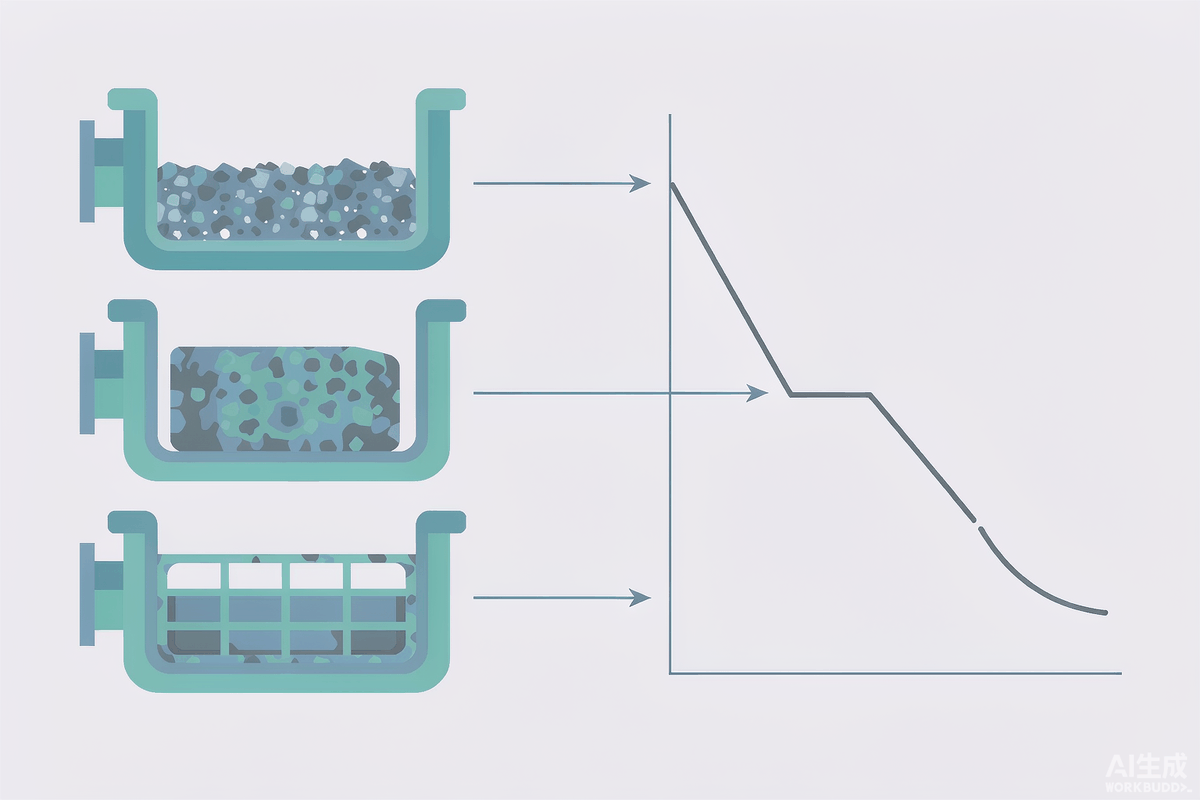
Thermal drying itself is divided into three stages. The first stage is the preheating stage, where the material is heated to near the wet-bulb temperature, with very little evaporation; the second stage is the constant-rate stage, where the material surface remains wet, and the evaporation rate is controlled by the external heat transfer rate, making it the most efficient region of the entire curve; the third stage is the falling-rate stage, where after surface water has evaporated, moisture must migrate from inside the particles to the surface, making mass transfer the controlling step, and the rate decays rapidly. Sandwiched between the second and third stages is the sticky zone that engineering least wants to deal with: sludge loses flowability and becomes paste-like, the heat transfer coefficient drops sharply, and the stirring torque surges. Measurements inside paddle dryers show that after 30~40 min of operation, the sludge temperature begins to drop noticeably, indicating deterioration of heat transfer, until the material breaks up and enters the granular zone, at which point the temperature rises again.
Another easily overlooked measured phenomenon is the reverse temperature rise at the end of drying: under drying conditions of 160℃ and 180℃, the temperature of nearly fully dried sludge can reach 135℃ and 162℃ respectively—the dried sludge is in turn heated by the wall surface, and this segment is precisely the period with the highest dust risk. Therefore, drying is not a one-way process of "burning off water"; it simultaneously produces three things: dried sludge, tail gas (containing water vapor, ammonia, volatile organic compounds, and odorous components), and condensate. The latter two are most easily omitted from calculations during the planning stage, yet they are precisely the major contributors to investment and operating costs.
II. Selection sequence: first determine the heat source, then the outlet, and only lastly the equipment type
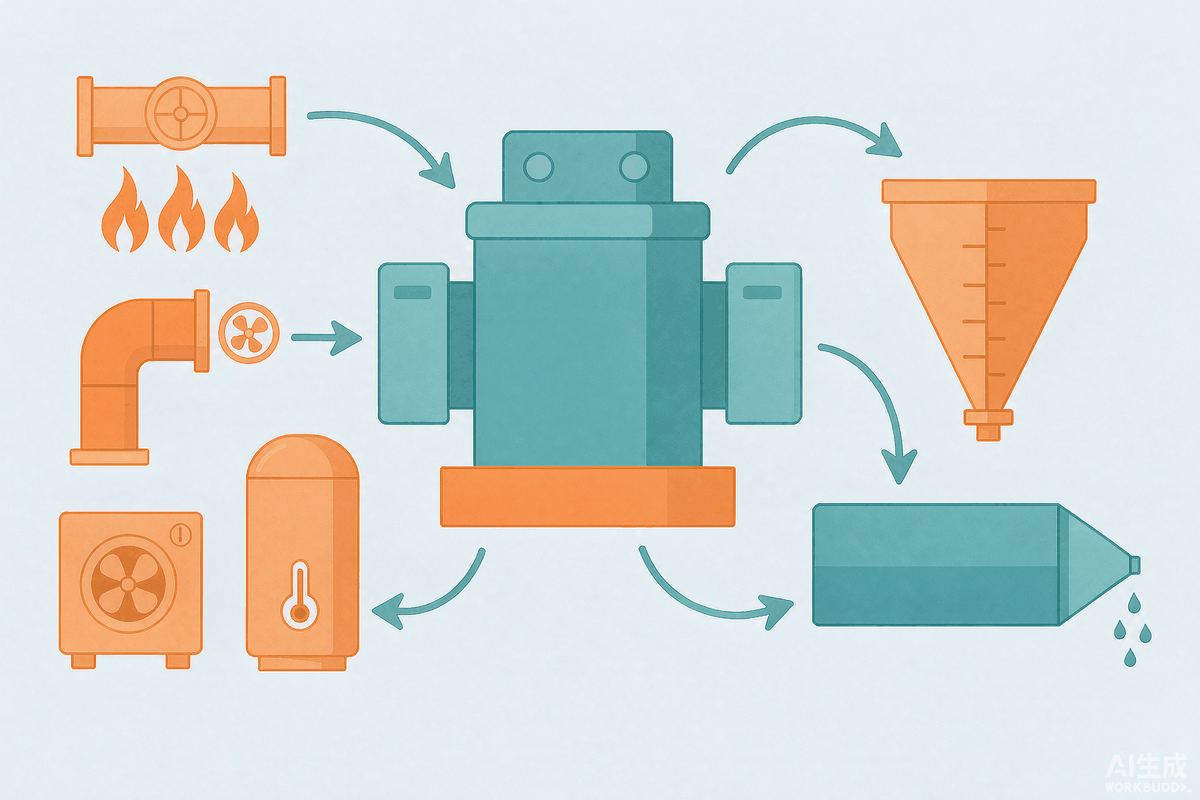
Reversing the selection sequence (choosing the equipment type first and then finding the heat source) is the most common structural error in drying projects. The correct sequence is three steps: ① What is the heat source—plants with steam above 0.6 MPa will almost inevitably choose indirectly heated equipment types (paddle, disc, thin-film); plants with only low-temperature waste heat (hot water or flue gas at 80~150℃) can only take the low-temperature belt or heat pump coupled route; ② Where does the water vapor go—indirectly heated equipment types produce small tail gas volumes with concentrated condensate, while directly contacting equipment types (rotary drum, fluidized bed, direct flue gas drying) increase tail gas volume by multiples or even an order of magnitude, and the investment in tail gas deodorization and dust removal may exceed that of the main dryer; ③ Who takes the dried sludge—cement kilns, coal-fired power plants, independent incinerators, RDF production, or building materials each have hard constraints on moisture content, chlorine and sulfur content, and conditioner type; if no outlet can be matched, the only option is downgrading to landfill.
The reason the sequence cannot be reversed is that among these three steps, only the third step will in turn lock in the target moisture content. The direct collision between upstream process formulation and downstream disposal constraints is the norm along the sludge chain: the dewatering stage adds iron salts and lime to make the cake drier, while the co-incineration end explicitly rejects iron salt conditioners due to slagging and chlorine corrosion—the same parameter, with two opposing requirements.
III. The first instance of mixed terminology: reduction of 79.4% and volume reduction of 67%—the difference is not a calculation error
In the National Catalogue of Advanced Pollution Prevention and Control Technologies, the dehumidification heat pump low-temperature drying case (Yongqing domestic sludge reduction project, 6 t/d) originally gives two figures: the sludge moisture content is reduced from 82.5% to 15%, volume reduction 67%, mass reduction 79.4%. When both figures appear together, they are often misinterpreted as a contradiction in basis; in fact, they calculate two different things.
The accounts become clear once you work them through. For 1 t of wet sludge at moisture content 82.5%, the dry-basis solids mass is 175 kg. After drying to moisture content 15%, the total mass becomes 175 ÷ 0.85 ≈ 206 kg, so mass reduction = (1000 − 206) ÷ 1000 = 79.4%, and the mass basis checks out completely. The volume basis requires one more pass through bulk density: sludge at moisture content 82.5% has a density of about 1.0 t/m³, and 1 t accounts for roughly 1.0 m³; whereas dried sludge at moisture content 15% is granular or powdery, with a bulk density of only 0.5~0.6 t/m³, and the volume of 206 kg is about 0.34~0.41 m³. Volume reduction = 1 − 0.34~0.41 ≈ 59%~66%, which is of the same order of magnitude as the 67% in the original text. The conclusion is clear: because the bulk density of dried sludge is significantly lower than that of wet sludge, volume reduction is always less than mass reduction, and the two can never be equal.
The engineering consequences of this are very real. Transport fees are usually calculated per "tonne-kilometer," while landfill fees and co-incineration disposal fees are usually calculated per "tonne," so quotations and settlements must use mass reduction; whereas silos, hoppers, screw conveyors, and packaging machines are sized by volume, so volume reduction must be used. Getting one wrong results in "after drying, the transport truck still cannot be filled / cannot fit the load" or "the silo stays half empty year-round."
IV. The second mixed usage: four sets of energy consumption units; after conversion to primary energy, the two routes are almost on par
Drying energy consumption has at least four commonly used units: water removal capacity (kg water/kWh, the higher the better), specific power consumption (kWh/t water), specific steam consumption (t steam/t water), and specific heat consumption (kJ/kg water). The mixed use of these four sets of units across different sources is the main reason for disagreements over conclusions such as "low-temperature drying saves half the energy consumption compared with steam drying."
First, look at publicly available measured data. Industry data for paddle-type indirect heating models give a steam consumption of 1.1~1.4 t steam/t water and a thermal efficiency of ≥75% (measured values can reach above 80%). The measured data for the low-temperature dehumidification route are more detailed: a low-temperature belt dryer at a certain plant cumulatively treated 74 781.87 t of wet sludge at moisture content 80%, with an average outlet sludge moisture content of 35.1±11.25%, and a water removal capacity of the main drying unit of 3.11 kg/(kW·h); the water removal capacity of a closed-loop thermal drying unit is 3.2~3.47 kg/(kW·h), averaging 3.32. A unit in Zhejiang dried wet sludge at moisture content 1 t 63.26% down to 27.06%, and removing 1 m³ of water consumed about 298 kWh of electricity, costing about 193.7 元 at an electricity price of 0.65 元/kWh.
Converting the two sets of bases to the same reference yields a result many people have never calculated. Take the low-temperature route at 3.32 kg water/kWh, i.e. 301 kWh/t water; converted at the current average coal consumption for thermal power generation of about 300 g standard coal/kWh, this is about 90 kg standard coal/t water. Take the steam route at 1.25 t steam/t water (0.6 MPa saturated steam has an enthalpy of about 2 760 kJ/kg; after deducting the feedwater enthalpy of about 400 kJ/kg, the net heat consumption is about 2 360 MJ/t steam), equivalent to about 2 950 MJ/t water, and converted at 1 kg standard coal = 29 307 kJ, this is about 101 kg standard coal/t water. The primary energy consumption of the two routes falls within the same order of magnitude.
There is one more point that must be aligned: what boundary the energy consumption assessment value is written against. The above-mentioned low-temperature belt dryer did not meet the requirement in T/CAMIE 10—2021 Sludge Low-Temperature Belt Dryer that the water removal capacity be no less than 3.5 kg/(kW·h); while the assessment value in the contract is 384.6 kWh/m³ condensate water. The two figures look different, but in fact they describe the same thing from two directions; which basis is chosen and whether the boundary includes auxiliary equipment determine the judgment of "meeting the standard or not."
V. The Third Confusion: The Threshold of "Self-Sustaining Incineration" — Between 40% and 35% Lies an Account Book
The most popular saying in the industry is that "self-sustaining incineration can be achieved once the moisture content drops below 40%." Yet a systematic study on cement kiln co-processing gives three points that look completely different: taking sludge with an initial solids content of 20% (moisture content 80%) and a dry-basis calorific value of 3 400 cal/g (about 14.2 MJ/kg) as the object, when dried to a solids content of 37.29% (moisture content 62.7%), the recoverable heat from the sludge fed into the kiln is zero; when the solids content reaches 65% (moisture content 35%), the recoverable heat from kiln feeding and the heat required for drying just reach equilibrium; only when dried further does the system have net recoverable heat.
Connecting these three points makes it clear: 62.7% is the threshold at which "feeding into the kiln no longer incurs a heat penalty," and 35% is the threshold at which "drying heat consumption and kiln-recovered heat offset each other." The commonly cited "40% self-sustaining" actually refers to the vicinity of the second threshold, and its validity rests on two implicit premises — the boundary counts only the incinerator itself, excluding drying energy consumption; the dry-basis calorific value is sufficiently high. The same study also gives a hard constraint on the heat source side: for daily drying of 300 t, with moisture content reduced from 80% to 35%, it is necessary to extract 32 003 Nm³/h of flue gas from the cement kiln calciner (kiln system output 3 283 t/d, equivalent to 0.234 Nm³/kg clinker). In other words, "self-sustaining" is never a property of the sludge alone, but is jointly determined by sludge properties + drying temperature + system boundary. For printing and dyeing and electroplating sludge with high inorganic content, the dry-basis calorific value is far below 3 400 cal/g, and the same statement simply does not hold.
There is also a constraint here that binds three things together — "energy consumption—calorific value—condensate": the drying temperature should be controlled below 380℃, because at higher temperatures the volatiles in the sludge are lost through pyrolysis and the calorific value instead decreases; and the same study simultaneously observed that as the drying temperature rises, the concentrations of COD, BOD, ammonia nitrogen, and SS in the drying liquid also become higher and higher. That is to say, raising the temperature in order to make the sludge drier comes at a cost on both the calorific value side and the condensate side — which is precisely the definitional conflict to be elaborated in the next section.
VI. The Fourth Confusion: Condensate, from "Directly Dischargeable" to COD 13 810 mg/L
On the question of "how to handle drying condensate," publicly available information gives an extremely wide range of answers: at one end, the national advanced technology catalog explicitly states that "the condensate produced can be directly discharged"; at the other end, high-concentration organic wastewater with measured COD of 13 810 mg/L is reported. Laying five sets of public data side by side, the first variable immediately emerges — the drying temperature tier.
| Source/Process | Drying Temperature Level | pH | COD | Ammonia Nitrogen/Total Nitrogen | Other |
|---|---|---|---|---|---|
| Dehumidification heat pump low-temperature drying (National Advanced Pollution Prevention and Control Technology Catalog, Yongqing 6 t/d) | 40~75℃ enclosed low temperature | — | Can be discharged directly (no value given) | — | Low emission of harmful gases; drying workshop staffed with 5 persons on 24 h shifts |
| Measured data from a low-temperature belt dryer at a plant (cumulative 74 781.87 t wet sludge) | Outlet air 70℃, return air approx. 35℃ | 7.96±0.15 | 988±292 | Ammonia nitrogen 66±9.7; Total nitrogen 80±13 | Total phosphorus 0.01±0.005; SS 4.4±0.98; Water volume approx. 3 m³/h; No obvious color or odor, can be diluted by influent when discharged into the plant's internal pipe network |
| Enclosed circulating thermal drying device (China Jiliang University et al.) | Enclosed circulating thermal drying | — | 152 | Ammonia nitrogen 37.72; Nitrogen-containing 48.32 | Total phosphorus 0.3; SS 6; When the same device tested sludge from other municipal plants, COD averaged <50, with a minimum of <25 |
| Stirring and drying characteristics of paddle dryer (Shanghai Chengtou Wastewater Treatment Co., Ltd.) | Paddle indirect heating, sludge temperature at final stage can reach 135~162℃ | 9.3 (alkaline) | 430 | Ammonia nitrogen 167 | BOD₅ 150; pH, COD, BOD₅, and ammonia nitrogen are all significantly higher than the influent limits of wastewater treatment plants |
| Technical specification for condensate wastewater from high-temperature indirect sludge drying (Appendix A reference values) | High-temperature indirect drying | 8~10 | 1 000~2 500 | Ammonia nitrogen 200~700; Total nitrogen 350~800 | Color ≤50, yellow and turbid; SS 200~3 000; BOD₅ 600; Total phosphorus 10; Petroleum 50~150; Sulfide ≤80; Contains trace chromium/zinc/copper/nickel |
| Condensate from a sludge disposal center (industry data citing "Sludge Thermal Drying") | High-temperature drying | 5.3 (acidic) | 13 810 | Ammonia nitrogen 1 130 | One of the main sources of COD is volatile fatty acids; phosphorus, sulfur, manganese, and zinc contents are very low, making it difficult to support microbial growth; contains volatile phenols, toxicity requires special attention |
Four conclusions can be directly applied to design. First, temperature is the primary variable: in the low-temperature range (≤75℃), condensate COD is on the order of 1 000 mg/L with ammonia nitrogen in the tens, and can be discharged into the plant's internal pipe network for dilution by influent; in the high-temperature range (steam 150~200℃, material final-stage temperature exceeding 130℃), condensate COD ranges from 1 000 to 13 810 mg/L and ammonia nitrogen from 200~1 130 mg/L, requiring separate treatment as high-ammonia-nitrogen, high-COD organic wastewater. The typical process is emergency tank→equalization tank→pretreatment→hydrolysis acidification→aerobic→advanced treatment, with the concentrate returned to the drying stage. Second, the same device processing a different sludge stream may produce completely different condensate: after the same enclosed thermal drying device was switched to sludge from several municipal plants, COD dropped from 152 mg/L to below 50 mg/L and even below 25 mg/L—sludge quality differences outweigh process differences. Third, pH cannot be applied uniformly: measured values range from 5.3 (acidic, dominated by volatile fatty acids) to 9.3 and 8~10 (alkaline, dominated by ammonia release), with opposite acid-base directions, directly affecting subsequent process selection. Fourth, condensate often lacks the nutrients required by microorganisms: wastewater with very low phosphorus, sulfur, manganese, and zinc contents entering the biological stage directly will exhibit "high COD but bacteria won't grow," requiring nutrient supplementation or combined treatment with other wastewater.
VII. Safety: Dried Sludge Dust Is Class St 1, While the Limiting Oxygen Concentration Is Only 20%
The one section of sludge drying that can never be omitted is safety. According to the EN 14034 series dust explosion characteristic test methods and the measured results of ISO/IEC 80079-20-2, thermally dried sludge dust is a Class St 1 combustible dust: the minimum auto-ignition temperature of a 5 mm-thick dust layer is 270℃, the minimum ignition temperature of a dust cloud is 490℃, the minimum explosive concentration (lower explosive limit) is 60 g/m³, the limiting oxygen concentration (LOC) is 20%, and the minimum ignition energy is greater than 1 000 mJ. The study also lists sludge dust fires and explosions that have occurred at wastewater treatment plants in recent years, including 2021 年 San Francisco, USA, 2020 年 Bristol, UK and Hamilton, Canada, and 2019 年 Koziegłowy, Poland; 2021 年 globally reported combustible dust incidents total 137 (57 fires and 80 explosions).
Among these figures, the most memorable is LOC = 20%. The oxygen content of dry air is 20.9%, which means that for a dryer using air as the carrier gas with no inerting measures whatsoever, the oxygen concentration margin is less than 1 percentage points. This means system safety cannot rely on "the oxygen content being naturally low enough"; it must rest on three conditions being satisfied simultaneously: keeping the temperature below the dust layer auto-ignition temperature (270℃ is the measured value for a fully dried dust layer, and the equipment inner wall and hot-spot temperatures must have margin), keeping the dust concentration below the lower explosive limit (60 g/m³ is the measured value, while the industry guideline for municipal sludge is 40~60 g/m³), and completely eliminating ignition sources (friction, static electricity, mechanical impact, hot particles — the minimum ignition energy is only on the order of 1 000 mJ). If active inerting is to be used, the operating oxygen contents given in industry literature are 2% for nitrogen, 4% for carbon dioxide, and 8% for steam, all considerably more conservative than the literature LOC of 20% — the difference here stems from differences in the test object (sludge type, particle size, moisture content) and the protected object (full-scale machine vs. laboratory vessel), so conservative values are adopted in engineering.
The empirical moisture values for ordinary organic dust can also serve as an auxiliary criterion: when the drying gas humidity is relatively high, dust is less likely to disperse and the flame propagation speed decreases; organic dust with a moisture content above 30% is not readily explosible, and above 50% it is generally considered safe. This rule of thumb in turn reminds designers that the drier the material, the higher the risk; full drying (moisture content in the 10% range) imposes higher explosion-proof design requirements than semi-drying (in the 30%~40% range).
VIII. The Real Ledger
| Project/Source | Scale and sludge type | Heat source and model | Key indicators | Investment/Cost |
|---|---|---|---|---|
| Chongqing Luohuang sludge thermal drying project (co-combustion in thermal power plant) | 600 t/d, domestic sewage sludge | Low-temperature low-pressure steam from power plant, independent drying then sent to power plant for co-combustion with coal | Sludge treatment fee calculated at 238 元/t, considering 3 年 price adjustment, financial internal rate of return 6.92% (industry benchmark 5%), pre-tax investment payback period 10.43 年 (industry benchmark 18 年) | Part I investment 14 008.86 万 yuan; total investment 17 300.13 万 yuan; treatment cost 244.60 元/t, unit operating cost 165.51 元/t |
| Shanghai Hongqiao Wastewater Treatment Plant sludge dewatering and drying (National Comprehensive Service Platform for Transformation of Ecological and Environmental Scientific and Technological Achievements) | 240 t/d reduced to 80 t/d, domestic sewage sludge | Low-temperature vacuum dewatering and drying integrated process: feed filtration—diaphragm filter pressing—backblowing—vacuum drying—discharging | Moisture content reduced from 98% to below 40% in one pass; under negative pressure, water vaporization temperature drops to about 45℃; heat source temperature drops from above 100℃ to below 90℃ | Total project investment 9 300 万 yuan; operating cost about 160 元/t; technology has been promoted in 30 projects, total scale 2 300 t/d (calculated at 80% moisture content) |
| Nanjing sludge resource utilization comprehensive project (sludge drying technology based on coupled power generation) | 400 t/d | Coupling with existing heating system of power plant, moisture content 80% dried to 30% | Heat required for water evaporation about 2 600 kJ/kg water; dust removal efficiency 98%, after condensation >99%, recovered heat >50%; equivalent annual standard coal saving about 3 530.61 t | Total investment 8 288 万 yuan (fixed assets 7 506 万 yuan, of which engineering costs 6 369 万 yuan); unit operating cost 134 元/t, unit running cost 158 元/t; after-tax internal rate of return 13.66%, pre-tax payback period 7.78 年 (including 2 年 construction period) |
| Yongqing domestic sludge reduction project (dehumidification heat pump low-temperature drying equipment in the Catalogue of National Advanced Pollution Prevention and Control Technologies) | 6 t/d, domestic sewage sludge | Dehumidification heat pump + mesh belt drying, 40~75℃ enclosed low temperature | Moisture content 82.5%→15%, volume reduction 67%, mass reduction 79.4%; dewatering energy consumption <250 kWh/t water; unit energy consumption 4 kg water/kWh (industry average 2.5) | Investment 150 万 yuan; operating cost (dewatering) <200 元/t water; condensate can be discharged directly |
| Operation report of a low-temperature belt dryer at a certain plant (cumulative treatment of 74 781.87 t wet sludge up to 2023-06) | 8 dryers, feed sludge 80% | Low-temperature belt type, outlet air 70℃, return air about 35℃ | Average discharged sludge 35.1±11.25%, reduction 67.8%; main unit water removal 3.11 kg/(kW·h) (= 321.5 kWh/m³), workshop unit power consumption 375 kWh/m³; did not reach T/CAMIE 10—2021 of ≥3.5 kg/(kW·h); when feed sludge >81%, power consumption is difficult to control; when >84%, it becomes fluid and may cause mesh belt overload and breakage | Contract assessment value 384.6 kWh/m³ condensate; drying workshop staffing 5 persons, 24 h shifts |
| Enclosed gas circulation sludge thermal drying technology (College of Mechanical and Electrical Engineering, China Jiliang University, etc.) | Pilot test, 63.26%→27.06% | Heat pump + enclosed circulating air duct, heat recovery unit recovers return air heat | Water removal capacity 3.2~3.47 kg/(kW·h), average 3.32; power consumption for removing 1 m³ water about 298 kWh | Cost of removing 1 m³ water about 193.7 元 (electricity price 0.65 元/kWh); converted to raw sewage about 0.023 元/m³ (treatment volume 19 万 m³/d) |
| Xianyang Jingyang Jidong Cement 480 t/d collaborative disposal (Third Batch of the Compilation of Advanced Applicable Technologies for "Zero-Waste City" Construction) | 480 t/d, semi-solid wastes such as sludge, paint residue, oil sludge, etc. | Cement kiln head flue gas waste heat (110℃ flue gas heat exchange to 90℃ hot water) + heat pump | Dried to moisture content 40%~10%, material weight reduction above 50%; dried sludge enters kiln as alternative fuel, used to replace coal consumption indicators | Waste gas introduced into high-temperature section of kiln head grate cooler for incineration, equipped with activated carbon deodorization; condensate treated and reused |
| Beijing Cement Plant Sludge Disposal Center (China's first demonstration project for sludge disposal from wastewater treatment plants using cement kiln waste heat drying, completed in 2009 年) | 500 t/d (average solid content 20%) | Cement kiln flue gas waste heat, semi-drying | Moisture content reduced from 80% to 35%; drying odor directly incinerated in kiln; cumulative sludge treatment of over 30 ten thousand tons by the end of 2012 年 | Condensate wastewater enters supporting wastewater treatment station, after treatment reused as make-up water for drying condensate circulation; compared with independent "drying + incineration + flue gas treatment", infrastructure investment is greatly reduced |
| Ningxia Qingtongxia sludge drying to biomass fuel project (reported by Ningxia Broadcasting and Television Station) | Single line 100~150 t/d, planned 5 lines; domestic and industrial sludge | "Solar + air source heat pump coupled drying", 50~60℃ low-temperature drying, residence about 20 h | Moisture content 80%→less than 10%; calorific value 2 000~3 000 kcal; power consumption per ton of sludge over 100 kWh; comprehensive disposal cost per ton about 150 元 (traditional semi-drying incineration process over 300 元) | Planned total project investment 1.1 亿 yuan; fees: domestic sewage sludge 280 元/t, industrial sludge 340 元/t; 2027 年 planned to reach full capacity 500~700 t/d |
| Printing and Dyeing Wastewater sludge drying technology using flue gas waste heat from thermal power plant (industry technology promotion platform) | 100 t/d (moisture content about 80%) | Flue gas waste heat from thermal power plant | Preserves over 95% calorific value of Printing and Dyeing Wastewater sludge; calorific value of 20 t dried sludge is approximately equivalent to 7 t standard coal; increases thermal energy utilization rate of thermal power plant by 10%~15% | Total investment 400~750 万 yuan (main equipment 350~600 万 yuan); operating cost 50~70 元/t; land area 1 000~3 000 m²; based on landfill fee 180 元/t, annual savings of 432~468 万 yuan |
| Engineering application of KJG series twin-shaft paddle dryer (paper mill sludge, etc., equipment manufacturer and industry data) | Heating area 100~240 m²; feed 80%, discharge 25%~40% | 0.4~0.6 MPa saturated steam (about 140~160℃) or thermal oil; indirect heating | Steam consumption 1.1~1.4 t steam/t water; thermal efficiency ≥75% (measured above 80%); power consumption about ≤15 kWh/t dried sludge; 240 m² model treats wet sludge 4.5~6.0 t/h, steam 1.25~1.40 t/t water | Material contact surface SUS304; tail gas equipped with condensation + alkali washing + activated carbon three-stage treatment; shaft end mechanical seal + nitrogen purging |
IX. How to Match the Machine Model with the Heat Source
| Technology | Heat Transfer Mode and Heat Source | Typical Dewatered Sludge Moisture Content | Energy Consumption Characteristics | Main Limitations and Ancillary Equipment |
|---|---|---|---|---|
| Paddle Type (Hollow Paddle / Dual Shaft) | Indirect wall conduction, mainly 0.4~0.6 MPa saturated steam, thermal oil or hot water also applicable | 25%~40% (adjustable to 20%~40%) | Steam 1.1~1.4 t/t water, thermal efficiency ≥75% (measured above 80%) | Heat transfer deterioration in viscous zone, high organic sludge prone to wall adhesion; requires exhaust gas condensation + alkali washing + activated carbon; shaft end sealing and paddle wear resistance are key to service life |
| Thin Film / Thin Layer / Disc Type | Indirect conduction, steam or thermal oil; rotor and wall surface film scraping | 30%~40% or lower | Same order of magnitude as paddle type, large heat transfer area per unit volume, small footprint | Sensitive to sand content, rotor wear; feed requires stable homogenization |
| Low-Temperature Belt Type + Dehumidification Heat Pump | Closed-loop circulating hot air, dehumidification heat pump recovers latent heat and reheats, 40~80℃ | 10%~50% adjustable on demand | Water removal 3.1~3.5 kg/(kW·h); MEE catalog dewatering energy consumption <250 kWh/t water | Advantages include no boiler or steam network, no odor emission, condensate can be directly discharged; extremely sensitive to feed sludge moisture content (>81% deteriorates, >84% can cause mesh belt breakage) |
| Low-Temperature Vacuum Dewatering-Drying Integrated System | Negative pressure lowers water boiling point (down to approximately 45℃), heat source temperature <90℃ | Moisture content reduced from 98% to below 40% in one step | Dewatering and drying combined, eliminating intermediate conveying and reheating | Plate-and-frame type intermittent operation; relatively high equipment investment (Shanghai Hongqiao project total investment 9 300 万 yuan) |
| Belt Type / Rotary Drum (Direct Contact) | Flue gas or hot air in direct contact with material | 20%~50% | High heat transfer efficiency, simple equipment | Exhaust gas volume increases significantly, heavy investment in deodorization and dust removal; high concentrations of condensate and odorous components under high-temperature direct contact |
| Fluidized Bed / Paddle + Low-Temperature Vacuum Combination | Fluidized bed uses high-temperature hot air; vacuum combination operates at 80~110℃ | Can achieve full drying (moisture content <10%) | Full drying has the highest energy consumption, but best product calorific value and RDF applicability | Fluidized bed has the highest dust risk; vacuum combination exhaust gas volume can be reduced to approximately 1/10 of hot air type, suitable for heat-sensitive, VOC-containing sludge |

X. Five Engineering Truths
References
- Sludge Dehumidification Heat Pump Low-Temperature Drying Equipment. Technology supporting unit of the "National Catalogue of Advanced Pollution Prevention and Control Technologies": Shengqi Huanyuan (Beijing) Technology Co., Ltd.; Advanced Applicable Technology for the Ministry of Ecology and Environment's "Zero-Waste City" Pilot Construction (2019). (Process: sludge with moisture content of 80%~85% is fed by screw pump into a mesh belt dryer, drying temperature 40~75℃, condensate can be discharged directly; dewatering energy consumption <250 kWh/t water; case "Yongqing Domestic Sludge Reduction Project" (Beijing Jinyu Liushui Environmental Protection Technology Co., Ltd., Yongqing North Sewage Treatment Co., Ltd.) 6 t/d, 2016-05-20 commissioning, 05-30 acceptance; moisture content 82.5%→15%, volume reduction 67%, mass reduction 79.4%; equipment SBDD4800FL dewatering capacity 4.8 t/d, power 52 kW; unit energy consumption 4 kg water/kWh, industry average 2.5 kg water/kWh; investment 150 万 yuan, operating cost <200 元/t water) https://www.mee.gov.cn/home/ztbd/2020/wfcsjssdgz/dcsj/ztyj/201912/W020191203564450829003.pdf
- Operation Report of Sludge Low-Temperature Drying Process at a Certain Plant. Wastewater Treatment Engineering Network, 2025-11-29. (Dryer outlet air temperature set at 70℃, return air approximately 35℃; lowering outlet air temperature can suppress odor but greatly reduces drying rate; to approach rated treatment capacity, outlet air of approximately 70℃ is required; condensate approximately 3 m³/h, COD 988±292 mg/L, ammonia nitrogen 66±9.7, Total Nitrogen 80±13, Total Phosphorus 0.01±0.005, SS 4.4±0.98 mg/L, pH 7.96±0.15, no obvious color or odor, can be diluted by approximately 4 000 m³/h influent when discharged into the plant's sewage pipe; drying chamber 3 layers of polyethylene belts with spreading thickness of 3~5/6~8/8~10 cm, total residence time approximately 3 h; as of 2023-06, cumulative treatment of wet sludge with moisture content 80% of 74 781.87 t, average output sludge 35.1±11.25%, reduction 67.8%; drying workshop unit power consumption 375 kWh/m³ condensate, main unit dewatering capacity 3.11 kg/(kW·h), not reaching T/CAMIE 10—2021 of ≥3.5 kg/(kW·h); assessment value 384.6 kWh/m³; when influent sludge >81%, power consumption is difficult to control; when >84%, it becomes fluid and may cause mesh belt overload and breakage; drying workshop operating personnel 5 persons, 24 h shifts) https://www.dowater.com/jishu/2025-11-29/10156804.html
- T/CAMIE 10—2021 "Sludge Low-Temperature Belt Dryer". China Environmental Protection Machinery Industry Association Group Standard. (Dewatering capacity assessment requirement: not less than 3.5 kg/(kW·h); cited via literature 2)
- Enclosed Gas Circulation Sludge Thermal Drying Technology. Wastewater Treatment Engineering Network, 2025-03-18. (Source: Zhejiang Norman Environmental Engineering Technology Co., Ltd., College of Mechanical and Electrical Engineering, China Jiliang University; condensate contains nitrogen 48.32 mg/L, ammonia nitrogen 37.72, Total Phosphorus 0.3, COD 152, SS 6 mg/L; when the same equipment treats sludge from other municipal sewage plants, COD average <50 mg/L, minimum <25 mg/L; dewatering capacity minimum 3.2, maximum 3.47 kg/(kW·h), average 3.32; drying wet sludge with 1 t moisture content 63.26% to 27.06%, removing 1 m³ water consumes approximately 298 kWh electricity, cost approximately 193.7 元 (0.65 元/kWh); converted raw sewage cost 0.023 元/m³, treatment volume 19 万 m³/d) https://www.dowater.com/jishu/2025-03-18/7795259.html
- Sludge Stirring Drying Characteristics. China Wastewater Treatment Engineering Network; Source: Shanghai Chengtou Wastewater Treatment Co., Ltd. (In paddle dryer, sludge first heats up, after 30~40 min temperature drops significantly (deteriorated heat transfer), then rises again upon entering particle zone; when drying at 160℃ and 180℃, final dry sludge temperature can reach 135℃ and 162℃ respectively; drying condensate pH 9.3, COD 430, BOD₅ 150, ammonia nitrogen 167 mg/L, all significantly higher than sewage plant influent water quality standard limits) http://www.lyhdhjgc.com/qiyedongtai/871.html
- Technical Specification for Condensate Wastewater Treatment Engineering of Sludge High-Temperature Indirect Drying (Appendix A Condensate Water Quality Values, Appendix B General Treatment Process Flow). China Environmental Protection Industry Association. (pH 8~10; chroma ≤50 yellow turbid; COD 1 000~2 500 mg/L; SS 200~3 000; ammonia nitrogen 200~700; Total Nitrogen 350~800; Total Phosphorus 10; BOD₅ 600; petroleum substances 50~150; chloride 0.6~1.2; sulfide ≤80; total chromium ≤0.1, hexavalent chromium ≤0.05, zinc ≤1, copper ≤0.5, nickel ≤0.05 mg/L; process: condensate→emergency tank→equalization tank→pretreatment→Hydrolysis Acidification→Aerobic→advanced treatment→standard discharge/reuse, sludge concentrate returned to drying section) http://www.acef.com.cn/uploads/soft/221010/7-221010141106.pdf
- Sludge Thermal Drying (Chapter 6) · Condensate Water Quality Analysis. Industry Technical Data (citing condensate research from a Beijing sludge disposal center). (Condensate pH 5.3, ammonia nitrogen 1 130 mg/L, COD 13 810 mg/L, belongs to high ammonia nitrogen and high COD acidic organic wastewater, one of the main sources of COD is volatile fatty acids; phosphorus, sulfur and trace nutrient elements such as manganese and zinc are very low, difficult to meet normal microbial growth; contains volatile phenols, attention must be paid to biological treatment toxicity; if directly discharged into sewage plant, it will affect stable operation and increase refractory organic matter in effluent) [Industry data citation, recommend tracing back to original research literature]
- Determination of the Self-Ignition Behavior of the Accumulation of Sludge Dust and Sludge Pellets from the Sewage Sludge Thermal Drying Station. Process Safety and Environmental Protection / LAPSE indexed, 2023. (Maximum explosion pressure and maximum rate of pressure rise measured per EN 14034-1/-2, thermally dried sludge dust belongs to St 1 class; 5 mm dust layer minimum auto-ignition temperature 270℃, dust cloud minimum ignition temperature 490℃ measured per ISO/IEC 80079-20-2; minimum explosive concentration (lower explosive limit) 60 g/m³ measured per EN 14034-3; limiting oxygen concentration 20%, minimum ignition energy >1 000 mJ measured per EN 14034-4 and ISO/IEC 80079-20-2; lists 2021 年 San Francisco, USA, 2020 年 Bristol, UK and Hamilton, Canada, 2019 年 Koziegłowy, Poland sewage plant sludge dust fire/explosion; 2021 年 global combustible dust accidents 137 cases (57 fires, 80 explosions)) https://psecommunity.org/wp-content/plugins/wpor/includes/file/2304/LAPSE-2023.34714-1v1.pdf
- Main Causes and Preventive Measures of Dust Explosion Accidents in Sludge Dryers. Industry Technical Data. (Lower explosive concentration limit of organic dust generally 20~60 g/m³, municipal sludge approximately 40~60 g/m³; mixing 5%~10% fine powder into coarse powder (>150 μm) is sufficient to form an explosive mixture; combustible dust with particle size all greater than 400 μm will not explode even with strong ignition source; dust cloud ignition temperature 360~550℃, dust layer ignition temperature approximately 160~375℃; nitrogen/carbon dioxide/steam inerting treatment oxygen content operating values are 4%/6%/10% respectively, further reduced by 2% in engineering to 2%/4%/8%; organic dust with moisture >30% is not easily deflagrable, >50% is absolutely safe) [Industry source, same order of magnitude as measured values in literature 8 but more conservative, design values must be traced back to original tests]
- Preventive Measures in Sludge Drying Process and Safety Analysis of "Dry Sludge Back-Mixing". Industry Technical Data. (Back-mixing can reduce sludge viscosity, improve particle permeability and thus improve drying efficiency; however, dry sludge with solid content ≥90% is difficult to rehydrate in a short time, back-mixing encountering high temperature will cause some particles to overheat and generate dust; when solid content is 90%, granulation is difficult to compact, and hygroscopic reaction during back-mixing also generates dust; mixing dust with particles will increase oxidation rate and increase dust explosion risk, actual engineering should minimize back-mixing amount) [Industry source, qualitative conclusions usable, quantitative thresholds to be verified]
- Research and Engineering Application of Municipal Sludge Disposal Technology Using Cement Kiln. Dissertation, National Library of China Collection. (Targeting sludge with initial solid content 20%, dry basis calorific value 3 400 cal/g: when dried to solid content 37.29%, recoverable heat entering kiln is zero; when solid content reaches 65%, recoverable heat entering kiln balances with drying heat demand; drying temperature should be controlled below 380℃ to avoid calorific value loss, and as drying temperature increases, COD, BOD, ammonia nitrogen, SS concentrations in drying liquid are higher; daily drying 300 t, moisture content 80%→35% requires extracting flue gas 32 003 Nm³/h from calciner, kiln system output 3 283 t/d, equivalent to 0.234 Nm³/kg clinker; sludge blending ratio 15%~20% gives best burnability, blending ratio <10% can improve clinker strength at all ages, >10% strength decreases with blending ratio; LCA shows 2 000 t/d and 3 000 t/d clinker lines after sludge disposal have electricity consumption increases of 2 and 1 kWh/t clinker respectively (accounting for 1%~2%), coal consumption increases of 0.012 and 0.007 t/t clinker (accounting for 4%~7%), greenhouse effect impact increases 1%~2%, acidification, photochemical pollution and human health damage increase <1%) http://read.nlc.cn/allSearch/searchDetail?fid=009584948
- Research and Demonstration of Key Technologies for Low-Temperature Drying of Semi-Solid Waste. "Advanced Applicable Technologies for 'Zero-Waste City' Construction" (Third Batch), National Ecological Environment Science and Technology Achievement Transformation Comprehensive Service Platform. (Case is the cement kiln collaborative sludge disposal expansion project at Jidong Cement Plant, Wangqiao Town, Jingyang County, Xianyang City, Shaanxi Province, scale 480 t/d; kiln head flue gas approximately 110℃ through heat exchanger produces 90℃ hot water as drying heat source and combined with heat pump; dried to moisture content 40%~10%, material weight reduction 50% or more, dry sludge enters kiln as alternative fuel to replace coal indicators; waste gas introduced into kiln head grate cooler high-temperature section for incineration, separately equipped with Activated Carbon deodorization as backup; condensate treated by existing wastewater treatment system then used as Reclaimed Water Reuse) https://www.ceett.org.cn/kjcg/jscg/582379893694533.shtml
- Sludge Dewatering and Drying at Shanghai Hongqiao Wastewater Treatment Plant. Engineering Demonstration Case, National Ecological Environment Science and Technology Achievement Transformation Comprehensive Service Platform. (Negative pressure lowers water boiling point, through "feed filtration—diaphragm filter pressing—system backblow—vacuum drying—discharge conveying" achieves integrated dewatering and drying; heat source temperature reduced from above 100℃ to below 90℃, water vaporization temperature reduced to approximately 45℃; moisture content reduced from approximately 98% to below 40% in one pass, 240 t/d reduced to 80 t/d; total project investment 9 300 万 yuan, operating cost approximately 160 元/t; has been promoted in 30 multiple projects, total scale 2 300 t/d (calculated at 80% moisture content)) https://www.ceett.org.cn/kjcg/dxal/586520601309253.shtml
- Sludge Drying Technology Based on Coupled Power Generation. Green Technology Bank (National Science and Technology Resource Sharing Service Platform). (Case: Nanjing Sludge Resource Utilization Comprehensive Project 400 t/d; main equipment includes dryer, dust removal—waste heat recovery tower, condenser and dry sludge storage silo; dust removal efficiency 98%, after condensation >99%, recovered heat >50%; moisture content 80%→30% water evaporation heat demand approximately 2 600 kJ/kg; year-on-year standard coal savings approximately 3 530.61 t; total investment 8 288 万 yuan, fixed assets 7 506 万 yuan (engineering costs 6 369 万 yuan); unit operating cost 134 元/t, operating cost 158 元/t; after-tax internal rate of return 13.66%, pre-tax payback period 7.78 年) https://www.greentechbank.com.cn/greentech/web/achv/achivementDetail/44c4f24fec97414dac6a0e85504f9f89
- Chongqing Luohuang 600 tons/day Sludge Thermal Drying Engineering Case. Reprinted engineering paper by Guangxi Urban Water Supply and Drainage Association. (Project built on reserved land of Huaneng Luohuang Power Plant, using low-temperature low-pressure steam from power plant as heat source, dry sludge sent to thermal power plant for co-combustion with coal at a small ratio for power generation; first part investment 14 008.86 万 yuan, total investment 17 300.13 万 yuan; treatment cost 244.60 元/t, unit operating cost 165.51 元/t; based on first year charge 238 元/t and considering 3 年 price adjustment, financial internal rate of return 6.92% (industry benchmark 5%), pre-tax payback period 10.43 年 (industry benchmark 18 年)) http://www.gxshuixie.com/lyxw/8296.jhtml
- Beijing Cement Plant Sludge Disposal Center—China's First Demonstration Project Using Cement Kiln Waste Heat for Drying and Disposing Sewage Plant Sludge. Digital Cement Network, 2013. (Built in 2009 年, daily treatment 500 t (average solid content 20%); moisture reduced from 80% to 35% (semi-drying), heat source is cement kiln flue gas heat; odor directly sent to kiln for incineration, condensate wastewater treated by supporting sewage station then reused as condensate circulating water supplement; dry sludge used as additive into kiln; kiln temperature generally 1 350~1 650℃; as of end of 2012 年, cumulative sludge treatment 30 ten thousand tons or more) http://www.dcement.com.cn/article/201311/118092_2.html
- Research and Application of Cement Kiln Collaborative Sludge Disposal Technology (including sludge direct drying and flue gas indirect drying technology). Pengfei Group Technical Data. (Using waste heat flue gas from cement production process as heat source; during direct drying, drying tail gas undergoes spray cooling, biological filter tower deodorization for standard discharge, condensate treated by wastewater treatment system then recycled or discharged; during flue gas indirect drying, heat carrier medium does not directly contact wet sludge, tail gas treatment process is simple, sludge moisture content at dryer outlet can be adjusted within 10%~30%; achievements applied in cement kiln collaborative disposal 2×50 t/d sludge projects, actual daily disposal of municipal sludge with moisture content 80% of 150~200 t, and applied in Zunyi Sancha Lafarge, Zhejiang Hongshi, Guangzhou Yuebao and other projects) [Enterprise technical data, engineering data recommend secondary tracing]
- Engineering Application and Case Analysis of Paddle Dryer in Sludge Drying Field. Industry Technical Data. (Typical case: daily treatment 200 t, moisture content 83% municipal sludge project, process is conditioning and dosing→filter pressing (moisture content 78%~80%)→paddle dryer (output sludge moisture content below 30%)→cooling→transport; one set of dual-shaft paddle dryer with heating area 240 m², feed moisture content 80%, discharge 25%~35%, wet sludge treatment capacity approximately 4.5~6.0 t/h, steam consumption 1.25~1.40 t steam/t water, power consumption approximately 18~25 kWh/t wet sludge; fully enclosed operation, odor centrally collected and sent to RTO or biological filter; typical problems are wall sticking and scaling, shaft end leakage and heat transfer surface scaling causing thermal efficiency decline; "paddle + low-temperature vacuum" combination operates at 80~110℃, tail gas volume can be reduced to approximately 1/10 of hot air type) [Industry technical data, values recommend tracing back to equipment manufacturer measured reports]
- KJG Series Dual-Shaft Hollow Paddle Dryer (Paper Mill Sludge) Technical Parameters and Supporting System. China Powder Network, Guide Chemical Network Equipment Data. (Steam consumption approximately 1.1~1.4 t/t water; calculated at evaporation of 1 190 kg/h water requires steam approximately 1.3~1.7 t/h; power consumption ≤15 kWh/t dry sludge; thermal efficiency ≥75% (measured can reach above 80%); single KJG-100 wet sludge treatment capacity approximately 8~12 t/d (feed sludge 80%, output sludge ≤40%, adjustable at 20%~40%), evaporation water approximately 500~700 kg/h, steam consumption approximately 650~900 kg/h (evaporating 1 kg water requires approximately 1.2~1.3 kg steam), total heat transfer area 100 m², main unit power 75~90 kW; heat source 0.4~0.6 MPa saturated steam (approximately 140~160℃) or thermal oil; material contact parts SUS304/SUS316L; tail gas equipped with condensation + alkali washing + Activated Carbon, implementing "Odor Pollutant Emission Standard" GB 14554) [Equipment manufacturer data, engineering selection must be verified with measured parameters and bench test data]
- Energy Consumption Analysis of Sludge Dryers and Operating Cost Comparison of Three Major Technical Routes. Industry Technical Data, 2025. (Heat source types and heat consumption indicators: coal-fired hot air furnace 3 500~4 000 kJ/kg water, gas-fired hot air furnace 3 000~3 600 kJ/kg water, steam drying 1.1~1.5 t steam/t water, heat pump low-temperature drying COP 3.0~4.5, unit power consumption 0.35~0.55 kWh/kg water; steam heating process converted comprehensive energy consumption 200~350 kWh/t water; heat pump drying power consumption 200~400 kWh/t water; energy consumption accounts for 60%~70% of drying operating cost, power consumption accounts for 15%~25% of total operating cost and is often underestimated because induced draft fan, conveying, auxiliary heating and control system are not included; waste heat temperature 80~150℃ can meet heat pump supplementary heating or indirect drying needs, after utilizing waste heat, heat source cost can be reduced by 50%~80%, some projects can be reduced to 40~80 元/t water) [Industry summary data, there are scope differences with measured values in literature 2, 4, only for order of magnitude reference]
- Efficient and Standardized New Sludge Treatment Technologies and Equipment (including Printing and Dyeing Wastewater thermal power plant flue gas waste heat drying and resource utilization). Liaoyang City Science and Technology Innovation Service Platform Technology Promotion Data. (Calculated at daily treatment of Printing and Dyeing Wastewater with flue gas waste heat (moisture content approximately 80%) 100 t/d: total investment 400~750 万 yuan (main unit 350~600 万 yuan), land area 1 000~3 000 m², operating cost 50~70 元/t; preserves more than 95% calorific value of Printing and Dyeing Wastewater, 20 t dry sludge calorific value approximately equivalent to 7 t standard coal; increases thermal power plant thermal energy utilization rate by 10%~15%; technology supporting unit: Jiangsu Nanda Zijin Technology Group Co., Ltd.) [Technology promotion platform data, investment and operating data recommend secondary tracing]
- Beautiful China · Ningxia Tour "Here is a Marvelous Method, Eat Sludge and Excrete Fuel": Ningxia Qingtongxia Sludge Drying and Biomass Fuel Production Project. Ningxia Radio and Television Station, 2026. ("Solar + Air Source Heat Pump Coupled Drying", 50~60℃ low temperature, residence time approximately 20 h, moisture content 80%→less than 10%, calorific value 2 000~3 000 kcal, each ton consumes more than 100 kWh, comprehensive disposal cost approximately 150 元 (traditional semi-drying incineration 300 元 or more); charging municipal sludge 280 元/t, industrial sludge 340 元/t; planned total investment 1.1 亿 yuan, 5 lines, single line 100~150 t/d, 2027 年 planned to reach full capacity 500~700 t/d) https://web2.cmc.ningxiahuangheyun.com/nxrmtpt_html/nxhhy/LBSdt/wzdt/2400078.shtml
- Series of engineering cases on sludge thermal drying and waste heat utilization from Chinese core journals such as Water & Wastewater Engineering / China Water & Wastewater (including power plant collaborative co-combustion, cement kiln collaborative disposal, low-temperature drying operation optimization). [This entry is a search direction, specific volume, issue and page numbers to be supplemented]