


 Mechanical Filter, Wastewater Treatment Equipment
 2026-09-22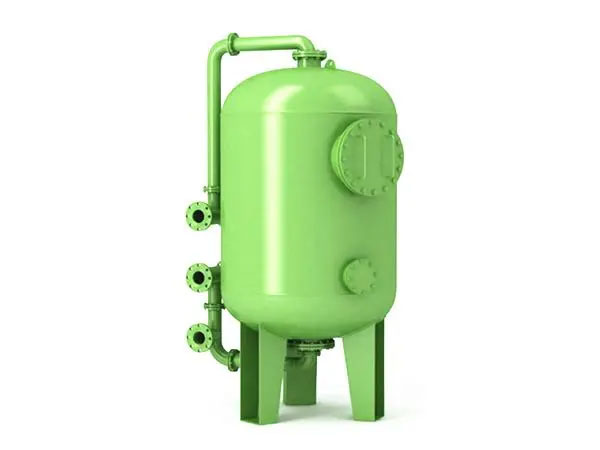
Mechanical filters, also known as pressure filters, are an important part of the preliminary pretreatment for pure water preparation and water purification systems. The materials include steel-lined rubber or stainless steel. According to the different filter media, they are divided into natural quartz sand filters, multi-media filters, activated carbon filters, manganese sand filters, etc. According to the water inlet method, they can be divided into single-flow filters and dual-flow filters. They can be used in combination or individually according to actual conditions. Overview Fully automatic mechanical filters are suitable for industrial water or domestic water supply treatment equipment in industrial and mining enterprises and towns that require filtered effluent turbidity generally within 5 mg/L and meeting drinking water quality standards. They have a very good removal effect on suspended solids and other solids in industrial wastewater. The cohesive colloidal particles in water that cannot be removed by sedimentation after the suspended matter coagulates into flakes can be removed by passing the water through the filter layer installed in the pressure filter, making the water transparent. Mechanical filters, also called pressure filters, are an important part of the preliminary pretreatment for pure water preparation and water purification systems. Their materials are made of steel-lined rubber or stainless steel. Due to different filter filling media, their uses and functions differ. Generally, there are quartz sand filters, activated carbon filters, and manganese sand filters. They can be used alone or in combination according to actual conditions. The media of multi-media filters are quartz sand, anthracite, etc. Their function is to filter out suspended solids, mechanical impurities, organic matter, etc., and reduce water turbidity. The medium of activated carbon filters is activated carbon, with the purpose of adsorbing and removing pigments, organic matter, residual chlorine, colloids, etc. in water. The medium of manganese sand filters is manganese sand, mainly to remove divalent iron ions in water. Working Principle Mechanical filters use one or several filter media to make the raw liquid pass through the media under a certain pressure, removing impurities and thereby achieving the purpose of filtration. The fillers installed inside are generally quartz sand, anthracite, granular porous ceramics, manganese sand, etc., and users can choose according to actual conditions. Mechanical filters mainly use fillers to reduce water turbidity, intercept and remove suspended solids, organic matter, colloidal particles, microorganisms, chlorine odor, and some heavy metal ions in water, purifying the feed water. This is one of the traditional methods of water treatment. Working principle: Mechanical filters (also known as multi-media filters, quartz sand filters). They are pressure filters that use refined quartz sand filter material filled inside the filter. When the inlet water flows from top to bottom through the filter layer, suspended solids and viscous colloidal particles in the water are removed, thereby reducing water turbidity. Performance: Mainly used for turbidity removal in water treatment, water softening, and pre-treatment for electrodialysis and reverse osmosis. They can also be used for surface water, groundwater, etc. They can effectively remove suspended solids, organic matter, colloids, mud and sand, etc. in water. Application Scope Used in water treatment processes, mainly for turbidity removal in feed water treatment, reverse osmosis, and pre-treatment for ion exchange softening and demineralization systems. They can also be used to remove mud and sand from surface water and groundwater. The inlet water turbidity is required to be less than 20 degrees, and the effluent turbidity can reach below 3 degrees. They can be widely used in electronics and electric power, petrochemicals, metallurgy and electroplating, papermaking and textiles, pharmaceutical dialysis, food and beverages, domestic drinking water, factory and enterprise water, swimming pools, etc. They can meet the liquid filtration needs of various industries. Classification and Features Classification Quartz sand filters (sand filters), activated carbon filters (carbon filters), multi-media filters, iron and manganese removal filters (manganese sand filters), fiber ball filters, hair filters. Features The pipeline of single-flow mechanical filters is simple and operation is stable. The filtration flow rate is generally 4—50m/h, and the operating cycle is generally 8小时. Dual-flow mechanical filters are provided with water inlet devices at the upper and lower ends and a water outlet device in the middle. Their advantages are larger filtration water volume, higher dirt removal capacity, and long operating cycle, generally 20小时. The disadvantages are that the pipeline system is relatively complex, operation is not very stable, and flushing and material replacement are relatively difficult. 1. Low equipment cost, low operating cost, and simple management 2. The filter material can be used multiple times after backwashing, and the filter material has a long service life 3. Good filtration effect and small footprint Main Technical Parameters Working pressure: 0.05MPa~0.6MPa Working temperature: 5℃~40℃ (special temperature can be customized) Single unit flow rate: 0.5m3/h~80m3/h Operation mode: manual or automatic control Filtration speed: 5m3/h~12m3/h, maximum 15m3/h Product specifications: Φ223~Φ3000 Cylinder material: 304, 316L, Q235 lined with rubber or glass-coated epoxy. Mechanical filter ◆ Principle: Adsorption method ◆ Use: Solid-liquid separation ◆ Style: Vertical filter ◆ Performance: High-efficiency filtration ◆ Applicable object: Water ◆ Applicable object properties: Low-temperature materials ◆ Filter material type: Quartz sand ◆ Scope of application: Water treatment systems in petroleum, pharmaceuticals, automobiles, light industry, water treatment, electroplating, textiles and other industries Mechanical filtration performance table
| Item Name | Φ1000 Single-Flow Mechanical Filter | Φ1500 Single-Flow Mechanical Filter | Φ2000 Single-Flow Mechanical Filter | Unit |
|---|---|---|---|---|
| Filter Outlet Water | 3.9~7.85 | 8.8~17.5 | 15.7~31.4 | T/h |
| Filter Working Pressure | 0.6 | 0.6 | 0.6 | Mpa |
| Filter Working Temperature | 5~30 | 5~30 | 5~30 | C |
| Filter Velocity | 5~10 | 5~10 | 5~10 | M/h |
| Filter Area | 0.785 | 1.75 | 3.14 | ㎡ |
| Filter Media Diameter | 0.5~1 (Quartz Sand)/0.8~1.5 (Anthracite | 0.5~1 (Quartz Sand)/0.8~1.5 (Anthracite | 0.5~1 (Quartz Sand)/0.8~1.5 (Anthracite | ㎜㎜ |
| Filter Layer Height | 1200 | 1200 | 1200 | ㎜ |
| Filter Inner Diameter | Φ1000 | Φ1500 | Φ2000 | ㎜ |
| Filter Total Height | 2530 | 3423 | 5034 | ㎜ |
| Filter Width | 1496 | 1705 | 2080 | ㎜ |
| Support Circumference Φ | Φ1005 | Φ1500 | Φ1800 | ㎜ |
| Support Dimensions | 160×125 | 200×160 | 250×200 | ㎜ |
| Raw Water Inlet Diameter | 80 | 80 | 100 | ㎜ |
| Clean Water Inlet Diameter | 80 | 80 | 100 | ㎜ |
| Backwash Clean Water Inlet Diameter | 80 | 100 | 150 | ㎜ |
| Compressed Air Inlet Diameter | 40 | 50 | 80 | ㎜ |
| Drain Outlet Diameter | 80 | 80 | 100 | ㎜ |
| Blowdown Outlet Diameter | 80 | 100 | 150 | ㎜ |
| Raw Water Inlet Elevation A | 800 | 1055 | 1000 | ㎜ |
| Clean Water Inlet Elevation B | 800 | 1055 | 1000 | ㎜ |
| Filter Media Discharge Outlet Diameter | 150 | 150 | 150 | ㎜ |
| Equipment Weight | 1244 | 1256 | 2423 | ㎏ |